454bbf No.24355994 [Last 50 Posts]
Welcome to Q Research Scotland
If you are Scottish, no doubt by now you will have noticed that neither the Scottish nor UK Parliament represent you THE PEOPLE.
New "rules" are being made up daily to undermine our Legal System, effectively turning us into Government Property. We no longer are in control of our government, they no longer even pretend to act on our behalf once elected. Pretty soon they will no longer need to play along with their fake elections designed to brainwash you into believing they work for you.
The intention of this board is to provide free space for the people of this Nation to circumvent the traitorous Media, Government and Business interests arrayed against us the people, to allow us to post a collection of open-sourced and verifiable information, supplied BY and FOR the People to demonstrate their corruption and lies and take back OUR power.
UNITED WE STAND, DIVIDED WE FALL.
Let's take back our power collectively, no matter your racial, employment (yes, the police and military too) or religious background, we are all in this together, and will be subjected to the same tyranny if we allow the perverts and criminals in power to proceed with their plans.
WWG1WGA
Q's Private Board
>>>/projectdcomms/ & Q's Trip-code: Q !!Hs1Jq13jV6
Q drops can be found here:
https://qaggregator.news/
QAnon.pub - qresear.ch/q-posts - QAlerts.pub - operationQ.pub - QPosts.online - qanon.news/Q - 8kun.top/qresearch/qposts.html
qntmpkts.keybase.pub - QAlerts.app - QAlerts.net - douknowq.com/134295/Q-Anon-Pub.htm - we-go-all.net/q.html -
Q Aggregator Sites:
Q Alerts (with desktop notifications) https://qalerts.pub/
Qanon.pub https://qanon.pub/
Qanon.news https://qanon.news/
Qposts online https://qposts.online/
Q Research sites:
https://q-resear.ch/
https://www.qproofs.com/
TOR Access
http://w7m432cocr665kf5tlpcxojwldajr3njd2etcxwhpbrt44eemuxhp7ad.onion/qresearch/catalog.html
New here? Q Proofs & Welcome
Welcome to Q Research (README FIRST, THEN PROCEED TO LURK) https://8kun.top/qresearch/welcome.html
Q - THE PLAN TO SAVE THE WORLD: https://www.bitchute.com/video/lfBKxfR3F5Aw/
Q: The Basics - An Introduction to Q and the Great Awakening PDF & PICS Archive: >>>/comms/3196
100+ Q Proof Graphics qproofs.com
8kun FAQs: https://8kun.top/faq.html
Questions & Practice Thread: >>9901078
How to screenshot, insert MP4's, embed videos (YT & Twitter) >>>/comms/9658
Use logic and reason when evaluating posts, look beyond the content of the post(s) and evaluate intent.
________
____________________________
Disclaimer: this post and the subject matter and contents thereof - text, media, or otherwise - do not necessarily reflect the views of the 8kun administration.
454bbf No.24355996
Bread Archives(sites)
Board Archive - The main /research/ board archive: https://8kun.top/qresearch/archive/index.html
Bread Archives (downloads)
MasterArchivist qarchives.gq | masterarchivist.github.io/qarchives/
Supplement to MA main spreadsheet, 2nd tab (labeled)
Germanarchiveanon https://mega.nz/folder/LPZxEIYJ#N5JwCNoxOxOtAoErKdUgvw
Missing Catalog Bredz 10964-11007 https://pastebin.com/xT0PWKMf
https://docs.google.com/spreadsheets/d/1M2AzhZKh2PjL7L7GVPN42Em0hZXKWMdhGnj59ZQ3YcQ/edit#gid=0
Useful Links
Q Research search engine for searching all posts from Q Research
https://qresear.ch/
Wayback Machine for old archived websites
https://web.archive.org
TinEye to find original posting date and source of pics
https://tineye.com/
Free Translator
https://translate.yandex.com/
https://www.collinsdictionary.com/translator
Banned YouTube Channels Archive
https://www.altcensored.com/channel/deleted
International Q Research Threads
>>25031928 ——–——– Australia #48
>>24831817 ——–——– Canada #96
>>24916193 ——–——– France #9
>>22976021 ——–——– Germany #108
>>24625756 ——–——– Japan #29
>>23118337 ——–——– Nederland #11
>>22976797 ——–——– QAJF #3
>>22970962 ——–——– South Africa #14
>>22753901 ——–——– UK #52
Archived Scotland posts
https://8kun.top/qnotables/res/39180.html
Know Your Bunker
https://endchan.gg/qrbunker/catalog.html
Disclaimer: this post and the subject matter and contents thereof - text, media, or otherwise - do not necessarily reflect the views of the 8kun administration.
Post last edited at
454bbf No.24355997
Notables are NOT Endorsements
#13
>>23121635, >>23121644, >>23121658 Hamilton, Larkhall and Stonehouse by-election
>>23122441 The Land Rome Couldn't Conquer (video)
>>23174592, >>23174738, >>23174744, >>23223165 Remove 'far-right racist' banners from Clydebank landmark -- councillor
>>23454968 British Navy behind radioactive leaks – investigation
>>23506633 Embarrassment for SNP as Turkish shipyard launches island ferry just two years after being awarded contract
>>23743705 Initial Dundee 'Axe Girl' Bun | Updated Government Bloat, Waste, and Abuse Bun
>>23743720 Updated Royals Bun | Initial Colin Smyth and Holyrood Loocam Bun
>>24011636 Updated NHS Bun
>>24015980 Labour MSP to quit Holyrood over links to sex offender
>>24073052 Caught on Record: British Lord Admits Plan to Sabotage Trump (video)
>>24100013 Scottish Government not informed of US use of airport during seizure of Russian-flagged tanker (video)
>>24222032 Starmer couldn’t ‘stop his hands from shaking’ when asked about Epstein (video)
>>24251961 Updated Government Bloat, Waste, and Abuse Bun
>>24341725 Britain Blocked Trump's Strikes, Now He's Ending Their Global Dominance (video)
>>24355965 Final Abuse Bun
>>24355966 Final Covid and Other Pestilence Bun
>>24355967 Gordon Brown Bun
>>24355968 Final Immigration Bun
>>24355969 Final Law and Disorder Bun
>>24355970 Final Lord Peter Mandelson Bun
>>24355971 Final NHS Bun
>>24355972 Final Nicola Sturgeon & SNP Bun
>>24355976 Joani Reid Husband Spying Bun
>>24355977 Final Royals Bun Part One
>>24355979 Final Royals Bun Part Two
>>24355982 Final Operation Talla Bun
Disclaimer: this post and the subject matter and contents thereof - text, media, or otherwise - do not necessarily reflect the views of the 8kun administration.
454bbf No.24356000
Dough
https://fullchan.net/?adaf9b78dbc8a6cd#5Naonf1kZRzSANDQ4MsnsUZY5M5igtPNDPW47UkppQZW
Disclaimer: this post and the subject matter and contents thereof - text, media, or otherwise - do not necessarily reflect the views of the 8kun administration.
e7e3cb No.24361454
Canada #89
DOJ-Released Picture Shows Disgraced Former Prince Andrew With Trafficking Victim in His Lap, as His Daughter Eugenie Has To Resign From Charity Over Relentless Epstein Scandal
by Paul Serran Mar. 8, 2026
Another week, another ‘Randy Andy’ scandal.
By now, having lost all his British royal perks, titles, and honors, having been arrested, currently under investigation, one could imagine that Andrew Mountbatten-Windsor, exiled in a Sandringham farm, couldn’t care less if yet another compromising picture of him has been released by the US DOJ.
But, in fact, it’s the compounding effect this has on his investigation, and also the consequences being faced by his daughters.
In the meantime, people around Andrew are also suffering grave reputational damage.
The undated images, small and low resolution, are among the 180,000 photographs released by the DOJ under the Epstein Files Transparency Act.
They’re more of a blur, these new photos, but they keep the spotlight on Andrew after a slew of compromising photos and documents destroyed whatever was left of his life.
His daughter, Princess Eugenie, had to resign from her role in an anti-slavery charity, as the relentless fallout from the Epstein documents continues.
Page Six reported:
“[She] served for seven years as a patron of Anti-Slavery International.
On Sunday, the princess, 35, stepped away from her role at the world’s oldest human rights organization, the Observer reported.
The charity said in a statement to the outlet, ‘After seven years, our patronage from HRH Princess Eugenie of York has come to an end. We thank the Princess very much for her support for Anti-Slavery International. We hope that she continues to work to end slavery for good and deliver freedom for everyone’.”
More:
https://www.thegatewaypundit.com/2026/03/doj-released-picture-shows-disgraced-former-prince-andrew/
Disclaimer: this post and the subject matter and contents thereof - text, media, or otherwise - do not necessarily reflect the views of the 8kun administration.
e7e3cb No.24361870
YouTube embed. Click thumbnail to play.
General Research #29698
Drone footage captures Glasgow central building after fire
March 9, 2026
DRONE footage has captured the smouldering Union Street building in daylight following a horrific blaze last night.
Following the fire, Glasgow Central station is likely to remain closed for at least two days causing major travel disruption.
The 19th century building on Union Street – known as Union Corner – was hollowed out by the intense fire, which caused a dome to partially collapse.
All train services from Scotland’s busiest railway station were cancelled and Network Rail have said it will remain closed on Monday and likely Tuesday as well.
An MSP compared the damage to the devastation from “the Blitz”. Nearby hotels were evacuated and roads were sealed off.
On Monday morning, fire crews used aerial platforms to hose water onto what remained of the building, as smoke hung in the air.
Only the facade of the building at the corner of Gordon Street and Union Street has been left standing.
As of 6.45am, the Scottish Fire and Rescue Service said crews were still battling the fire with nine appliances at the scene, and people are urged to avoid the area where possible.
A spokesperson said: “Firefighters were mobilised at 3.46pm on Sunday March 8 to reports of a fire on the ground floor of a four-storey building.
“Operations remain ongoing and there have been no reports of casualties.”
First Minister John Swinney has said the Scottish Government is willing to help Glasgow City Council with the financial consequences of the fire outside Central station.
He told press ahead of a visit to the scene: “The UK Government recognises that there will be a significant financial cost arising out of this incident.
“We’re in the early days of all of that. But I want to signal our willingness to support Glasgow City Council and to support them financially in dealing with the consequences, which will be immediate, significant and unexpected.”
https://www.thenational.scot/news/25919800.drone-footage-captures-glasgow-central-building-fire/
https://www.youtube.com/watch?v=4CTrNn2fMyY
Disclaimer: this post and the subject matter and contents thereof - text, media, or otherwise - do not necessarily reflect the views of the 8kun administration.
fe3bae No.24362050
>>24355997
Thanks buddy. It quickly builds up all this corruption doesn't it and most of this related just to Scotland, imagine how much corruption throughout all the lands?
Disclaimer: this post and the subject matter and contents thereof - text, media, or otherwise - do not necessarily reflect the views of the 8kun administration.
fe3bae No.24362095
YouTube embed. Click thumbnail to play.
https://youtu.be/Llbh7iMN6B8
ROME Buried This: The LOST TRIBES Carried David's THRONE to Britain
Uncovered Biblical History And Traditions
9.01K subscribers
6,317 views Mar 3, 2026 #DeepBibleStories #BiblicalHistory #LostTribesOfIsrael
Welcome to Uncovered Biblical History and Traditions:
What if millions of people walking the earth today have NO IDEA they're descended from the royal throne of David? In this unmissable episode of Deep Bible Stories, we uncover the Lost Tribes of Israel in Britain — tracing the scarlet thread of Lost Stories of the Bible from ancient Palestine to the far northwest isles of Europe.
This is Uncovered Biblical History like you've never encountered. We follow the Lost Tribes of Israel through Biblical Stories Uncovered by scholars, prophets, and hidden records — revealing the Hidden History of Christianity that mainstream teaching ignores. Rooted in Bible Prophecy, we explore the Manasseh and Ephraim blessing, revealing how the 10 Lost Tribes of Israel became a great nation and company of nations. The Promises of God — God's Promises made to Abraham, Isaac, and Jacob — were never broken. Israel Lost Tribes didn't vanish. They were planted. And Uncovered Biblical History and Traditions show exactly where.
Follow Jeremiah as he carries David's royal throne to a people who didn't know they were waiting for it. This is Uncovered Biblical Stories and Biblical History at its deepest.
📖 SERIES: Lost Tribes of Israel | Uncovered Biblical Stories & Traditions
Disclaimer: this post and the subject matter and contents thereof - text, media, or otherwise - do not necessarily reflect the views of the 8kun administration.
fe3bae No.24362262
>>24355965 Final Abuse Bun
https://www.dailymail.co.uk/news/article-15624269/We-lined-picked-abused-US-sailors-say-victims-Scots-care-home.html
We were lined up, picked out and abused by US sailors say victims at Scots care home
HANNAH RODGER
7 March 2026
American sailors working at a nuclear submarine base in Scotland have been accused of historical sexual abuse of children at a nearby care home.
Former residents of Dunclutha children’s home in Dunoon, Argyll, have given brave testimony to the Scottish Child Abuse inquiry about the suffering they endured at the hands of both US Navy personnel and brutal care home staff during the 1960s and 70s.
Abuse survivors say children in care were taken out by sailors ‘as a public relations exercise’.
One survivor compared his treatment to ‘being at a market’, with youngsters made to line up wearing their ‘Sunday best’ for the Americans, and ‘if they liked you, they picked you to go home with them’.
Up to 1,400 American servicemen were stationed at Holy Loch, near Dunoon, from 1961. The site on the Cowal Peninsula was used by the US Navy to house its nuclear submarines and ballistic missiles until 1992, after the fall of the Soviet Union.
Some former Dunclutha residents said the Americans were the only good thing about living at the home, as they provided entertainment, treats and respite from the cruelty of depraved staff.
But others described being abused by the military men who they said had free access to the 50-odd Dunclutha youngsters.
One man, who spoke to the inquiry using the pseudonym Peter, said he was ‘groomed’ by the seamen and seriously sexually assaulted when he was just seven or eight.
Peter, who was born in 1960, was taken into Glasgow City Corporation’s care as a baby and was in Dunclutha from aged six to nine.
He said the sailors would visit every weekend, adding: ‘They would come with a naval minibus. They just had carte blanche to pick us up and do what they wanted.’
Peter said there was ‘all the American razzmatazz’ at the base, including ‘ten-pin bowling and what we called McDonald’s’.
He said: ‘‘On several occasions, I was taken on a ship called USS Simon Lake. I got to know them and they got to know me. Then they got to groom me.’
Peter said the sailors would give him ‘all sorts of goodie bags’ when he went out with them. ‘Then they started touching me,’ he added.
‘It went on for some considerable time. They were then entrusted to take children away on wee breaks. That was when I encountered my downfall.’
Around Christmas of 1967 or 1968, Peter said he was taken out by a married ‘officer’ who he had been out with before for runs in his ‘big American car’.
He said: ‘He lived in a large, sandstone villa on a hill overlooking the naval base…I trusted him. I didn’t know what grooming was then.’
On the day he was attacked, Peter said they had returned to the man’s home after a trip to a nearby beach and forest.
He had dinner and a bath, but after the bath he was assaulted in another man’s presence. Peter said: ‘The man had stripped himself down to his underwear. He stood over me and proceeded to perform a sexual act...
Peter then described a serious sexual assault in graphic detail, and said he was ‘screaming with pain’. Afterwards he said he was ‘put into bed’ with both of the men. ‘The deeds were done and it was hell for me. They cleaned me up and bought me toys,’ he said.
‘They were acts of depravity beyond one’s comprehension.’
Disclaimer: this post and the subject matter and contents thereof - text, media, or otherwise - do not necessarily reflect the views of the 8kun administration.
fe3bae No.24362267
>>24362262
……………………………………………………………………………..continued………………………………………………………………………..
Other testimonies mention interactions with the Americans, including one woman who was in Dunclutha for just six months and faced three sexual assaults during that time by staff.
On one occasion, the woman, who used the name Carol, said she was groped by a handyman who worked at the home.
She also said older girls ‘orchestrated’ an incident where she was assaulted. ‘The girls said I would get sweets. I went in and I was made to sit on his knee,’ she said.
‘The same thing was happening to [the others]. I witnessed them sitting on [the man]’s knee, and his hand going up their skirts. He gave them sweets too.’
Carol added: ‘Some of the older girls would get taken down to the submarines. I would hide so I didn’t have to go. They would come back with sweets.’
Newspaper articles from the 1960s detail several times the US sailors interacted with the Dunclutha children, including in 1965 when they laid on a massive birthday party for one girl named Ann.
Another article from 1964 shows growing local concern about the sailors’ presence in Dunoon, with MP Emrys Hughes even challenging Prime Minister Sir Alec Douglas-Home in Parliament to ‘disguise himself as an American sailor on a Saturday night’ and witness the ‘vice’ in the town.
A third story from 1962 details how a 15-year-old Dunoon girl was preparing to fly to the US to see her American sailor boyfriend who she wanted to marry.
Six people told the inquiry about their experiences at Dunclutha, with all of them detailing cruelty, violence and neglect at the hands of staff, and one detailing extreme abuse by the US Navy personnel.
Other children said they suffered brutal and humiliating punishments by staff, including having their faces rubbed in soiled bedding if they wet the bed at night, being beaten with belts and brushes and being force-fed.
A US Navy spokesman declined to comment.
Disclaimer: this post and the subject matter and contents thereof - text, media, or otherwise - do not necessarily reflect the views of the 8kun administration.
fe3bae No.24362294
>>24362262
>>24355997
"Peter, is of course the boggley-eyed one we spoke about on previous boards baker anon. The one involving the big american car. I'll post his statement in full (with redactions). It is not all he has to say, he's a lot more to say but did not want to give anything much to the Scottish Child Abuse Inquiry (SCAI- Now no longer on twitter). He cannot use any evidence provided to the inquiry in a personal lawsuit against them moving forward, so he kept back - A LOT.
I'll post the statements from what I believe is Case Study No 9 over the next few days. The findings have not been released by the faux inquiry that exonerates politicians, judicial office holders and other high officials from the remit, they are not expected to until sometime around June 2026.
Disclaimer: this post and the subject matter and contents thereof - text, media, or otherwise - do not necessarily reflect the views of the 8kun administration.
fe3bae No.24362421
>>24355965 Final Abuse Bun
>>24355967 Gordon Brown Bun
https://www.bbc.co.uk/news/articles/cp9m8zmxe25o
'Our children paid the ultimate price' – How the Dunblane school shooting changed Britain
Craig Williams
8th March 2026
Even after 30 years, the facts of the Dunblane massacre are hard to comprehend.
On the morning of Wednesday 13 March 1996, a gunman entered the gymnasium of the town's primary school and, over the course of less than four minutes, murdered 16 children and their teacher.
Another 12 children and three adults were either shot or injured in the assault. All but two of the children attacked that day were aged just five and six.
The horror of the murders was matched by disbelief. How could this have happened in the UK? How could it happen in such a small, quiet place?
And how had a man been able to walk into a school armed with four handguns and more than 700 rounds of ammunition to commit mass murder?
What happened in Dunblane that morning changed thousands of lives. It also changed the country forever and, in the minds of those who campaigned afterwards, has prevented anything like it from happening again.
As the 30th anniversary of that day approaches, a BBC Scotland documentary - Dunblane: How Britain Banned Handguns - looks back at what happened and speaks to those affected by the murders.
On the day of the shootings Thomas Hamilton, a 43-year-old Stirling man with a troubling reputation, arrived at the school a little after 09:30.
He made his way to the gym, where Gwen Mayor's primary one class were about to start their PE lesson
Eileen Harrild was the PE teacher.
"I was aware of the gym door being banged open and a man came in, dressed in combat gear with earmuffs on, and immediately started to shoot," she says.
"And he targeted the adults first. He shot me first and then he turned his gun on the two other adults in the gym and then started on the children.
"The shooting was continuous and rapid, and he had intent in his eyes. After about three or four minutes there was silence. Just silence."
Kenny and Pam Ross's five-year-old daughter Joanna was in the class. Her parents describe her as a "lively wee girl", "quite a personality" and a "daddy's girl".
Mick North's daughter Sophie was also in the gym. Mick's wife, Barbara, had died when Sophie was three.
"I was a single parent, bringing up my five-year old daughter. Sophie had only recently started at the local primary school and we were doing well. We had taken our time to get over her mum's death, but we were doing extremely well," he says.
Both girls were among the 16 children shot dead with Gwen Mayor that morning.
As the news broke and the media descended on Dunblane, word spread to London, and Scotland's two most senior politicians.
Michael Forsyth was Scottish secretary in John Major's Conservative government. George Robertson was his opposite number for Labour.
Both had personal connections to Dunblane. Forsyth was the local MP, while Robertson lived in the town and his children had been pupils at the primary school.
It would later turn out that both had encountered the killer. Hamilton had written to Forsyth on several occasions and Robertson had withdrawn his sons from one of Hamilton's boys' clubs, concerned by the way it was being run.
That morning, political rivalries were put aside.
"My first reaction was disbelief that this could have happened," Forsyth says.
"I said 'you have to get hold of George Robertson'. I think they thought that was a bit strange because George was my opposite number who spent his life making my life difficult."
Robertson took up an invitation from Forsyth to travel together to the town.
Meanwhile, parents Kenny Ross and Mick North had been contacted and told something had happened at the school. By the time they got there, a crowd of locals and journalists was outside the gates.
"There seemed to be a vacuum of information," North says.
"Nobody knew for a while anything at all. Until we were told that it was Mrs Mayor's class, the class that Sophie was in."
"It was just panic and crowds of people," according to Pam Ross.
As the gravity of the tragedy began to emerge, casualties were being taken to local hospitals.
Shot in both arms, her right hand and left chest, teacher Eileen Harrild was waiting to be taken into theatre, desperate to find out what had happened to the children.
"I did say: 'How many children survived?'. I really wanted to know that. That was really important to me.
"I felt responsible because it was my class and suddenly this had happened. I needed to know how many were going to be surviving it."
Disclaimer: this post and the subject matter and contents thereof - text, media, or otherwise - do not necessarily reflect the views of the 8kun administration.
fe3bae No.24362430
>>24362421
>>24355965 Final Abuse Bun
>>24355967 Gordon Brown Bun
Forsyth and Robertson arrived at what was now the scene of a major crime.
"We were there very quickly after the deed had been perpetrated," Robertson says.
"The chief constable did say 'do you want to see the gym?'. A lot of the bodies were still there. And he said: 'You know, you're not obliged to do so'.
"I think we both believed that was the right thing to do. It was important to see the scene of the crime."
Forsyth adds: "So we went into the gym and I'm afraid I lost it."
"It's not surprising," says Robertson. "I'm brought to silence even thinking about what we saw. But I think it was right that we did see it."
"That scene. I can see it now," says Forsyth.
The scale of what had just happened meant parents were left waiting to find out about their children.
Pam and Kenny Ross were taken aside and told Joanna had died. Afterwards, they went home to their four-month-old baby daughter.
Pam says: "Both Kenny's mum and my mum were in our house watching the baby and they could see us coming up the path without Joanna and they knew. We didn't even really have to tell them."
"You were just numb," says Kenny.
"It felt like a very long wait without very much information at all," says Mick North.
"I had to wait until quarter to three in the afternoon before I was told what had happened to Sophie. And then I went back to the house where it would just be me."
Hamilton had fired 105 bullets. He was carrying 743 rounds of ammunition and four handguns – two 9mm Browning semi-automatic pistols and two Smith & Wesson .357 magnum revolvers.
In the shock of the murders, attention immediately turned to how he had been able to legally own such an arsenal - and how the country could prevent anyone from having one like it again.
Hamilton, who shot himself dead at the end of the attack, was well known to police and other authorities.
He had been blacklisted from the Scouts Association in 1974, after complaints about his leadership and concerns about his "moral intention towards boys".
He would go on to run 15 boys' clubs across the central belt between 1981 and his death. Many raised concerns about his conduct during that time.
The official report into the Dunblane shootings would conclude that Hamilton, who blamed "malicious gossip" on his blacklisting and for the failure of his DIY business, had a sexual interest in young boys and a paranoid personality.
Dunblane occupies a similar place to Lockerbie in the Scottish memory.
Both are small towns, populations of fewer than 10,000, tucked away in quiet corners of the country. Their names are attached to terrible events which both tested their communities to the limit and took on a wider significance.
Just as the hunt for the Lockerbie bombers became a global legal and political affair, how the families and allies of the Dunblane victims responded to the tragedy changed the UK and its relationship with guns.
Immediately, Michael Forsyth began planning a public inquiry to examine the circumstances of the killings, and what could have been done to prevent them.
He felt an opportunity had been missed to restrict access to guns after the Hungerford massacre of 1987, when Michael Ryan killed 16 people and injured 15 more in a shooting spree in the south of England.
Some of Forsyth's colleagues were sceptical, but "from the moment I left that gym I was absolutely determined we were going to have to have legislation to ban handguns," he says.
From the start, there was a move to take party politics out of the campaign. As Robertson says: "Trying to make sure that this remained bipartisan, that it was to be seen as all-party, was going to be crucially important".
To that end, Prime Minister John Major and Labour leader Tony Blair visited Dunblane together, meeting with victims' families and survivors.
Disclaimer: this post and the subject matter and contents thereof - text, media, or otherwise - do not necessarily reflect the views of the 8kun administration.
fe3bae No.24362447
>>24362421
>>24362430
>>24355965 Final Abuse Bun
>>24355967 Gordon Brown Bun
...................................................................................continued3...................................................................................
There was also growing public and private anger that Hamilton had owned his guns legally.
Eileen Harrild says: "When I realised that until he banged that gym door open, with his gun outstretched, everything he had done was legal, he held them in his house, these guns were legal, I was really angry. I felt angry, actually."
But there was strong push-back from gun owners and the shooting lobby.
They argued that people had the legal right to own handguns, that shooting was a legitimate sport no different from any other, that shooting incidents were rare and almost all gun owners were responsible.
Meanwhile, three women from the Dunblane area had begun campaigning for a total ban on handguns.
Ann Pearston, Jacqueline Walsh and Rosemary Hunter had formed the Snowdrop Campaign, named after the only flower blooming at the time of the shootings. They wanted the law changed by the time the snowdrops bloomed the following spring.
"We'd lived in Dunblane for about 18 months. We had been in that community and known people.
"Had we bought a house in Dunblane I would have had two children in the school that day, one of which would have been in one of the three primary one classes," Pearston says.
Despite, by their own admission, knowing "nothing, really, about politics" they began collecting names to petition parliament for a ban.
By any measure, the Snowdrop Petition would be a remarkable success. In that pre-internet age, they were inundated by sacks of letters and cards. It would collect 705,000 signatures.
The organisers' public profile brought both praise and death threats. It made public figures of three private women, who found themselves debating with politicians and gun owners on TV and radio.
At the same time, the legal and political responses to the shootings were getting under way. The public inquiry, chaired by the Scottish judge Lord Cullen, began sitting in Stirling at the end of May.
It took place over five weeks, hearing often harrowing testimony, with a remit to investigate the circumstances of the Dunblane shootings, gun legislation, and school safety.
Ann Pearston was present throughout.
"Having listened to all the evidence and having read every single submission that was put into that inquiry, I didn't think he could come down on anything other than a complete ban," she says.
But Home Secretary Michael Howard took the view that he could not pre-commit the government to implementing whatever Lord Cullen found. That rang alarm bells for some campaigners.
"I was not optimistic that we would succeed," says Mick North. "They needed to be pushed and they needed to be pushed hard."
They met Labour Party leader Tony Blair while in London to deliver the Snowdrop Petition.
"Part of the shock for me was that my children were, I mean, a little bit older than that, but they were still at school," Blair recalls.
"I felt deeply for them, but as a political leader you can't take all your decisions on the basis, simply, that there's a campaign to do something."
Blair, a former lawyer who was preparing for a looming general election, was minded to wait and see what Lord Cullen's report found before committing to action.
That wasn't good enough for Kenny Ross.
"Tony said if he were elected, he'd do what he can to go by our wishes, if you like. See what he could do. And I was just fed up with it," he says.
"I finally said to him: 'Have you got any children?' - and he says, 'yes'.
"I say: 'Well, I had a daughter. She's now six foot under. That is why you have to do something about these gun laws'.
"Total silence. You could have heard a pin drop. And then I was starting to think: 'Have I said the right thing? Have I said the wrong thing?'.
"It was to get his attention as to how serious this is. And hopefully it hit home."
Disclaimer: this post and the subject matter and contents thereof - text, media, or otherwise - do not necessarily reflect the views of the 8kun administration.
fe3bae No.24362451
>>24362421
>>24362430
>>24362447
>>24355965 Final Abuse Bun
>>24355967 Gordon Brown Bun
...................................................................................continued4.................................................................................
That October, Pearston gave a powerful speech at Labour's annual conference.
Delivered the day after what would have been Sophie North's sixth birthday, her words reduced many in the audience to tears and prompted party members to back a full ban.
"She came, she saw, she conquered," remembers Tony Blair.
"That was the end of it because it was an extraordinary and electrifying moment. She spoke with such conviction and such reason that, I think, for me that was conclusive.
"Let's do something that is so clear and so firm that we know we have done everything we can to prevent this in the future."
Two weeks later, Lord Cullen published his report.
He made 28 recommendations but stopped short of calling for a ban on handguns, suggesting instead a complex system that would see them dismantled and stored in different places.
The Conservative government accepted everything in the report but went further, suggesting a ban on all handguns except .22 pistols - a less powerful calibre used for Olympic target shooting.
Michael Forsyth had spent months persuading and managing some of his fellow Conservative MPs, many of whom were against any ban.
"Certainly, Michael Howard knew that, unless we did something, I just wouldn't have been able to accept it. So, the government of which I was a member went beyond Cullen, which no one expected," he says.
George Robertson says he knew that Forsyth also wanted the ban on .22s but was bound by cabinet responsibility.
"In government, you don't always get everything you want," says Forsyth.
The Firearms (Amendment) Act became law in February 1997. It was not enough for the families or the Snowdrop campaign, who continued to press for a full ban.
That wasn't long in coming.
Labour won the general election of May 1997, and almost immediately legislated.
That November, the amended act was passed and the age of legal handguns in the UK was over, 20 months after the murders in Dunblane.
Three decades on the people of Dunblane, the community that was torn apart by the tragedy, will mark the anniversary privately.
For those who fought for the handgun ban, there is some small consolation in what happened next.
"People make demands on the government the whole time," says Blair.
"You can't meet all those demands but this demand in this way was something, it wasn't about money, it wasn't about priorities, it was just about a terrible, terrible event that the country was determined should lead to a change."
For George Robertson, what the parents lost is "always going to be greater than anything that came out of it".
"When there is another school shooting in America, I do take a degree of satisfaction from the fact that we stopped that from happening in our country," he says.
"Because there is no doubt at all in my mind. If the law had remained the way it was, it would have happened again."
Michael Forsyth still finds what happened on 13 March 1996 difficult to talk about.
"It was a miserable experience for me, but nothing like what it was for those parents who lost their children. I just wish I'd never had to deal with it."
"Our children paid the ultimate price," says Joanna Ross's father, Kenny.
"And what I miss most is I can't remember what she sounds like. It was before the time of videos, mobile phones.
"I've forgotten her voice."
Disclaimer: this post and the subject matter and contents thereof - text, media, or otherwise - do not necessarily reflect the views of the 8kun administration.
fe3bae No.24362476
YouTube embed. Click thumbnail to play.
>>24362421
>>24355965 Final Abuse Bun
>>24355967 Gordon Brown Bun
https://youtu.be/Ags4YoDOL5s
Britain's Deadliest Mass Shooting | DUNBLANE: 30 Years On | Scottish Sun Documentary
The Scottish Sun and The Sun
22,088 views Mar 6, 2026 #scotland #news #dunblane
On the morning of March 13, 1996, a gunman walked into Dunblane Primary School near Stirling.
Thomas Hamilton entered the school gym and opened fire on a class of five and six-year-old children.
In the space of just three minutes, he murdered 15 schoolchildren and their teacher. Another child would die later in hospital.
30 years on, the massacre in Dunblane remains the deadliest shooting tragedy ever in the UK.
Our documentary explores the devastating impact of the shooting, hearing from the heart of those most affected.
Contents of video: -
00:00 - The Story of The Dunblane Shooting
01:13 - The Shooting: 3 Minutes That Changed Everything
11:06 - The Devastating Death Toll Revealed
17:06 - Thomas Hamilton: Who Was The Dunblane Shooter?
20:30 - The Tributes: PM John Major & Tony Blair Pay Tribute
21:45 - Remembering The Victims and Survivors of Dunblane
24:27 - The Queen Visits Dunblane
26:25 - How Survivors Began To Process Dunblane
28:42 - How Dunblane Sparked UK Gun Law Changes
33:03 - Dunblane Changes Praised by Parkland Shooting Campaigner
35:46 - How Andy Murray Brings Positivity To Dunblane
END
Disclaimer: this post and the subject matter and contents thereof - text, media, or otherwise - do not necessarily reflect the views of the 8kun administration.
fe3bae No.24362687
YouTube embed. Click thumbnail to play.
>>24361870
https://youtu.be/NBCtByWJit8
GLASGOW FIRE: Devastating aftermath revealed after vape shop explosion tears through city centre
The Scottish Sun
463K subscribers
Mar 9, 2026 #scotland #news #theScottishSun
HORROR pictures show the devastating aftermath of a huge blaze in Glasgow city centre last night.
Firefighters have been battling the massive fire which broke out in a vape shop next to Central Station through the night.
Disclaimer: this post and the subject matter and contents thereof - text, media, or otherwise - do not necessarily reflect the views of the 8kun administration.
fe3bae No.24363061
>>24355965 Final Abuse Bun
>>24362262
https://www.bbc.co.uk/news/articles/cn8zqygvxylo
Paedophile ex-sailor jailed for raping second boy
9 March 2026
A former sailor who is already serving a prison sentence for raping a boy has been jailed for a further 14 years for his earlier abuse of another child.
John Henderson, who served in the Royal Navy, was jailed for 14 years in 2019 for offences against one child, but was back at Newcastle Crown Court on Monday for his offences against a second victim.
Henderson, formerly of Amble in Northumberland, raped the boy after asking if he wanted to "play", then bought him sweets to stop him telling anyone, the court heard.
The 39-year-old admitted rape and sexual assault of a child, with a judge saying he posed a high risk to children.
The offences occurred before the ones for which Henderson was jailed in 2019 and also ordered to serve an extra year on extended licence, the court heard.
Prosecutor Sam Ponniah said Henderson asked the boy "do you want to have some fun" before raping him, then bought him sweets to "persuade him not to say anything".
In a statement read to the court, the victim said what happened was "disgusting" and he "felt guilty" Henderson had gone on to rape another child.
Judge Gavin Doig said Henderson had been a "model prisoner" for the past seven years but it was "clear major issues remain".
He said Henderson still posed a significant risk of serious harm to children.
Henderson was also ordered to serve a further four years on extended licence upon his eventual release from his latest sentence.
Disclaimer: this post and the subject matter and contents thereof - text, media, or otherwise - do not necessarily reflect the views of the 8kun administration.
fe3bae No.24370427
YouTube embed. Click thumbnail to play.
>>24355997
>>>24355965 Final Abuse Bun
https://youtu.be/tEjJ8foCZXI
PROTECTED BY MPs, MEDIA & CPS
Sonia Poulton
114K subscribers
10,485 views Mar 10, 2026
All Sonia Poulton LINKS: https://linktr.ee/soniapoulton
Sonia's Rumble https://rumble.com/user/SoniaPoulton1
Disclaimer: this post and the subject matter and contents thereof - text, media, or otherwise - do not necessarily reflect the views of the 8kun administration.
fe3bae No.24377620
YouTube embed. Click thumbnail to play.
>>24355970 Final Lord Peter Mandelson Bun
https://youtu.be/GOco26xAvbs
Peter Mandelson Epstein Links: What the New Documents Reveal
Times News
1.21M subscribers
15,819 views Mar 13, 2026 The Story Podcast
Peter Mandelson’s disastrous few months continue apace, after the government released a tranche of documents that tell us a lot about his hiring - and firing - as ambassador to the US. So what’s in the files? And what does it all say about the judgment of the Prime Minister?
#mandelsonfiles #keirstarmer #ukpolitics
00:00 – Breaking: The Mandelson files released
01:42 – Assessing the Prime Minister’s judgment
04:24 – The December 2024 appointment timeline
06:08 – Police arrest and the "flight risk" claims
08:12 – The JP Morgan report and "red flags"
10:20 – Internal mutiny: Warnings from senior aides
12:15 – The chaotic exit and £75,000 payoff
21:50 – What comes next: More files to follow
This podcast was brought to you thanks to the support of readers of The Times and The Sunday Times. Subscribe today: http://thetimes.com/thestory
Guest: Aubrey Allegretti, chief political correspondent, The Times.
Host: Rosie Wright.
Producers: Harry Stott, Micaela Arneson.
Clips: Guardian News, AFP News Agency, Sky News, Diario AS.
Photo: Getty Images.
Disclaimer: this post and the subject matter and contents thereof - text, media, or otherwise - do not necessarily reflect the views of the 8kun administration.
fe3bae No.24378079
My friend baker anon, who we've previously discussed...this is his statement to the inquiry. He did not attend the inquiry. He withheld most of his evidence from the inquiry who claim "ownership" of statements to the inquiry and do NOT allow victims to use anything shared with them in any future private legal action.
I'll just post screenshots. There is 47 pages to the statement.
>>24355965 Final Abuse Bun
>>24355971 Final NHS Bun
https://www.childabuseinquiry.scot/sites/default/files/2026-02/%28Peter%29%20KPW%20Witness%20Statement.pdf
Scottish Child Abuse Inquiry
Witness Statement ofKPW(Peter)
Support person present: Yes - Craig Christie , Solicitor, Drummond Miller, Glasgow.
Pages 1-5 of 47
Disclaimer: this post and the subject matter and contents thereof - text, media, or otherwise - do not necessarily reflect the views of the 8kun administration.
fe3bae No.24378086
>>24378079
Will post more of this tomorrow.
Disclaimer: this post and the subject matter and contents thereof - text, media, or otherwise - do not necessarily reflect the views of the 8kun administration.
fe3bae No.24378511
YouTube embed. Click thumbnail to play.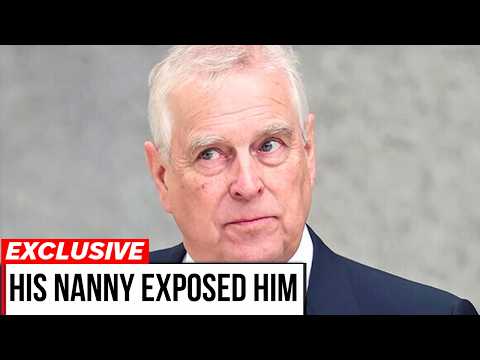
>>24355979 Final Royals Bun Part Two
https://youtu.be/uGJBeQuQ1SA
Andrew’s Former Nanny Reveals the HUMILIATING Nickname She Gave Him as a Child
Royal Family Tea
11.3K subscribers
42,614 views Mar 13, 2026
Andrew Mountbatten-Windsor once lived one of the most privileged lives inside the British royal family. But according to someone who knew him long before the scandals and headlines, his behaviour was already raising eyebrows when he was just a child growing up in the palace nursery.
In this video, we look at surprising claims from Andrew Mountbatten-Windsor’s former royal nanny, Mabel Anderson, who reportedly gave the young royal a humiliating nickname because of his mischievous and difficult behaviour. Anderson cared for several of Queen Elizabeth II’s children, including King Charles, Princess Anne, Andrew Mountbatten-Windsor, and Prince Edward, and remained close to the royal household for decades.
According to reports and accounts referenced in Nigel Cawthorne’s book The End of the Monarchy and Epstein, Anderson described Andrew as a constant source of mischief as a child. Stories from inside the royal household suggest he played pranks around the palace, from tampering with his nanny’s radio to tying together the shoelaces of palace sentries. One anecdote even claims he once poured itching powder into Queen Elizabeth II’s bed at Buckingham Palace.
These early stories about Andrew’s personality have resurfaced as he remains one of the most controversial figures connected to the British monarchy. Once a naval officer who served during the Falklands War and a prominent royal representing the United Kingdom abroad, Andrew Mountbatten-Windsor has since been stripped of royal duties, patronages, and military roles by his brother, King Charles III.
We also look at recent developments surrounding Andrew’s life away from official royal duties, his removal from Royal Lodge, and the continuing fallout from his long association with Jeffrey Epstein.
From palace nursery pranks to royal exile, this story offers a revealing look at Andrew Mountbatten-Windsor’s early years and the personality insiders claim they witnessed long before the public controversies began.
Subscribe for more updates on the British royal family, including King Charles III, Prince William, Catherine Princess of Wales, and the latest palace developments.
contactroyalfamilytea@gmail.com
Disclaimer: this post and the subject matter and contents thereof - text, media, or otherwise - do not necessarily reflect the views of the 8kun administration.
fe3bae No.24380466
>>24378079
>>24355965 Final Abuse Bun
>>24355971 Final NHS Bun
https://www.childabuseinquiry.scot/sites/default/files/2026-02/%28Peter%29%20KPW%20Witness%20Statement.pdf
Scottish Child Abuse Inquiry
Witness Statement ofKPW(Peter)
Support person present: Yes - Craig Christie , Solicitor, Drummond Miller, Glasgow.
Pages 1-5 of 47
Disclaimer: this post and the subject matter and contents thereof - text, media, or otherwise - do not necessarily reflect the views of the 8kun administration.
fe3bae No.24381382
>>24355997
>>24355972 Final Nicola Sturgeon & SNP Bun
https://www.bbc.co.uk/news/articles/cx2gzmzn502o
Watchdog says he 'can't trust ministers' with Sturgeon inquiry files
12 March 2026
The Scottish government is being threatened with further legal action by the information commissioner over the release of documents about an ethics investigation into Nicola Sturgeon.
David Hamilton said he could no longer trust the government to handle some files "unsupervised" after being given "preposterous and unacceptable" excuses for not complying with his orders.
Ministers have repeatedly missed deadlines to publish correspondence about the Sturgeon inquiry, which cleared her of misleading parliament during a Holyrood probe into the handling of harassment claims against Alex Salmond.
The Scottish government insisted it was handling the documents with "the highest standards of impartiality and integrity".
The information commissioner is dealing with six different freedom of information appeals relating to the Sturgeon and Salmond inquiries.
The government published a large bundle of documents last month following a court battle.
Hamilton's latest criticism comes after he sought reassurances that ministers had complied with a 2024 order to release legal advice relating to a previous appeal about inquiry evidence.
After receiving a response, the commissioner said he believed the government had failed to comply and that he was considering legal action.
'Unacceptable'
Hamilton said in a statement: "Perhaps worse than the fact that Scottish ministers have once again failed to comply with one of my decisions, is that they appear to have tried to conceal this breach of trust with unjustified delays and a wall of silence.
"The excuses I have now been given, both in writing and in person, are preposterous and unacceptable."
The commissioner said he had expressed his dismay to Permanent Secretary Joe Griffin, Scotland's most senior civil servant.
He said: "I can no longer trust the government to handle this information unsupervised and will explore more intrusive options to ensure compliance."
The commissioner complained that the handling of freedom of information requests relating to the Sturgeon inquiry stood in "stark contrast to the way nearly every other case of theirs is handled".
Hamilton added that he would "now need to assess whether I can resource a further intervention to examine the unusual case handling practices in these cases".
In his letter to Hamilton, Griffin said: "I would reiterate that ensuring compliance with court orders has been ministers' absolute priority throughout this matter."
The permanent secretary said he had been assured that the government had not withheld information it had been ordered to publish and that ministers had fully complied with previous rulings.
Griffin also confirmed that the large bundle of documents released last month had been temporarily removed from the government website "to redact some additional information".
He said although the incident was regrettable, it was due to "the scale and complexity" of publishing more than 700 documents.
Freedom of information row
First Minister John Swinney previously told parliament that the freedom of information requests had been complicated by the need to make redactions to avoid identifying women who had made allegations against Salmond.
Salmond successfully sued the government in 2019 over its mishandling of complaints against him.
The former first minister, who died in 2024, was cleared of sexually assaulting nine women in 2020.
The freedom of information row dates back to March 2021, when James Hamilton, an Irish lawyer, cleared Sturgeon of breaching the ministerial code.
A freedom of information request was then made to the Scottish government for all written evidence used in the investigation.
The government had originally insisted that as Hamilton was an independent adviser on the ministerial code he was not subject to freedom of information legislation.
However, the information commissioner intervened and ordered the government to look at the case again.
Ministers then challenged this decision in the Court of Session, sparking a lengthy series of complex appeals.
A Scottish government spokesperson said: "The Permanent Secretary met the Scottish Information Commissioner on 11 March and assured him that these cases were being handled properly, in line with statutory duties and with the highest standards of impartiality and integrity."
Disclaimer: this post and the subject matter and contents thereof - text, media, or otherwise - do not necessarily reflect the views of the 8kun administration.
fe3bae No.24381469
>>24378079
>>24380466
>>24355965 Final Abuse Bun
>>24355971 Final NHS Bun
https://www.childabuseinquiry.scot/sites/default/files/2026-02/%28Peter%29%20KPW%20Witness%20Statement.pdf
Scottish Child Abuse Inquiry
Witness Statement ofKPW(Peter)
Support person present: Yes - Craig Christie , Solicitor, Drummond Miller, Glasgow.
Pages 11-15 of 47
Last post I forgot to correct the page numbers. Should have read pages 6-10. The numbers are on the bottom of the pages.
Redactions here are extensive and might be either being investigated, or as seems more likely, will be used in the next Case Study (no 10). Who are these people that think they have a right to withhold from the PUBLIC, publicly owned data obtained using their funds? These cunts think they can hide behind legislation they create to protect themselves...they pretty much can, they've been doing it for a long time.
Disclaimer: this post and the subject matter and contents thereof - text, media, or otherwise - do not necessarily reflect the views of the 8kun administration.
fe3bae No.24381701
>>24378079
>>24380466
>>24381469
>>24355971 Final NHS Bun
https://www.childabuseinquiry.scot/sites/default/files/2026-02/%28Peter%29%20KPW%20Witness%20Statement.pdf
Scottish Child Abuse Inquiry
Witness Statement ofKPW(Peter)
Support person present: Yes - Craig Christie , Solicitor, Drummond Miller, Glasgow.
Pages 16-20 of 47
Disclaimer: this post and the subject matter and contents thereof - text, media, or otherwise - do not necessarily reflect the views of the 8kun administration.
fe3bae No.24385249
>>24355997
>>24355965 Final Abuse Bun
>>24355969 Final Law and Disorder Bun
https://news.stv.tv/politics/more-than-80-unreported-cases-of-bullying-harassment-and-sexual-misconduct-at-scottish-parliament
More than 80 unreported cases of bullying, harassment and sexual misconduct at Scottish Parliament
The findings come from a Dignity at Work survey of all staff who work for MSPs, or for the Parliamentary Corporate Body
Mar 12th, 2026
The Scottish Parliament has found 84 unreported cases of bullying, harassment and sexual harassment at Holyrood.
The findings come from a Dignity at Work survey of all staff working for MSPs or the Scottish Parliamentary Corporate Body.
It was carried out in January and covers the whole five years of this parliamentary term.
It finds that staff reported 84 incidents where they experienced or witnessed bullying, harassment or sexual harassment – and it includes allegations of sexual misconduct going back to 2021.
This includes 45 reports in relation to bullying, 25 in relation to harassment and 14 in relation to sexual harassment, including a small number of allegations of serious sexual misconduct.
This is the first time the incidents have been publicly reported and have been described as shocking.
The biggest problem appears to be in MSPs’ offices, where small groups of people work closely together, but where there is a distinct power dynamic, with people being unwilling to complain about their boss because that could cost them their job.
The Parliament has made nine recommendations to tackle the issues, and statements from political parties are expected at Holyrood on Friday.
The review takes account of forthcoming changes in employment law arising from the Employment Act 2025.
The Act will bring in stronger whistleblowing protections and a duty for all employers – including MSPs in that capacity – to take proactive, preventative steps to stop harassment, including third-party harassment.
The findings from the survey and its accompanying report have been communicated jointly by the Parliament’s Presiding Officer, Alison Johnstone MSP, and the chief executive of the Parliament, David McGill.
Writing to all MSPs and staff, they said many staff work in positive, supportive environments, but they were both “deeply concerned” by new findings on bullying, harassment and sexual harassment.
Johnstone said: “We will all be shocked and deeply concerned to learn of some reported serious allegations.
“Senior Parliament officials made the Parliament Police unit aware of the limited information we have.”
John Swinney said: “As First Minister, I want to make it clear to Parliament that a culture of appropriate behaviour is essential to the functioning of our democracy.”
Russell Findlay, Scottish Tory leader, said: “It is clear that things need to change. Change is in the interests of all parties, all MSPs.”
Anas Sarwar, Scottish Labour leader, added: “This deeply worrying report must be taken with the utmost seriousness and its content demands not defensiveness, not delay, but decisive action from all of us.”
Gillian Mackay, co-leader of the Scottish Greens, said: “Presiding officer, the allegations and volume of them are shocking and will be hugely concerning for everyone using the parliamentary estate. I want to thank those who have come forward and shared their experiences to help improve the culture and conduct in Parliament.”
Alex Cole-Hamilton, leader of the Scottish Lib-Dems, said: “There are challenges in this report, it is embarrassing, but it is also a call to action and I sincerely hope that whilst this represents one of the last considerations of this Parliament, it represents one of the first considerations of the Parliament to come.”
Disclaimer: this post and the subject matter and contents thereof - text, media, or otherwise - do not necessarily reflect the views of the 8kun administration.
fe3bae No.24388209
YouTube embed. Click thumbnail to play.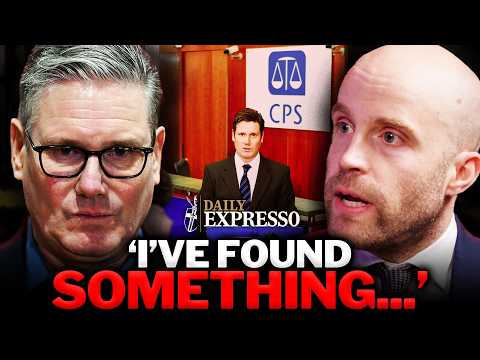
>>24355997
>>24355965 Final Abuse Bun
>>24355969 Final Law and Disorder Bun
>>24355970 Final Lord Peter Mandelson Bun
>>24355967 Gordon Brown Bun
https://youtu.be/0OrATENqPFw
EXPOSED: New File UNCOVERED in Starmer Grooming Gangs Scandal | Daily Expresso
Daily Express
366K subscribers
203,700 views Mar 13, 2026 Daily Expresso
Starmer Scandal: JJ Anisiobi sits down with Express Report's Zak Garner-Purkis following explosive revelations about Keir Starmer's time at the CPS when Child Abduction Warning Notices were being drafted.
What really happened during his tenure as Director of Public Prosecutions at the CPS?
WATCH THE EXPLOSIVE EXPRESS REPORT VIDEOS BELOW!
Part 1: • EXPOSED: Keir Starmer's Grooming Gang 'COV...
Part 2: • BOMBSHELL: Starmer's Secret File UNCOVERED...
A Downing Street spokesperson said:
"CAWNs(Child Abuse Warning Notices)are a police tool that existed before the Prime Minister became DPP. As we have made clear, he was not responsible for their creation or use."
Disclaimer: this post and the subject matter and contents thereof - text, media, or otherwise - do not necessarily reflect the views of the 8kun administration.
fe3bae No.24388333
YouTube embed. Click thumbnail to play.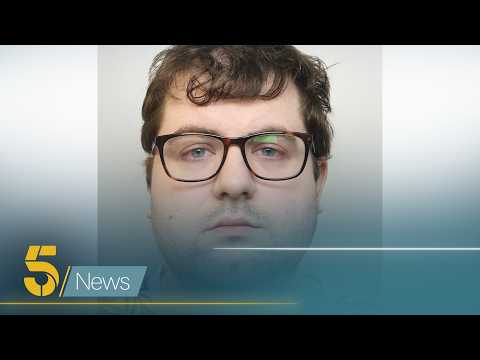
>>24355965 Final Abuse Bun
https://youtu.be/bAFN2BUvABs
Nursery worker jailed for 24 years after sexually abusing five young boys in his care
5 News
194K subscribers
Mar 16, 2026
► A nursery worker has been jailed for at least 24 years after sexually abusing five young boys in his care.
Nathan Bennett, who worked at Partou King Street Nursery in Bristol, was described by the judge as an 'evil' and 'dangerous paedophile'.
5 News' Simon Vigar reports.
Warning: Contains some upsetting details.
Disclaimer: this post and the subject matter and contents thereof - text, media, or otherwise - do not necessarily reflect the views of the 8kun administration.
fe3bae No.24388343
YouTube embed. Click thumbnail to play.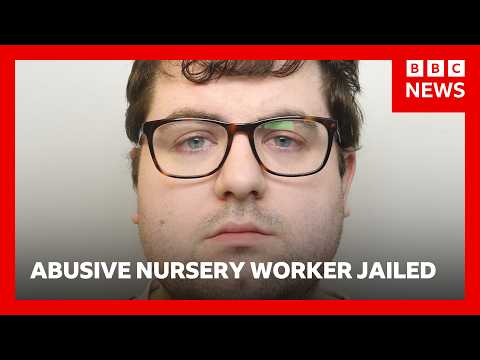
>>24388333
>>24355965 Final Abuse Bun
https://youtu.be/_LGqjaC4yqQ
Nursery worker who raped children sentenced to 30 years | BBC News
BBC News
19.5M subscribers
BBC is a British public broadcast service. Wikipedia
Mar 16, 2026 #BBCNews
An "evil" nursery worker has been handed a 30-year sentence for sexually abusing children in what was described in court as "every parent's nightmare".
Nathan Bennett was convicted in February of multiple counts of sexual abuse, including two counts of rape, against five boys at Partou King Street Nursery in Bristol, UK. The victims were two and three years old at the time.
The 30-year-old, of Corston near Bath, had previously admitted 13 other sexual offence charges relating to four of the boys.
Handing down sentence, His Honour Judge William Hart described Bennett as "evil" and an "incorrigible and dangerous paedophile".
Disclaimer: this post and the subject matter and contents thereof - text, media, or otherwise - do not necessarily reflect the views of the 8kun administration.
fe3bae No.24388356
YouTube embed. Click thumbnail to play.
>>24388333
>>24388343
>>24355965 Final Abuse Bun
https://youtu.be/xthfPU31wkI
Nursery worker jailed – the dangers of daycare with Erica Komisar
The Spectator
498K subscribers
3,438 views Mar 15, 2026 Spectator TV Originals
Today Nathan Bennett was sentenced to 30 years in jail. Natasha Feroze speaks to child psychotherapist and author Erica Komisar about the growing debate over childcare and early childhood development. Are babies being sent to daycare too young — and should we ban men from working in nurseries? They discuss why Komisar believes nurseries can be harmful to infants, why she argues mothers and fathers play different roles in early childhood, and why governments are pushing for more men to work in nurseries.
Disclaimer: this post and the subject matter and contents thereof - text, media, or otherwise - do not necessarily reflect the views of the 8kun administration.
fe3bae No.24388549
>>24355965 Final Abuse Bun
>>24355970 Final Lord Peter Mandelson Bun
>>24355979 Final Royals Bun Part Two
https://www.scottishdailyexpress.co.uk/news/world-news/prince-peer-paedophile-new-photo-36864277
The prince, the peer and the paedophile... new photo emerges from the Epstein Files
Handout document issued by the US Department of Justice is believed to be the first photograph to emerge showing the three men pictured together
Ben Borland
13 Mar 2026
Andrew Mountbatten-Windsor and Lord Peter Mandelson have been pictured in bathrobes alongside paedophile financier Jeffrey Epstein.
The undated photograph has been unearthed by ITV News as part of the US Department of Justice's Epstein-related document dump earlier this year.
It shows the King's disgraced brother and Lord Mandelson sitting outside at a wooden table, along with Epstein who is wearing a dark shirt and light slacks. The three men have mugs emblazoned with the US flag on the table in front of them.
The broadcaster said the picture was taken in Martha's Vineyard – an island in Massachusetts, famous as one of the most upmarket holiday destinations in the US. It is believed to be the first photograph that has been uncovered showing the three men together.
Andrew and Mandelson are both wearing white bathrobes, which appear to match a previous image of Mandelson included in Epstein's "birthday book". It was taken at Martha's Vineyard in 2003 and is accompanied by a message in which the former Labour peer describes the disgraced financier as his "best pal".
The photos are thought to have been taken before the financier was imprisoned in 2008 for soliciting prostitution from a minor. According to the Martha's Vineyard Times, Andrew Mountbatten-Windsor visited the island at least twice in the 1990s, and during one of those visits, he was a guest at a birthday party that Epstein attended.
Separately, the Mail on Sunday has reported the former prince was introduced to Epstein at a 68th birthday party hosted by Lynn Forester de Rothschild for her husband, Sir Evelyn, on his Martha's Vineyard estate in August 1999.
Andrew, the former Duke of York, and Lord Mandelson have been arrested on suspicion of misconduct in public office over their connections with the paedophile and have both since been released under investigation.
Both men feature a number of times in the so-called Epstein files, including images of Andrew bent over an unidentified female and lying across the laps of a number of women.
Images of Lord Mandelson receiving a foot massage and others of him standing in his underwear have also been published by the US Department of Justice. Both Andrew and Lord Mandelson have denied any wrongdoing over their association with Epstein.
Disclaimer: this post and the subject matter and contents thereof - text, media, or otherwise - do not necessarily reflect the views of the 8kun administration.
fe3bae No.24389032
Is the tumbleweed stirring?
>>24355997
>>24355968 Final Immigration Bun
https://youtu.be/ybKZCw-Cvv4
The English Are Waking Up
Ex British Army Paz49
201K subscribers
174,071 views Mar 15, 2026
In this video I don’t condone the violence shown in the clip nor do I encourage it.
I merely point out what society does when the police lose control or prioritise political crimes instead.
Educational purposes and my own critique.
Disclaimer: this post and the subject matter and contents thereof - text, media, or otherwise - do not necessarily reflect the views of the 8kun administration.
fe3bae No.24389367
YouTube embed. Click thumbnail to play.
>>24389032
>>24389032
>https://youtu.be/ybKZCw-Cvv4
Disclaimer: this post and the subject matter and contents thereof - text, media, or otherwise - do not necessarily reflect the views of the 8kun administration.
fe3bae No.24390042
>>24355982 Final Operation Talla Bun
https://ethicalapproach.co.uk/judicial_and_wef_connections.pdf
Important Public Briefing Report: The Judiciary and the World Economic Forum
Judicial Advisory Group on Artificial Intelligence (2019): Potential Compromise and Conflicts of Interest
Prepared by Ethical Approach UK - October 2025
1. Introduction
In March 2019, the judiciary of England and Wales announced the formation of an Artificial Intelligence Advisory Group. Chaired by Professor Richard Susskind, the group was tasked with advising senior judges on the impact of AI technologies on the courts and the justice system. Membership included four senior judicial figures, representatives from the Bar, academia and industry. Of particular note were Sir Geoffrey Vos (now Master of the Rolls), Lord Neuberger (former Supreme Court President) and Kay Firth-Butterfield, then Head of AI and Machine Learning at the World Economic Forum (WEF).
This note examines the constitutional and legal implications of that group’s composition and function, with particular focus on
(1) potential judicial compromise,
(2) conflicts of interest and
(3) regulatory capture arising from overlap between the judiciary, regulators and external global bodies such as the WEF.
Pages 1-4 of 11
Disclaimer: this post and the subject matter and contents thereof - text, media, or otherwise - do not necessarily reflect the views of the 8kun administration.
fe3bae No.24390060
>>24390042
>>24355982 Final Operation Talla Bun
https://ethicalapproach.co.uk/judicial_and_wef_connections.pdf
Important Public Briefing Report: The Judiciary and the World Economic Forum
Judicial Advisory Group on Artificial Intelligence (2019): Potential Compromise and Conflicts of Interest
Prepared by Ethical Approach UK - October 2025
Pages 5-7 of 11
Disclaimer: this post and the subject matter and contents thereof - text, media, or otherwise - do not necessarily reflect the views of the 8kun administration.
fe3bae No.24390065
>>24390042
>>24390060
>>24355982 Final Operation Talla Bun
https://ethicalapproach.co.uk/judicial_and_wef_connections.pdf
Important Public Briefing Report: The Judiciary and the World Economic Forum
Judicial Advisory Group on Artificial Intelligence (2019): Potential Compromise and Conflicts of Interest
Prepared by Ethical Approach UK - October 2025
Pages 8-11 of 11
Disclaimer: this post and the subject matter and contents thereof - text, media, or otherwise - do not necessarily reflect the views of the 8kun administration.
fe3bae No.24390174
>>24355997
>>>24355982 Final Operation Talla Bun
>>24390042
>>24390060
>>24390065
https://thelightpaper.co.uk/assets/pdf/Light-66-Feb-26-Web-Final.pdf
Police refuse to probe midazolam cull
Operation Talla blocked NHS ‘murders’ from being investigated
ISSUE 66
(Monthly)
FREE FOR THINKERS
www.thelightpaper.co.uk
Disclaimer: this post and the subject matter and contents thereof - text, media, or otherwise - do not necessarily reflect the views of the 8kun administration.
fe3bae No.24394733
>>24355997
>>>24355972 Final Nicola Sturgeon & SNP Bun
https://www.scottishdailyexpress.co.uk/news/politics/snp-pass-law-allowing-mentally-36876639
SNP to pass law allowing mentally ill criminals to vote at Holyrood Election
The Scottish Government is hoping to pass temporary legislation which lets criminals locked up in mental health wards vote in the Scottish Parliament and local council elections.
David Walker
16 Mar 2026
The SNP and other left-wing parties have been branded "out-of-touch" after approving "dangerous" plans to let mentally ill criminals vote at the upcoming Holyrood Election. It follows previous nationalist legislation which handed offenders serving sentences of less than 12 months the opportunity to vote in 2021.
The practice is still banned across the rest of the UK but has been introduced north of the border, alongside extending voting rights to those aged 16 and 17. It is only valid at the next Scottish Parliament and council elections.
Last week, MSPs on the Standards, Procedures and Public Appointments Committee voted in favour of the emergency legislation in relation to the 2026 and 2027 council elections; the next Parliament will need to decide whether to extend it. Only the Scottish Tories voted against it, with a final vote to be held before Holyrood breaks up at the end of March.
It will allow those detained on mental health grounds but sentenced to 12 months or less to vote. Someone charged or convicted of criminal conduct but who has received a mental health detention rather than a prison sentence will be able to vote only if the maximum sentence or sentences possible would have amounted to 12 months or less.
Those on a temporary compulsion order, i.e on remand but receiving mental health treatment, will also get voting rights. According to parliamentary business minister Graeme Dey, it will impact about 20 people, and it will be a temporary measure that "allows the next Parliament to get into the detail so that we have a permanent solution that captures all the different strands."
The Scottish Tories are urging other parties to back their attempts to block the new law. Scottish Conservative MSP Sue Webber said: “This sums up how out of touch SNP politicians and Holyrood’s cosy left-wing consensus are with the real challenges facing Scotland.
“We warned when the nationalists first introduced prisoner voting in Scottish elections that it would pave the way for a further extension. Now that is exactly what this dangerous plan would do. The SNP are not even being straight with Scots. They mistakenly believe they have to do this to comply with an old ruling from the ECHR, when they know full well that a ban on prisoner voting remains elsewhere in the UK.
“The SNP are not only content with giving prisoners the right to vote, but astonishingly do not see any problems with allowing those who are not even mentally capable of taking responsibility for their actions the right to participate in the democratic process. Scots will be appalled by the SNP’s loosening of the rules when it comes to the privilege of voting at future elections.
"We will be fighting this plan every step of the way and would urge every MSP in Holyrood to show some common sense and join us in rejecting this proposal.”
Defending the legislation, Mr Dey said: "I understand Ms Webber’s position on this issue, but what we are dealing with is an anomaly in a law passed by this Parliament. The law is there; we have an issue that we need to resolve temporarily. The next Parliament can return to the matter in full and come to a permanent solution. Obviously, all members of the Parliament will be able to feed their views in at that point."
Disclaimer: this post and the subject matter and contents thereof - text, media, or otherwise - do not necessarily reflect the views of the 8kun administration.
fe3bae No.24399109
YouTube embed. Click thumbnail to play.
https://youtu.be/cM1nd3IBJKQ
Met Commissioner wants unredacted files on Andrew and Mandelson
ITV News
2.16M subscribers
Mar 18, 2026
Police investigating what if any crimes have been committed by the former Prince Andrew and the former Ambassador Lord Mandelson are making good progress. So the head of London's Metropolitan police told us, during a visit to the United States.
Sir Mark Rowley wants the authorities there to release the unredacted files on both men - who were friends of Jeffrey Epstein.
Sir Mark said he's confident they'll be handed over soon.
Andrew's name appeared at least several hundred times in the document released by the Department of Justice .
He has consistently denied any wrongdoing.
Mandelson was arrested on suspicion of misconduct in public office on February 23 and then released on bail.
He has said, via lawyers, that he looks forward to clearing his name.
In response to the latest Epstein documents released, Mandelson gave the same statement he did to BBC Newsnight on January 12.
He said: “I was wrong to believe Epstein following his conviction and to continue my association with him afterwards. I apologise unequivocally for doing so to the women and girls who suffered."
Disclaimer: this post and the subject matter and contents thereof - text, media, or otherwise - do not necessarily reflect the views of the 8kun administration.
ea6ccc No.24402149
Canada #90
LIFE WINS: Scotland Lawmakers Reject ‘Assisted Dying’ Law
by Paul Serran Mar. 18, 2026
Euthanasia and assisted suicide were defeated, a blow to the culture of death in the British Isles.
Under failing Prime Minister Keir Starmer, Britain has fully embraced Globalist policies that promote death, as you can read in After Late Term Abortions, British MPs Now Approve Assisted Suicide Bill – PM Starmer Votes for It – Campaigners Vow To Resist Legislation in the House of Lords.
But while the England and Wales’ ‘Assisted Dying’ legislation has been stuck in the House of Lords, a much harder pushback is taking place across the Irish Sea, in Scotland.
Yesterday (17), Scottish lawmakers voted against legalizing assisted dying, in a crushing defeat for the campaigners for the ‘culture of death’
“After much thought and consideration, I have decided to vote ‘No’ on the Assisted Dying for Terminally Ill Adults (Scotland) Bill.
Firstly, there is a real fear that vulnerable people, including women who have suffered domestic abuse, could be coerced into taking their own lives.
Secondly, many disabled people fear that their lives will be devalued and could be pushed to take their lives.
Thirdly, the scope of this bill could be widened to include more illnesses and younger ages, as has been the case in other countries.
Instead of creating a pathway for people to end their lives, we should be strengthening the palliative care services that help them live their final days with dignity, comfort and support.
Dr. Pam Gosal
Reuters reported:
“Fifty-seven lawmakers in Scotland, whose parliament has devolved powers in certain areas, backed the bill. But 69 voted against and there was one abstention for a law to allow terminally ill, mentally competent adults, who have lived in Scotland for at least 12 months, to end their lives, the Scottish parliament said on X.”
Globalists at Reuters frame the situation as the United Kingdom ‘being behind Australia, Canada and some U.S. states’.
The Telegraph reported:
“MSPs voted by 69 to 57 to throw out the Assisted Dying for Terminally Ill Adults (Scotland) Bill, with one abstention, after several who previously supported it switched sides.
They were given a free vote on the Bill, meaning they could act in line with their consciences and were not whipped by their parties.”
Opponents to this bill are concerned that ‘vulnerable people could be coerced into ending their own lives,’ something that we already see happening in Canada, as you can read in CULTURE OF DEATH: 5% of Canadian Deaths Are Now Caused by Euthanasia and Assisted Suicide, Killing More Than 13.500 People.
“Dr Gordon Macdonald, chief executive of the Care Not Killing campaign against the legislation, said: ‘We are relieved that MSPs have decided not to back this legislation. We believe the Bill posed serious risks to the most vulnerable in society – including disabled people and those suffering from domestic abuse. It threatened the relationship between doctor and patient that is central to our NHS’.”
https://www.thegatewaypundit.com/2026/03/life-wins-scotland-lawmakers-reject-assisted-dying-law/
Disclaimer: this post and the subject matter and contents thereof - text, media, or otherwise - do not necessarily reflect the views of the 8kun administration.
816b52 No.24402185
Canada #90
The British Imperialistic Influence of the Free World Is Coming to an End
by Joe Hoft March 18, 2026
President Trump is not only destroying Iran, but he is also destroying the free-loaders who have been influencing US foreign policy for nearly a century.
We’ve learned a lot about US foreign policy under President Trump. We knew that the Iranian terrorist regime was evil and murderous but the actions of US allies have now come to light.
Who would have ever guessed that the actions of US allies would be highlighted once bombs started dropping on Iran?
Yesterday, US allies refused to act and help the US protect oil tankers moving throught the Strait of Hormuz. Today, President Trump shared whether he should not protect the Strait either. After all, the US is energy independent and doesn’t need oil from the Middle East.
What these past few weeks have highlighted is that the British are not as close to the US as they claim to be. Promethean Action is all over this:
https://www.prometheanaction.com/
Here is an analysis from overseas of the current situation between the US and Britain.
Trump Has Just Told NATO Allies They Are On Their Own. Starmer Did This.
Donald Trump has just posted the most consequential statement about the Western alliance since its foundation. NATO allies, he wrote, privately agreed that Iran could not be allowed a nuclear weapon but refused to help when asked. America no longer needs or desires their assistance. We never did. Let that land.
This is not bluster. It is a doctrine. Trump is telling every European government that the Article 5 guarantee they have sheltered under for seventy years was always conditional, and that they have now demonstrated they will not honour their side of the arrangement when it matters. The mutual defence alliance that kept the peace in Europe since 1949 has just been publicly declared a one way street by the President of the United States. Every adversary watching, Russia, China, Iran, will draw the same conclusion simultaneously.
Britain’s fingerprints are all over this moment. Starmer blocked Diego Garcia. He needed a drone on his own runway to reverse the decision. He consulted his team on minesweepers. He watched France, Greece and Spain defend a British base while HMS Dragon sat in Portsmouth. He offered an aircraft carrier after the war was won and was told it was no longer wanted. He issued a joint humanitarian statement about Lebanon that did not mention Hezbollah once. At every stage of this crisis he chose the path of least domestic political resistance over the obligations of the oldest and most important bilateral relationship in British foreign policy.
Trump’s post also hands every adversary a strategic map. A Western alliance whose European members privately agree on the threat but publicly refuse to act against it is not an alliance. It is a talking shop with a defence clause nobody intends to honour. Putin will have read this post with considerable satisfaction. So will Beijing. The fracture that Starmer and his European counterparts have opened is not merely reputational. It is structural. And it will not be repaired by a press conference or a carefully worded statement about the special relationship being in operation.
Churchill understood that alliances are maintained by behaviour not words. You show up or you do not. Britain did not show up. Trump has noticed. And he has said so, in capital letters, for the entire world to read. The consequences of Starmer’s calculations are no longer theoretical. They are here, on Truth Social, signed by the President of the United States of America.
“At every stage of this crisis [Starmer] chose the path of least domestic political resistance over the obligations of the oldest and most important bilateral relationship in British foreign policy.”
President Trump is reshaping US and global foreign policy. He rightly asserts that the US doesn’t need European assistance that isn’t there when needed.
https://joehoft.com/british-imperialistic-rule-free-world-has-come-end/
Disclaimer: this post and the subject matter and contents thereof - text, media, or otherwise - do not necessarily reflect the views of the 8kun administration.
ea6ccc No.24402468
From General Research #29753
Disclaimer: this post and the subject matter and contents thereof - text, media, or otherwise - do not necessarily reflect the views of the 8kun administration.
fe3bae No.24406422
>>24399109
"Officer"? Not Constable? Policy officer?
Disclaimer: this post and the subject matter and contents thereof - text, media, or otherwise - do not necessarily reflect the views of the 8kun administration.
fe3bae No.24406437
YouTube embed. Click thumbnail to play.
>>24355997
>>>24355972 Final Nicola Sturgeon & SNP Bun
https://youtu.be/yUiy9DGTC1A
Nicola Sturgeon delivers emotional final Scottish Parliament speech
The National
14.7K subscribers
5,866 views Mar 20, 2026
Nicola Sturgeon said “the time is right to move on” as she gave her final speech in Scottish Parliament
However, the former SNP leader and former first minister, who is not standing in May’s Scottish election, admitted that she won’t pretend that leaving the Parliament was a “wrench”and now, thankfully minus 1 WRETCH
Disclaimer: this post and the subject matter and contents thereof - text, media, or otherwise - do not necessarily reflect the views of the 8kun administration.
fe3bae No.24406470
>>24355997
>>>24355972 Final Nicola Sturgeon & SNP Bun
https://www.scottishdailyexpress.co.uk/news/politics/snps-culture-excess-exposed-ministers-36900397
SNP's 'culture of excess' exposed as Ministers rack up £3.4 million bill 'wining and dining' in less than a year
EXCLUSIVE: The spend on hospitality has been described as a 'scandal' at a time ordinary Scots are struggling with rising bills
Douglas Dickie
20 Mar 2026
SNP Ministers racked up a £3.4 million bill on hospitality in less than a year, new figures have revealed. The spend has been branded a "scandal" at a time ordinary Scots are struggling with rising food, petrol and energy bills.
It also comes as public services across the country face more brutal cuts. The spend was uncovered by Scottish Conservative MSP Stephen Kerr.
He told the Scottish Express: "While families across Scotland are tightening their belts, the SNP Government has blown over £3.4 million of taxpayers’ money on wining and dining in just ten months. It is a scandal that they feel they can run up an eye-watering hospitality tab at the taxpayers’ expense.
"At a time when public services are being cut to the bone, when NHS waiting lists are at record levels, and when councils are crying out for funding, the SNP’s priorities are laid bare for all to see.
"The Scottish people deserve a government that treats their money with respect, not one that treats Bute House like a banqueting hall. This culture of excess must end."
Data released via a Freedom of Information request showed that the nationalist executive spent a total of £3,463,271.79 on hospitality between January and October 2025. Of this, £3,462,231.79 was paid to the Scottish Government’s catering contractor, with a further £1,040 paid to private caterer L’Chaims.
Of the total, £1,675,664.73 was spent on staffing costs alone for hospitality staff, including chefs, front of house staff, servers, and event management personnel employed across the Scottish Government estate.
The Scottish Government has been approached for comment.
Disclaimer: this post and the subject matter and contents thereof - text, media, or otherwise - do not necessarily reflect the views of the 8kun administration.
e2173e No.24410098
Canada #90
UK COVID Inquiry Finds Lockdowns May Have Cost 1000s Of Lives
Authored by Steve Watson via Modernity.news Saturday, Mar 21, 2026
The authoritarian COVID lockdowns and stay-at-home orders sold as life-saving measures have been unmasked once again as a deadly failure of big government overreach.
A new UK Covid-19 Inquiry report has concluded that the relentless “Stay Home, Protect the NHS, Save Lives” messaging likely cost thousands of lives by convincing people they could not get access to health services.
The inquiry, led by Baroness Hallett, slammed the slogan created by Cabinet Office officials without input from health leaders. It “led some people to feel they must avoid burdening the NHS” and “may have inadvertently sent the message that healthcare was closed,” contributing to a sharp decline in A&E attendances for life-threatening emergencies such as heart attacks.
The report states plainly: “It is clear that, during the pandemic, worsening delays in diagnosis and treatment led to increased ill-health and suffering and, in some cases, cost lives.” Some patients waited so long their conditions became “untreatable,” with permanent loss of mobility.
Baroness Hallett stressed: “It is important that government communication campaigns do not deter those in need from accessing healthcare.” She urged future governments to consult healthcare professionals on messaging “to avoid unintended consequences.”
Office for National Statistics data backs this up, recording more than 17,000 excess deaths from non-Covid conditions at the height of the pandemic. Cancer screenings were paused, diagnoses plummeted, and non-urgent care cancellations left patients suffering. Hospital visiting bans were branded too tough, with dying people left alone and families devastated.
The NHS itself “coped, but only just,” teetering on the brink of collapse under “intolerable strain,” per Hallett, who noted politicians like then-health secretary Matt Hancock were reluctant to admit the system was overwhelmed.
The findings come on the back of mountains of research indicating isolation policies inflicted generational damage on children’s development.
A recent University of East Anglia-led study, published in Child Development, concuded that lockdowns may have permanently damaged kids’ brain development through lost socialisation and routine.
The study tracked 139 children and found the greatest harm hit reception-year pupils aged four to five when the first lockdowns struck in March 2020 – a critical window for learning routines, friendships, and self-regulation.
Lead researcher Prof John Spencer said: “Children who were in reception when the country shut down showed much slower growth in key self-regulation and cognitive flexibility skills over the next few years than children who were still in preschool.”
He added: “Reception is a critical year for peer socialisation. It’s when children learn classroom norms and build early friendships that shape their confidence.”
Without those experiences, “children’s self-regulatory skills didn’t develop as quickly year-on-year after the lockdowns ended.” The study concluded: “Without these experiences, reception children had a challenging time developing self-regulation and cognitive flexibility in the years that followed the pandemic.”
That research adds to a cascade of older studies exposing the full horror.
More:
https://www.zerohedge.com/covid-19/uk-covid-inquiry-finds-lockdowns-may-have-cost-1000s-lives
Disclaimer: this post and the subject matter and contents thereof - text, media, or otherwise - do not necessarily reflect the views of the 8kun administration.
e2173e No.24410338
Canada #90
You Won't Believe What The UK Green Party Wants To Teach Children…
Authored by Steve Watson via Modernity.news Saturday, Mar 21, 2026
Radical leftists want a new Department of Migration to push open borders propaganda in schools and fast-track voting rights, free housing and citizenship for illegals.
A leaked Green Party dossier has blown the lid off plans to brainwash British schoolchildren into believing they have a ‘moral duty’ to embrace endless immigration.
The document, hidden behind a password-locked policy archive normally only accessible to party members, calls for a new Department of Migration to work hand in glove with education chiefs. Its stated goal is to “disseminate knowledge” about immigrants directly into classrooms.
🚨 A LEAKED Green Party dossier reveals radical plans to teach children they have a 'MORAL OBLIGATION' to accept immigrants pic.twitter.com/Vzjt0qG89R
— WeGotitBack 🏴🇬🇧🇺🇸 (@NotFarLeftAtAll) March 19, 2026
Children would be taught they have a “moral obligation” to accept immigrants under these radical plans.
The exact wording from the leaked dossier states the new department would educate pupils on “the situations from which those seeking asylum and resettling refugees are fleeing, and the need for and moral obligation of asylum and humanitarian protection.”
It goes further, declaring the party “seeks not only to provide asylum to those forced from their homes but to work towards a world in which no one has to flee their home.”
Additional proposals include free legal advice and support to illegal immigrants to “regularise their status without penalty for being undocumented,” granting settled status to those who have been in the UK for at least five years — complete with welfare benefits, voting rights and a pathway to citizenship — and opening borders wider for those from countries with “seriously disturbing public order” or claiming persecution under equality laws.
In short, the Greens want to hand illegals free housing, votes and passports while telling British kids it’s their moral duty to cheer it on.
They also want to be SOFTER on terrorist suspects.
This all comes at a time when the UK is already buckling under the weight of mass migration, with migrants set to swallow 40% of new homes by 2030.
This fits a disturbing pattern. The same political class has already turned schools into surveillance hubs, urging them to snitch on “anti-Muslim hostility.”
Counter-terror police run ads warning teens that sharing funny content could be terrorism, and a government video game literally teaches kids they’re terrorists for questioning mass migration.
More:
https://www.zerohedge.com/political/you-wont-believe-what-uk-green-party-wants-teach-children
Disclaimer: this post and the subject matter and contents thereof - text, media, or otherwise - do not necessarily reflect the views of the 8kun administration.
fe3bae No.24410627
>>24410098
Another total whitewash of an inquiry. What skeletons does Hallet and her inquiry "team" have hidden away?
Disclaimer: this post and the subject matter and contents thereof - text, media, or otherwise - do not necessarily reflect the views of the 8kun administration.
fe3bae No.24410688
>>24410338
>complete with welfare benefits, voting rights and a pathway to citizenship
They already have employed many of them as "parking attendants/wardens". We now have a sittuation where foreigners are issuing us with "fines" on behalf of the criminal parasites in positons of influence.
Disclaimer: this post and the subject matter and contents thereof - text, media, or otherwise - do not necessarily reflect the views of the 8kun administration.
fe3bae No.24410810
YouTube embed. Click thumbnail to play.
https://youtu.be/q0Nw6rcTEfw
Parliament ERUPTS as Starmer GOES OFF THE RAILS — Mandelson, Tommy Robinson and Islam All Dragged In
The UK Agenda
48.7K subscribers
65,521 views Premiered Mar 20, 2026
/ @theukagenda1
Why do they keep muffling the word "paedophile"? The censorship in this country is incredible. You can get away with buggering kids if you're part of the establishment, but heaven forbid you should call it what it is. Censoring the dialogue from Parliament in the media so blatantly, or is it done because of youtube algorithms by the people posting the video??
Disclaimer: this post and the subject matter and contents thereof - text, media, or otherwise - do not necessarily reflect the views of the 8kun administration.
828b2b No.24411060
>>24410810
If I remember right it would be YouTube's rules causing that
Disclaimer: this post and the subject matter and contents thereof - text, media, or otherwise - do not necessarily reflect the views of the 8kun administration.
828b2b No.24411415
UK #52
No10 told to hand over private messages on WhatsApp groups as investigation into Mandelson's appointment as US ambassador deepens
By GLEN OWEN Published: 18:09 EDT, 21 March 2026 | Updated: 22:29 EDT, 21 March 2026
Downing Street officials have been ordered to hand over private messages on WhatsApp groups involving Peter Mandelson, as the investigation widens into his disastrous appointment as British ambassador to Washington.
Sir Keir Starmer has faced mounting pressure over allegations of a cover-up during the first release of the Mandelson files earlier this month. Personal email correspondence between Mandelson and former No 10 chief of staff Morgan McSweeney, who played a key role in the appointment, were not made public.
Cat Little, the Cabinet Office Permanent Secretary, has written to officials involved in the decision to appoint Mandelson asking them to hand over any 'group chat' exchanges on 'private devices'.
However on Saturday night critics said the delay meant the most pertinent messages will have deleted automatically by now. It is against the law to 'conceal information with the intention of preventing its disclosure' – but this does not apply to chats which automatically clear after a set period of time.
Amid the ongoing police investigation, the Prime Minister has faced questions about why he did not interview Mandelson to assess the extent of his friendship with paedophile Jeffrey Epstein.
Instead he delegated the task to Mr McSweeney and Matthew Doyle – another Mandelson ally and director of communications at the time.
So far only 31 documents and messages relating to Mandelson's appointment and his dismissal nine months later have been made public – all from official email addresses and none involving Mr McSweeney.
And it has been reported Mr McSweeney used his personal email address during discussions with Mandelson before his appointment. Sir Keir agreed to release documents relating to the appointment only under intense pressure from MPs, with the process being overseen by the cross-party intelligence and security committee.
Tory front-bencher Alex Burghart has now written to sleaze watchdog Sir Laurie Magnus demanding an investigation into 'missing' correspondence.
Mandelson was arrested last month on suspicion of misconduct in public office as part of a Met Police probe into whether he passed government information to Epstein. He has denied any wrongdoing.
In 2024 the Prime Minister received an official report showing Mandelson's relationship with Epstein carried on after his conviction. Sir Keir then tasked Mr McSweeney with asking Mandelson just three questions. Lord Doyle then looked at the responses and declared he was 'satisfied'.
There is no written record of Starmer's decision to appoint Mandelson, which was made in an un-minuted meeting.
Alex Burghart, Shadow Chancellor of the Duchy of Lancaster, said: 'Ministers sat on their hands while messages and emails were allowed to auto-delete.
'The Government continues frustrating Parliament's will by letting important evidence vanish. This looks like a deliberate cover-up of No 10's involvement in the Mandelson-Epstein scandal.'
Downing Street has rejected claims of a cover-up, but said that there are 'lessons to be learnt on the wider appointment process'.
https://www.dailymail.co.uk/news/article-15667933/No10-told-hand-private-messages-WhatsApp-groups-investigation-Mandelsons-appointment-US-ambassador-deepens.html
Disclaimer: this post and the subject matter and contents thereof - text, media, or otherwise - do not necessarily reflect the views of the 8kun administration.
828b2b No.24411417
Canada #90
Qatar Dethroned As 'LNG King' As U.S. Seizes Throne, Reshaping Future Of Gas
Submitted by Criterion Research President, James Bevan Friday, Mar 20, 2026
The geopolitical calculus underpinning global LNG supply through the early 2030s has shifted materially. Iranian drone strikes on Qatari LNG trains, delays to key expansion projects, and the indefinite closure of the Strait of Hormuz have created a compounding threat to Qatar's LNG position that goes well beyond a construction delay. What had been framed as a two-horse race for global LNG market share now looks considerably more one-sided. The beneficiary is clear: U.S. Gulf Coast LNG.
At Criterion Research, our outlook is for US LNG exports to nearly double by 2030, with further upside in the coming decade
While Qatar’s loss of 12.8 MTPA for 3 to 5 years due to Iranian strikes is a serious blow to Qatar’s 77 MTPA export capacity, it is not a global catastrophe on its own. What is worrying is that Iran has demonstrated the potential for further strikes, which means that even restored capacity cannot be treated as a stable floor. Even if onshore facilities are repaired and the Strait is nominally reopened, LNG tanker operators and their insurers are unlikely to resume normal transits until they have, over time, earned confidence that vessels are not exposed to strikes or mines. That confidence cannot be declared by a government. It has to be proven through sustained safety in a conflict environment with no clear resolution, a process that could take months or years, regardless of the physical state of Qatar's terminals. Molecules that cannot move to market are effectively stranded, and the Strait of Hormuz shipping constraint is the piece that is hardest to resolve through engineering or diplomacy alone.
Beyond current Qatari volumes being impacted, Qatar's three-phase North Field expansion program, encompassing NFE, NFS, and North Field West, was designed to lift total liquefaction capacity from 77 MTPA to 142 MTPA by 2030. Global LNG demand was counting on these volumes. All three phases now face indefinite delays, with no official revised timeline and no near-term path to resuming offshore construction. NFE’s first train had already slipped to a 3Q26 start before the suspension, and rumors say it was pushed to 2027 before strikes began.
Taken together, disruption to the existing base and delay of the full expansion program represent a potential swing of well over 100 MTPA relative to what the market had been counting on through the early 2030s. No other supply source can replace that on a compressed timeline.
The U.S. project queue was already moving aggressively before Qatar's situation deteriorated. According to our data at Criterion Research, Golden Pass LNG is in active commissioning, CP2 Phase 1, Port Arthur, and Rio Grande LNG are all on track for first production in 2027, following, and CP2 Phase 2 reached FID. Post-FID US projects alone are expected to reach 39 Bcf/d by 2033. While the US cannot make up for the lost Qatari volumes before 2030, there is a strong pipeline of pre-FID projects for early 2030 and beyond that may now be pushed over the edge by new customer demand replacing Qatari volumes.
More:
https://www.zerohedge.com/energy/qatar-dethroned-lng-king-us-seizes-throne-reshaping-future-gas
Disclaimer: this post and the subject matter and contents thereof - text, media, or otherwise - do not necessarily reflect the views of the 8kun administration.
fe3bae No.24413201
>>24411060
>If I remember right it would be YouTube's rules causing that
Lots of obstacles on social media where people's feelings are paramount. ¯_(ツ)_/¯
Disclaimer: this post and the subject matter and contents thereof - text, media, or otherwise - do not necessarily reflect the views of the 8kun administration.
fe3bae No.24413210
>>24411415
They'll just delete them like with convid and everything else.
Disclaimer: this post and the subject matter and contents thereof - text, media, or otherwise - do not necessarily reflect the views of the 8kun administration.
fe3bae No.24414193
>>>24355997
>
>>>>24355972 Final Nicola Sturgeon & SNP Bun
https://www.scottishdailyexpress.co.uk/news/politics/another-sex-pest-rocks-up-36905093
Another sex pest rocks up at SNP conference, leaving woman 'physically sick'
Mark McDonald was booted out of the party in 2017 but appears to be back in the fold after being spotted at the pre-election event
Douglas Dickie
22 Mar 2026
Another 'sex pest' attended last week's SNP conference, it has emerged, leaving female members furious. We told how former MP Patrick Grady was spotted at the event, despite complaints that he made unwanted sexual advances against a male staffer being upheld by a Westminster probe.
It was now been reported that former MSP Mark McDonald was also at the event. He was suspended at children's minister in 2017 after a Holyrood investigation upheld allegations of inappropriate conduct against women, with one claim suggesting he had engaged in "harassment and sexual innuendo".
He was eventually booted out of the party and served as an independent until the 2021 election. However, he appeared to be back in the fold when he attended the pre-election conference as policy and media manager for Scottish Autism, reports the Scotsman
The paper reported that one woman was "physically sick" after seeing him there, while another said: "We are not saying Mark McDonald should not be allowed to move on with his life. We are saying he should not be at SNP events where he is likely to come into contact with women who made allegations against him.
"The party has a choice to protect its women members, who they know have suffered trauma, but it made the wrong choice here." Another woman who made a complaint against McDonald said: "I was furious to see him there.
"I almost couldn’t speak. Why did no one think this through? We are meant to be the party of championing women’s rights - until it’s time to put that into practice."
McDonald was elected as a regional MSP in the North East in 2011. He went on to win the Aberdeen Donside seat in 2016 and was made Minister for Childcare and Early Years by Nicola Sturgeon.
He lasted less than a year in the role before stepping down. Speaking at the time, he said: "It has been brought to my attention that some of my previous actions have been considered to be inappropriate - where I have believed myself to have been merely humorous or attempting to be friendly, my behaviour might have made others uncomfortable or led them to question my intentions.
"My behaviour is entirely my responsibility and I apologise unreservedly to anyone I have upset or who might have found my behaviour inappropriate." McDonald refused to comment on the story, but an SNP source said the feeling in the party was "split" between "accepting people have to be allowed rehabilitation and a sense that he can be rehabilitated, but maybe still have the sensitivity not to appear at the SNP's own events".
An SNP spokeswoman said: "We take this matter seriously and are taking steps to address it. Women should feel welcome to participate in party politics in Scotland."
Disclaimer: this post and the subject matter and contents thereof - text, media, or otherwise - do not necessarily reflect the views of the 8kun administration.
fe3bae No.24414374
>>24355997
>>>24355965 Final Abuse Bun
https://www.scottishdailyexpress.co.uk/news/scottish-news/kids-young-four-being-taught-36906625
Kids as young as FOUR being taught to massage each other in schools as practice branded 'disturbing'
EXCLUSIVE: Stephen Kerr MSP called for the practice to be stopped after it emerged thousands of pupils had taken part in the scheme
Douglas Dickie
22 Mar 2026
Children as young as four are being encouraged to massage each other in Scottish schools, in a practice branded "disturbing" by an MSP. Eight local authorities across the country are signed up to the 'Massage in Schools' programme.
It involves a daily peer session, where children between the ages of 4 and 12 massage each other. The aim is for children to "experience nurturing touch at school", with a focus on areas including the "back, neck, shoulders, head, arms and hands".
But Scottish Conservative MSP Stephen Kerr said it was "distressing to discover that this programme is allowed in Scottish schools". He added: "It is simply bizarre to encourage pubescent boys and girls to intimately massage each others’ shoulders and necks. It is not appropriate and has no place in the classroom.
"Scotland’s educational establishment have lost their collective minds if they think this is acceptable or that parents would be happy to see their children involved in this inappropriate experiment." According to Freedom of Information requests to all of Scotland's 32 councils, over 4,000 pupils between primary one and seven have taken part in the programme since 2020.
In Stirling, 1,600 pupils have taken part, while over 500 had taken part in each of Scottish Borders, East Ayrshire and West Dunbartonshire, the latter of which had also offered the programme to S2-S5 students, between the ages of 13 and 17.
Inverclyde, Fife, Argyll and Bute, and Renfrewshire also took part, with the programme costing taxpayers almost £12,000. Over 70 members of school staff had also undertaken training provided by the Massage in Schools Association to run massage sessions, with other sessions being provided by external visitors.
Mr Kerr called for the the local authorities involved to "end this programme now, and reassure parents that their children won’t be subject to this disturbing experiment again". But a spokesman for Stirling Council said: "The Massage in Schools Programme (MISP) is well established and has been taking place in schools in the UK for 25 years.
"It gives children between four and 12 the chance to experience positive, nurturing touch at school in a safe and creative way and supports key aims of the curriculum. It’s one of many supportive approaches to help children’s health and wellbeing in primary schools.
"The benefits of this programme include improved concentration, improved focus and co-operation, increased self-esteem/confidence, a reduction in aggressive behaviour and bullying and a calmer classroom environment. Children always ask permission from each other before they begin the massage and it’s done over the clothes on the back, head and arms."
The only other council to respond to a request for comment was West Dunbartonshire, where a spokeswoman said: "None of our schools have spent directly on the programme in the last five years. This is a recognised programme used across Scottish local authorities and offers a number of benefits for children including improved concentration, increased confidence and empathy and respect in communicating.
"Parents who do not consent to their child participating in the supervised sessions can opt out, and in addition, children ask each other permission before each massage begins."
Disclaimer: this post and the subject matter and contents thereof - text, media, or otherwise - do not necessarily reflect the views of the 8kun administration.
fe3bae No.24414583
>>>24355997
>
>>>>24355972 Final Nicola Sturgeon & SNP Bun
https://www.scottishdailyexpress.co.uk/news/politics/education-secretary-jenny-gilruth-cashing-36870937
Education Secretary Jenny Gilruth cashing in on school textbook compared to 'SNP propaganda manual'
The former teacher has been accused of 'handing her homework in late' after she belatedly declared the £500-a-year she receives from her book on the ministerial register of interests
Ben Borland
15 Mar 2026
With just days to go until the end of the five-year session at Holyrood, Education Secretary Jenny Gilruth has belatedly updated her register of interests to declare a source of outside income.
The former teacher is the co-author of a textbook for school pupils taking the National 4/5 Modern Studies course, from which she expects to receive about £500 a year.
But although she declared the income on the MSPs' register of interests, she inexplicably failed to do so on the separate ministerial register of interests. A revision to the document was published by the Scottish Government on Friday, March 13. It states: "As noted in her MSP register of interests, the Cabinet Secretary published an educational text book before she was a Minister."
Yet the Scottish Ministerial Code makes it clear that interests must be declared on BOTH registers. It states: "Ministers are reminded that the provisions of the Ministerial Code are additional to the requirements of the Interests of Members of the Scottish Parliament Act 2006, which apply both to Ministers who are MSPs and to the Law Officers."
The full title of the textbook is 'Leckie Course Notes – National 4/5 Modern Studies: Comprehensive Textbook to Learn CfE Topics'. It was written along with Elizabeth Elliott and Jenny Reynolds and was first published by HarperCollins in 2014.
However, the subjective content of the book has now raised eyebrows. One passage states: "The Scottish Parliament has passed a number of laws that Scottish people are in support of, such as free university tuition and free prescriptions. On the other hand, although the Scottish Parliament can hold debates on reserved matters it cannot change the law or make decisions on these matters.
"For example, MSPs debated Brexit in 2018. However, they had no say on the vote which was held in the House of Commons in London. Many people think it is unfair that the Scottish Parliament cannot pass legislation on reserved matters as they feel that these important aspects of Scottish people's lives shouldn't be controlled by Westminster."
Scottish Conservative shadow education secretary Miles Briggs said: "It's outrageous that Jenny Gilruth is pocketing royalties from a school textbook that reads more like an SNP propaganda manual than a balanced guide to politics. We only found this out after she belatedly updated her register of interests – a classic example of handing in your homework late.
"Parents will be furious that their kids are being fed one-sided political spin and downright lies about parties and policies while the education secretary – who is lamentably failing teachers and pupils – cashes in. Classrooms should be places for facts and balanced debate – not taxpayer-funded brainwashing that would make the Kremlin blush."
Before becoming an MSP in 2016, Ms Gilruth taught Modern Studies at the Royal High School, in Edinburgh, and Social Subjects at St Columba's RC High School, in Dunfermline. She held a number of ministerial roles from 2020 before being appointed Education Secretary in 2023.
In the MSPs' register, she declares: "I expect to receive remuneration of up to £500 per annum. This remuneration represents royalties for a text book written prior to my election and I do not expect to undertake any publishing work during this session."
Disclaimer: this post and the subject matter and contents thereof - text, media, or otherwise - do not necessarily reflect the views of the 8kun administration.
fe3bae No.24414649
>>24414583
>>24355997
>>>24355972 Final Nicola Sturgeon & SNP Bun
https://www.scottishdailyexpress.co.uk/news/politics/jenny-gilruth-begs-ross-greer-36901434
Jenny Gilruth begs Ross Greer for his 'extremist' advice on children's sexual education
Exclusive: The Scottish Government's Education Secretary chased the Scottish Greens co-leader for his feedback on her new guidance for sex education in schools.
David Walker
22 Mar 2026
Scotland's Education Secretary has been slated after "begging" Ross Greer for advice when writing up the country's sex education guidance for pupils. The previous document was out-of-date after being published in 2014, and the new guidelines were consulted on by controversial LGBT groups.
It was finally publicly released in February 2026, but only after the Scottish Greens co-leader was approached repeatedly to offer his thoughts. He helped to write the original draft which was pulled in 2023 due to concerns from some parents about whether it was age appropriate and the involvement of groups like LGBT Youth Scotland.
Now, it has been revealed that Ms Gilruth chased Mr Greer for months to get him to sign off on the guidance, with this leading to criticism from rivals. The Greens' regularly promote gender ideology, including gender self-identification, and campaign to allow biological men access to single-sex female facilities such as bathrooms and changing rooms.
According to a freedom of information request, the SNP's Education Secretary repeatedly urged her officials and special advisers to set up a meeting with her fellow nationalist. On November 4, it is revealed that she was seeking a meeting with him to discuss the guidance.
A draft of the guidelines was then sent and a month later an official wrote: "Ms Gilruth is also keen to know whether we have received any feedback from Ross Greer on the draft guidance” When she was told this hadn't happened yet, a second email was sent: “Ms Gilruth is keen to hear feedback from Mr Greer – could you perhaps prompt this, [Kate Higgins – Special Adviser]”
Ms Higgins then announced that a meeting would be held in the New Year but on January 9 another piece of correspondence said: "We will need to chase again on Ross Greer next week and directly with Kate if necessary.”
Disclaimer: this post and the subject matter and contents thereof - text, media, or otherwise - do not necessarily reflect the views of the 8kun administration.
fe3bae No.24414662
>>24414649
………………………………………………………………………………..continued………………………………………………………………………………
The Greens "extremist" views on gender were blasted by the Scottish Tories. Scottish Conservative children and young people spokesperson Roz McCall MSP said: “The extremist Scottish Greens should have zero influence in deciding the sex education of our children.
“Their gender ideology is deeply harmful to children. One of their MSPs, Maggie Chapman, wants kids as young as eight to be allowed to ‘explore’ changing their gender. The fact that Jenny Gilruth was so desperate to get Ross Greer’s sign-off and made civil servants and spin doctors beg him for his approval will shock and alarm parents who just kids to be allowed to be kids.
“If the fanatical Greens have their ear, the thought of the SNP winning May’s election is even more terrifying. Who knows what dangerous ideas they will come up with. That’s why voters need to back the Scottish Conservatives on their peach ballot. This is their secret weapon to stop the SNP and switch the focus on to the issues that matter to common-sense, mainstream Scots.”
A Scottish Government spokesman said: "Relationships, sexual health and parenthood (RSHP) education equips young people with knowledge and understanding of issues such as consent, appropriate relationships and boundaries to help them make informed choices that promote and protect their own and others health and wellbeing.
“It is not correct to say Mr Greer signed-off the updated RSHP Guidance when in fact he was simply sighted on a draft, given his interest in the issue, including in Parliament. To be clear, the RSHP Core Review group, which includes representation from COSLA, ADES, NHS Scotland and Education Scotland, led the development of the Guidance, which was approved by the Education Secretary.”
The Scottish Greens were approached for comment.
These 2 could write a book together and title it "How to sexualise other people's children for the titilation of paedophiles"?
Disclaimer: this post and the subject matter and contents thereof - text, media, or otherwise - do not necessarily reflect the views of the 8kun administration.
fe3bae No.24414894
YouTube embed. Click thumbnail to play.
>>24355997
>>>24355979 Final Royals Bun Part Two
https://youtu.be/Go6SZ0WxjDU
WATCH - Bishop Ceirion Dewar Reads His VIRAL Letter to KING Charles III LIVE on The Mike Graham Show
The Mike Graham Show - The Home of Common Sense
144K subscribers
15,185 views Premiered 12 hours ago #BishopCeirionDewar #DefenderOfTheFaith #KingCharles
In one of the most powerful moments ever broadcast on the Mike Graham Show, Bishop Ceirion H. Dewar FSHC, Missionary Bishop of the Confessing Anglican Church, reads his extraordinary open letter to King Charles III in full, live on air.
The letter, which went viral with over two million views and 56,000 likes on X within days of publication and has since been signed by thousands of supporters, is a direct and historic appeal to the monarch to honour his coronation oath and stand as a true Defender of the Faith.
This is essential viewing for every Christian in Britain and for every person who cares about this nation's heritage, identity and future.
What Bishop Dewar says to the King:
Britain's Christian foundations are being quietly but deliberately dismantled
The coronation oath to maintain and preserve the Protestant Reformed Religion established by law is not a formality but a solemn vow before Almighty God
The title Defender of the Faith is not decorative, it is a charge and a sacred duty
Christian belief is being mocked in the public square and Christian morality dismissed as intolerance
Powerful political movements are openly calling for Britain to become a post-Christian state
Remove Christianity from the story of Britain and you do not create a neutral society, you create a moral vacuum
History teaches us that moral vacuums are never left empty for long
King Charles now stands at a crossroads that few monarchs in modern history have faced
The King must choose between presiding over the quiet dissolution of Britain's Christian identity or rising to his ancient responsibility
Britain's Christians are not asking for coercion, they are asking for leadership
About Bishop Ceirion H. Dewar FSHC:
Bishop Ceirion Dewar is a Missionary Bishop in the Confessing Anglican Church, Diocese of Providence. He is a podcaster, TV contributor, author and international speaker. You can find his weekly online Sunday service at 4pm on YouTube at Bishop Dewar, and his pinned letter to the King on X at BishopDewar.
About The Mike Graham Show:
The Mike Graham Show is one of Britain's most outspoken and independent media platforms, giving a voice to the conversations that mainstream media refuses to have. Broadcasting independently and available on YouTube every Monday from 7am.
🔔 Subscribe to The Mike Graham Show and never miss an episode
👍 Like and share this video so every Christian in Britain gets the chance to hear this letter
✍️ Sign the open letter yourself at openletter.earth
The Mike Graham Show, every Monday from 7am
Subscribe here:
/ @themikegrahamshow
#BishopCeirionDewar #DefenderOfTheFaith #KingCharles #KingCharlesIII #OpenLetter #ChristianBritain #Christianity #ChristianHeritage #CoronationOath #ChurchOfEngland #ConfessingAnglicanChurch #MikeGraham #MikeGrahamShow #BritishChristianity #PostChristian #FaithUnderAttack #ChristianPersecution #DefendTheFaith #BritishHistory #BritishIdentity #ProtestantReformedReligion #ChristianValues #FreedomOfReligion #FreeSpeech #ViralLetter #KingCharlesLetter #ChristianUK #BishopDewar #AnglicansForChrist
Disclaimer: this post and the subject matter and contents thereof - text, media, or otherwise - do not necessarily reflect the views of the 8kun administration.
fe3bae No.24417939
YouTube embed. Click thumbnail to play.
>>24355997
>>>24355966 Final Covid and Other Pestilence Bun
https://youtu.be/GTv9YhYlLsw
Module 3 Report Chair's statement
UK Covid-19 Inquiry
30.2K subscribers
1,284 views Premiered Mar 19, 2026
No description has been added to this video.
Another lying old cow spouting the establishment narrative….even knowing that it is all a lot of shite. Corrupt auld cunt.
Disclaimer: this post and the subject matter and contents thereof - text, media, or otherwise - do not necessarily reflect the views of the 8kun administration.
fe3bae No.24419295
YouTube embed. Click thumbnail to play.
>>24417939
https://youtu.be/paL_9VHwUv0
"Was It A Good Idea?!" | Inquiry Finds Stay At Home Covid-19 Order 'Killed Thousands'
TalkTV
1.41M subscribers
1,471 views Mar 20, 2026 #covid #talk #inquiry
Stay home, Protect the NHS, Save Lives slogans used during the Covid-19 pandemic “sent the message that healthcare was closed”, the inquiry into the crisis has said as it highlighted how the NHS “came close to collapse”.
The message, which was created by Cabinet Office officials without input from health leaders, was part of the reason people were “deterred” from accessing healthcare during the pandemic, according to the UK Covid-19 Public Inquiry findings.
Some people avoided A&E, even for life-threatening emergencies such as heart attacks, did not seek help for other medical conditions to avoid being a burden to the NHS and did not attend hospital for fear of catching the virus, according to the inquiry’s latest report on the NHS during the pandemic.
Speaking with Professor of Evidence-Based Medicine at The University of Oxford Carl Heneghan, Talk's Alex Phillips says: “Was the whole strategy the right approach to take?"
Disclaimer: this post and the subject matter and contents thereof - text, media, or otherwise - do not necessarily reflect the views of the 8kun administration.
fe3bae No.24419316
YouTube embed. Click thumbnail to play.
>>24417939
>>24419295
https://youtu.be/ouAS60SS8VQ
Scottish Covid Bereaved deliver damning verdict on Scottish Covid Inquiry
Daily Record
154K subscribers
206 views Mar 11, 2026 #TBA #DailyRecord
Grieving families have accused the delayed £50million Scottish Covid inquiry of prolonging their agony as it was revealed politicians will not give evidence until next year.
Relatives of Scots who died from coronavirus hit out as the chairman of the probe - which is examining the response of the Scottish Government to the pandemic - said evidence from key ministers and their aides could run into 2027.
The investigation - Scotland’s largest ever public inquiry - is poised to hear from former First Minister Nicola Sturgeon, who was at the helm during the crisis and gave bombshell evidence to the UK inquiry more than two years ago.
And bereaved families accused the Scottish inquiry of failing to deliver on Tuesday - saying a new pandemic could hit before lessons are learned.
Margaret Waterton, 65, lost her mother and husband to coronavirus just six months apart.
Her 86-year-old mum, also Margaret, died after testing positive at Monklands Hospital, North Lanarkshire, in 2020.
Her husband, David, died in hospital aged 71 in January 2021.
Disclaimer: this post and the subject matter and contents thereof - text, media, or otherwise - do not necessarily reflect the views of the 8kun administration.
fe3bae No.24423630
YouTube embed. Click thumbnail to play.
>>24355997
>>>24355972 Final Nicola Sturgeon & SNP Bun
https://youtu.be/wDI5hjKVzO4
NICOLA STURGEON makes fraud probe claim as she quits Holyrood after 27 years
The Scottish Sun
465K subscribers
1,341 views Mar 24, 2026 #politics #scottishpolitics #nicolasturgeon
NICOLA Sturgeon has sensationally claimed she's probably a "happier" person due to the SNP fraud probe.
The ex Nats leader - who stepped down as First Minister the week before cops raided her marital home - bizarrely claimed Operation Branchform had lifted her spirit and made her “stronger”.
Her remarks come despite the long-running investigation still hanging over her estranged husband Peter Murrell, who has appeared in court charged with embezzling nearly £460,000 from the SNP.
In an interview to mark her leaving the Scottish Parliament tomorrow after 27 years as an MSP, Ms Sturgeon said the saga had not "soured" her as a person.
She said: "On the contrary, some of the things that have happened in the last couple of years, last three years, I would dearly love to be able to erase and have them never happen, but I also know that they've made me a stronger person.
Disclaimer: this post and the subject matter and contents thereof - text, media, or otherwise - do not necessarily reflect the views of the 8kun administration.
fe3bae No.24427425
>>24355997
>>>24355982 Final Operation Talla Bun
>>24390174
>>24390042
>>24390060
>>24390065
https://ethicalapproach.co.uk/FOI_25_0673_police_scotland_speirs_directive.pdf
Police Scotland - Spiers Directive.
One page.
OFFICIAL
OFFICIAL COVID-19 anti-vaccine related activity by members of the public
Published 25/01/2022: Statement from ACC Alan Speirs about the intimidation of staff and volunteers working in settings related to the COVID-19 vaccine:
A number of incidents have taken place across the UK in recent days where members of the public have sought to intimidate and serve papers on staff and volunteers working in settings related to the COVID-19 vaccine.
We are also aware of individuals attending at police stations or calling police to either report what they believe to be criminal offences relating to the vaccine or to request police support in their attempts to “serve” papers on staff and volunteers or to shut down facilities.
In some cases, these individuals have claimed that a police investigation is taking place into criminal allegations relating to the UK’s vaccine programme.
The Metropolitan Police Service received a complaint and a number of documents on 20 December 2021. The MPS provided the complainers with a crime reference number and is reviewing the content of the documents.
However, the MPS has been clear that nothing has been found to suggest any offences or grounds for an investigation, and that no such investigation is taking place.
The National Police Chiefs’ Council has also said that it does not believe any of the papers which have been “served” to date have any legal standing.
Should any officer or member of staff be approached or contacted by people requesting assistance in line with any of the above, then these requests should be rejected.
A SID entry should be submitted and marked for the attention of Operation Norden, and Operation Talla should be informed via a CVI entry.
While we continue to uphold individuals’ rights to freedom of expression and to protest, this must be balanced with the rights of others, keeping the public safe, preventing crime and disorder, and seeking to minimise disruption.
None of the type of behaviour outlined above should be considered as protest activity and could in fact constitute criminal activity.
Any efforts to intimidate, harass, or commit assault against emergency service workers, staff and volunteers will not be tolerated.
ACC Alan Speirs
Operation Talla Silver Commander
Disclaimer: this post and the subject matter and contents thereof - text, media, or otherwise - do not necessarily reflect the views of the 8kun administration.
fe3bae No.24427602
>>24427425
https://x.com/EthicalApproach
Disclaimer: this post and the subject matter and contents thereof - text, media, or otherwise - do not necessarily reflect the views of the 8kun administration.
fe3bae No.24427799
>>24427425
https://ethicalapproach.co.uk/snake_with_several_heads.pdf
OPERATION TALLA - THE SNAKE WITH SEVERAL HEADS
How Behavioural Science, Police Command, Government Messaging and Military Influence Were Deployed Against the British Public During COVID-19
A Full Public Interest Report by Ethical Approach UK
5 December 2025
Executive Summary
This report places into the public record a disturbing and unprecedented convergence of:
• policing directives under Operation Talla,
• behavioural influence strategies (SPI-B, BIT),
• national “counter-misinformation” units,
• regulatory suppression of dissent,
• and the domestic involvement of the British Army’s 77th Brigade.
Pages 1- 4 of 16
Disclaimer: this post and the subject matter and contents thereof - text, media, or otherwise - do not necessarily reflect the views of the 8kun administration.
fe3bae No.24427808
>>24427799
>>24427799
……………………………………………………………………………………..continued2……………………………………………………………………………………..
>>24427425
https://ethicalapproach.co.uk/snake_with_several_heads.pdf
OPERATION TALLA - THE SNAKE WITH SEVERAL HEADS
How Behavioural Science, Police Command, Government Messaging and Military Influence Were Deployed Against the British Public During COVID-19
A Full Public Interest Report by Ethical Approach UK
5 December 2025
Executive Summary
This report places into the public record a disturbing and unprecedented convergence of:
• policing directives under Operation Talla,
• behavioural influence strategies (SPI-B, BIT),
• national “counter-misinformation” units,
• regulatory suppression of dissent,
• and the domestic involvement of the British Army’s 77th Brigade.
Pages 5 - 8 of 16
Disclaimer: this post and the subject matter and contents thereof - text, media, or otherwise - do not necessarily reflect the views of the 8kun administration.
fe3bae No.24427823
>>24427425
>>24427799
>>24427808
https://ethicalapproach.co.uk/snake_with_several_heads.pdf
OPERATION TALLA - THE SNAKE WITH SEVERAL HEADS
How Behavioural Science, Police Command, Government Messaging and Military Influence Were Deployed Against the British Public During COVID-19
A Full Public Interest Report by Ethical Approach UK
5 December 2025
Executive Summary
This report places into the public record a disturbing and unprecedented convergence of:
• policing directives under Operation Talla,
• behavioural influence strategies (SPI-B, BIT),
• national “counter-misinformation” units,
• regulatory suppression of dissent,
• and the domestic involvement of the British Army’s 77th Brigade.
Pages 9 - 12 of 16
Disclaimer: this post and the subject matter and contents thereof - text, media, or otherwise - do not necessarily reflect the views of the 8kun administration.
fe3bae No.24427832
>>24427425
>>24427799
>>24427808
>>24427823
………………………………………………………………………………..continued4…………………………………………………………………………………..
https://ethicalapproach.co.uk/snake_with_several_heads.pdf
OPERATION TALLA - THE SNAKE WITH SEVERAL HEADS
How Behavioural Science, Police Command, Government Messaging and Military Influence Were Deployed Against the British Public During COVID-19
A Full Public Interest Report by Ethical Approach UK
5 December 2025
Executive Summary
This report places into the public record a disturbing and unprecedented convergence of:
• policing directives under Operation Talla,
• behavioural influence strategies (SPI-B, BIT),
• national “counter-misinformation” units,
• regulatory suppression of dissent,
• and the domestic involvement of the British Army’s 77th Brigade.
Pages 13 - 16 of 16
Disclaimer: this post and the subject matter and contents thereof - text, media, or otherwise - do not necessarily reflect the views of the 8kun administration.
fe3bae No.24431970
YouTube embed. Click thumbnail to play.
>>24355997
>>>24355970 Final Lord Peter Mandelson Bun
https://youtu.be/-UGBdJo_b1g
Another Starmer cover-up? The mystery of McSweeney’s missing mobile I The Daily T
The Telegraph
6.11M subscribers
91,549 views Mar 25, 2026 The Daily T Podcast
Camilla Tominey and Tim Stanley examine the timeline of Morgan McSweeney’s stolen phone. It was reportedly lost shortly after Lord Mandelson had been sacked, and not “months before” as Steve Reed, the Housing Secretary, said at the weekend. Further reports today say that McSweeney did not tell police who he was, or that the phone contained top-level government material, when he informed them of the theft.
Disclaimer: this post and the subject matter and contents thereof - text, media, or otherwise - do not necessarily reflect the views of the 8kun administration.
dd53b2 No.24433930
Canada #90
‘The Era of Deportations Has Begun’: EU Parliament Approves Member Countries Setting up Return Hubs Outside the EU To Send Failed ‘Asylum Seekers’
by Paul Serran Mar. 26, 2026
What was once a ‘far-right’ idea is now a common-sense policy for Europe.
First, it was Italian Prime Minister Giorgia Meloni with her Albania plan, followed by former British PM Rishi Sunak with his ‘Rwanda plan’ – both blocked by activist judges because of the insane EU asylum legislation.
But today (26), after years of constant growth of right-wing parties across the old continent, things are changing for real, as European lawmakers voted to authorize the setting up of migrant detention centers outside the European Union, known as ‘return hubs’.
Associated Press reported:
“Members of the European Parliament voted 389-206 in favor, with 32 abstentions. Right-wing parties made an alliance with far-right groups that they had previously shunned to pass the measure, while parties of the left and center voted against.
Any EU nation can now negotiate on its own or in small coalitions to deport migrants not to their home countries but to facilities yet to be built outside the 27-nation bloc.”
“Already, Greece, Germany, the Netherlands, Austria, and Denmark have entered into negotiations with governments mainly in Africa to host sites to hold migrants denied asylum.
[…] Charlie Weimers, a lawmaker from the right-wing Sweden Democrats: ‘There is a new consensus in Europe. The era of deportations has begun’, he said in a social media post.”
Euronews reported:
“The law will also increase the legal detention period to up to two years and impose practically unlimited entry bans in the EU on the returned people.
The final version of the law will now be discussed between the Parliament and EU member states. The negotiation is expected to be smooth, as there are no substantial differences between the two texts.
Both MEPs and EU countries want to include in the deportations to third countries families with children, excluding from the provision only the unaccompanied minors.”
https://www.thegatewaypundit.com/2026/03/era-deportations-has-begun-eu-parliament-approves-member/
Disclaimer: this post and the subject matter and contents thereof - text, media, or otherwise - do not necessarily reflect the views of the 8kun administration.
Post last edited at
dd53b2 No.24434063
Canada #90
First Qatar Supply Shock, Now Cyclone Chaos Slams Major Australian LNG Plants
by Tyler Durden Friday, Mar 27, 2026
In a troubling overnight development that could further deepen the Gulf energy shock, especially in global LNG markets, a tropical cyclone has disrupted operations at three major Australian LNG facilities, which together account for roughly 8.4% of global supply. The timing is alarming: Iranian strikes have already knocked out about 17% of Qatar's LNG export capacity, with repairs potentially taking years. The Australian outages now add near-term supply risks for buyers, particularly in Asia and Europe, who are already panicking and scrambling for new supplies.
Tropical Cyclone Narelle is bearing down on Western Australia's coastline and has sparked major disruptions across three of Australia's top LNG facilities, including Gorgon, Wheatstone, and North West Shelf (as per Bloomberg):
Woodside Energy Group Ltd.'s North West Shelf export plant in Western Australia had a production interruption due to severe Tropical Cyclone Narelle, according to a company spokesperson.
Meanwhile, Chevron Corp. said one of the three production units at its Gorgon plant was shut, as well as a platform that feeds its Wheatstone facility and domestic gas production.
Following the closure of the Strait of Hormuz and Iranian strikes damaging the world's largest liquefaction plant in Qatar, Australia has become the second-largest LNG exporter, with the US in the top spot.
"Temporary shut-ins at Australian LNG plants come at the worst time for LNG buyers looking to replace supply from Qatar," said Josh Runciman, lead analyst for Australian gas at the Institute for Energy Economics and Financial Analysis. "LNG spot prices are likely to increase on the back of the shut-ins, leading to further pain for buyers."
MST Marquee analyst Saul Kavonic warned the cyclone "will exacerbate gas market tightness in Asia and Europe, especially if it takes more than a matter of days to normalize Australian production levels again."
Asian LNG prices have soared by 90% since the conflict in the Middle East erupted in late February, and the conflict is set to enter its first month. In Europe, natural gas prices have doubled since the start of the conflict.
The big question now is whether Australia's Gorgon, Wheatstone, and North West Shelf facilities, which together accounted for roughly half of the country's LNG exports last month and about 8.4% of global trade, can resume operations quickly once the cyclone passes. Any meaningful storm damage would risk extending outages, further tightening the global LNG market in crisis, and compounding supply woes for buyers in Asia and Europe.
More:
https://www.zerohedge.com/commodities/first-qatar-supply-shock-now-cyclone-chaos-slams-major-australian-lng-plants
There's a link in the article from the 20th about how with Qatar down the United States is now the biggest LNG supplier
Disclaimer: this post and the subject matter and contents thereof - text, media, or otherwise - do not necessarily reflect the views of the 8kun administration.
b92228 No.24435121
Disclaimer: this post and the subject matter and contents thereof - text, media, or otherwise - do not necessarily reflect the views of the 8kun administration.
fe3bae No.24435206
YouTube embed. Click thumbnail to play.
>>24355997
>>>24355965 Final Abuse Bun
>>>24355972 Final Nicola Sturgeon & SNP Bun
https://youtu.be/V95rLiyyMpY
Predator Ex-SNP chief GUILTY of ten charges including sexually assaulting boy, 15, at council HQ
The Scottish Sun
465K subscribers
1,399 views Mar 26, 2026 #politics #snp #news
A FORMER top SNP politician is facing jail after being found guilty by a jury of sexually assaulting five young men and boys.
The jury found him guilty of 10 charges which included the five sex assault charges against males aged 15 to 18, putting three males, aged 14 to 18 in a state of fear or alarm with his sexualised behaviour, sending sexual images to a 17-year-old and sending indecent communications to one of the men he’d sexually assaulted.
Disclaimer: this post and the subject matter and contents thereof - text, media, or otherwise - do not necessarily reflect the views of the 8kun administration.
50930e No.24435397
Attention: all planets of the Solar Federation. We have assumed control.
After the next 10 minutes or so, expect communications (comms) to be disrupted off and on, as we run the light cable down the space elevator.
We will be up and down for the next few hours. Hold on.
Disclaimer: this post and the subject matter and contents thereof - text, media, or otherwise - do not necessarily reflect the views of the 8kun administration.
e51fb8 No.24441971
Canada #91
North Sea Oil Fight Escalates As Starmer Cites Legal Limits
Authored by Mauricio Alencar via City A.M. Sunday, Mar 29, 2026
Sir Keir Starmer has said he doesn’t hold legal powers to approve fresh exploration of North Sea oil and gas fields, with the decision falling in the hands of net zero secretary Ed Miliband.
Starmer said current legislation determined that a quasi-judicial decision relating to cases for more gas extraction at Shell’s Jackdaw site and Equinor’s Rosebank oil field was left to Miliband.
The Prime Minister reiterated the government’s commitment to expanding renewable energy. He said the introduction of fresh legislation would “slow the process down” and accused the leader of the opposition, Kemi Badenoch, of failing to know about the law before raising questions in Parliament.
“Its absolutely clear that the quasi judicial [process] lies with secretary of state,” Starmer said.
“In the last four weeks, because we are on a fossil fuel rollercoaster, everyone is being held to ransom."
He added: “The most important thing to get energy security is to make sure we de-escalate the war.”
Starmer backed by Davey
Scottish courts ruled government approvals for more extraction at each field as unlawful on environmental grounds.
The power now falls on the energy secretary to make a decision while considering economic and environmental reasons for projects.
Badenoch accused Starmer of “hiding behind legal process every time” though Liberal Democrat leader Ed Davey, who served as the energy secretary in the coalition government, said he agreed with the Prime Minister.
The Tory leader heckled Davey to “stop sucking up”. She also shouted out “you can change the law” and repeated the word “weak” several times.
Starmer is facing growing pressure to remove restrictions on North Sea oil and gas projects from officials working across clean energy.
Jurgen Maier, who oversees Great British Energy, the publicly owned investment company, said in a post on LinkedIn that more drilling in the region would support a “managed energy transition”, slow job losses and improve tax receipts.
However, he said that energy costs would not be brought down and later emphasised he was “fully supportive” of the government’s position to use existing fields for further exploration.
Prime Minister’s Questions also came just a day after the lobby group Offshore Energies UK (OEUK) called on the government to “urgently” allow new drilling projects to take place.
Its annual report said much as half of the UK’s liquified natural gas (LNG) will come from international suppliers by 2035.
David Whitehouse, chief executive of OEUK, said:
“As demand rises and electricity use accelerates, weakening domestic supply would only increase our reliance on imported LNG, leaving consumers more exposed to global volatility and higher emissions.”
https://www.zerohedge.com/energy/north-sea-oil-fight-escalates-starmer-cites-legal-limits
Disclaimer: this post and the subject matter and contents thereof - text, media, or otherwise - do not necessarily reflect the views of the 8kun administration.
e51fb8 No.24441997
Canada #91
UK's Ofcom To Investigate Complaints Of Climate-Change Denial
Authored by Paul Homewood via notalotofpeopleknowthat blog Sunday, Mar 29, 2026
This is frightening. Indeed it is truly Orwellian…
From the Guardian:
A U-turn by the UK’s broadcasting regulator Ofcom means it will investigate complaints of climate change denial on television and radio for the first time since 2017. The move marks a victory for campaigners who have accused the regulator of allowing some broadcasters “to spout dangerous climate lies” and “flout” rules on accuracy and impartiality.
Complaints about programmes on TalkTV and TalkRadio were assessed by Ofcom, which then decided not to investigate, the same result as more than 1,000 other climate complaints since 2020. However, after a letter from the Good Law Project (GLP) in January, requesting an explanation for the rejections, Ofcom said it had withdrawn its original decision and would “consider afresh” the complaints.
One complaint was about comments from a Talk guest who said in November that climate change “was a deliberate effort to create fake anxiety … out of something that is false”. In the second case, also in November, another guest said the Labour government’s energy policies were “suicidal”, “driven by pseudoscience in many cases” and “a kind of cultish behaviour”.
A reassessment led Ofcom to conclude its approach to “due impartiality” in the broadcasts “required reconsideration”, with the results of the investigations to be published in due course. Ofcom stuck by its decision to not investigate three other climate complaints.
“Rightwing channels have been allowed to spout dangerous climate lies, unchecked, for too long,” said a GLP spokesperson. “We’re glad Ofcom is finally listening and await the conclusion of the investigations. Should it fail to take action against Talk’s misinformation, we will not hesitate to hold them to account.”
An Ofcom spokesperson said: “In re-examining the programmes, we concluded that they raise potentially substantive issues under the broadcasting code which warrant investigation. We have, therefore, opened investigations [on] whether they breached our rules on due impartiality and material misleadingness.” Ofcom said it had also opened another climate-related investigation after a viewer complaint about another TalkTV programme.
A spokesperson for Talk said: “We, as we always would, will cooperate with Ofcom in these matters.”
The first point to make is that there are already rules in place to address factually inaccurate news reporting. But this is not what is at issue here.
OFCOM, it appears, now want to police free speech. Both of these new complaints concern the views of guests, not the journalists or presenters.
Guests on these sort of shows make all sorts of outlandish, and sometimes patently false, comments about all sorts of topics. That is their right. We still have something called freedom of speech in this country.
OFCOM does not get involved in these other cases, so why should they intervene when the topic is climate change?
This decision to intervene in free speech by OFCOM opens a whole new barrel of worms.
What will happen in future if somebody challenges the establishment line on, say, hurricanes?
There is a wide variety of scientific opinion on most climate topics. Will OFCOM be the new arbiter of which version is “correct”?
Will they ban anybody who dares offer a different opinion, or, heaven forbid, dare to quote some facts?
Maybe OFCOM will also ban all use of fraudulent weather attribution models, but I somehow doubt it!
This is a chilling suppression of free speech. “Truth” is fine, but who decides what is true and what is not? OFCOM? The Government? BBC? UN?
And it won’t stop with climate change. How long before we are not allowed to call Starmer the worst PM ever? Or dare to criticise his Government?
We will end up with George Orwell’s Ministry of Truth, where the Government decides what is right and what is wrong.
“The Party told you to reject the evidence of your eyes and ears. It was their final, most essential command”
https://www.zerohedge.com/geopolitical/uks-ofcom-investigate-complaints-climate-change-denial
Disclaimer: this post and the subject matter and contents thereof - text, media, or otherwise - do not necessarily reflect the views of the 8kun administration.
fe3871 No.24442053
Canada #91
The European Parliament approves the toughest deportation plan in its history: immediate expulsions and an unprecedented shift in migration policy
by Rafa Gómez-Santos Martín March 28, 2026
Europe has just crossed a line that, until very recently, many believed was impossible to cross.
The European Parliament has approved the most radical plan for detaining and deporting illegal migrants ever proposed within the Union—an overhaul that dramatically tightens border controls and speeds up the removal of those who enter irregularly.
The approval has triggered a political shockwave in Brussels.
Not only because of how forceful the measures are, but because of how quickly they will take effect:
deportations and returns will be enforced immediately , without long bureaucratic delays, without months of waiting, and without the legal loopholes that for years allowed thousands of migrants to remain in Europe despite having final expulsion orders.
The message from the European Parliament is unmistakable: the era of vague policies, half-measures, and empty declarations is over.
Europe—pushed by national governments, overwhelmed reception systems, and growing public frustration—has decided to impose a 180-degree shift in its migration model.
This new framework places border security at the center of the debate.
It grants more power to member states, minimizes detention times, and streamlines procedures to return irregular migrants to their countries of origin or to designated safe third countries.
The change is so significant that even within the Parliament several MEPs have described it as “a before-and-after moment in the history of the European project.”
Others celebrate it as a necessary step to regain control, protect Europe’s external borders, and dismantle the human smuggling networks that for years have decided who enters the continent.
Meanwhile, left-wing organizations and pro-migration groups have responded with fierce criticism, claiming that the EU is abandoning its humanitarian tradition.
However, the parliamentary majority—including moderate factions that previously resisted such measures—argues that the current situation is unsustainable and that Europe needs order, clarity, and firmness.
What is clear is that nothing will be the same from now on.
The European Union has activated the toughest deportation plan in its recent history, and it has done so with a determination that makes one thing unmistakably evident:
the era of permissive migration policies in Europe has come to an end.
https://gatewayhispanic.com/2026/03/european-parliament-approves-toughest-deportation-plan-its-history/
Disclaimer: this post and the subject matter and contents thereof - text, media, or otherwise - do not necessarily reflect the views of the 8kun administration.
fe3bae No.24442226
YouTube embed. Click thumbnail to play.
>>24355997
>>>24355969 Final Law and Disorder Bun
https://youtu.be/_jvTB-2HRZU
Trans murderer Paris Green moved to men’s jail after attacking security guard
The Scottish Sun
465K subscribers
Mar 29, 2026
TRANS killer Paris Green is set to be shunted from a female jail to men’s jail — one year after facing court claims he attacked a woman warder.
Green claimed to be transgender after being handed a life sentence for his part in the 2013 torture and murder of Robert Shankland, 45, and was allowed to stay in the female estate despite attacking a prison guard.
It’s understood he is set to be shifted from a female wing of HMP Polmont to a male wing of HMP Greenock where he will no longer be allowed to wear women’s clothing.
However, he will still have access to make up.
Disclaimer: this post and the subject matter and contents thereof - text, media, or otherwise - do not necessarily reflect the views of the 8kun administration.
fe3bae No.24442253
YouTube embed. Click thumbnail to play.
https://youtu.be/AiUV0rM9v7s
The Fabian Society and Eugenics: The Plan For Britain
Green & Pleasant
25.5K subscribers
Mar 28, 2026 #FabianSociety #UKPolitics #LabourParty
The Fabian Society has supplied every Labour Prime Minister in history. 141 of 411 Labour MPs are members. More than half the cabinet. And they'll tell you all of this themselves — it's on their website.
Founded in 1884 with a wolf in sheep's clothing as their coat of arms, the Fabian Society is Britain's oldest political think tank — and the organisation most people have never heard of. Their strategy, which they openly called "permeation," was to infiltrate institutions from within rather than build new ones. They founded the London School of Economics, started the New Statesman, wrote Labour's constitution, and traced a direct pipeline from pamphlet to law that still operates today.
But the part they'd rather you didn't examine too closely? The founders — George Bernard Shaw, Sidney and Beatrice Webb, H.G. Wells — were committed eugenicists who advocated forced sterilisation and lethal chambers for those they deemed unfit. William Beveridge, the architect of the welfare state, sat on the Eugenics Society's council and presented his welfare blueprint to eugenicists on the same day Parliament debated it.
And the man who tried to warn you? George Orwell. His teacher at Eton was Aldous Huxley — whose brother Julian coined the term "transhumanism" and ran the Eugenics Society. Orwell gave one lecture to the Fabians. They rewrote his words without permission. He spent the rest of his life writing about exactly that.
Every claim in this video is sourced from the Fabians' own publications, verified historical records, and primary documents. This is not a conspiracy theory. It's their own words.
📄 KEY SOURCES (verify everything yourself):
Fabian Society — "Every Labour PM has been a Fabian": https://fabians.org.uk/about-us/
Fabian Society — 141 Fabian MPs elected July 2024: https://fabians.org.uk/hard-fought/
Fabian Society — Our History: https://fabians.org.uk/about-us/our-h…
Starmer's Fabian pamphlet "The Road Ahead" (2021): https://fabians.org.uk/publication/th…
David Lammy's Fabian conference speech (Jan 2024): https://www.davidlammy.co.uk/fabian-s…
Beveridge's Galton Lecture to the Eugenics Society (1943) — full text: https://pmc.ncbi.nlm.nih.gov/articles…
Sidney Webb "interfere, interfere, interfere!" — Eugenics Review (1910): https://pmc.ncbi.nlm.nih.gov/articles…
English Heritage — Beveridge on the Eugenics Society council: https://www.english-heritage.org.uk/v…
Shaw's Man and Superman (1903) — eugenics appendix: https://www.gutenberg.org/ebooks/3328
H.G. Wells, Anticipations (1901) — Chapter 9: https://www.gutenberg.org/ebooks/19229
LSE History — The Fabian Window: https://blogs.lse.ac.uk/lsehistory/20…
Orwell's Fabian lecture manuscript: https://www.jonkers.co.uk/rare-book/9…
Orwell, "Notes on Nationalism" (1945): https://www.orwellfoundation.com/the-…
Shaw's 1933 letter denying Ukrainian famine: https://www.garethjones.org/soviet_ar…
Disclaimer: this post and the subject matter and contents thereof - text, media, or otherwise - do not necessarily reflect the views of the 8kun administration.
fe3bae No.24442500
>>24355997
>>>24355969 Final Law and Disorder Bun
>>24355997
>>>24355968 Final Immigration Bun
>>24355982 Final Operation Talla Bun (On the strength that it's another thing NOT to be investigated).
https://www.scottishdailyexpress.co.uk/news/politics/alarming-police-scotland-not-required-36929747
'Alarming' Police Scotland not required to record nationality of criminals - under orders from the SNP
Exclusive: The force only record the nationality of a suspect in 50% of cases - and refused to hand over data about how many sex attacks are committed by foreign nationals.
David Walker
28 Mar 2026
Police Scotland doesn't mandatory record the nationality of criminals - and only do so in 50% of crimes, according to shock new statistics. Concerns have been raised about sex attacks by migrants, with cases reported in the likes of Glasgow and Falkirk recently.
But the force refused to hand over data about how many foreign nationals have been charged with sexual crimes in each of the last three years and where they came from, insisting that this costs too much money (over £600). It later revealed that its officers only record nationalities in about half the suspects they arrest.
According to Reform UK, Glasgow's streets are no longer as safe as they once were due to “a lot more men basically from foreign lands, not speaking English as their first language." Scottish leader Malcolm Offord claimed that women felt unsafe when walking home from nights out.
Police Scotland confirmed that before 2024, crime reports didn't include nationality as a field. It said: "Crime reports were held on the legacy crime recording systems of the eight former Scottish police forces. Those systems varied significantly in terms of capability and system architecture and in terms of national data, information from key fields was drawn into a central data store, from which management information/ statistics could be produced.
"In terms of your request, nationality was not one of those fields. That means that for that earlier period, case by case assessment of individual crime reports would be required in order to extract and note the information sought."
From January 2024, a new national system was rolled out which "does have a searchable field for the nationality of an individual in connection with a crime report, but the field is not mandatory, and experience thus far demonstrates that it has only been completed for around 50% of detected crimes (those where an accused has been identified and there exists a sufficiency of evidence under Scots Law to justify consideration of criminal proceedings)."
Disclaimer: this post and the subject matter and contents thereof - text, media, or otherwise - do not necessarily reflect the views of the 8kun administration.
fe3bae No.24442502
>>24442500
……………………………………………………………………………continued…………………………………………………………………………….
This revelation led to stark criticism from the Scottish Tories. Sharon Dowey, who served as the shadow community safety minister, told the Scottish Daily Express: "The public will be alarmed that Police Scotland are still not routinely recording this data. Serious questions must be answered as to why the nationality of those committing serious crimes is not able to be recorded accurately.
“That points to a force that is buckling under the pressure of being hit by years of SNP cuts. The Scottish Conservatives have repeatedly called on the SNP to work with the Home Office to deport foreign criminals from Scotland. The SNP’s soft-touch approach and failure to support Police Scotland simply isn’t working. That is why you should vote Scottish Conservative on your peach ballot paper wherever you live to help stop an SNP majority in May."
A Police Scotland spokesman suggested that the SNP Government is to blame for this lack of nationality data. He said: "The recording of the nationality of an individual suspected linked to a crime report is not mandatory under the Scottish Crime Recording Standards.”
A Scottish Government spokeswoman said: “Under the Criminal Procedure (Scotland) Act 1995, police can request the nationality of an individual, which is an operational matter for Police Scotland.”
Earlier this month, Syrian national Mohan Mageed was jailed for eight years after following a 21-year-old student as she walked home at night - and raping her in 2025. Rapualla Ahmadze, from Afghanistan, was jailed for nine years after raping a vulnerable teenager in Cooper Park in Elgin during August 2024.
Disclaimer: this post and the subject matter and contents thereof - text, media, or otherwise - do not necessarily reflect the views of the 8kun administration.
fe3bae No.24442504
Disclaimer: this post and the subject matter and contents thereof - text, media, or otherwise - do not necessarily reflect the views of the 8kun administration.
fe3bae No.24442556
>>24435206
>>24355997
>>>24355965 Final Abuse Bun
>>>24355972 Final Nicola Sturgeon & SNP Bun
The Scottish Youth Parliament could face legal action after conviction of sexual predator Jordan Linden
Victims of Jordan Linden have confirmed they are writing to the charity regulator urging for a probe into the parliament following the conviction
Jennifer Hyland & John Glover
29 Mar 2026
The Scottish Youth Parliament may face legal action and a probe by the charity regulator following the conviction of predator Jordan Linden.
The former Scottish Youth Parliament chairman, was convicted of 10 offences five for sexual assault and five related to stalking and sexual communication. He is set to be sentenced on May 5 and is facing a prison sentence.
Linden, was a future star of the SNP, rising through the ranks to become leader of the North Lanarkshire Council, carrying out the crimes between 2011 and 2021.
Victims who raised concerns are now considering taking legal action after they were dismissed or ignored reports the Sunday Mail.
A source told the paper: “This is something victims may consider now given the failures that took place. Concerns were raised, complaints were made and ignored. They were swept under the carpet. Questions need to be answered and victims deserve better."
And now Laura Connor, a partner with Thompsons Solicitors, added: "Once again we see a powerful man who used their position to abuse children and young people.
Disclaimer: this post and the subject matter and contents thereof - text, media, or otherwise - do not necessarily reflect the views of the 8kun administration.
fe3bae No.24442560
>>24442556
……………………………………………………………………….continued…………………………………………………………………………
“Linden’s victims are to be commended for coming forward and helping the crown secure his conviction. Time and time again whether it be elite schools, famous sporting clubs, religious groups or in this case political bodies, warnings were ignored and victims were sidelined. This is utterly unacceptable and survivors may be able to seek redress."
And now, three victims of the predator have revealed to the Mail on Sunday they are calling for a full-scale probe into the Scottish Youth Parliament and will write to the Office of the Scottish Charity Regulator to detail their concerns about the Scottish Government funded charity.
John Swinney criticised by Scottish Labour to come clean following his 'faux apology' and out the person who protected Jordan Linden and to remove Tracy Carragher from the list.
It was revealed Mr Swinney ignored concerns about the complaint process from six months ago and only launched a review following the conviction of Linden.
Scottish Labour deputy leader Jackie Baillie said: “The Scottish National Party behaves like a criminal enterprise and expects to get away with it.
“But unless Don John Swinney comes clean with the people of Scotland, he’ll be punished by decent law-abiding Scots on May 7.
“He must immediately name and shame who in the SNP was responsible for this disgraceful cover-up, sack Tracy Carragher who backed Linden and confirm all SNP figures have cut ties with him.
“If he continues to refuse to do this there is only one conclusion to draw - John Swinney is not on the side of the victims of Jordan Linden’s sexual abuse, he is on the side of those who covered up for the abuser.
“Until the SNP expels Tracy Carragher as a candidate, and John Swinney explains what role his party played in aiding, abetting and covering up Jordan Linden’s criminality, Scotland can be left with only one conclusion: John Swinney supports it.
John Swinney apologised to Linden’s victims. He said: “The first thing I want to say is that for anybody who has suffered as a consequence of the behaviour of Jordan Linden, I’m very, very sorry for what they have experienced.
He added: “I want to make sure the SNP has the strongest possible complaints handling process in place in all circumstances.
“What I would say is that the SNP has an effective process in place to scrutinise any poor behaviour, any abusive behaviour, and we will review that to make sure that it is appropriate for all the circumstances that we may face.”
Disclaimer: this post and the subject matter and contents thereof - text, media, or otherwise - do not necessarily reflect the views of the 8kun administration.
fe3bae No.24442585
>>24442556
>>>24435206
>>24355997
>>>24355965 Final Abuse Bun
>>>24355972 Final Nicola Sturgeon & SNP Bun
https://www.scottishdailyexpress.co.uk/news/politics/ex-police-union-boss-blasts-36936693
Ex-police union boss blasts SNP councillor’s ‘plucked from backside’ defence of under fire SNP candidate for defending sex pest Jordan Linden
The SNP are under pressure to axe a budding MSP candidate from the Holyrood elections after she defended sex pest Jordan Linden
John Glover
28 Mar 2026
Former police union boss Callum Steele has blasted SNP councillor Mhairi Hunter for claiming under pressure councillor Tracy Carragher was forced to give witness testimony on behalf of sex pest Jordan Linden.
Mr Steele, who served as General Secretary of the Scottish Policing Federation, which represents rank and file officers, blasted the Glasgow City Councillor's defence of her under pressure colleague.
Ms Carragher, was pictured with Linden on a night out in December 2022 with Fiona Fotherham. She was one of two North Lanarkshire Nat councillors to speak on his behalf where they downplayed some of the complaints made about him.
The SNP is under growing pressure to axe a budding MSP candidate after she defended sex offender Jordan Linden in court claiming she only knew Linden in a "group-setting" and through political events after they were both elected as North Lanarkshire councillors in 2017.
She issued a statement following the court case and pressure from fellow nat councillors, stating: "I was called as a witness in Jordan Linden’s trial, and so I gave an honest account of my involvement and my knowledge of events. I did not at any point defend Mr Linden."
Disclaimer: this post and the subject matter and contents thereof - text, media, or otherwise - do not necessarily reflect the views of the 8kun administration.
fe3bae No.24442588
>>24442585
………………………………………………………………………….continued……………………………………………………………………………..
And now, she has been defended by Mhairi Hunter, who wrote on X: "Without commenting on the specifics of any case, if you are cited to appear as a witness in court in Scotland for either side you must attend unless you are unable to through illness. In American movies people may refuse to testify, but you would get arrested for that here"
However, Mr Steele was quick to shut down this assertion, writing on X: "Without commenting on the specifics of any case - defence witnesses are rarely plucked out of someone’s backside and usually come about as a result of testimony supplied to the defence agent in advance of trial."
Following the court case, Linden was found guilty of sexually assaulting five young men and boys aged 15 to 22 and is now on the sex offenders register.
He was also convicted by a jury of causing fear and alarm and of directing unwanted sexual communications towards seven teenagers aged from 14, including pictures of himself in a bubble bath and more explicit shots of his genitalia.
Some of his younger victims were fellow SNP members who complained to the party about him but nothing was done.
The offences spanned ten years from 2011 to 2021 during Linden's time at North Lanarkshire Council, the youth parliament and the SNP's youth wing, Young Scots for Independence. John Swinney dodged media appearances about this scandal, instead sending Westminster leader Stephen Flynn out to face journalists.
And Mr Flynn suggested a to a group of journalists the female councillors should denounce the predator before a decision is made about their futures.
Ms Carragher is the SNP group leader on North Lanarkshire and is seventh on the party's Central Scotland list - meaning she passed SNP vetting despite being friends with a man set to face trial.
Pressure is growing on both the SNP and North Lanarkshire Council to act on all the councillors who continued to back Linden after complaints were made. A number of Nat councillors quit the group and party due to a lack of action and now sit as either independents or Progressive Change NL.
Members of this group have demanded the SNP axe the seven councillors who supported Linden - Ms Carragher, Ms Fotheringham, Alan Masterton, Richard Sullivan, Margaret Hughes, Anne Thomas and Kirsten Larson. Failing that, the leader of the council should "withdraw the Opposition Leader's additional responsibility payment."
Scottish Conservative candidate for Central Scotland Meghan Gallacher said: "The SNP must come clean as to why they believed Tracy Carragher was an appropriate candidate in the first place to stand for them to be an MSP. She continued to ignore serious allegations against Jordan Linden to the point she saw no issue with defending his character in court.
"Now that he has been convicted of sexually assaulting young victims, she should seriously consider her position. It raises serious questions about her judgment that she stood by Linden and how she would act if she got elected to even higher office than she enjoys now."
Disclaimer: this post and the subject matter and contents thereof - text, media, or otherwise - do not necessarily reflect the views of the 8kun administration.
fe3bae No.24442605
https://www.scottishdailyexpress.co.uk/news/politics/pro-independence-march-led-john-36937964
Pro-independence march led by John Swinney mocked over 'pathetic' turnout
The Scottish Conservatives slammed John Swinney for prioritising 'rabble rousing' with diehard nationalists
John Glover
28 Mar 2026
Critics have mocked the weekend independence March led by John Swinney over its poor turnout with many claiming that more people turned up to watch Stenhousemuir Football Club play.
Disclaimer: this post and the subject matter and contents thereof - text, media, or otherwise - do not necessarily reflect the views of the 8kun administration.
fe3bae No.24442716
YouTube embed. Click thumbnail to play.
>>24419295
>>24410098
>>24390174
>>24381701
>>24381469
>>24380466
>>24378079
>>24355997
>>>24355971 Final NHS Bun
https://youtu.be/xO-4xjagI9o
The NHS - M*rder on their Mind?
Demirep
78.9K subscribers
13,469 views Mar 25, 2026 Granniopteryx Podcasts
SUPPORT:
Buy me a coffee: https://www.buymeacoffee.com/granniopteF
Paypal: granniopteryx@gmail.com
Subscribestar: https://www.subscribestar.com/grannio…
Gab: https://gab.com/Granniopteryx
X.com: @Granniopteryx
granniopteryx@gmail.com
Videos also here:
Rumble: https://rumble.com/user/Granniopteryx
Minds: https://www.minds.com/Granniopteryx
Bitchute:https://old.bitchute.com/channel/UyVb…
Disclaimer: this post and the subject matter and contents thereof - text, media, or otherwise - do not necessarily reflect the views of the 8kun administration.
fe3bae No.24444594
>>24435206
>>24355997
>>>24355965 Final Abuse Bun
>>>24355972 Final Nicola Sturgeon & SNP Bun
>>24442556
>>24442585
https://www.thescottishsun.co.uk/news/16094009/sex-pest-snp-politician-shameful-photo/
PREDATOR POLITICIANS Sex pest SNP politicians snapped side by side in shameful photo
Oliver Norton
28 Mar 2026
TWO Nats predators posed together in a pic to promote safety in schools — before both were nailed for sex attacks on teenagers.
Photos show perverts Jordan Linden, 30, and Mark Kerr, 43, grinning alongside Holyrood candidate Tracy Carragher.
The image from November 2018 re-emerged after she appeared as a defence witness for ex-council leader Linden — who was last week found guilty of a ten-year campaign of predatory behaviour.
It appeared on North Lanarkshire SNP’s Facebook page four years before shamed former councillor Kerr was convicted of grooming and abusing boys.
Last night, Tory election hopeful Meghan Gallacher hit out: “Having two convicted sex offenders in their North Lanarkshire group raises serious questions about the SNP’s safeguarding and oversight.
“Tracy Carragher must urgently explain her links to these individuals, why she testified on Linden’s behalf and why she is fit to stand as an SNP parliamentary candidate.”
The snap was taken to promote life-saving CPR training in schools. At the time, Linden was councillor for Bellshill.
A jury at Falkirk Sheriff Court convicted him of five sex assaults of men and boys between 2011 and 2021.
The trial heard how Ms Carragher, below, was a “close ally” of the shamed politician. She succeeded him as head of the council’s SNP group.
The party’s Westminster leader Stephen Flynn called for her to explain her association with Lindon or face deselection.
And the Nats leadership has been accused of failing to act on complaints about him.
Ms Gallacher added: “John Swinney and SNP bosses cannot sweep this scandal under the carpet.
“There must be full disclosure of what was known, and when, by senior members of the party.”
We told how Kerr, of Motherwell, tried to rape one lad at his home and groped another at a food bank.
He was jailed for six years in December 2022.
Last night, Ms Carragher said: “I welcome the decision reached by the jury.
“It should send a message that even when victims do not go to the police straight away, justice can still be done.
“My thoughts are with the victims in this case, and I truly hope that this verdict will bring them some closure.”
An SNP spokesman added: “We have undertaken a comprehensive review of our complaints procedures since 2016, but in light of this case the Party Leader, John Swinney, has instructed that an independent review of these procedures be conducted.
“This will ensure people are protected and our complaints procedures are as robust as they can be.”
Disclaimer: this post and the subject matter and contents thereof - text, media, or otherwise - do not necessarily reflect the views of the 8kun administration.
fe3bae No.24444840
>>24444594
https://www.thescottishsun.co.uk/news/16088589/snp-councillor-accuses-party-jordan-linden-cover-up/
COUNCILLOR CLAIMS Ex-SNP councillor accuses party of Jordan Linden cover-up as he claims he was expelled for raising alarm
Sarah Peddie
27 Mar 2026
A FORMER SNP councillor has accused the party of a Jordan Linden cover-up after he claimed he was expelled for raising concerns over the politician’s behaviour.
Paul Di Mascio, who now stands as an independent for Airdrie South, said he was forced out of the party three years ago after supporting a colleague who raised concerns about Linden’s behaviour towards him.
It comes after Linden, 30, was found guilty of 10 charges by a jury of sexually assaulting five young men and boys.
The charges included the five sex assault charges against males aged 15 to 18, putting three males, aged 14 to 18 in a state of fear or alarm with his sexualised behaviour, sending sexual images to a 17-year-old and sending indecent communications to one of the men he’d sexually assaulted.
The offences spanned ten years from 2011 to 2021 during Linden’s time at North Lanarkshire, the youth parliament and the SNP’s youth wing, Young Scots for Independence.
Following the verdict last night, Councillor Di Mascio took to X and accused the party of a cover-up over Linden’s behaviour.
He started the post by saying: “My thoughts are with every brave survivor of Jordan Linden’s sexual offences.
“My heart goes out to them, I hope they take strength seeing justice served. I sincerely hope they are receiving the full support they need and deserve.”
He added: “Three years ago, while still a member of North Lanarkshire SNP, I took a stand to support a brave colleague who raised concerns about Linden’s behaviour toward him.
“As a result of speaking out, I found myself expelled and forced from the party, along with a colleague and five others who chose to leave after being suspended.
“The concerns raised at the time were credible, yet there was a multilayered dereliction of duty from group leadership foremost, from group members, then from the central party, and even from some local parliamentarians. Ultimately, survivors being failed.”
He claimed that raising the alarm over Linden’s behaviour were met with comments such as “it’s just Jordan” or “the only thing Jordan is guilty of is being a young person”.
Mr Di Mascio also claimed that others were completely ignored.
He said: “Failure to listen, failure to safeguard, and failure to fully support are simply not acceptable.
“While much less important than the suffering of survivors, those who attempted to advocate, support and raise concerns being mistreated and pushed out should be hugely concerning to all.”
He added: “The failures in how concerns were handled firstly locally and nationally cannot be ignored. An independent investigation into the party’s handling of this matter is essential.
“The initial failure to address the situation proportionately, and the refusal to confront those failings, is not acceptable, it is wholly unacceptable.
“Only a transparent, independent inquiry into how things were handled locally and nationally can begin to restore trust and ensure that nothing like this is allowed to happen again.”
Disclaimer: this post and the subject matter and contents thereof - text, media, or otherwise - do not necessarily reflect the views of the 8kun administration.
fe3bae No.24444852
>>24444840
………………………………………………………………………………..continued………………………………………………………………………………..
Joanna Cherry, former SNP MSP, also hit out at the party for its “systemic failure that went on for years”.
She wrote on X: “As heard in evidence at his trial SNP HQ ignored complaints against Jordan Linden.
“This was part of a systemic failure which went on for years.
“Complaints of harassment or bullying were ignored unless they could be weaponised against those seen as a threat to the leadership.
“The cant and hypocrisy about always listening to victims that we have had to endure during this period has been insufferable.
“It’s time for this to stop and for John Swinney to set up an independent inquiry into the SNP complaints system and to address any outstanding complaints.”
Last night, trial witness and fellow NLC councillor Cammie McManus wrote on X: “Nine years on from the incident, three and a half years of the SNP ignoring me, calling me a liar, avoiding me and treating me like the accused rather than the victim. Justice.”
Mr McManus, 28, had complained to police that Linden had climbed into bed with him during an SNP youth trip to Barcelona in 2016 to kiss and cuddle him while he slept and had continued to pursue him when they pair worked together as Nat councillors in 2017.
The court heard that the victims had been stroked, poked, prodded, touched inappropriately and sent the partially naked and sometimes explicit selfies by Linden.
Witnesses spoke of Linden getting into beds or bunks with them, or trying to pull at their belts and waistbands.
One man, who joined the SYP at the same time as Linden when they were both 15 said Linden’s touching, on the face or the cheek or the neck, was “relentless” but when he told a youth worker at the parliament it was dismissed as “just Jordan”.
He said that despite him making it “abundantly clear” he was straight, Linden phoned him in the middle of the night “panting”, sent him photographs of his genitalia, touched his bum, tried to pull his trousers down, and poked him, even in meetings.
He said what he termed “the Just Jordan behaviour” became more prevalent as time went on, and made him feel vulnerable and “sick to the stomach”. He eventually removed himself from the Youth Parliament to “take himself out of the equation.”
A man who was the youth parliament’s youngest member at the time – aged 14 — said Linden cornered him in a hotel room as he was getting ready for a social event, poking and prodding him, and sent him suggestive and flirtatious messages and pictures on Snapchat including “almost but not quite nude” selfies in the bath.
The man told jury that when Linden stepped down as chairman of the youth parliament in 2016 he had left in tears because of the way it was announced.
He said a parliament board member had made a speech at the parliamentary session, in Stornoway, suggesting Linden had stepped down for “unfair reasons”.
Another witness, 15 when he was a member of the youth parliament, said he’d received pictures from Linden showing a “bulge” in his boxers.
He said when Linden was “thanked profusely” at the Stornoway session, he began to fear a “Governmental cover-up”.
A man, who is now 29, recalled a ‘traumatic evening’ in August 2018 – a year after Linden became an SNP councillor – when they had been at the politician’s flat in Bellshill, Lanarkshire, drinking and watching a film.
They later sharing a bed, and he “vomited in disgust” after waking up to find Linden performing a sex act on him.
One man said that when he was 18, at a Gay Pride afterparty in Dundee in 2019 involving members of the SNP’s LGBT wing Out for Independence, a “rambling and intoxicated” Linden had followed him into a bathroom, locked the door, and tried to get him to urinate in front of him while biting and kissing his ear and trying to touch his crotch.
Bail was continued and Linden was placed on the sex on the sex offenders’ register.
An SNP spokesperson said: “We hope this verdict brings some justice to those who have bravely come forward and shared their experiences – their courage in speaking out cannot be overstated.
“As proceedings remain ongoing, it would be inappropriate to comment further at this time.”
Disclaimer: this post and the subject matter and contents thereof - text, media, or otherwise - do not necessarily reflect the views of the 8kun administration.
fe3bae No.24444856
>>24444840
>>24444852
…………………………………………………………………………..continued3…………………………………………………………………………….
Shamed fiend nailed by jurors on ten sick charges
Linden sent sexual images of his private parts to a 16-year-old when he was also 16 in March 2012.
In March 2011, Linden, then aged 15, sexually assaulted a 15-year-old boy by repeatedly groping him.
At the age of 19 in July 2014, Linden sent partially naked pictures of himself to a boy, 16.
Linden, then 19, made sexual advances and sent sexualised messages and pictures to a boy, 14, in January 2015.
He coerced at 17-year-old into looking at a partially naked picture of himself in July 2015 when he was aged 20.
In September 2015, he sexually assaulted the same 17-year-old victim after climbing into his hotel bed while he slept.
In August 2018, he carried out a sexual assault on a boy, 17, in Bellshill, Lanarkshire, with sex acts while he slept.
Linden carried out a sexual assault on a man, 18, at a Dundee party in September 2019 by repeatedly touching him.
At the same party, Linden sexually assault- ed a 19-year-old man by trying to pull down his trousers.
In August 2021, he struck fear or alarm into an 18-year-old by demanding pictures of the victim at the gym.
Disclaimer: this post and the subject matter and contents thereof - text, media, or otherwise - do not necessarily reflect the views of the 8kun administration.
fe3bae No.24444919
YouTube embed. Click thumbnail to play. >>24444594
https://youtu.be/V95rLiyyMpY
Predator Ex-SNP chief GUILTY of ten charges including sexually assaulting boy, 15, at council HQ
The Scottish Sun
465K subscribers
2,082 views Mar 26, 2026 #scotland #politics #news
A FORMER top SNP politician is facing jail after being found guilty by a jury of sexually assaulting five young men and boys.
The jury found him guilty of 10 charges which included the five sex assault charges against males aged 15 to 18, putting three males, aged 14 to 18 in a state of fear or alarm with his sexualised behaviour, sending sexual images to a 17-year-old and sending indecent communications to one of the men he’d sexually assaulted.
Disclaimer: this post and the subject matter and contents thereof - text, media, or otherwise - do not necessarily reflect the views of the 8kun administration.
fe3bae No.24447939
>>24444919
>>24444594
https://www.dailymail.co.uk/news/article-15692465/SNP-slammed-bid-suppress-sex-predator-scandal.html
SNP slammed for bid to suppress sex predator scandal
TOM GORDON
30 March 2026
Leaked recordings of SNP politicians trying to shut down the Jordan Linden sex scandal have been branded ‘disgraceful’.
Scottish Labour said it showed the true nature of the ‘Scottish Nasty Party’.
A North Lanarkshire councillor posted the recordings to show how Linden’s colleagues tried to protect him days after he quit as council leader in 2022 over misconduct claims.
Councillors can be heard backing Linden, 30, who is said to have ‘support from the party’. They also warn against leaks to the press which could add to the crisis.
The Scottish Tories called it ‘manipulation and cover-up’.
Linden was put on the sex offenders register last week after being found guilty of ten offences against young men, including five sexual assaults, between 2011 and 2021.
His trial heard victims warned the SNP about him, but complaints were ignored and whistleblowers treated like liars.
John Swinney ordered a review of the SNP’s complaints process, but it then emerged he ignored a plea for better safeguarding from Linden’s former colleagues six months ago.
Meghan Gallagher, Scottish Tory candidate for Linden’s hometown of Bellshill, said: ‘These recordings highlight the scale of manipulation and cover-up the SNP were engaged in.
‘Swinney’s independent review into the SNP’s complaints procedure is a cynical PR exercise.
‘His party will always put their interests before doing the right thing.’
One of Linden’s key allies during his offending was Tracy Carragher, now leader of the SNP opposition on the council and a Holyrood list candidate for Central Scotland.
She and fellow SNP councillor Fiona Fotheringham were defence witnesses in the trial.
On the leaked recordings, Cllr Carragher is heard saying: ‘Jordan’s got a lot of support. He’s got support from the party, from his family and from his partner. The party told him not to comment.
Cllr Fotheringham cited the backlash to then SNP Westminster leader Ian Blackford for urging colleagues to ‘give as much support as possible’ to sex pest MP Patrick Grady,
She said: ‘We are supportive of Jordan. We send our love. We’ve sent our support.’
She then added: ‘I would not expect to read anything like that in the papers.’
Cllr Claire Barclay said she was ‘disgusted’ at leaks, claiming whoever leaked one particular email had ‘put the party at risk and independence at risk’, adding: ‘It’s evil, absolute evil.’
She said: ‘If it doesn’t stop, we’ll find out who that person is and the full force of disciplinary [action] will go against them. That is a final warning. The cameras are on us.’
Cllr Kirsten Larson said: ‘Based on the information I have, the only thing Jordan Linden is guilty of is being a young person.’
Scottish Labour deputy leader Dame Jackie Baillie said: ‘These recordings prove that the Scottish Nasty Party are determined to bully and gaslight victims of sexual abuse to try and desperately preserve their reputation.
‘Disgraceful remarks can be heard from several SNP councillors in these recordings.
‘Despite the SNP attempting to deny knowing about Linden’s despicable behaviour, they were told explicitly about him in emails sent in 2017 and 2022.
‘The SNP and Swinney are not fit for office. They are a party that is addicted to cover-up and secrecy.’
The four councillors who were taped were approached for comment.
The SNP said it ‘welcomes the verdict against Mr Linden and commends the bravery of the individuals who came forward and shared their experiences with the police’.
Disclaimer: this post and the subject matter and contents thereof - text, media, or otherwise - do not necessarily reflect the views of the 8kun administration.
fe3bae No.24448466
>>24355997
>>>24355969 Final Law and Disorder Bun
https://www.dailymail.co.uk/news/article-15689525/Anger-Police-Scotland-standards-probe-delayed.html
Anger as Police Scotland standards probe is delayed
GRAHAM GRANT
29 March 2026
Scotland’s police chief has been accused of ‘undermining public confidence’ by blocking the publication of a watchdog’s report on the force until after the Holyrood election.
The report on the force’s professional standards department was scheduled for release on March 17 – but Chief Constable Jo Farrell stepped in four days before to order a delay.
Both Police Scotland and the Scottish Police Authority (SPA) said His Majesty’s Inspectorate of Constabulary (HMICS) should hold off until after polling day on May 7.
HMICS said the organisations had ‘asked for time to consider any potential implications for proceedings that are currently ongoing’ which may refer to an ongoing bullying investigation into Deputy Chief Constable Jane Connors.
The Mail revealed on Saturday that she had been ‘redeployed’ to a job with the London-based National Police Chiefs’ Council, despite the probe by the Police Investigations and Review Commissioner.
Rob Hay of the Association of Scottish Police Superintendents said he was ‘concerned’ the delay ‘risks undermining public confidence in the independence and transparency of the assurance process’.
He added: ‘Transparency… is essential to support improvement and maintain confidence in the system of police accountability.’
A policing source said: ‘It is scandalous and smacks of a politically motivated cover-up. This report has been a long time coming and tackles some really important and sensitive areas for the force.
‘The reason given for the delay doesn’t stack up – why would the publication have any bearing on ongoing proceedings?’
Scottish Tory justice spokesman Liam Kerr said: ‘Scots will feel that conduct and discipline in the force is not a politically sensitive issue. There should be no harm publishing the report before the election.’
Police Scotland said: ‘We are engaging with HMICS who has agreed to provide further time to consider the potential implications for ongoing matters.’
HMICS said that ‘at this stage, a new date for publication has not been set, but due to the pre-election guidelines this will not be before May 7, 2026’.
It added: ‘HMICS has taken the decision to temporarily pause the publication [after] requests from both the Chief Constable of Police Scotland and the chief executive of the SPA who have asked for time to consider any potential implications for proceedings that are currently ongoing.’
An SPA spokesman: 'We are grateful to HMICS for allowing the time to consider any potential implications for proceedings currently ongoing.'
The Scottish Government declined to comment.
Disclaimer: this post and the subject matter and contents thereof - text, media, or otherwise - do not necessarily reflect the views of the 8kun administration.
fe3bae No.24449955
>>24381701
>>24355965 Final Abuse Bun
>>24378079
>>24380466
>>24381469
>>24355971 Final NHS Bun
>>24381701
Disclaimer: this post and the subject matter and contents thereof - text, media, or otherwise - do not necessarily reflect the views of the 8kun administration.
fe3bae No.24450047
>>24447939
https://www.dailymail.co.uk/news/article-15687887/After-four-years-SNP-cover-ups-lies-Jason-Linden-sex-scandal-Minister-FINALLY-forced-say-sorry-victims.html
After four years of SNP cover-ups and lies over Jordan Linden sex scandal, First Minister is FINALLY forced to say sorry to his victims
HANNAH RODGER
28 March 2026
John Swinney has been forced to issue a grovelling apology to the victims of SNP sex predator Jordan Linden.
However, four years after complaints about twisted Linden were ignored by the SNP, the First Minister failed to own up to his party's failings over the scandal.
He finally said sorry today - three days after Linden was convicted of ten sex offences and after The Mail confronted him at a pro-independence rally.
But his apology was branded 'pathetic and grovelling' by his political opponents
His apology comes as three men abused by the 30-year-old former SNP council leader demand a probe into the Scottish Youth Parliament (SYP) by charity regulators and compare the organisation to the 'Hunger Games' – a dystopian film about teenagers who are forced to fight to the death.
Mr Swinney told the MoS: 'The first thing I want to say is I would apologise to anyone affected by the whole process and experience that has happened here.
'A lot of issues have come to light about Jordan Linden's conduct.'
He repeated that he has ordered an 'independent review' into the SNP's own examination of its complaints handling procedure from 2022, 'to ensure it is fit for purpose for the future' and said: 'We have to make sure that when it gets complaints it addresses them properly and I'm confident we will do that.'
Swinney claimed he had no prior knowledge of Linden's misconduct 'until it came into the public domain'.
But his apology has been branded 'pathetic and grovelling' by his political opponents.
Meghan Gallacher of the Scottish Conservatives said: 'John Swinney's pathetic, grovelling apology has come far too late and will cut little ice with Jordan Linden's victims, who were gaslit by the SNP in a desperate effort to protect the party's reputations.
'The victims of this predator and the Scottish public will find it hard to believe that 'Honest John' knew nothing about this scandal until it came into the public domain, when there were such frantic efforts in SNP circles to cover it up.
'It's vital that Swinney's supposedly independent review of SNP complaints procedures and safeguarding has the trust of Linden's victims.'
Scottish Labour deputy leader Jackie Baillie called for Swinney to 'come clean' about who in the SNP was responsible for the Linden 'cover-up'
She said: 'If he continues to refuse to do this there is only one conclusion to draw - John Swinney is not on the side of the victims of Jordan Linden's sexual abuse, he is on the side of those who covered up for the abuser.'
The party was first alerted to the predator's behaviour in 2017 by a concerned young SNP member and former member of the Scottish Youth Parliament, who had seen Linden's predatory behaviour first-hand.
The man, who showed the Mail on Sunday his emails to the SNP, told the party nearly a decade ago that he was 'concerned that Jordan Linden is not fit to represent the SNP as a political organisation.'
He explained what had happened within the SYP and said: 'I hope you do look into these details and question Jordan Linden on his previous conduct.'
In August 2022, when details of a Linden attacking a young SNP member in Dundee in 2019 were made public, the man once again contacted the SNP to raise the alarm.
He wrote: 'Given the various reports…in particular the 2019 incident…I believe it would be the best course of action to re-examine Linden's status within the party. Specifically the recent allegation that Linden sexually assaulted an individual…should be enough to look at this case again'.
His pleas were completely ignored and Linden remained an SNP member until resigning of his own accord in 2023.
Asked about the warning emails, Mr Swinney simply said he had 'no knowledge of this until it came into the public domain.'
A whistleblower councillor, who alleged he was assaulted and harassed by Linden at North Lanarkshire Council, said the SNP were 'complicit' in the cover-up of Linden's crimes.
Cameron McManus, who reported Linden to the police in 2023, said: 'The SNP are complicit in this. They were warned, not only by me, but others, about Linden and they did nothing.
'Their announcement of a review into their processes is an utter nonsense, because they did the same thing years ago and the outcome has never been made public.
'They have to make clear what the outcome was, and why what they are doing now is different.
'This is an attempt to ignore questions about Jordan before the election. It is completely unacceptable.'
Disclaimer: this post and the subject matter and contents thereof - text, media, or otherwise - do not necessarily reflect the views of the 8kun administration.
fe3bae No.24450086
>>24444594
https://www.bbc.co.uk/news/uk-scotland-glasgow-west-63838881
Ex-SNP councillor jailed for six years for sex attacks on teenage boys
2 December 2022
A former SNP councillor found guilty of grooming and abusing six teenage boys has been jailed for six years.
Mark Kerr attempted to rape one boy at his home in North Lanarkshire and assaulted another boy at a food bank.
During a two-week trial, the 40-year-old claimed he was the victim of a vendetta which had seen him hounded from the village of Croy.
However, a judge described the abuse as "a systematic and deliberate course of conduct".
At the High Court in Paisley, judge Douglas Brown told Kerr: "You spent time with teenage boys, tried to engage them in sexually charged conversations and took advantage of opportunities to assault them.
"You took advantage of one of the boys while he was asleep and attempted to rape him."
Some of the victims and their relatives were at court to see Kerr sentenced.
There were cries of "justice" and "yes" as Kerr, who now lives in Wishaw, was jailed.
Prosecutors had described him as a "predator hiding in plain sight".
Most of the offences dated from before he was elected as a councillor for the Kilsyth ward in 2017.
'Lacking remorse and empathy'
The boy he attempted to rape was aged 15 at the time.
He went on to grope his final victim at a food bank in Croy in May 2020.
The court heard a pre-sentencing report had found Kerr was "lacking remorse and empathy" for the victims.
David Taylor, defending, said: "He tells me he regards sexual offending as abhorrent and, in no way, condones that behaviour.
"It is his view that he was not guilty."
Kerr was also put on the sex offenders list indefinitely.
Det Insp Colin Moffat, of Police Scotland's National Child Abuse Investigation Unit, welcomed the six-year sentence.
He said: "Kerr was in a position of responsibility and trust as a local politician but he preyed on teenagers, one of whom he met at an official function. He befriended them and betrayed them.
"I welcome his conviction and placement on the Sexual Offenders Register.
"Our thoughts are very much with his victims and their bravery in coming forward is commended. I hope they now get some closure with his sentencing."
Disclaimer: this post and the subject matter and contents thereof - text, media, or otherwise - do not necessarily reflect the views of the 8kun administration.
fe3bae No.24450136
>>24450047
https://www.bbc.co.uk/news/articles/c5yx8rdryr0o
Former SNP candidate accused of sex offences
Phil Sim
31 March 2026
A former SNP election candidate is being investigated by police over a report of sex offences.
Fife councillor Stefan Hoggan was due to stand for the party in North East Fife, but dropped out earlier this month for "personal reasons". He also quit the party.
Police Scotland said it was investigating a report of sexual offences in the Cupar and Edinburgh areas, received this month, and that inquiries were ongoing.
In a social media post, Hoggan said that he would "completely refute" the allegations, alleging they were part of "a vile and disgusting vendetta" against him.
Hoggan - who was a para-athlete before beginning a career in politics - said he was co-operating with police and would make a full statement in due course.
A SNP spokesperson said Hoggan had resigned as a candidate and a SNP member once a complaint was received.
They added: "The SNP advised the complainant that whilst the party would progress a complaint about safeguarding, any alleged criminal behaviour would be rightly a matter for the police.
"Advice and support was offered to the complainant on how to progress a complaint to the police."
Lindsay Thomson, Fife Council's head of legal and democratic services said the local authority had not received any complaints about Hoggan.
She added that the council would "take any safeguarding measures possible" as the police investigation continues.
Disclaimer: this post and the subject matter and contents thereof - text, media, or otherwise - do not necessarily reflect the views of the 8kun administration.
fe3bae No.24457919
YouTube embed. Click thumbnail to play.
>>24355997
>>>24355979 Final Royals Bun Part Two
https://youtu.be/m07ChDSLmBU
Breaking News: King Charles Rejects Easter With NO Message
Lauren The Insider
132K subscribers
15,143 views Premiered 3 hours ago
Breaking Royal News - global outrage as King Charles rejects Easter.
Disclaimer: this post and the subject matter and contents thereof - text, media, or otherwise - do not necessarily reflect the views of the 8kun administration.
fe3bae No.24461408
YouTube embed. Click thumbnail to play.
>>24457919
https://youtu.be/2L4z8SKPWIc
‘Not our King’ graffiti sprayed on cathedral in Wales ahead of Charles visit
Daily Record
155K subscribers
1,984 views Apr 2, 2026 #DailyRecord
Graffiti saying “Not our King” has been covered up at a cathedral in North Wales just hours before Charles was due to attend an Easter service.
Disclaimer: this post and the subject matter and contents thereof - text, media, or otherwise - do not necessarily reflect the views of the 8kun administration.
fe3bae No.24461976
>>24355997
>>>24355965 Final Abuse Bun
https://www.bbc.co.uk/news/articles/cp385p1vvn8o
Ex-councillor sentenced over child sex offences
20 March 2026
A former Labour councillor who sent a nude video of himself to someone he thought was a 13-year-old schoolgirl has been handed a suspended jail sentence.
Liron Velleman, 31, used the alias "Tim Graham 95" to send his messages on an online chatroom and Snapchat, unaware he was talking to an undercover police officer.
His messages between 3 and 10 December 2024 culminated in him stripping down to his underwear and urging for the girl to send pictures of herself in her underwear.
Appearing at Southwark Crown Court, he was handed an eight-month prison sentence suspended for the next 15 months and will be on the Sex Offenders Register for the next 10 years.
Prosecutor Edmund Blackman said the undercover officer, using the name Kaylee, was approached by Velleman on messaging service Chatib at the start of December 2024.
"He was told from the off that she was 13, and he maintained an interest in her," he said.
"The chat moved to Snapchat, and it became sexual quite quickly."
The messages continued over the course of several days, during which Velleman talked about sex acts before sending a video of his penis, Mr Blackman said.
Velleman resigned as a Labour councillor for the ward of Whetstone in Barnet, north London, after his arrest for child sexual offences.
He pleaded guilty in February having been charged with attempting to engage in sexual communication with a child and attempting to cause a child aged 13 to 15 to look at an image of sexual activity.
During sentencing, Judge James Lofthouse told Velleman: "You know you have no one to blame for the disintegration of your personal and professional life but yourself.
"This is where your reckless, vile and frankly devious interest in children has led you."
Velleman, of North Finchley, was supported in court by his parents, as the judge also ordered him to carry out 180 hours of community service and 20 rehabilitation days as part of his suspended prison sentence.
He will be under a Sexual Harm Prevention Order for the next 10 years, and must also pay £150 in costs and a £187 victim surcharge.
Disclaimer: this post and the subject matter and contents thereof - text, media, or otherwise - do not necessarily reflect the views of the 8kun administration.
fe3bae No.24475896
>>24355997
>>>24355965 Final Abuse Bun
>>24450047
https://www.scottishdailyexpress.co.uk/news/politics/peter-murrell-told-sick-jordan-36970089
Peter Murrell was told of sick Jordan Linden complaints a DECADE ago as SNP crisis deepens
The Nats' then-chief executive was told – in person – about an investigation into complaints from youngsters about the predator as far back as 2016
Ben Borland
04 Apr 2026
The crisis at the top of the SNP deepened dramatically tonight after the bombshell revelation that Peter Murrell was told about sexual misconduct complaints against a shamed party figure – ten years ago.
Former North Lanarkshire Council leader Jordan Linden, 30, was convicted last month of sexually assaulting young men and sending sexual messages to boys as young as 14. The offences spanned a period from 2011 to 2022.
First Minister John Swinney has apologised to his victims but insisted he was never aware of the concerns around Linden's conduct. Before he was promoted to one of Scotland's leading local authority roles, the predator was a member of the Scottish Youth Parliament (SYP).
And Amy Lee Fraioli, who joined the SYP board as a teenager in 2016, said they received a number of complaints about young SYP members being sent sexual images from Linden. Controversially, instead of calling the police, the organisation, under the leadership of chief executive Ben McKendrick, chose to bring in a private law firm to investigate the complainants.
But Ms Fraioli told the Scottish Mail on Sunday that there was no question that SNP leadership knew about what was going on, with Mr Murrell – who was then the chief executive of the party, alongside his now-estranged wife Nicola Sturgeon as party leader – kept fully in the loop.
She said: "At the time we were based on the ground floor of Gordon Lamb house in Edinburgh, and the SNP were the floor above. At that point Jordan worked for the MSP Richard Lyle. He was also a member of the SNP and Young Scots for Independence [the youth wing of the Nats].
"As a board, we had a conversation and Ben McKendrick decided that he had to go upstairs and speak to Peter Murrell and tell him that we were going to conduct this investigation into Jordan and the complaints. That took place. He went up and he spoke to Peter Murrell, he informed him of the investigation and the fact that it was taking place at that time in 2016.
"Ben put it to us that that was something he wanted to do and he reported back to us on the fact that he had done it. So the SNP were aware even then that there were allegations against Jordan."
Disclaimer: this post and the subject matter and contents thereof - text, media, or otherwise - do not necessarily reflect the views of the 8kun administration.
fe3bae No.24477036
>>24475896
………………………………………………………………………….continued…………………………………………………………………………
Now aged 27, she went on to become chairwoman of the SYP in 2017 before leaving in 2019 to work as a parliamentary aide at Holyrood and Westminster. Mr McKendrick, 47, is still running the SYP.
And Ms Fraioli's revelations have cast major doubt on Mr Swinney's claim to be unaware of the Linden complaints before they were made public in 2022. Mr Murrell is the highest ranking SNP figure to have been informed, ahead of Health Secretary Neil Gray and other figures in the Lanarkshire branch.
Scottish Conservative candidate Meghan Gallacher said: "Those at the very top of the SNP were informed of their former rising star's predatory behaviour a decade ago and yet they spent years stonewalling complaints and gaslighting his victims."
She added: "This revelation underlines the length and scale of the SNP's betrayal of Linden's victims. It also casts further doubt on John Swinney's protestation that he knew nothing about the Linden scandal until it entered the public domain several years later. If Swinney thinks belatedly sacking an SNP candidate who defended Linden will make this go away, he's wrong. He and his party still have serious questions to answer."
'It took brave reporting to expose vile predator'
Scottish Labour deputy leader Jackie Baillie said: "If it is the case that Peter Murrell knew about these complaints, it confirms that Linden's behaviour has been known about at the most senior level of the SNP for a decade, yet it took the brave reporting of journalists to expose this vile predator.
"Swinney has been at the heart of this SNP government for 19 years. It seems inconceivable that he simply had no idea about what was going on within the party that has been his entire life. He must make a televised statement setting out exactly what he knew and when."
This latest twist was revealed by Scottish Mail on Sunday chief reporter Hannah Rodger, who was at the Sunday Mail when she first broke the story – and revealed last week how she had been subjected to threats from a masked man when she went to North Lanarkshire to ask questions.
Many offences occurred while Linden, from Bellshill in Lanarkshire, was chair of the SYP. After he was convicted by a jury at Falkirk Sheriff Court, he was placed on the sex offenders register before being released on bail ahead of his sentencing on May 5.
A spokesman for the SNP said: "We have undertaken a comprehensive review of our complaints procedures since 2016, but in light of this case the party leader, John Swinney, has instructed that an independent review of these procedures be conducted.
"This will ensure that people are protected and our complaints procedures are as robust as they can be. More generally, the SNP welcomes the verdict against Mr Linden and commends the bravery of the individuals who came forward and shared their experiences with the police."
Disclaimer: this post and the subject matter and contents thereof - text, media, or otherwise - do not necessarily reflect the views of the 8kun administration.
fe3bae No.24477047
>>24477036
That was excruciating. A whole evening to post one article. Is this file size issue likely to persist?
Disclaimer: this post and the subject matter and contents thereof - text, media, or otherwise - do not necessarily reflect the views of the 8kun administration.
fe3bae No.24477229
>>24355997
>>>24355965 Final Abuse Bun
>>24450086
>>24450047
https://www.dailyrecord.co.uk/news/scottish-news/paedophile-lawyer-allowed-keep-working-36299073
Paedophile lawyer allowed to keep working months after admitting vile crimes
One “disgusted” legal insider called for an urgent probe yesterday after Alan Eccles, from Giffnock, near Glasgow, had his practising certificate renewed despite being sentenced for a string of “despicable” offences in June.
Sally Hind
25 Nov 2025
A paedophile lawyer who engaged in child abuse chat and shared sick images of kids has been allowed to keep working months after admitting his vile crimes.
One “disgusted” legal insider called for an urgent probe yesterday after Alan Eccles, from Giffnock, near Glasgow, had his practising certificate renewed despite being sentenced for a string of “despicable” offences in June.
Eccles, a former lawyer for the Scottish Youth Parliament, was spared jail and sentenced to 300 hours of community service after admitting to engaging in online conversations about the sexual abuse of children.
He also pled guilty to sharing indecent photos of children and an intimate picture of a woman in 2023.
But Law Society of Scotland procedures mean a sentence of less than a year in prison does not trigger a suspension - and he has now had his application to renew his license to operate granted, giving him the right to continue working as a lawyer.
The 44-year-old has an active business website describing him as “caring” and a “consummate professional”.
The procedure allowing Eccles to continue practicing was branded “shameful” by an opposition MSP.
Scottish Conservative shadow minister for victims and community safety Sharon Dowey MSP said: “The public will be appalled to learn that this predatory offender has not only escaped jail but, as a result of his lenient sentence, is able to continue practising law.
“The failure to properly punish him and uphold public safety is shameful.”
In June, Eccles was tagged for eight months as he was handed his community-based sentence at Paisley Sheriff Court, which included a three-year supervision order. He was also added to the sex offenders’ register for three years.
His lawyer John Scullion KC told the court the offences took place when his mental health was poor, saying: “He accepts full responsibility.”
Sheriff Bruce Erroch told first offender Eccles his behaviour was “despicable”.
Eccles’ profile was removed from the Law Society’s pages following his conviction but later reinstated.
Lawyers are charged a fee to renew their practising certificate with the Law Society every year.
The society’s new practise year started this month, with details of Eccles’ Hillington-based business remaining on the register.
Disclaimer: this post and the subject matter and contents thereof - text, media, or otherwise - do not necessarily reflect the views of the 8kun administration.
fe3bae No.24477236
>>24477229
………………………………………………………………………………..continued…………………………………………………………………………………….
Eccles’ webpage features references from legal professionals, describing him as a “consummate professional”.
Another said: “Alan is caring, empathetic and is dedicated to providing the best outcomes for clients. He has the technical knowledge and professionalism to meet client needs.”
One outraged lawyer said: “The Law Society of Scotland have, this month, renewed Alan Eccles’ practising certificate for the year 2025-2026, just months after you reported that he plead guilty to child sex offences.
“I believe this warrants an investigation. As a practicing solicitor, I will be raising this with Law Society of Scotland myself.
“You can imagine my disgust and dismay.”
Scottish Labour Justice spokesperson Pauline McNeill added: “It is worrying that Alan Eccles is still freely practising law given the appalling crimes he committed.
“It is vital that appropriate safeguards are in place while any appropriate checks and procedures are carried out.”
The Law Society of Scotland’s Executive Director of Regulation, Rachel Wood, said: “Where we have reason to believe that one of our members has not met the high professional standards expected of them we will take action.
“By law, we have powers to suspend a solicitor from practice in limited circumstances, which include where a solicitor has been convicted and sentenced to a term of imprisonment of 12 months or more. Other disciplinary measures are available where that threshold is not met but a solicitor is still able to practice pending the conclusion and outcome of the disciplinary process.
“Due to our successful lobbying…we will have enhanced powers to suspend solicitors in the future.
“All complaints against solicitors must be raised with the Scottish Legal Complaints Commission in the first instance. In exceptional cases, we can initiate that process ourselves.
“If the SLCC deems a complaint to be eligible, cases concerning the conduct of a solicitor are passed to us to investigate and we can make a finding of unsatisfactory professional conduct or if appropriate, we will prosecute the solicitor before the independent Scottish Solicitors’ Discipline Tribunal (SSDT).
“The SSDT decides whether they are guilty of professional misconduct and on any sanction. It can censure, fine or restrict solicitors’ practice. In the most serious cases the SSDT can strike a solicitor off the roll.”
When approached by the Record, Eccles said there was “nothing unusual” that he has a practising certificate.
He added: “I am not aware of any such complaint as you have outlined having been made.”
Disclaimer: this post and the subject matter and contents thereof - text, media, or otherwise - do not necessarily reflect the views of the 8kun administration.
fe3bae No.24478944
>>24477229
>>24477236
How come 8kun keeps deleting screenshots? 2 parts to the article, 3 screenies on the 1st part and 2 in the 2nd but in each part one screenshot has disappeared?????
What's that all about?
I started posting here as the boards were described as the last bastion of free speech, but looking at general boards would suggest a helluva lot of data is being deleted. Anybody want to throw some light on the no rhymme or reason deletions?
Disclaimer: this post and the subject matter and contents thereof - text, media, or otherwise - do not necessarily reflect the views of the 8kun administration.
fe3bae No.24478954
Disclaimer: this post and the subject matter and contents thereof - text, media, or otherwise - do not necessarily reflect the views of the 8kun administration.
fe3bae No.24478958
Disclaimer: this post and the subject matter and contents thereof - text, media, or otherwise - do not necessarily reflect the views of the 8kun administration.
61e1b5 No.24479136
>>24478944
>3 screenies on the 1st part and 2 in the 2nd but in each part one screenshot has disappeared
I'm seeing the images
Try clearing your cache (although I recall so many times the image server wanted to be difficult)
Disclaimer: this post and the subject matter and contents thereof - text, media, or otherwise - do not necessarily reflect the views of the 8kun administration.
fe3bae No.24486646
>>24479136
I'm seeing them now too. Thanks. Been difficult posting images last couple of days I tried. Had a sick day yesterday so no attempts.
God bless.
Disclaimer: this post and the subject matter and contents thereof - text, media, or otherwise - do not necessarily reflect the views of the 8kun administration.
fe3bae No.24486666
>>24355997
>>>24355965 Final Abuse Bun
More than 6,000 indecent images found on guilty ex-BBC producer's devices
Jordan Davies
BBC Wales, Reporting fromCardiff Crown Court
Published
10 April 2026, 15:00 BST
Updated 6 hours ago
A former BBC Wales producer has been found guilty of possessing or making more than 6,200 indecent images of children.
Dylan Dawes, 50, had been downloading the images over a 16-year period, using a hard drive, a compact laptop and two iPads.
His catalogue of images also included 192 of the most serious kind - classed as category A, the most serious.
The four-day trial at Cardiff Crown Court heard Dawes searched the term "jailbait" in Google, and all of the indecent images were saved in a file named, "Dylan Account" on his computer.
He was found guilty on all six charges.
Dawes claimed he allowed BBC colleagues to use his devices and hard drive for work, and someone else must have downloaded the images.
But judge Eugene Egan said the jury found Dawes guilty on what they found to be "overwhelming evidence".
Dawes joined the BBC in 2001. BBC Wales declined to comment.
He will be sentenced at a later date.
Disclaimer: this post and the subject matter and contents thereof - text, media, or otherwise - do not necessarily reflect the views of the 8kun administration.
fe3bae No.24489685
>>24355971 Final NHS Bun
>>24378079
>>24380466
>>24381469
>>24381701
https://www.childabuseinquiry.scot/sites/default/files/2026-02/%28Peter%29%20KPW%20Witness%20Statement.pdf
Scottish Child Abuse Inquiry
Witness Statement ofKPW(Peter)
Pages 21-25 of 47
Trying to post another 5 pages of this witness statement. It's bad enough i'm using an ancient computer that crashes every other hour or so, but this graphics thing and constant refusal to accept images is becoming a real pain in the arse.
My life is just about at an end and time is just ebbing away, hours trying to post a couple of shitty graphics with no joy whatsoever.
Unable to post on 8kun.top. If you are unable to upload video larger than 14 KB, we apologize for the inconvenience. Image uploads should work. Please try clearing your cache if it still doesn’t work
Now it's a video issue but there is no video only 5 screenshots.
Any likelyhood of this recurring issue being rectified?
Disclaimer: this post and the subject matter and contents thereof - text, media, or otherwise - do not necessarily reflect the views of the 8kun administration.
fe3bae No.24489693
>>24489685
Absolutely soul destroying.
Disclaimer: this post and the subject matter and contents thereof - text, media, or otherwise - do not necessarily reflect the views of the 8kun administration.
fe3bae No.24489784
YouTube embed. Click thumbnail to play.
>>24355997
>>>24355968 Final Immigration Bun
>>24355997
>>>24355965 Final Abuse Bun
https://youtu.be/TcxkqXViIZk
The Kriss Donald Case | Murder, Manhunt & Jail Justice
Scottish Crime
9.72K subscribers
30,993 views Apr 9, 2026 #ScottishCrime #TrueCrime #Glasgow
Kriss Donald was just 15 when he was grabbed off a Glasgow street and murdered by a gang in 2004. This documentary covers the full story, the brutal killing, the two-year investigation that stretched to Pakistan, the trial, and the violence his killers faced behind bars.
#ScottishCrime #TrueCrime #Glasgow #Documentary #MurderCase #Justice #PrisonJustice #TrueCrimeDocumentary #Scotland #UKCrime #CrimeStories
It's the guys in jail or that have done time, who have skirted "The Law" (All Unconstitutional as it happens and in reality all jails should be cleared of prisoners - They were put there unlawfully with those who enabled our lands to be invaded.) and rejected the system, those are the ones that people will look to for leadership. The people are soft, feminized and completely oblivious to anything other than sport, drink/drugs and gambling. Their energy has been sapped by successive corrupt gov'ts and judicial figures giving our lands away. Probably because they are blackmailing them all because they set them up with kiddies and filmed it all. Then there's the heroin that ravaged the whole continent, all coming from Pakistan and Afghanistan and helped along the way by the corrupt crown and soulless fuckers in the military who'd see their own countrymen poisoned and replaced for a few lousy shekels and a medal from the crown.
Disclaimer: this post and the subject matter and contents thereof - text, media, or otherwise - do not necessarily reflect the views of the 8kun administration.
fe3bae No.24490186
2am and still unable to post images. After dozens of attempts.
🤷♀
Disclaimer: this post and the subject matter and contents thereof - text, media, or otherwise - do not necessarily reflect the views of the 8kun administration.
fe3bae No.24493373
>>24355965 Final Abuse Bun
>>24355971 Final NHS Bun
>>24378079
>>24380466
>>24381469
>>24381701
https://www.childabuseinquiry.scot/sites/default/files/2026-02/%28Peter%29%20KPW%20Witness%20Statement.pdf
Scottish Child Abuse Inquiry
Witness Statement ofKPW(Peter)
Support person present: Yes - Craig Christie , Solicitor, Drummond Miller, Glasgow.
Pages 21-22 of 47
Disclaimer: this post and the subject matter and contents thereof - text, media, or otherwise - do not necessarily reflect the views of the 8kun administration.
fe3bae No.24493388
>>24493373
>>24355965 Final Abuse Bun
>>24355971 Final NHS Bun
>>24378079
>>24380466
>>24381469
>>24381701
https://www.childabuseinquiry.scot/sites/default/files/2026-02/%28Peter%29%20KPW%20Witness%20Statement.pdf
Scottish Child Abuse Inquiry
Witness Statement ofKPW(Peter)
Support person present: Yes - Craig Christie , Solicitor, Drummond Miller, Glasgow.
Pages 23-24 of 47
Disclaimer: this post and the subject matter and contents thereof - text, media, or otherwise - do not necessarily reflect the views of the 8kun administration.
fe3bae No.24493394
>>24493388
So only 2 images now?? Like the previous poster?
Disclaimer: this post and the subject matter and contents thereof - text, media, or otherwise - do not necessarily reflect the views of the 8kun administration.
fe3bae No.24496210
>>24493373
>>24493388
>>24355965 Final Abuse Bun
>>24355971 Final NHS Bun
>>24378079
>>24380466
>>24381469
>>24381701
https://www.childabuseinquiry.scot/sites/default/files/2026-02/%28Peter%29%20KPW%20Witness%20Statement.pdf
Scottish Child Abuse Inquiry
Witness Statement ofKPW(Peter)
Support person present: Yes - Craig Christie , Solicitor, Drummond Miller, Glasgow.
Pages 25-26 of 47
Disclaimer: this post and the subject matter and contents thereof - text, media, or otherwise - do not necessarily reflect the views of the 8kun administration.
fe3bae No.24496212
>>24493373
>>24493388
>>24355965 Final Abuse Bun
>>24355971 Final NHS Bun
>>24378079
>>24380466
>>24381469
>>24381701
https://www.childabuseinquiry.scot/sites/default/files/2026-02/%28Peter%29%20KPW%20Witness%20Statement.pdf
Scottish Child Abuse Inquiry
Witness Statement ofKPW(Peter)
Support person present: Yes - Craig Christie , Solicitor, Drummond Miller, Glasgow.
Pages 25-26 of 47
Disclaimer: this post and the subject matter and contents thereof - text, media, or otherwise - do not necessarily reflect the views of the 8kun administration.
fe3bae No.24496214
>>24355965 Final Abuse Bun
>>24355971 Final NHS Bun
>>24378079
>>24380466
>>24381469
>>24381701
>>24493373
>>24493388
https://www.childabuseinquiry.scot/sites/default/files/2026-02/%28Peter%29%20KPW%20Witness%20Statement.pdf
Scottish Child Abuse Inquiry
Witness Statement ofKPW(Peter)
Support person present: Yes - Craig Christie , Solicitor, Drummond Miller, Glasgow.
Pages 25-26 of 47
Disclaimer: this post and the subject matter and contents thereof - text, media, or otherwise - do not necessarily reflect the views of the 8kun administration.
fe3bae No.24496231
>>24355965 Final Abuse Bun
>>24355971 Final NHS Bun
>>24378079
>>24380466
>>24381469
>>24381701
>>24493373
>>24493388
>>24496212
https://www.childabuseinquiry.scot/sites/default/files/2026-02/%28Peter%29%20KPW%20Witness%20Statement.pdf
Scottish Child Abuse Inquiry
Witness Statement ofKPW(Peter)
Support person present: Yes - Craig Christie , Solicitor, Drummond Miller, Glasgow.
Pages 27-28 of 47
Disclaimer: this post and the subject matter and contents thereof - text, media, or otherwise - do not necessarily reflect the views of the 8kun administration.
fe3bae No.24496254
>>24496231
The bottom of page 28 were some notes I'd deleted but forgot to save prior to uploading.
The title of the film "Peter" refers to is actually a 2 part documentary from the BBC. The full title is:
Eugenics: Science's Greatest Scandal which was in 2 parts and I'll post shortly. A friend just found links for both parts for me when I was incapable of finding it myself.
I should probably try and download and put up as an MP4 file, so the episodes are not lost entirely if the youtube page where they are now goes down.
Meant just to delete the notes at the bottom which I typed while on the phone to the Chief Guinea-pig "Peter" looking for the details of the "film" his statement was mentioning.
Disclaimer: this post and the subject matter and contents thereof - text, media, or otherwise - do not necessarily reflect the views of the 8kun administration.
fe3bae No.24496256
YouTube embed. Click thumbnail to play.
>>24496231
https://youtu.be/uZ0xTb1E1XE
Disclaimer: this post and the subject matter and contents thereof - text, media, or otherwise - do not necessarily reflect the views of the 8kun administration.
fe3bae No.24496259
YouTube embed. Click thumbnail to play. >>24496256
>>24496231
https://youtu.be/uZ0xTb1E1XE
Eugenics: Science's Greatest Scandal - Episode 1 (BBC)
Culture Vulture Rises
14.6K subscribers
3,047 views Sep 9, 2025
2-part BBC documentary series. Science journalist Angela Saini and disability rights activist Adam Pearson, reveal that eugenics - the controversial idea that was a driving force behind the Nazi death camps - originated in the upper echelons of the British scientific community.
The presenters uncover how shocking eugenic beliefs permeated the British establishment and intelligentsia; supporters included figures such as Winston Churchill and Marie Stopes. They see how eugenics influenced the Mental Deficiency Act of 1913, which resulted in thousands of disabled people being locked up for decades. Eugenics shaped immigration law, education policy and even town planning. The documentary uncovers disturbing links between British universities and German race scientists in the first half of the 20th century, and investigates how eugenics fed into the racist ideologies of Nazi Germany.
Disclaimer: this post and the subject matter and contents thereof - text, media, or otherwise - do not necessarily reflect the views of the 8kun administration.
fe3bae No.24496266
YouTube embed. Click thumbnail to play.
>>24496259
https://youtu.be/mFu_s7TkRTM
Eugenics: Science's Greatest Scandal - Episode 2 (BBC)
Culture Vulture Rises
14.6K subscribers
822 views Sep 9, 2025
BBC documentary series. Science journalist Angela Saini and disability rights activist Adam Pearson uncover the shocking story of eugenics, the controversial idea that the human race can be improved by selective breeding. It is commonly thought that eugenics disappeared after the horrors of the Nazi Holocaust, but the presenters discover how eugenic practices, such as the sterilisation of the poor, continued on a global scale for many more years. The presenters meet the victims of this ideology, including a woman who was sterilised.
Angela and Adam also ask if eugenic-style attitudes towards the poor and disabled continue to shape today’s society, and explore if breakthroughs in medicine, such as screening and gene editing, will combine with prejudice against the disabled to bring a form of eugenics back. They weigh the undoubted benefits of modern medicine with the possibility of their misuse in the name of human enhancement. They look into the story of the first attempts to edit the genomes of humans in China and explore the latest science on the issue of what’s more important—nature or nurture.
Disclaimer: this post and the subject matter and contents thereof - text, media, or otherwise - do not necessarily reflect the views of the 8kun administration.
2e1e1a No.24497720
Disclaimer: this post and the subject matter and contents thereof - text, media, or otherwise - do not necessarily reflect the views of the 8kun administration.
d8fcfc No.24498031
Initial Abuse Bun
>>24362262, >>24362267 We were lined up, picked out and abused by US sailors say victims at Scots care home
>>24363061 Paedophile ex-sailor jailed for raping second boy
>>24370427 Protected by MPs, Media, and CPS (video)
>>24378079 Scottish Child Abuse Inquiry: Witness Statement of KPW (Peter) Pages 1-5 of 47
>>24380466 Scottish Child Abuse Inquiry: Witness Statement of KPW (Peter) Pages 6-10 of 47
>>24381469 Scottish Child Abuse Inquiry: Witness Statement of KPW (Peter) Pages 11-15 of 47
>>24381701 Scottish Child Abuse Inquiry: Witness Statement of KPW (Peter) Pages 16-20 of 47
>>24385249 More than 80 unreported cases of bullying, harassment and sexual misconduct at Scottish Parliament
>>24388209 New File Uncovered in Starmer Grooming Gangs Scandal (video)
>>24388333, >>24388343, >>24388356 Nursery worker jailed for 24 years after sexually abusing five young boys in his care (video)
>>24435206, 24444919 Predator Ex-SNP chief GUILTY of ten charges including sexually assaulting boy, 15, at council HQ (video)
>>24442556, >>24442560, The Scottish Youth Parliament could face legal action after conviction of sexual predator Jordan Linden
>>24442585, >>24442588 Ex-police union boss blasts SNP councillor’s ‘plucked from backside’ defence of under fire SNP candidate for defending sex pest Jordan Linden
>>24444594, >>24444856 Sex pest SNP politicians snapped side by side in shameful photo
>>24450086, >>24477229, >>24477236 Ex-SNP councillor jailed for six years for sex attacks on teenage boys
>>24450136 Former SNP candidate accused of sex offences
>>24461976 Ex-councillor sentenced over child sex offences
>>24486666 More than 6,000 indecent images found on guilty ex-BBC producer's devices
>>24493373 Scottish Child Abuse Inquiry: Witness Statement ofKPW(Peter) Pages 21-22 of 47
>>24493388 Scottish Child Abuse Inquiry: Witness Statement ofKPW(Peter) Pages 23-24 of 47
>>24496210 Scottish Child Abuse Inquiry: Witness Statement ofKPW(Peter) Pages 25-26 of 47
>>24496231 Scottish Child Abuse Inquiry: Witness Statement ofKPW(Peter) Pages 27-28 of 47
Disclaimer: this post and the subject matter and contents thereof - text, media, or otherwise - do not necessarily reflect the views of the 8kun administration.
Post last edited at
d8fcfc No.24498032
Initial Covid and Other Pestilence Bun
>>24410098 (Canada #90) UK COVID Inquiry Finds Lockdowns May Have Cost 1000s Of Lives
>>24414374 Kids as young as FOUR being taught to massage each other in schools as practice branded 'disturbing'
>>24414583 Education Secretary Jenny Gilruth cashing in on school textbook compared to 'SNP propaganda manual'
>>24414649, >>24414662 Jenny Gilruth begs Ross Greer for his 'extremist' advice on children's sexual education
>>24417939 UK Covid-19 Inquiry: Module 3 Report Chair's statement (video)
>>24419295 "Was It A Good Idea?!": Inquiry Finds Stay At Home Covid-19 Order 'Killed Thousands' (video)
>>24419316 Scottish Covid Bereaved deliver damning verdict on Scottish Covid Inquiry (video)
Disclaimer: this post and the subject matter and contents thereof - text, media, or otherwise - do not necessarily reflect the views of the 8kun administration.
d8fcfc No.24498034
Initial Epstein Bun
>>24377620 Peter Mandelson Epstein Links: What the New Documents Reveal (video)
>>24388549 The prince, the peer and the paedophile… new photo emerges from the Epstein Files
>>24399109 Met Commissioner wants unredacted files on Andrew and Mandelson (video)
>>24411415 (UK #52) No10 told to hand over private messages on WhatsApp groups as investigation into Mandelson's appointment as US ambassador deepens
>>24431970 The Daily T: Another Starmer cover-up? The mystery of McSweeney’s missing mobile (video)
Disclaimer: this post and the subject matter and contents thereof - text, media, or otherwise - do not necessarily reflect the views of the 8kun administration.
d8fcfc No.24498035
Initial Globalist Moves and Countermoves
>>24402185 (Canada #90) The British Imperialistic Influence of the Free World Is Coming to an End
>>24442253 The Fabian Society and Eugenics: The Plan For Britain (video)
>>24496256, >>24496259, >>24496266 Eugenics: Science's Greatest Scandal - Episode 1&2 (BBC) (video)
Disclaimer: this post and the subject matter and contents thereof - text, media, or otherwise - do not necessarily reflect the views of the 8kun administration.
d8fcfc No.24498041
Initial Immigration Bun
>>24389032, >>24389367 The English Are Waking Up (video)
>>24410338 (Canada #90) You Won't Believe What The UK Green Party Wants To Teach Children
>>24433930 (Canada #90) ‘The Era of Deportations Has Begun’: EU Parliament Approves Member Countries Setting up Return Hubs Outside the EU To Send Failed ‘Asylum Seekers’
>>24442053 (Canada #91) The European Parliament approves the toughest deportation plan in its history: immediate expulsions and an unprecedented shift in migration policy
>>24442500, >>24442502, >>24442504 'Alarming' Police Scotland not required to record nationality of criminals - under orders from the SNP
Disclaimer: this post and the subject matter and contents thereof - text, media, or otherwise - do not necessarily reflect the views of the 8kun administration.
d8fcfc No.24498043
Initial Law and Disorder Bun
>>24362421, >>2436230, >>24362447, >>24362451 'Our children paid the ultimate price' – How the Dunblane school shooting changed Britain
>>24362476 Britain's Deadliest Mass Shooting | DUNBLANE: 30 Years On | Scottish Sun Documentary (video)
>>24390042 Important Public Briefing Report: The Judiciary and the World Economic Forum Pages 1-4 of 11
>>24390060 Important Public Briefing Report: The Judiciary and the World Economic Forum Pages 5-7 of 11
>>24390065 Important Public Briefing Report: The Judiciary and the World Economic Forum Pages 8-11 of 11
>>24402149 (Canada #90) Scotland Lawmakers Reject ‘Assisted Dying’ Law
>>24448466 Anger as Police Scotland standards probe is delayed
>>24489784 The Kriss Donald Case: Murder, Manhunt & Jail Justice (video)
Disclaimer: this post and the subject matter and contents thereof - text, media, or otherwise - do not necessarily reflect the views of the 8kun administration.
d8fcfc No.24498044
Initial Nicola Sturgeon & SNP Bun
>>24381382 Watchdog says he 'can't trust ministers' with Sturgeon inquiry files
>>24394733 SNP to pass law allowing mentally ill criminals to vote at Holyrood Election
>>24414193 Another sex pest rocks up at SNP conference, leaving woman 'physically sick'
>>24414583 Kids as young as FOUR being taught to massage each other in schools as practice branded 'disturbing'
>>24423630 Nicola Sturgeon makes fraud probe claim as she quits Holyrood after 27 years (video)
>>24444840, >>24444852 Councillor Claims Ex-SNP councillor accuses party of Jordan Linden cover-up as he claims he was expelled for raising alarm
>>24450047 After four years of SNP cover-ups and lies over Jordan Linden sex scandal, First Minister is FINALLY forced to say sorry to his victims
>>24475896, >>24477036 Peter Murrell was told of sick Jordan Linden complaints a DECADE ago as SNP crisis deepens
Disclaimer: this post and the subject matter and contents thereof - text, media, or otherwise - do not necessarily reflect the views of the 8kun administration.
d8fcfc No.24498047
Initial Royals Bun
>>24361454 (Canada #89) DOJ-Released Picture Shows Disgraced Former Prince Andrew With Trafficking Victim in His Lap, as His Daughter Eugenie Has To Resign From Charity Over Relentless Epstein Scandal
>>24414894 Bishop Ceirion Dewar Reads His VIRAL Letter to KING Charles III LIVE on The Mike Graham Show (video)
>>24457919 King Charles Rejects Easter With NO Message (video)
>>24461408 ‘Not our King’ graffiti sprayed on cathedral in Wales ahead of Charles visit (video)
Disclaimer: this post and the subject matter and contents thereof - text, media, or otherwise - do not necessarily reflect the views of the 8kun administration.
d8fcfc No.24498048
Initial Operation Talla Bun
>>24390174 Operation Talla blocked NHS ‘murders’ from being investigated
>>24427425, >>24427602 Police Scotland - Spiers Directive
>>24427799 Operation Talla: The Snake With Several Heads pages 1-4 of 16
>>24427808 Operation Talla: The Snake With Several Heads pages 5-8 of 16
>>24427823 Operation Talla: The Snake With Several Heads pages 9-12 of 16
>>24427832 Operation Talla: The Snake With Several Heads pages 13-16 of 16
Disclaimer: this post and the subject matter and contents thereof - text, media, or otherwise - do not necessarily reflect the views of the 8kun administration.
d8fcfc No.24498330
Notables are NOT Endorsements
coming up on 150
#14
>>24361870, >>24362687 Glasgow Fire: Devastating aftermath revealed after vape shop explosion tears through city centre (video)
>>24441971 (Canada #91) North Sea Oil Fight Escalates As Starmer Cites Legal Limits
>>24441997 (Canada #91) UK's Ofcom To Investigate Complaints Of Climate-Change Denial
>>24442605 Pro-independence march led by John Swinney mocked over 'pathetic' turnout
>>24442716 The NHS - M*rder on their Mind? (video)
>>24498031 Initial Abuse Bun
>>24498032 Initial Covid and Other Pestilence Bun
>>24498034 Initial Epstein Bun
>>24498035 Initial Globalist Moves and Countermoves
>>24498041 Initial Immigration Bun
>>24498043 Initial Law and Disorder Bun
>>24498044 Initial Nicola Sturgeon & SNP Bun
>>24498047 Initial Royals Bun
>>24498048 Initial Operation Talla Bun
Disclaimer: this post and the subject matter and contents thereof - text, media, or otherwise - do not necessarily reflect the views of the 8kun administration.
fe3bae No.24501152
>>24498043
>>24498044
https://www.scottishdailyexpress.co.uk/news/politics/snps-secret-scotland-blamed-police-37002284
'SNP's secret Scotland' blamed for Police Scotland's huge spend on gagging orders
Exclusive: The Scottish Government's secretive culture was blamed for £2.8m being spent on non-disclosure agreements by Police Scotland.
David Walker
12 Apr 2026
The SNP's "secret Scotland" has been blamed for Police Scotland spending a huge £2.8m on gagging orders in just five years - with this being paid out to employees so they can't speak about their employment. The cash-strapped force has complained about not getting enough funding from the Scottish Government, meaning police numbers may have to be slashed again.
But according to a freedom of information request by the Scottish Daily Express, it has managed to find a lot of money for non-disclosure agreements, basically using taxpayer cash to stop whistleblowing. The sums of cash were used to settle claims including discrimination, unfair dismissal, and harassment.
The SNP Executive oversees the police force and have been caught up repeatedly in its own secrecy scandals, fighting the Scottish Information Commissioner in court repeatedly to block the release of documents. Most recently, it was to block files relating to whether Nicola Sturgeon breached the ministerial code.
Gagging orders were signed with both officers and civilian staff and relate to employment tribunals, with the recipient usually unable to speak out thanks to the compensation payout. The most high-profile case was in 2022 when the force paid out £940,000 to former firearms office Rhona Malone after a tribunal found she had also been discriminated against after complaining about a sexist email.
According to the request, a total of four NDAs were signed in 2021, costing £63,801, then 19 were settled in 2022 at a cost of £417,750. The highest cost came in 2023 when 14 gagging orders were noted, with a bill of £2.1m. In 2024, there were five at £182,500 and there were two last year, reaching £58,000.
Critics slated the huge amount spent on these deals, especially with the financial struggles of the force. Scottish Conservative candidate for Aberdeenshire East Douglas Lumsden told the Scottish Daily Express: “The eye-watering sum spent on gagging orders is yet another example of the SNP’s secret Scotland.
“Millions of pounds of taxpayers’ cash has been spent to stop police officers speaking out – this isn’t just a misuse of public cash, it’s a nefarious example of the SNP’s lack of transparency. The threat of the SNP getting a majority is very real, and if they do, they’ll continue to resist accountability – that’s why you need to vote Scottish Conservative on your peach ballot paper.”
Just last month, Police Scotland cut the number of special sick pay arrangements offered to officers due to financial worries. Under the current rules, Chief Constable Jo Farrell has the discretion to allow officers to continue to receive full or half pay to which they would not be entitled under the force’s absence regulations.
But in a letter to one officer, the service’s head of human resources said their sick pay would not be extended after the arrangement was tightened. The force sought a £105 million uplift, but received only £90 million.
A Police Scotland spokesperson said: “Compensation payments are dealt with on a case-by-case basis with a view to securing best value for the public purse. The organisation has introduced learning processes in order to support the understanding of managers of how they can support their people and ensure that all opportunities are taken to resolve matters in advance of escalation.”
Disclaimer: this post and the subject matter and contents thereof - text, media, or otherwise - do not necessarily reflect the views of the 8kun administration.
fe3bae No.24501162
>>24498043
>>24498044
https://www.scottishdailyexpress.co.uk/news/politics/snps-secret-scotland-blamed-police-37002284
'SNP's secret Scotland' blamed for Police Scotland's huge spend on gagging orders
Exclusive: The Scottish Government's secretive culture was blamed for £2.8m being spent on non-disclosure agreements by Police Scotland.
David Walker
12 Apr 2026
The SNP's "secret Scotland" has been blamed for Police Scotland spending a huge £2.8m on gagging orders in just five years - with this being paid out to employees so they can't speak about their employment. The cash-strapped force has complained about not getting enough funding from the Scottish Government, meaning police numbers may have to be slashed again.
But according to a freedom of information request by the Scottish Daily Express, it has managed to find a lot of money for non-disclosure agreements, basically using taxpayer cash to stop whistleblowing. The sums of cash were used to settle claims including discrimination, unfair dismissal, and harassment.
The SNP Executive oversees the police force and have been caught up repeatedly in its own secrecy scandals, fighting the Scottish Information Commissioner in court repeatedly to block the release of documents. Most recently, it was to block files relating to whether Nicola Sturgeon breached the ministerial code.
Gagging orders were signed with both officers and civilian staff and relate to employment tribunals, with the recipient usually unable to speak out thanks to the compensation payout. The most high-profile case was in 2022 when the force paid out £940,000 to former firearms office Rhona Malone after a tribunal found she had also been discriminated against after complaining about a sexist email.
According to the request, a total of four NDAs were signed in 2021, costing £63,801, then 19 were settled in 2022 at a cost of £417,750. The highest cost came in 2023 when 14 gagging orders were noted, with a bill of £2.1m. In 2024, there were five at £182,500 and there were two last year, reaching £58,000.
Critics slated the huge amount spent on these deals, especially with the financial struggles of the force. Scottish Conservative candidate for Aberdeenshire East Douglas Lumsden told the Scottish Daily Express: “The eye-watering sum spent on gagging orders is yet another example of the SNP’s secret Scotland.
“Millions of pounds of taxpayers’ cash has been spent to stop police officers speaking out – this isn’t just a misuse of public cash, it’s a nefarious example of the SNP’s lack of transparency. The threat of the SNP getting a majority is very real, and if they do, they’ll continue to resist accountability – that’s why you need to vote Scottish Conservative on your peach ballot paper.”
Just last month, Police Scotland cut the number of special sick pay arrangements offered to officers due to financial worries. Under the current rules, Chief Constable Jo Farrell has the discretion to allow officers to continue to receive full or half pay to which they would not be entitled under the force’s absence regulations.
But in a letter to one officer, the service’s head of human resources said their sick pay would not be extended after the arrangement was tightened. The force sought a £105 million uplift, but received only £90 million.
A Police Scotland spokesperson said: “Compensation payments are dealt with on a case-by-case basis with a view to securing best value for the public purse. The organisation has introduced learning processes in order to support the understanding of managers of how they can support their people and ensure that all opportunities are taken to resolve matters in advance of escalation.”
Disclaimer: this post and the subject matter and contents thereof - text, media, or otherwise - do not necessarily reflect the views of the 8kun administration.
fe3bae No.24501173
YouTube embed. Click thumbnail to play.
>>24498044
>>24498043
https://youtu.be/QM2aLlD0Wug
SNP-backing tycoon & Glasgow restaurant owners nailed over huge £680k VAT fraud
The Scottish Sun
466K subscribers
Apr 14, 2026
A TYCOON indy backer who rubbed shoulders with former First Ministers Nicola Sturgeon and Humza Yousaf has been nailed alongside two restaurant bosses over a huge VAT scam.
Dodgy accountant Khalid Javid, 67, recklessly made false statements on HMRC returns that cost the taxman more than £136,000.
Leading restaurateurs Antonio Carbajosa, 41, and Kevin Campbell, 44, were also busted in the probe.
The pair ran a group of venues in Glasgow including Cranside Kitchen, Pickled Ginger and Halloumi.
Disclaimer: this post and the subject matter and contents thereof - text, media, or otherwise - do not necessarily reflect the views of the 8kun administration.
d8fcfc No.24506375
Canada #91
WW3 WATCH: Russia Threatens Drone Manufacturing Enterprises in European Countries Supplying Drones to Ukraine – Britain, Germany, Italy and Spain Among Them
by Paul Serran Apr. 16, 2026
Drone factories in the crosshairs of Russia.
While the world is following with bated breath the developments for peace in the Middle East, the war between Russia and Ukraine continues unabated, and a new disturbing development raises fears of a widening conflict involving Western European countries.
Yesterday (15), Russia’s Ministry of Defense warned that the European plans to step up drone supplies to Ukraine will bring those countries into an actual kinetic war with Russia.
A number of EU countries have decided to increase the production and supply of drones to Ukraine, the Russian MoD believes, a move that is escalating the conflict.
Reuters reported:
“[The Russian MoD] published a list of factories and enterprises in several European countries it alleges manufacture drones or drone components, and gave their addresses, including sites in Britain, Germany, Spain, Italy, Israel and Poland, among others.
‘The European public should not only have a clear understanding of the true causes of the threats to their security, but also be aware of the addresses and locations of Ukrainian and joint enterprises producing UAVs and components for Ukraine within their own countries’, it said.”
“Former Russian President Dmitry Medvedev, now deputy chair of Russia’s Security Council, said in a subsequent post on X that the list published by the military amounted to a list of potential targets for Russia’s armed forces.”
This is a serious escalation, not a ‘warning’ or a ‘hint’, but rather an open announcement of ‘imminent strikes’.
More:
https://www.thegatewaypundit.com/2026/04/ww3-watch-russia-threatens-drone-manufacturing-enterprises-european/
Disclaimer: this post and the subject matter and contents thereof - text, media, or otherwise - do not necessarily reflect the views of the 8kun administration.
fe3bae No.24511215
>>24501173
https://www.thescottishsun.co.uk/news/16150097/glasgow-restaurateurs-jailed-680-k-vat-fraud/
TAX BILL SCAM Owners of Glasgow restaurants Halloumi & Pickled Ginger jailed over massive £680k VAT fraud
Connor Gordon
13 Apr 2026
A TYCOON indy backer who rubbed shoulders with former First Ministers Nicola Sturgeon and Humza Yousaf has been nailed alongside two restaurant bosses over a huge VAT scam.
Dodgy accountant Khalid Javid, 67, recklessly made false statements on HMRC returns that cost the taxman more than £136,000.
Leading restaurateurs Antonio Carbajosa, 41, and Kevin Campbell, 44, were also busted in the probe.
The pair ran a group of venues in Glasgow including Cranside Kitchen, Pickled Ginger and Halloumi.
Carbajosa and Campbell previously pleaded guilty to VAT fraud totalling £682,882 between November 2011 and October 2016.
Khalid – who repeatedly posed for pics with Ms Sturgeon including at Bute House – meantime admitted recklessly making a statement which was false in that he submitted VAT returns for two companies.
He had been due to stand trial at the High Court in Glasgow today but pleaded guilty.
Carbajosa and Campbell were sentenced to three years each for their crimes while sentence was deferred on Khalid.
The court heard that Carbajosa and Campbell were associates who ran various restaurants and takeaways across Glasgow.
It was stated that the pair “acted together in a co-ordinated way” in the lucrative scam.
Disclaimer: this post and the subject matter and contents thereof - text, media, or otherwise - do not necessarily reflect the views of the 8kun administration.
fe3bae No.24511226
>>24511215
……………………………………………………………………………….continued…………………………………………………………………………….
The men “suppressed” the true value of sales for their limited companies that were registered.
Javid’s accountancy firm KA Javid & Co were instructed by Carbajosa and Campbell.
The accountant created the dodgy duo’s VAT returns and dealt with other matters such as PAYE, corporation tax as well as annual returns to Companies House.
Carbajosa and Campbell meantime were responsible for creating and maintaining business records to calculate VAT.
Prosecutor Wojciech Jajdelski said: “Carbajosa and Campbell did not comply with the VAT requirements in order to profit, in the longer term, from their restaurant businesses by not accounting for all of the VAT due to HMRC.
“Carbajosa and Campbell were also able to take more money out of the companies as their personal income than they otherwise would have been able to do.”
The hearing was told that VAT was to be added to goods and services supplied which would be accounted to HMRC.
Despite some of the businesses selling sushi takeaway food which required no VAT, most of the supplies were subject to 20 percent tax.
The offending came to light of HMRC investigators due to initial discrepancies in returns from two of the businesses.
This resulted in Operation Keyholder and a forensic accounting report was prepared between August 2012 and October 2016.
Furthermore, three of the companies were not registered for VAT and did not pay tax on sales generated by them.
Mr Jajdelski said: “This was done personally or through Khalid Javid and/or his staff on VAT returns submitted to HMRC.
“Carbajosa and Campbell knew that the sales information provided in the VAT returns were false.”
The advocate depute stated that HMRC made a total loss of £136,576 from Javid’s actions.
Mr Jajdelski said: “In relation to two of the companies, Mr Javid recklessly made statements in the relevant VAT returns which were false.”
This included failing to give the correct sales and output VAT as well as seek clarification from the two men about figures.
It was also said a twenty percent reduction to all sales figures without a “proper factual basis” was carried out.
Javid, of Stepps, Lanarkshire, has twice posted pics on social media of him at Edinburgh’s Bute House with ex-Nats chief Ms Sturgeon.
In another he’s seen speaking at a Scots Asians for Independence event before the 2014 referendum, watched by then-First Minister Alex Salmond and Ms Sturgeon.
And a snap posted in 2019, but thought to be from years earlier, shows him alongside new SNP leader Mr Yousaf.
Javid was linked to a Holyrood probe in 2010 after it emerged that he paid £2,000 at a Glasgow auction event for lunch with then deputy first minister Nicola Sturgeon.
Javid had bid £260 the previous year for a tour of the Scottish Parliament.
Following the SNP saying that none of these events had taken place and no donations had been received, the complaints against Miss Sturgeon and then First Minister Alex Salmond were dismissed.
Disclaimer: this post and the subject matter and contents thereof - text, media, or otherwise - do not necessarily reflect the views of the 8kun administration.
fe3bae No.24511334
>>24498031
https://www.thescottishsun.co.uk/news/16167048/cops-nab-paedo-watching-child-abuse-material-on-train/
BEHIND BARS Moment cops pounce on paedo after passenger saw him watching child sex abuse material on the TRAIN
Bruno Brown
17 Apr 2026
THIS is the moment a creep is arrested on a train after a disturbed passenger saw him looking at indecent images as they travelled.
Sicko David Johnson was caught after a horrified fellow traveller spotted him watching child abuse videos on his phone during a journey to London.
Police body worn footage shows officers storming onto the train as it arrives at Euston Station and cuff the creep.
Johnson appeared puzzled and said “I haven’t” as an officer states the reason for his arrest.
The shocked witness who reported Johnson was sitting behind him when he saw the fiend opening a video showing a young child being abused.
Johnson then switched chats where someone asked: “what kinds of videos do you like? I have all kinds”.
Johnson chillingly replied: “just kids videos”.
Stunned by what he had heard, the witness texted his partner about what he was seeing.
When he looked again, Johnson was watching another clip involving an even younger child.
The shaken passenger moved carriage before alerting British Transport Police using its 61016 text service.
Officers raced to meet the train at London Euston railway station where Johnson was arrested.
The court later heard how, at around midday on September 23 last year, Johnson had been travelling from Stafford to London when he was spotted.
A search revealed his phone wallpaper was itself an indecent image of a child.
In custody, he even asked if he could have his property back because he “needed to delete some stuff”.
He gave no comment in interview.
Further searches uncovered nearly 200 indecent images on his phone, including 105 in the most serious category.
Detectives also found messages showing he believed he was speaking to a 13-year-old girl and had arranged to meet her for sex.
Another chat suggested he was trying to see the same child, but was told she was unwell.
Officers later established the girl did not exist.
Johnson, of Francis Chichester Way, Wandsworth, admitted six counts of making indecent images of children, two counts of attempting to engage in sexual communication with a child and arranging or facilitating a child sex offence.
He was jailed for two years and three months at Inner London Crown Court on April 1.
Johnson was also handed a 10-year Sexual Harm Prevention Order and must sign the sex offenders register for a decade.
Detective Constable Victoria Lowth said: “The quick thinking and courage of the man who saw Johnson’s phone meant that we were able to quickly arrest him and uncover the scale of his offending.
“I’d like to offer our sincerest thanks to that man, whose actions have directly led to Johnson’s imprisonment.
“Behind every image and video Johnson owned is a vulnerable child that has been exploited and abused.
“He is clearly a danger to children and has rightly been handed substantial jail sentence, and stringent conditions have been put in place to prevent him from offending further.
“We will always do everything we can to make the railway a hostile place for criminals, and especially those whose offending targets children.”
Disclaimer: this post and the subject matter and contents thereof - text, media, or otherwise - do not necessarily reflect the views of the 8kun administration.
6c8327 No.24529287
Canada #92
German Court Court Affirms Injured Covid-19 Vaccinated Right To Access Manufacturer Data, Forcing Disclosure
BioNTech Ordered To Hand Over 32 Internal Safety, Toxicity, and Manufacturing Records on ‘Comirnaty’ COVID-19 mRNA Vaccine
21 Apr 2026
The ruling directly addresses a core imbalance that has defined vaccine injury litigation: injured individuals have been expected to prove causation while being denied access to the very data needed to do so.
In a major procedural victory for vaccine-injured plaintiffs, a German court has ordered BioNTech to turn over internal data on its Comirnaty mRNA COVID-19 vaccine—affirming that individuals claiming harm have the right to access the manufacturer’s own records to challenge its safety claims and pursue damages.
The Regional Court of Aurich (Landgericht Aurich), in case 5 O 1106/24, issued a certified partial judgment (“Teilurteil”) ordering BioNTech Manufacturing GmbH to provide detailed information on the vaccine’s effects, side effects, and underlying biological and manufacturing characteristics.
The court’s order states, translated and paraphrased for readability:
The defendant is ordered … to provide information … on the effects and side effects known to it … as well as on other findings that may be relevant for the assessment of the justifiability of harmful effects …
The ruling directly addresses a core imbalance that has defined vaccine injury litigation: injured individuals have been expected to prove causation while being denied access to the very data needed to do so.
This decision breaks that barrier.
Independent journalist Bastian Barucker first reported on the ruling.
Court Order Forces Disclosure Across Manufacturing, Biology, and Safety
The certified judgment (“Beglaubigte Abschrift”)—posted by Tobias Ulbrich (@AnwaltUlbrich), the plaintiff’s lead lawyer from Rogert & Ulbrich—shows the court is not ordering narrow or limited disclosure.
It is compelling BioNTech to provide specific, technical categories of internal data, including:
Toxicity and immunological effects of lipid nanoparticles (ALC-0159, ALC-0315)
Pharmaceutical purity and variability of key components
Manufacturing processes, suppliers, and batch-level differences
Residual DNA contamination and sequencing data (“Process 2”)
Spike protein design, function, and biological behavior (including ACE2 interaction and cleavage mechanisms)
Whether spike protein remains membrane-bound or becomes freely circulating in the body
Biodistribution and potential exposure of organs and tissues
Pharmacovigilance data on recorded injuries matching the plaintiff’s conditions
Genotoxicity findings in humans
Reproductive and fertility-related effects
Sex-based risk differences, including higher risk signals in women
Cancer-related mechanisms, including P53 interaction and oncomiR findings
Internal evaluations tied to risk-benefit assessments
Batch-specific quality control and contamination measurements
Quantification of spike protein production in the body
These categories align with a broader disclosure request submitted by the plaintiff—commonly circulated as a “32-point” data list—now substantiated by the court’s order itself.
More:
https://www.truth11.com/german-court-court-affirms-injured-covid-19-vaccinated-right-to-access-manufacturer-data-forcing-disclosure/
Disclaimer: this post and the subject matter and contents thereof - text, media, or otherwise - do not necessarily reflect the views of the 8kun administration.
fe3bae No.24532651
>>24498048
https://www.scottishdailyexpress.co.uk/news/scottish-news/police-watchdog-investigating-directive-ignore-37054505.amp
Police watchdog investigating directive to ignore complaints about the Covid vaccine
Campaigner Lesley Roberts has set her sights on a new target, with Police Scotland (and Nicola Sturgeon) taking a lead role in the UK-wide police response to the Covid pandemic and subsequent complaints and protests
Ben Borland
22 Apr 2026
The Scottish Police Authority is investigating a complaint about a Covid-era directive telling officers to "ignore" criminal complaints relating to vaccine jabs.
The order was issued as part Operation Talla, which was set up by Police Scotland on January 29, 2020, after a meeting of the Scottish Government's 'Resilience Room' chaired by then-First Minister Nicola Sturgeon.
It was put in place to "activate organisational plans for a pandemic scenario" and was later expanded to police forces across the whole of the United Kingdom by the National Police Chiefs' Council.
Police Scotland adopted the 'Four Es' approach (Engage, Explain, Encourage, Enforce) to the lockdown laws. As Deputy Chief Constable Alan Speirs later told the UK Covid Inquiry: "Enforcement, whether through the issuance of a Fixed Penalty Notice or otherwise, was used only as the last resort after the first three 'Es' had been undertaken."
Between March 2020 and May 2021, Police Scotland recorded 145,544 "Covid-19 related encounters" with members of the public with 20,410 fines issued and "less than 1%" resulting in arrest.
In January 2022, DCC Speirs – who was then an Assistant Chief Constable – gave a statement about "the intimidation of staff and volunteers" at vaccine stations across the UK, after a number of incidents where "members of the public [had] sought to intimidate and serve papers" on them. He added: "We are also aware of individuals attending at police stations or calling police to… report what they believe to be criminal offences relating to the vaccine."
He also referred to Operation Norden, which had been set up the previous year to monitor anti-vaccine protests and other incidents relating to the growing opposition to the strict Covid-19 restrictions.
ACC Speirs said: "Should any officer or member of staff be approached or contacted by people requesting assistance in line with any of the above, then these requests should be rejected.
"A SID entry should be submitted and marked for the attention of Operation Norden, and Operation Talla should be informed via a CVI entry. While we continue to uphold individuals' rights to freedom of expression and to protest, this must be balanced with the rights of others, keeping the public safe, preventing crime and disorder, and seeking to minimise disruption.
"None of the type of behaviour outlined above should be considered as protest activity and could in fact constitute criminal activity. Any efforts to intimidate, harass, or commit assault against emergency service workers, staff and volunteers will not be tolerated."
This statement – which has become known as the 'Speirs Directive' – became a focus of concern among anti-vaccine campaigners. And now one of Scotland's most reputable healthcare activists has picked up the torch.
Disclaimer: this post and the subject matter and contents thereof - text, media, or otherwise - do not necessarily reflect the views of the 8kun administration.
fe3bae No.24532658
>>24498048
https://www.scottishdailyexpress.co.uk/news/scottish-news/police-watchdog-investigating-directive-ignore-37054505.amp
Police watchdog investigating directive to ignore complaints about the Covid vaccine
Campaigner Lesley Roberts has set her sights on a new target, with Police Scotland (and Nicola Sturgeon) taking a lead role in the UK-wide police response to the Covid pandemic and subsequent complaints and protests
Ben Borland
22 Apr 2026
The Scottish Police Authority is investigating a complaint about a Covid-era directive telling officers to "ignore" criminal complaints relating to vaccine jabs.
The order was issued as part Operation Talla, which was set up by Police Scotland on January 29, 2020, after a meeting of the Scottish Government's 'Resilience Room' chaired by then-First Minister Nicola Sturgeon.
It was put in place to "activate organisational plans for a pandemic scenario" and was later expanded to police forces across the whole of the United Kingdom by the National Police Chiefs' Council.
Police Scotland adopted the 'Four Es' approach (Engage, Explain, Encourage, Enforce) to the lockdown laws. As Deputy Chief Constable Alan Speirs later told the UK Covid Inquiry: "Enforcement, whether through the issuance of a Fixed Penalty Notice or otherwise, was used only as the last resort after the first three 'Es' had been undertaken."
Between March 2020 and May 2021, Police Scotland recorded 145,544 "Covid-19 related encounters" with members of the public with 20,410 fines issued and "less than 1%" resulting in arrest.
In January 2022, DCC Speirs – who was then an Assistant Chief Constable – gave a statement about "the intimidation of staff and volunteers" at vaccine stations across the UK, after a number of incidents where "members of the public [had] sought to intimidate and serve papers" on them. He added: "We are also aware of individuals attending at police stations or calling police to… report what they believe to be criminal offences relating to the vaccine."
He also referred to Operation Norden, which had been set up the previous year to monitor anti-vaccine protests and other incidents relating to the growing opposition to the strict Covid-19 restrictions.
ACC Speirs said: "Should any officer or member of staff be approached or contacted by people requesting assistance in line with any of the above, then these requests should be rejected.
"A SID entry should be submitted and marked for the attention of Operation Norden, and Operation Talla should be informed via a CVI entry. While we continue to uphold individuals' rights to freedom of expression and to protest, this must be balanced with the rights of others, keeping the public safe, preventing crime and disorder, and seeking to minimise disruption.
"None of the type of behaviour outlined above should be considered as protest activity and could in fact constitute criminal activity. Any efforts to intimidate, harass, or commit assault against emergency service workers, staff and volunteers will not be tolerated."
This statement – which has become known as the 'Speirs Directive' – became a focus of concern among anti-vaccine campaigners. And now one of Scotland's most reputable healthcare activists has picked up the torch.
Disclaimer: this post and the subject matter and contents thereof - text, media, or otherwise - do not necessarily reflect the views of the 8kun administration.
fe3bae No.24532677
>>24498048
……………………………………………………………………………….continued…………………………………………………………………………………
Lesley Roberts, a whistleblowing former NHS Greater Glasgow and Clyde nurse from Greenock, says the directive "ensured that no police officer was able to listen to concerns or offer a reference number to any member of the public who had reservations or complaints".
In her complaint to Police Scotland, she adds: "Appalling did not even cover it. The general public rely on the police to protect them and do what is right when a crime has been reported. Instead this directive simply ignored complaints being raised in relation to Covid vaccinations."
Ms Roberts told the Scottish Express that she didn't take the Covid vaccine when the rollout began in late 2020 as she was already alarmed by the official failures in relation to the pandemic, and she did not believe it had been subject to sufficient testing. As time went on, she was also appalled at the way public sector workers were "forced to take this vaccine, even if they did not want to, in order to remain in employment".
Then, in March 2023, Ms Roberts and two fellow campaigners – Roger Livermore and Rab Wilson, of the Action for a Safe and Accountable People's NHS group – lodged a complaint of corporate manslaughter against the Scottish Government. This was in relation to unsafe masks, care home transfers and other decisions, rather than anything related to the vaccine.
They say they were "ignored" and "had to sit there for a substantial length of time" until their complaint was eventually accepted at Cowcaddens police station in Glasgow, despite Ms Roberts brandishing letters from the Chief Constable and the Lord Advocate advising her to take her concerns to the police.
She now believes this "dismissive" attitude was a result of the Speirs Directive, and her complaint to Police Scotland has now been shared with the Scottish Police Authority (SPA).
Correspondence from the SPA states: "For complaints about officers above the rank of Chief Superintendent (Assistant Chief Constable, Deputy Chief Constable, and Chief Constable), the appropriate authority is the SPA.
"Given this your email, in a redacted format, was shared with the Authority by Police Scotland, as you raise concerns about an officer then at the rank of Assistant Chief Constable.
"Given the content of your email, we believe that this is a relevant complaint in terms of the legislation. We would therefore like to arrange a meeting with you to obtain a signed Heads of Complaint and witness account."
Disclaimer: this post and the subject matter and contents thereof - text, media, or otherwise - do not necessarily reflect the views of the 8kun administration.
6c845c No.24542198
>>24498048
https://ethicalapproach.co.uk/when_rules_are_not_applied_independently.pdf
17th March 2026
You Cannot Win When the Rules Are Not Applied Independently
A Constitutional Analysis of Crime Recognition and Institutional Control
1. Introduction
The criminal justice system rests upon a simple but non-negotiable foundation:
The rules must be applied independently. Not selectively. Not conditionally. Not by reference to institutional interest.
Just, simply, applied.
This principle is not aspirational. It is constitutional because the criminal law does not begin in the courtroom. It begins at the point where alleged harm is recognised as capable of constituting a crime.
If that step is withheld, the system does not engage.
No investigation. No evidence. No court. It’s that stark.
The question addressed in this paper is therefore fundamental:
What follows when the gateway to the criminal law is itself subject to influence?
2. Crime Recording: The Constitutional Gate
Crime recording is often described as administrative. It is not. It is the constitutional gateway through which the entire criminal justice system is activated.
Once an allegation is recorded as a crime:
• investigative duties arise
• evidence must be gathered and preserved
• disclosure obligations follow
• prosecutorial consideration becomes possible
• judicial oversight is ultimately engaged
Without that act of recognition, none of these safeguards exist.
The law is not defeated. Rather, it is never permitted to operate.
3. Structural Conflict and Institutional Interest
In any system governed by the rule of law, the recognition of crime must be insulated from competing interests.
Risk arises where that insulation is weakened.
Particularly where:
• operational practice is shaped through centralised coordination
• national policy environments influence interpretation
• institutions responsible for recording allegations are themselves connected, directly or indirectly, to the subject matter of those allegations
In such circumstances, a structural conflict emerges, not necessarily of intent, but of position.
The same system which determines whether allegations enter the criminal process may also have an interest in how those allegations are characterised.
That is not a procedural issue. It is a constitutional vulnerability.
4. Recharacterisation as a Control Mechanism
The most effective means of controlling access to the criminal law is not overt refusal - It is redefinition.
Allegations capable of engaging criminal law may insteadbe:
• reclassified as protest activity
• treated as expressions of opinion or dissent
• absorbed into intelligence systems rather than crime records
• dismissed as matters outside criminal jurisdiction
The effect is decisive.
If an allegation is not recognised as a crime:
Disclaimer: this post and the subject matter and contents thereof - text, media, or otherwise - do not necessarily reflect the views of the 8kun administration.
13f2a4 No.24542237
>>24542198
……………………………………………………………………………..continued………………………………………………………………………………..
• no investigative duty arises
• no evidential process is triggered
• no independent scrutiny follows
The matter is removed from the justice system at the point of inception. Quietly, administratively and completely.
5. The Constitutional Breach
This raises a question which goes to the core of constitutional governance.
The rule of law requires that:
• access to justice is real, not conditional
• legal thresholds are applied consistently
• the recognition of crime is determined by law, not convenience
Where the classification of alleged harm is capable of being shaped by institutional interest, those principles are compromised.
The critical shift is this:
The question ceases to be “Does this allegation disclose a crime?”
It becomes “Will this allegation be permitted to be treated as one?”
That is not a lawful transformation. It is actually a structural failure.
6. Oversight: The Missing Safeguard
Where such a risk exists, independent oversight should never be optional. It is absolutely essential and it has to be meaningful and properly accountable oversight itself.
The following questions arise with urgency:
• Who supervises systemic decisions relating to crime
recording?
• What scrutiny exists where national coordination
influences operational classification?
• How are decisions not to record allegations as crimes reviewed, audited or challenged?
If these questions cannot be answered clearly, then independence cannot be demonstrated – it is a sham. It does not exist.
Where independence cannot be demonstrated, public confidence cannot possibly be sustained.
7. Conclusion
The integrity of the criminal justice system does not fail in the courtroom. It fails at the threshold.
If the rules governing the recognition of crime are not applied independently, the system cannot function as a system of law. Law ceases to exist because the decisive moment has already passed.
The allegation has not been tested. It has been filtered.
The law has not been applied. It has been withheld. The position is lawless.
In those circumstances, the issue is no longer one of
operational practice. It becomes a significant constitutional problem.
Final Note
This paper does not depend upon any single category of allegation or factual scenario. Its conclusion is narrower, and more serious:
Where the gateway to the criminal law is subject to influence, the rule of law itself is placed at risk.
Ian Clayton
17 March 2026
Disclaimer: this post and the subject matter and contents thereof - text, media, or otherwise - do not necessarily reflect the views of the 8kun administration.
fe3bae No.24542648
>>24498048
https://ethicalapproach.co.uk/naming_the_harm.pdf
Naming the Harm
Why Some Deaths Arising from Investigative Suppression Require New Legal Language
A supplementary public paper
1. Why language now matters
In the preceding paper, “When the State Switches Off Investigation” we examined how centrally coordinated suppression of crime recording and investigation can lead to foreseeable loss of life.
That analysis raises a further, unavoidable question:
If existing legal language cannot accurately describe the harm that has occurred, how can accountability ever be meaningfully pursued?
Law depends on naming.
Where harm cannot be named, it is rarely remedied.
2. The limits of existing terminology
Current legal and public discourse tends to frame deaths linked to systemic failure as:
• “tragic outcomes,”
• “regulatory failure,”
• “oversight breakdown,” or
• “institutional error.”
These terms may be appropriate where:
• failures are accidental,
• risks are not known,
• or systems are overwhelmed despite good-faith effort.
They are not adequate where evidence shows:
• deliberate suppression of investigation,
• centrally enforced non-recording of allegations,
• knowledge that harm would foreseeably continue,
• and persistence of that suppression after risks became clear.
At that point, the language of failure no longer describes reality.
3. The conceptual problem we now face
Deaths arising in these circumstances do not sit comfortably within traditional categories because:
• there may be no single lethal act,
• no isolated decision-maker,
• no immediate temporal link,
• and no investigation capable of testing causation.
Yet the deaths are not random, not unforeseeable and not detached from state action. They arise from institutional design choices.
This creates a conceptual gap:
• too grave to be dismissed as maladministration,
• too systemic to be reduced to individual negligence.
4. Introducing a necessary working term
To describe this category of harm, a working term is required.
The term proposed, cautiously, provisionally, and for analytical purposes, is:
“Novel homicide”
This term is not introduced lightly, nor as a criminal charge.
Pages 1-4 of 11
Disclaimer: this post and the subject matter and contents thereof - text, media, or otherwise - do not necessarily reflect the views of the 8kun administration.
fe3bae No.24542664
>>24498048
………………………………………………………………………………….continued2………………………………………………………………………………..
It is introduced to describe a form of lethal harm produced by mechanisms not previously encountered at scale.
5. What is meant by “novel”
“Novel” does not mean unprecedented death. It means a new mechanism of causation.
Specifically:
death arising not from a direct act, but from the engineered suppression of processes which exist to prevent death, where that suppression is deliberate, coordinated, and sustained.
The novelty lies in how the harm is produced - through policy-driven institutional silence.
6. What is meant by “homicide” (in this instance)
The term “homicide” is used here in its analytical, not accusatory sense.
It reflects the reality that:
life has been lost, the loss was foreseeable and the loss iscausally connected to state action or state-mandated inaction.
This usage does not assert:
• criminal intent,
• individual guilt,
• or settled legal liability.
It asserts something narrower, but profound:
That death has resulted from a system knowingly disabling its own life-protective functions.
7. Why existing law struggles with this category
Traditional homicide and manslaughter frameworks assume:
• identifiable acts,
• proximate causation,
• and intact investigative pathways.
Here, the investigative pathway itself has been removed.
This creates a paradox:
the more effective the suppression, the harder it becomes to attribute responsibility, even as harm increases.
“Novel homicide” names that paradox and prevents it from being hidden behind administrative language.
8. Relationship to human rights law
Human rights frameworks, particularly the right to life, already recognise:
• duties to protect life, and
• duties to investigate death.
What this concept adds is clarity around intentional systemic obstruction of those duties.
Where investigation is deliberately suppressed: the procedural breach becomes substantive and the harm extends beyond paperwork into mortality.
9. Why naming this matters now
Without language:
• deaths are compartmentalised,
• responsibility is diffused,
pages 5-8 of 11
Disclaimer: this post and the subject matter and contents thereof - text, media, or otherwise - do not necessarily reflect the views of the 8kun administration.
fe3bae No.24542671
>>24542648
>>24542664
………………………………………………………………………….continued3………………………………………………………………………….
• and systems remain unchanged.
With language:
• patterns become visible,
• accountability can be discussed honestly,
• and future suppression becomes harder to justify.
Naming is not escalation, but rather, it is precision.
10. What this paper does and does not do
This paper does not:
• accuse individuals,
• declare criminal findings,
• bypass due process.
It does:
• identify a new category of state-induced harm,
• explain why existing terms are inadequate,
• and invite serious legal, ethical and institutional examination.
11. The invitation
The term “novel homicide” is offered as a working concept, not a verdict.
It invites:
• legal scholars to test it,
• coroners and investigators to reflect on causation,
• policymakers to confront structural risk,
• and the public to ask better questions.
The alternative is silence and silence has already proven lethal.
Closing reflection
When a state disables the mechanisms which exist to prevent death, and people die as a result, the harm must be named or it will otherwise almost certainly be repeated.
Ian Clayton
8 December 2025
pages 9-11
Disclaimer: this post and the subject matter and contents thereof - text, media, or otherwise - do not necessarily reflect the views of the 8kun administration.
fe3bae No.24542769
>>24498048
https://x.com/EthicalApproach/status/2033836764146651628
ETHICAL APPROACH UK
@EthicalApproach
It is only fair that we express our thanks to the FOI teams at both @PoliceScotland and @PoliceChiefs for providing the disclosure necessary in order to drive forward our private investigation into Operation Talla policing.
We are genuinely and sincerely grateful to them 🙏
Disclaimer: this post and the subject matter and contents thereof - text, media, or otherwise - do not necessarily reflect the views of the 8kun administration.
fe3bae No.24542996
>>24498048
https://x.com/EthicalApproach/status/2033989533742592354
Email sent to Public Administration and Constitutional Affairs Committee (PACAC).
Date: 17 March 2026 at 19.24
Dear Sir or Madam
Re: Constitutional Question - Oversight of Criminal Justice System Strategic Command Structure (CJSSC)
I write to raise a matter which, in my respectful submission, falls squarely within the constitutional remit of the Public Administration and Constitutional Affairs Committee.
It concerns the existence and operation of the Criminal Justice System Strategic Command Structure (CJSSC), a coordination framework which brings together senior leadership from across policing, prosecution, courts, custodial services and relevant government departments.
The existence of coordination mechanisms within the justice system is not, in itself, objectionable. However, where such a structure operates across institutions which are ordinarily constitutionally independent, it raises a fundamental question of oversight.
The administration of justice in England and Wales depends upon the separation and independence of those institutions. Any structure capable of coordinating activity across that system necessarily engages issues of constitutional significance.
At present, there appears to be no clear evidence of dedicated parliamentary scrutiny of the CJSSC, including by this Committee and in that context, I have publicly raised the following question:
"Where power operates across the justice system without scrutiny, it is no longer coordination - it is control.
Where is @CommonsPACAC?"
That post may be viewed here: https://
x.com/i/status/2033984442893496408
The purpose of this correspondence is not to assert any conclusion, but to invite consideration of a simple and very important constitutional point: Where a structure exists which is capable of coordinating the operation of multiple justice institutions, what mechanisms are in place to ensure that its operation is transparent, accountable and consistent with the constitutional principle of institutional independence?
I would be grateful if the Committee could indicate whether:
(1) it is aware of the CJSSC and its operational role; and
(2) it has considered, or intends to consider, the constitutional implications of such a structure.
Given the Committee’s role in examining constitutional arrangements and executive coordination, this would appear to be a matter of legitimate public interest.
Yours faithfully
Ian Clayton
Lead Investigator
Ethical Approach UK
Disclaimer: this post and the subject matter and contents thereof - text, media, or otherwise - do not necessarily reflect the views of the 8kun administration.
fe3bae No.24543146
>>24498048
https://ethicalapproach.co.uk/rejection_and_non_recording_in_op_talla.pdf
The Speirs Rejection Directive and the “To Not Record” Decision
A Forensic Legal Analysis of Crime Recording Suppression within Operation Talla
1. Introduction
This paper examines two interrelated elements emerging from documentary disclosures concerning Operation Talla:
1. The directive attributed to Assistant Chief Constable Alan Speirs instructing that certain public requests for assistance be rejected;
2. Subsequent evidential indications that guidance “to not record” such matters was considered operationally successful.
Individually, each raises concern. Taken together, they require structured legal scrutiny.
The issue is not operational discretion. It is whether a coordinated approach existed which influenced whether allegations capable of constituting criminal offences were permitted to enter the criminal justice system at all.
Pages 1-5 of 13
Disclaimer: this post and the subject matter and contents thereof - text, media, or otherwise - do not necessarily reflect the views of the 8kun administration.
fe3bae No.24543153
>>24543146
>>24498048
https://ethicalapproach.co.uk/rejection_and_non_recording_in_op_talla.pdf
The Speirs Rejection Directive and the “To Not Record” Decision
A Forensic Legal Analysis of Crime Recording Suppression within Operation Talla
1. Introduction
This paper examines two interrelated elements emerging from documentary disclosures concerning Operation Talla:
1. The directive attributed to Assistant Chief Constable Alan Speirs instructing that certain public requests for assistance be rejected;
2. Subsequent evidential indications that guidance “to not record” such matters was considered operationally successful.
Individually, each raises concern. Taken together, they require structured legal scrutiny.
The issue is not operational discretion. It is whether a coordinated approach existed which influenced whether allegations capable of constituting criminal offences were permitted to enter the criminal justice system at all.
Pages 6-10 of 13
Disclaimer: this post and the subject matter and contents thereof - text, media, or otherwise - do not necessarily reflect the views of the 8kun administration.
fe3bae No.24543157
>>24543146
>>24543153
>>24498048
https://ethicalapproach.co.uk/rejection_and_non_recording_in_op_talla.pdf
The Speirs Rejection Directive and the “To Not Record” Decision
A Forensic Legal Analysis of Crime Recording Suppression within Operation Talla
1. Introduction
This paper examines two interrelated elements emerging from documentary disclosures concerning Operation Talla:
1. The directive attributed to Assistant Chief Constable Alan Speirs instructing that certain public requests for assistance be rejected;
2. Subsequent evidential indications that guidance “to not record” such matters was considered operationally successful.
Individually, each raises concern. Taken together, they require structured legal scrutiny.
The issue is not operational discretion. It is whether a coordinated approach existed which influenced whether allegations capable of constituting criminal offences were permitted to enter the criminal justice system at all.
Pages 11-13 of 13
Disclaimer: this post and the subject matter and contents thereof - text, media, or otherwise - do not necessarily reflect the views of the 8kun administration.
fe3bae No.24543351
YouTube embed. Click thumbnail to play.
>>24532658
>>24498048
https://youtu.be/BBS8kgKJqLI
23rd April 2026 and a message from Mark Sexton, about the Scottish Police Authority, Operation Talla
Ethical Approach UK
780 subscribers
66 views 2 days ago
Disclaimer: this post and the subject matter and contents thereof - text, media, or otherwise - do not necessarily reflect the views of the 8kun administration.
fe3bae No.24545148
>>24498048
https://ethicalapproach.co.uk/jcvi_foi_disclosure_analysis_sept_2025.pdf
What the JCVI Really Considered: Precaution, Risk-Benefit and What Was Hidden
Based on FOI Request FOI/212(1), 30 June 2025
Ethical Approach UK
Date: 9 September 2025
Introduction
On 30 June 2025, Ethical Approach UK submitted a Freedom of Information Act (FOIA) request to the Joint Committee on Vaccination and Immunisation (JCVI). The request sought evidence of how the precautionary principle and risk-benefit analysis were applied in relation to COVID-19 vaccination guidance, particularly for younger and low-risk groups.
The FOI response, received in September 2025, together with an unpublished internal presentation released under disclosure, provide important insights into how the JCVI approached these questions and, crucially, what was not considered or communicated.
Pages 1-5 of 29
Disclaimer: this post and the subject matter and contents thereof - text, media, or otherwise - do not necessarily reflect the views of the 8kun administration.
fe3bae No.24545155
>>24498048
>>24545148
https://ethicalapproach.co.uk/jcvi_foi_disclosure_analysis_sept_2025.pdf
What the JCVI Really Considered: Precaution, Risk-Benefit and What Was Hidden
Based on FOI Request FOI/212(1), 30 June 2025
Ethical Approach UK
Date: 9 September 2025
Introduction
On 30 June 2025, Ethical Approach UK submitted a Freedom of Information Act (FOIA) request to the Joint Committee on Vaccination and Immunisation (JCVI). The request sought evidence of how the precautionary principle and risk-benefit analysis were applied in relation to COVID-19 vaccination guidance, particularly for younger and low-risk groups.
The FOI response, received in September 2025, together with an unpublished internal presentation released under disclosure, provide important insights into how the JCVI approached these questions and, crucially, what was not considered or communicated.
Pages 6-10 of 29
Disclaimer: this post and the subject matter and contents thereof - text, media, or otherwise - do not necessarily reflect the views of the 8kun administration.
fe3bae No.24545294
>>24498048
>>24545148
>>24545155
https://ethicalapproach.co.uk/jcvi_foi_disclosure_analysis_sept_2025.pdf
What the JCVI Really Considered: Precaution, Risk-Benefit and What Was Hidden
Based on FOI Request FOI/212(1), 30 June 2025
Ethical Approach UK
Date: 9 September 2025
Introduction
On 30 June 2025, Ethical Approach UK submitted a Freedom of Information Act (FOIA) request to the Joint Committee on Vaccination and Immunisation (JCVI). The request sought evidence of how the precautionary principle and risk-benefit analysis were applied in relation to COVID-19 vaccination guidance, particularly for younger and low-risk groups.
The FOI response, received in September 2025, together with an unpublished internal presentation released under disclosure, provide important insights into how the JCVI approached these questions and, crucially, what was not considered or communicated.
Pages 11-15 of 29
Disclaimer: this post and the subject matter and contents thereof - text, media, or otherwise - do not necessarily reflect the views of the 8kun administration.
fe3bae No.24545505
>>24498048
>>24545148
>>24545155
>>24545294
https://ethicalapproach.co.uk/jcvi_foi_disclosure_analysis_sept_2025.pdf
What the JCVI Really Considered: Precaution, Risk-Benefit and What Was Hidden
Based on FOI Request FOI/212(1), 30 June 2025
Ethical Approach UK
Date: 9 September 2025
Introduction
On 30 June 2025, Ethical Approach UK submitted a Freedom of Information Act (FOIA) request to the Joint Committee on Vaccination and Immunisation (JCVI). The request sought evidence of how the precautionary principle and risk-benefit analysis were applied in relation to COVID-19 vaccination guidance, particularly for younger and low-risk groups.
The FOI response, received in September 2025, together with an unpublished internal presentation released under disclosure, provide important insights into how the JCVI approached these questions and, crucially, what was not considered or communicated.
Pages 16-20 of 29
Disclaimer: this post and the subject matter and contents thereof - text, media, or otherwise - do not necessarily reflect the views of the 8kun administration.
fe3bae No.24545520
>>24498048
>>24545148
>>24545155
>>24545294
>>24545505
https://ethicalapproach.co.uk/jcvi_foi_disclosure_analysis_sept_2025.pdf
What the JCVI Really Considered: Precaution, Risk-Benefit and What Was Hidden
Based on FOI Request FOI/212(1), 30 June 2025
Ethical Approach UK
Date: 9 September 2025
Introduction
On 30 June 2025, Ethical Approach UK submitted a Freedom of Information Act (FOIA) request to the Joint Committee on Vaccination and Immunisation (JCVI). The request sought evidence of how the precautionary principle and risk-benefit analysis were applied in relation to COVID-19 vaccination guidance, particularly for younger and low-risk groups.
The FOI response, received in September 2025, together with an unpublished internal presentation released under disclosure, provide important insights into how the JCVI approached these questions and, crucially, what was not considered or communicated.
Pages 21-25 of 29
Disclaimer: this post and the subject matter and contents thereof - text, media, or otherwise - do not necessarily reflect the views of the 8kun administration.
fe3bae No.24545535
>>24498048
>>24545148
>>24545155
>>24545294
>>24545505
>>24545520
https://ethicalapproach.co.uk/jcvi_foi_disclosure_analysis_sept_2025.pdf
What the JCVI Really Considered: Precaution, Risk-Benefit and What Was Hidden
Based on FOI Request FOI/212(1), 30 June 2025
Ethical Approach UK
Date: 9 September 2025
Introduction
On 30 June 2025, Ethical Approach UK submitted a Freedom of Information Act (FOIA) request to the Joint Committee on Vaccination and Immunisation (JCVI). The request sought evidence of how the precautionary principle and risk-benefit analysis were applied in relation to COVID-19 vaccination guidance, particularly for younger and low-risk groups.
The FOI response, received in September 2025, together with an unpublished internal presentation released under disclosure, provide important insights into how the JCVI approached these questions and, crucially, what was not considered or communicated.
Pages 26-29 of 29
Disclaimer: this post and the subject matter and contents thereof - text, media, or otherwise - do not necessarily reflect the views of the 8kun administration.
fe3bae No.24545567
YouTube embed. Click thumbnail to play.
>>24498031
https://youtu.be/6_luNBdamms
Starmer’s Rochdale Scandal EXPOSED: 13-Year-Old Victim Breaks Silence | Express Report
Daily Express
393K subscribers
80,844 views Apr 26, 2026 #ExpressReport #GroomingGangs #KeirStarmer
EXPLOSIVE INVESTIGATION: In this explosive, exclusive interview for the Express Report, Zak Garner-Purkis sits down with Ruby, a survivor of the Rochdale grooming gangs, to uncover the horrific, uncensored truth of her ordeal and the devastating failures of the UK justice system.
For years, Prime Minister Keir Starmer has presented his handling of the Rochdale case during his time at the Crown Prosecution Service (CPS) as a resounding success. Today, Ruby sets the record straight. She exposes a shocking reality of ignored evidence, institutional victim-blaming, and the heartbreaking truth behind the charging decisions.
From being ignored by teachers, police, and social services, to the horrific mishandling of vital DNA evidence, Ruby’s brave testimony demands accountability from those at the very top.
Inside This Investigation:
The Grooming Playbook: How vulnerable 12-year-old girls were targeted, isolated, and coerced with alcohol and violence in Heywood.
The Institutional Cover-Up: The staggering failures of schools, social workers, and police officers who knew exactly what was happening and did nothing.
The CPS Failures: How Keir Starmer's CPS dropped rape charges despite possessing concrete DNA evidence.
The Prime Minister's Record: Why the authorities’ "success" story is a betrayal to the victims left behind without justice or aftercare.
Disclaimer: this post and the subject matter and contents thereof - text, media, or otherwise - do not necessarily reflect the views of the 8kun administration.
fe3bae No.24560967
YouTube embed. Click thumbnail to play.
>>24498048
https://youtu.be/WynsfvqJ6f0
Public Notice
CLC News
7.83K subscribers
863 views Apr 29, 2026
The legal profession is now widely viewed as greedy, self-serving, manipulative, and, in many cases, corrupt.
Operation Talla discussed toward the eend of the video.
Disclaimer: this post and the subject matter and contents thereof - text, media, or otherwise - do not necessarily reflect the views of the 8kun administration.
fe3bae No.24564560
YouTube embed. Click thumbnail to play.
https://youtu.be/muZITWEDQy4
UK Islamic sect RAIDED by HUNDREDS of police over 'sex slaves and FORCED marriages'
Daily Express
396K subscribers
May 2, 2026 #DailyExpress #News #police
Police have made nine arrests in a probe into allegations of sexual abuse, forced marriage and modern slavery at a religious community.
More than 500 officers from Cheshire Police and neighbouring forces have taken part in raids at three addresses in Crewe, Cheshire, with the suspects allegedly members of the Ahmadi Religion of Peace and Light, which has a headquarters in the town.
The operation took place at around 8.50am on Wednesday, April 29.
Following a detailed investigation into the allegations reportedly dating back to 2023, of which police were made aware in March this year, officers have today conducted three warrants in Crewe, including Webb House, along with residential properties.
Cheshire Police said six men and three women of American, Mexican, Italian, Spanish, Swedish and Egyptian nationalities are in custody following the arrests made.
All of the alleged offences involved one victim, a woman, who was a member of the group at the time the alleged incidents occurred, police said.
Disclaimer: this post and the subject matter and contents thereof - text, media, or otherwise - do not necessarily reflect the views of the 8kun administration.
fe3bae No.24564564
YouTube embed. Click thumbnail to play.
>>24564560
https://youtu.be/PHEVjCZE47s
Religious group members questioned over modern slavery | BBC News
BBC News
19.7M subscribers
BBC is a British public broadcast service. Wikipedia
70,092 views Apr 30, 2026 #Cheshire #England #BBCNews
Police are continuing to investigate allegations of sexual abuse, forced marriage and modern slavery connected to a religious community in Cheshire, England.
Ten people were arrested since Wednesday as 500 police officers were involved in raids on properties connected to members of the Ahmadi Religion of Peace and Light (Arpol). The allegations are related to a woman who was previously part of the community.
About 150 people are understood to live at its base at Webb House, which was targeted by police, as well as raids on two other properties owned by Arpol.
Disclaimer: this post and the subject matter and contents thereof - text, media, or otherwise - do not necessarily reflect the views of the 8kun administration.
fe3bae No.24575070
>>24498031
>>24498048
>>24355982
https://ethicalapproach.co.uk/talla_analysis_published_05052026.pdf
An Analysis of
OPERATION TALLA
Based on Statements
made by
Owen Weatherill
Alan Speirs
Martin Hewitt
Published by: Ethical Approach UK
Date: 5 May 2026
This document runs to 198 pages. I won't be putting much of it up here. I've not yet read it myself but it would eat up a lot of time after reading to post it all. Anyone taking an interest should read the document from the link above.
Forensic Findings Report - Part 1
Operation Talla: Commencement, Command Structure and Institutional Tension
Author: Ian Clayton
Date: 3 May 2026
1. Documents reviewed
The present analysis concerns:
• Owen Weatherill statement, dated 14 April 2023, on behalf of the NPCC.
• Alan Speirs statement, dated 31 August 2023, on behalf of the NPCC, pertaining to Police Scotland.
• Alan Speirs corporate statement, dated 31 March 2025, on behalf of Police Scotland.
• Martin Hewitt statement, dated 29 June 2023, on behalf of the NPCC.
2. Primary finding: Operation Talla has no single stable commencement account
The first major finding is that the documents do not present one consistent account of when Operation Talla began.
Alan Speirs’ 2025 corporate statement gives the most detailed Scotland-specific account. It states:
“Operation Talla was established within Police Scotland on 29 January 2020, following a Scottish Government Resilience Room (SGORR) meeting regarding the Covid-19 pandemic which was chaired by the First Minister.”
That is a clear and direct statement. It places Operation Talla in Scotland in existence from 29 January 2020.
The same statement continues:
“As a result of the meeting, Police Scotland initiated a command structure to respond to the Covid-19 pandemic and activated organisational plans for a pandemic scenario.”
That is legally important. It means the Scottish operation was not merely discussed. A command structure was initiated.
Speirs then states:
“This operational response was given the name ‘Operation Talla’.”
That places the operational name itself at the January 2020 stage.
By contrast, Martin Hewitt’s NPCC statement gives a different national account:
“Operation Talla was the operational name given to that response. It was established in March 2020, with a formal commencement briefing to all Chiefs on 10 March 2020.”
This creates an immediate tension:
Police Scotland / Speirs: Operation Talla established in Scotland on 29 January 2020.
NPCC / Hewitt: Operation Talla established nationally in March 2020, with formal briefing on 10 March 2020.
The likely reconciliation is that Scotland had an earlier operational structure which was later adopted nationally by the NPCC. Speirs expressly supports that interpretation:
“That operational name was subsequently adopted more broadly by the NPCC to ensure consistency across the United Kingdom.”
This is a major finding. It suggests that Operation Talla may have had a Scottish genesis or early Scottish operational identity, later adopted nationally.
3. Secondary finding: 20 March 2020 appears to be a documentation date, not the true operational start date Speirs’ 2025 statement says:
“On 20 March 2020, Police Scotland published the first version of the Operation Talla Gold Strategy Document, which reflected the objectives set during the Gold Group meeting on 30 January 2020.”
This is critical.
The 20 March date does not appear, on that account, to be the date Operation Talla began. It appears to be the date the first Gold Strategy Document was published.
That matters because the document itself states that the strategy reflected objectives already set on 30 January 2020. Therefore, any later institutional account relying on 20 March 2020 as the date Operation Talla was “put in place” risks conflating operational establishment with formal strategy publication.
That distinction is legally significant.
You'll have to read the rest of this "Forensic Findings Report" on the above pdf link....it's too much to post in its entirety.
Disclaimer: this post and the subject matter and contents thereof - text, media, or otherwise - do not necessarily reflect the views of the 8kun administration.
fe3bae No.24577982
YouTube embed. Click thumbnail to play.
>>24498044
https://youtu.be/KrAPEMWew6w
Sex, Lies and iPADs… the SNP scandals that CAN'T be ignored before Scottish Election
The Scottish Sun
467K subscribers
2,341 views May 5, 2026 #snp #snpScandal #news
We take a look at the last five years of SNP scandal, and ask the question: How did the SNP let it get so bad?
READ MORE:
https://www.thescottishsun.co.uk/news…
Contents of video: -
00:00 - intro
00:41 - Michael Matheson and his £11k ipad bill lies
04:11 - Neil Gray freebies to footie matches
06:38 - Jordan Linen sex predator and SNP denials
12:11 - Margaret Ferrier booted out of SNP for breaking Covid rules
16:24 - Nicola Sturgeon deleting Covid WhatsApp messages
19:34 - GULLGATE: The Jamie Hepburn and Douglas Ross rammy
END
Disclaimer: this post and the subject matter and contents thereof - text, media, or otherwise - do not necessarily reflect the views of the 8kun administration.
fe3bae No.24578082
>>24498031
https://www.scottishdailyexpress.co.uk/news/scottish-news/snp-predator-jordan-linden-jailed-37116895
SNP predator Jordan Linden jailed for 18 months for series of sex offences
The former leader of North Lanarkshire Council was convicted of 10 separate offences which took place over a decade
Douglas Dickie
06 May 2026
Jordan Linden has been sentenced to 18 months in jail for a series of sex offences against young men. A former rising star in the SNP, Linden was handed his sentence at Falkirk Sheriff Court on Wednesday.
The one-time leader of North Lanarkshire Council was convicted of 10 separate offences in March following a trial at Falkirk Sheriff Court, including five sexual assaults. The 30-year-old was also found guilty of three counts of engaging in a course of conduct causing fear or alarm and of charges involving sexual communication.
The offences spanned the period 2011 to 2021 with the youngest victim being just 14. He was initially due to be sentenced on Tuesday but this was delayed as his lawyer was absent.
A crowd outside the court had gathered as Linden arrived for his appearance on Wednesday morning. They could be heard shouting "Scottish Nonce Party" and "beast" as he entered the court building.
Linden was also placed on the sex offenders' register for 10 years by Sheriff Christopher Shead, who said he had "reached the conclusion" that "custody is the only appropriate disposal". Linden remained emotionless as sentence was handed down but blew a kiss to a family member in the public gallery as he was led away.
Linden’s lawyer David Moggach KC had urged the Sheriff to consider alternatives to custody. He said that Linden had been diagnosed with autism in 2021 and has not offended since then, and pointed out that Linden was a teenager himself at the time of some of the earlier offences.
Linden previously denying the offences against him, saying they either did not take place, or were consensual. But Mr Moggach said there was "an awareness on Mr Linden’s part of how his behaviour was simply unacceptable". He added: "He now appreciates that he overstepped certain boundaries and now knows where those boundaries are. This has been a hugely significant and sobering experience for him."
Linden had earlier refused to comment when approached by the media outside the court. He initially resigned as the leader of North Lanarkshire Council in July 2022 after reports of alleged sexual harassment emerged, leading to the collapse of the SNP administration in the area.
Complaints had also been made against him when he was chair of the Scottish Youth Parliament. During his seven-day trial, jurors heard that the victims had been stroked, poked, prodded, touched inappropriately and sent partially naked and sometimes explicit selfies by Linden.
Witnesses spoke of Linden getting into beds or bunks with them, or trying to pull at their belts and waistbands. One man, who joined the SYP at the same time as Linden when they were both 15 said Linden's touching, on the face or the cheek or the neck, was "relentless" but when he told a youth worker at the parliament it was dismissed as "just Jordan".He said that despite him making it “abundantly clear” he was straight, Linden phoned him in the middle of the night “panting”, sent him photographs of his genitalia, touched his bum, tried to pull his trousers down, and poked him, even in meetings. He said what he termed "the 'Just Jordan' behaviour" became more prevalent as time went on, and made him feel vulnerable and "sick to the stomach". He eventually left the Youth Parliament as a result.
Disclaimer: this post and the subject matter and contents thereof - text, media, or otherwise - do not necessarily reflect the views of the 8kun administration.
fe3bae No.24578094
>>24578082
…………………………………………………………………………….continued……………………………………………………………………………..
In a statement following the sentencing, the SYP board said: "SYP recognises the seriousness of this case and the concern it has caused, and we reiterate that our thoughts remain with those who were harmed by Linden’s actions.
"SYP twice commissioned external investigations into how we handled allegations made against Linden in 2016, which established there was no evidence of criminality based on the information we had at that time, and that we had properly followed procedures and guidelines in place. In November 2017, we also referred fresh allegations to Police Scotland, which is responsible for investigating potential criminality, and it later confirmed that no criminality had been established and its inquiry concluded.
"After further allegations emerged in 2022, the SYP fully supported Police Scotland and the Crown Office investigation which subsequently led to Linden’s conviction."
Linden was prominent in the youth wing of the SNP and was pictured with Nicola Sturgeon. He was elected a councillor in 2017, jus a year after he resigned from his role on the SYP. He became council leader in 2022 but his tenure lasted just two months.
The SNP has been accused of downplaying or ignoring complaints about Linden by party members who raised concerns. When the allegations first emerged, Nat bosses allegedly threatened journalists to stop running stories.
A witness in the trial described how he went for help in the SNP but was ignored or the matter was downplayed. Other witnesses also said their complaints about him were downplayed or ignored by adults in the organisation.
Several said they had been reluctant to complain about Linden because of his power and sway in the Youth Parliament and the SNP.
Disclaimer: this post and the subject matter and contents thereof - text, media, or otherwise - do not necessarily reflect the views of the 8kun administration.
6c845c No.24578330
YouTube embed. Click thumbnail to play.
>>24578082
https://youtu.be/pzXZuzvlwbY
Former SNP council leader jailed for sexual offences
STV News
75K subscribers
May 6, 2026
A former SNP council leader guilty of multiple sex offences against young men and teenagers was jailed for 18 months on Wednesday.
Disclaimer: this post and the subject matter and contents thereof - text, media, or otherwise - do not necessarily reflect the views of the 8kun administration.
fe3bae No.24579277
YouTube embed. Click thumbnail to play.
https://youtu.be/-mI2JMX3L0s
Escape from SNP prison!
Mercurius
10.5K subscribers
11K views 2 weeks ago
Disclaimer: this post and the subject matter and contents thereof - text, media, or otherwise - do not necessarily reflect the views of the 8kun administration.
fe3bae No.24579294
YouTube embed. Click thumbnail to play.
https://youtu.be/OzZcSZSX3wE
DO NOT vote SNP
Mercurius
10.5K subscribers
8,263 views 19 hours ago
Disclaimer: this post and the subject matter and contents thereof - text, media, or otherwise - do not necessarily reflect the views of the 8kun administration.
fe3bae No.24579299
>>24579294
Allan…cumming on Brian Cox is what I took from that
😂😂😂
Disclaimer: this post and the subject matter and contents thereof - text, media, or otherwise - do not necessarily reflect the views of the 8kun administration.
fe3bae No.24581493
>>24498048
https://x.com/EthicalApproach/status/2052411919869374643
ETHICAL APPROACH UK
@EthicalApproach
Today, a formal evidential notice has been served upon:
• the National Police Chiefs’ Council; • the Metropolitan Police Directorate of Legal Services; and
• the Judicial Office.
The attached public analysis does not allege judicial impropriety. It asks something much more serious:
Whether the courts were provided with the complete factual and operational picture surrounding Metropolitan Police CRN 6029679/21 and the wider Operation Talla structure.
The analysis is based not upon speculation, but upon primary-source material, including:
• NPCC disclosures;
• Operation Talla communications;
• Metropolitan Police handling evidence;
• command-level meeting records;
• Police Scotland disclosures;
• and documentary evidence demonstrating national coordination structures operating during the relevant period.
The emerging evidential picture appears to be fundamentally incompatible with the simplistic public narrative that, “there was no investigation” because the evidence demonstrates:
• national discussion;
• senior command involvement;
• dissemination pathways;
• legal directorate engagement;
• coordinated operational positioning;
• and structured closure handling.
In constitutional matters, the issue is not merely whether information was said. It is whether enough was said.
The correspondence and attached analysis may be viewed here:
https://ethicalapproach.co.uk/email_to_NPCC_
Disclaimer: this post and the subject matter and contents thereof - text, media, or otherwise - do not necessarily reflect the views of the 8kun administration.
fe3bae No.24582206
>>24498048
>>24581493
https://ethicalapproach.co.uk/email_to_NPCC_MPSDLS_JO_07052026.pdf
ethical approach -emailed formal notice to NPCC met police legal services and judicial office
Was His Honour Mr Justice Poole Told the
Whole Truth?
An evidence-led analysis of primary evidence
Author: Ian Clayton
Date: 7 May 2026
Introduction
In 2023 and 2024, the courts were repeatedly told that the
Metropolitan Police Service (MPS) did not conduct an
investigation into Crime Reference Number 6029679/21.
That position became central to the legal narrative
surrounding the handling of allegations submitted to the
MPS in December 2021 concerning matters connected to
the UK Covid-19 response and vaccine programme.
However, a growing body of disclosed material now raises
an obvious and unavoidable question:
Was His Honour Mr Justice Poole provided with the full
factual picture concerning the handling, assessment,
coordination and national dissemination of the matter?
This paper examines that question by reference to
primary-source material presently available in the public
domain.
It focuses specifically upon:
• the Metropolitan Police Service;
• the handling of CRN 6029679/21;
• the involvement of senior policing structures;
• the dissemination of information nationally through
Operation Talla structures;
• and the apparent contradiction between public/legal
representations and contemporaneous documentary
evidence.
This is not an allegation of judicial wrongdoing. Rather, it is
an examination of whether the factual account placed
before the court was materially incomplete.
The Official Position
The essential public-facing position advanced by policing
bodies was straightforward:
• a crime reference number was generated;
• material was reviewed;
• no criminal investigation was undertaken;
• and the matter was closed.
This position became highly significant legally.
Why?
Because if no investigation existed, then many of the legal
obligations and scrutiny mechanisms ordinarily
associated with criminal investigation could potentially be
avoided.
The distinction between:
• “a report being assessed”; and
• “an investigation”
therefore became absolutely central.
The documentary evidence now available paints a far
more complex picture.
pages 1-5 of 15
Disclaimer: this post and the subject matter and contents thereof - text, media, or otherwise - do not necessarily reflect the views of the 8kun administration.
fe3bae No.24582222
>>24498048
>>24581493
https://ethicalapproach.co.uk/email_to_NPCC_MPSDLS_JO_07052026.pdf
ethical approach -emailed formal notice to NPCC met police legal services and judicial office
Was His Honour Mr Justice Poole Told the
Whole Truth?
An evidence-led analysis of primary evidence
Author: Ian Clayton
Date: 7 May 2026
Introduction
In 2023 and 2024, the courts were repeatedly told that the
Metropolitan Police Service (MPS) did not conduct an
investigation into Crime Reference Number 6029679/21.
That position became central to the legal narrative
surrounding the handling of allegations submitted to the
MPS in December 2021 concerning matters connected to
the UK Covid-19 response and vaccine programme.
However, a growing body of disclosed material now raises
an obvious and unavoidable question:
Was His Honour Mr Justice Poole provided with the full
factual picture concerning the handling, assessment,
coordination and national dissemination of the matter?
This paper examines that question by reference to
primary-source material presently available in the public
domain.
It focuses specifically upon:
• the Metropolitan Police Service;
• the handling of CRN 6029679/21;
• the involvement of senior policing structures;
• the dissemination of information nationally through
Operation Talla structures;
• and the apparent contradiction between public/legal
representations and contemporaneous documentary
evidence.
This is not an allegation of judicial wrongdoing. Rather, it is
an examination of whether the factual account placed
before the court was materially incomplete.
The Official Position
The essential public-facing position advanced by policing
bodies was straightforward:
• a crime reference number was generated;
• material was reviewed;
• no criminal investigation was undertaken;
• and the matter was closed.
This position became highly significant legally.
Why?
Because if no investigation existed, then many of the legal
obligations and scrutiny mechanisms ordinarily
associated with criminal investigation could potentially be
avoided.
The distinction between:
• “a report being assessed”; and
• “an investigation”
therefore became absolutely central.
The documentary evidence now available paints a far
more complex picture.
pages 6-10 of 15
Disclaimer: this post and the subject matter and contents thereof - text, media, or otherwise - do not necessarily reflect the views of the 8kun administration.
fe3bae No.24582240
>>24498048
>>24581493
>>24582206
>>24582222
https://ethicalapproach.co.uk/email_to_NPCC_MPSDLS_JO_07052026.pdf
ethical approach -emailed formal notice to NPCC met police legal services and judicial office
Was His Honour Mr Justice Poole Told the
Whole Truth?
An evidence-led analysis of primary evidence
Author: Ian Clayton
Date: 7 May 2026
Introduction
In 2023 and 2024, the courts were repeatedly told that the
Metropolitan Police Service (MPS) did not conduct an
investigation into Crime Reference Number 6029679/21.
That position became central to the legal narrative
surrounding the handling of allegations submitted to the
MPS in December 2021 concerning matters connected to
the UK Covid-19 response and vaccine programme.
However, a growing body of disclosed material now raises
an obvious and unavoidable question:
Was His Honour Mr Justice Poole provided with the full
factual picture concerning the handling, assessment,
coordination and national dissemination of the matter?
This paper examines that question by reference to
primary-source material presently available in the public
domain.
It focuses specifically upon:
• the Metropolitan Police Service;
• the handling of CRN 6029679/21;
• the involvement of senior policing structures;
• the dissemination of information nationally through
Operation Talla structures;
• and the apparent contradiction between public/legal
representations and contemporaneous documentary
evidence.
This is not an allegation of judicial wrongdoing. Rather, it is
an examination of whether the factual account placed
before the court was materially incomplete.
The Official Position
The essential public-facing position advanced by policing
bodies was straightforward:
• a crime reference number was generated;
• material was reviewed;
• no criminal investigation was undertaken;
• and the matter was closed.
This position became highly significant legally.
Why?
Because if no investigation existed, then many of the legal
obligations and scrutiny mechanisms ordinarily
associated with criminal investigation could potentially be
avoided.
The distinction between:
• “a report being assessed”; and
• “an investigation”
therefore became absolutely central.
The documentary evidence now available paints a far
more complex picture.
pages 11-15 of 15
Disclaimer: this post and the subject matter and contents thereof - text, media, or otherwise - do not necessarily reflect the views of the 8kun administration.
fe3bae No.24591577
YouTube embed. Click thumbnail to play.
https://youtu.be/SIYcLbuP8uM
MAYBE THE MOST IMPORTANT VIDEO I HAVE RECORDED
THE LAST DAYS WATCHMAN
92K subscribers
12,951 views May 5, 2026
Please support this channel: https://paypal.me/SHOFARMINISTRIES Thank you.
Please Visit for e books https://payhip.com/LIONOFJUDAHBOOKSFO…
RABBIS REFUSE TO BELIEVE YESHUA WAS THE MESSIAH WHO WOULD DIE ON A CROSS. BUT THE TORAH SAYS SO IN AN AMAZING HIDDEN CODE BUT ONE THE JEWS KNOW VERY WELL.
Please subscrib, Like and Share.
PLEASE NOTE THE THIRD LETTER FROM THE RIGHT IS A DALET NOT A RESH. IT SHOULD BE RESH BUT I NOTICED THE IMAGE EROR TOO LATE. SO WHEN YOU WATCH THE VIDEO REMEMBER THE THIRD LETTER SHOULD BE AS I SAY IT IS A RESH.
Disclaimer: this post and the subject matter and contents thereof - text, media, or otherwise - do not necessarily reflect the views of the 8kun administration.
d8fcfc No.24594111
Canada #92
Meanwhile In Scotland…
Authored by Steve Watson via Modernity.news Monday, May 11, 2026
A trans Tamil immigrant on a temporary student visa has just been ELECTED as a Green Party MSP to Holyrood in Scotland – despite having no British citizenship, no permanent residency and no right to full-time work.
Where else would this be allowed to happen? It’s insane.
The candidate, Dr Q Manivannan (they/them), arrived in the UK a few years ago as a PhD student and was selected for the Green list in Edinburgh and the Lothians East. Scotland’s rules – relaxed under the SNP – explicitly allow non-citizens to stand for election and take office.
A trans Indian migrant who arrived in the UK a few years ago and is not a citizen or permanent resident was elected to the Scottish parliament as a member of the woke Green Party. Scotland allows non-citizens to become elected to office.
Manivannan’s own victory remarks left nothing to the imagination. “My name is Dr Q Manivannan, I am a transgender Tamil immigrant, my pronouns are they/them.” And later: “I am, to some in this country, everything that the hateful despise, and I’m standing here as your MSP now with care.”
This is not an isolated stunt. The Green Party has become a conduit for an unholy alliance of islamists and gender ideology obsessives.
Deputy leader Mothin Ali was pictured alongside a trans candidate, the awkward expression speaking volumes.
Other recent Green candidates reinforce the pattern. In Preston, new councillor “Tina” Balmer declared: “I want to help the city I love.”
The Greens aren’t just pushing open borders and gender ideology – they are the vehicle that fuses the two into one destructive package.
Scotland’s sovereignty is now being exercised by people who aren’t even British citizens, while taxpayers foot the bill for six-figure salaries and the erosion of women’s rights, free speech and national identity.
This isn’t democracy. It’s demographic replacement dressed up as progress – and the Green Party is leading the parade.
More:
https://www.zerohedge.com/political/meanwhile-scotland
Disclaimer: this post and the subject matter and contents thereof - text, media, or otherwise - do not necessarily reflect the views of the 8kun administration.
fe3bae No.24597071
>>24498048
https://x.com/EthicalApproach/status/2053857921583194577
ETHICAL APPROACH UK
@EthicalApproach
UK Policing
20th March 2025 - The Day The Veil Was Lifted
For years, many still believed that controversial policing decisions during the Covid period were likely isolated, reactive, or simply the product of institutional confusion under pressure.
Then came 20th March 2025 - The date upon which official disclosure material revealed that a national policing directive had existed instructing officers not to accept certain categories of public report connected to Covid-19 vaccination concerns.
That disclosure changed the constitutional landscape entirely.
From that moment onward, the issue ceased being merely about:
• Covid;
• vaccines;
• or one operational decision.
Instead, a far more serious picture began to emerge.
A picture involving:
• nationally coordinated operational posture;
• harmonised policing response;
• reporting-pathway control;
• guidance dissemination;
• command structures;
• strategic “steers”;
• and the operational management of institutionally difficult matters.
What many had previously dismissed as fragmented inconsistency increasingly began to resemble something structurally coherent.
The significance of 20th March 2025 therefore lies not merely in what was disclosed. It lies in what the disclosure revealed about modern policing architecture itself.
Once operational systems become capable of:
• filtering allegations;
• redirecting reports;
• harmonising institutional response;
• and administratively containing difficult matters,
the constitutional issue extends far beyond any one historical event.
That is why our investigation no longer fundamentally concerns Covid.
Covid was merely the environment in which the architecture became visible and once seen, it can no longer be unseen.
A downloadable briefing:
https://ethicalapproach.co.uk/from_allegation_to_institutional_analysis.pdf
From Allegation to Institutional Analysis
How an Investigation into Specific Reports Evolved into Wider Questions About Modern Policing Methods
Author: Ian Clayton
Date: 11 May 2026
Introduction
This paper is intended to explain, in simple and accessible terms, how an investigation which originally began with the examination of specific policing decisions gradually evolved into a broader analysis of modern policing structures, operational coordination and institutional
methodology.
The investigation did not broaden by ideological intention, political motivation or predetermined theory.
It broadened because the evidence itself progressively required wider examination.
What initially appeared to concern the handling of particular allegations, increasingly began to reveal patterns of operational behaviour, coordination and institutional alignment which raised broader public- interest and constitutional questions extending well beyond any single category of allegation. This paper explains that progression.
Pages 1-3 of 7
Disclaimer: this post and the subject matter and contents thereof - text, media, or otherwise - do not necessarily reflect the views of the 8kun administration.
fe3bae No.24597078
>>24498048
>>24597071
https://x.com/EthicalApproach/status/2053857921583194577
ETHICAL APPROACH UK
@EthicalApproach
UK Policing
20th March 2025 - The Day The Veil Was Lifted
For years, many still believed that controversial policing decisions during the Covid period were likely isolated, reactive, or simply the product of institutional confusion under pressure.
Then came 20th March 2025 - The date upon which official disclosure material revealed that a national policing directive had existed instructing officers not to accept certain categories of public report connected to Covid-19 vaccination concerns.
That disclosure changed the constitutional landscape entirely.
From that moment onward, the issue ceased being merely about:
• Covid;
• vaccines;
• or one operational decision.
Instead, a far more serious picture began to emerge.
A picture involving:
• nationally coordinated operational posture;
• harmonised policing response;
• reporting-pathway control;
• guidance dissemination;
• command structures;
• strategic “steers”;
• and the operational management of institutionally difficult matters.
What many had previously dismissed as fragmented inconsistency increasingly began to resemble something structurally coherent.
The significance of 20th March 2025 therefore lies not merely in what was disclosed. It lies in what the disclosure revealed about modern policing architecture itself.
Once operational systems become capable of:
• filtering allegations;
• redirecting reports;
• harmonising institutional response;
• and administratively containing difficult matters,
the constitutional issue extends far beyond any one historical event.
That is why our investigation no longer fundamentally concerns Covid.
Covid was merely the environment in which the architecture became visible and once seen, it can no longer be unseen.
A downloadable briefing:
https://ethicalapproach.co.uk/from_allegation_to_institutional_analysis.pdf
From Allegation to Institutional Analysis
How an Investigation into Specific Reports Evolved into Wider Questions About Modern Policing Methods
Author: Ian Clayton
Date: 11 May 2026
Introduction
This paper is intended to explain, in simple and accessible terms, how an investigation which originally began with the examination of specific policing decisions gradually evolved into a broader analysis of modern policing structures, operational coordination and institutional
methodology.
The investigation did not broaden by ideological intention, political motivation or predetermined theory.
It broadened because the evidence itself progressively required wider examination.
What initially appeared to concern the handling of particular allegations, increasingly began to reveal patterns of operational behaviour, coordination and institutional alignment which raised broader public- interest and constitutional questions extending well beyond any single category of allegation. This paper explains that progression.
Pages 4-7 of 7
Disclaimer: this post and the subject matter and contents thereof - text, media, or otherwise - do not necessarily reflect the views of the 8kun administration.
fe3bae No.24598330
>>24594111
https://www.scottishdailyexpress.co.uk/news/politics/snp-law-change-blame-scottish-37144606
Ian Blackford ignites Green row as he calls for visa-scandal MSP to step down
The nationalist government spearheaded legislation which allows anyone legally living in the country the right to stand for office - even if they are only here temporarily.
David Walker
12 May 2026
A SNP grandee has called on the Scottish Greens to sack one of its new MSPs who may be deported before serving his full stint in the Scottish Parliament. Ian Blackford broke ranks to demand the far-left party withdraw Q Manivannan amid speculation about his immigration status.
But it is the SNP Government that can be blamed for the lax rules surrounding who can become Holyrood candidates as it passed through legislation last year to ensure anyone with the right to live in Scotland can become a parliamentarian. Even those on temporary visas can still get into elected office.
The Scottish Parliament passed the Scottish Elections (Representation and Reform) Bill in 2025 which scrapped a previous rule in which only those who had indefinite leave to remain could serve in Holyrood. Now, anyone in the country legally can stand for council or Holyrood elections.
Manivannan, who was born in India, has a student visa which expires later this year. The trans migrant has applied for a graduate visa, which would last three more years, but won't cover his entire reign as an MSP. He hopes to secure a longer-term residency under a “Global Talent Visa”.
But if any of his applications are unsuccessful, he would lose the right to live in Scotland and would be deported. According to the Scotland Act, he would also forfeit his right to become an MSP, meaning the next up on the Scottish Greens Edinburgh list would be called up to replace him.
All parties voted through this legislation, with it initially being spearheaded by the SNP. Former parliamentary business minister George Adam admitted at the time it could "open up elections to foreign players who might wish to undermine Scotland’s electoral system”.
Disclaimer: this post and the subject matter and contents thereof - text, media, or otherwise - do not necessarily reflect the views of the 8kun administration.
fe3bae No.24598336
>>24598330
………………………………………………………………………………….continued………………………………………………………………………………………
But it was fully supported by the Scottish Greens, with Gillian Mackay praising this aspect of the legislation during a debate, stating: "A right to vote for refugees was first brought to the chamber in a Green amendment that was lodged in 2018 by my colleague Ross Greer and was supported by Labour, Liberal Democrat and Scottish National Party MSPs.
"We firmly believe that those who reside in Scotland must be afforded the right to vote and decide how best they would like to be represented, and it is logical to give those who have the right to vote the right to stand at such elections."
Then-Scottish Tory MSP and now Reform representative Graham Simpson did raise concerns about this at the time, saying: "The new proposal could mean that someone could be elected with no guarantee that they will be able to stay for their full term. That must be an issue."
Now, Mr Blackford, who is a former SNP Westminster leader, has also slated the new rules now that they have proven problematic. Speaking to the Times in a personal capacity, and as a member of the recently formed ethics and integrity commission, he said: “Quite frankly this should be an automatic vetting fail as a candidate on a student visa does not satisfy the ability to enter into full-time work.
"Selecting such a candidate undermines trust in politics and how on earth some can expect to be sworn in as an MSP without establishing the right to work is beyond me. The Greens are treating the electorate with contempt and given that Q Manivannan cannot satisfy the right-to-work requirements he should not be permitted to take his seat. The Greens ought to propose their next-placed candidate in their place.”
Manivannan moved to Scotland in 2021 to undertake a PhD in international relations at the University of St Andrews. He admitted in a statement that his visa is running out, stating: "I am in the process of transitioning to a graduate visa, which will allow me to stay in the UK for a further three years.
“At the same time, I am applying for a Global Talent Visa, recognising my contributions to the country, which will allow me to stay in the UK for my parliamentary term and beyond.”
But the Home Office warned that there is a real chance his application may be rejected. A spokesman said that these visas are normally dished out to “talented and promising individuals in the fields of science, digital technology, and arts and culture”. He added: “Successful applicants are leaders, or have the potential to be leaders, in their field. It is impossible to indicate whether an individual may qualify before an application.”
Disclaimer: this post and the subject matter and contents thereof - text, media, or otherwise - do not necessarily reflect the views of the 8kun administration.
fe3bae No.24598392
>>24594111
>>24598330
https://www.scottishdailyexpress.co.uk/news/politics/how-many-foreign-students-could-37144065
How many foreign students could vote in the 2026 Scottish Parliament election?
Q Manivannan is one of nearly 70,000 foreign students eligible to vote in Holyrood elections – and even become an MSP. The total includes around 18k from China, 10k from India and 6k from the USA
Ben Borland
12 May 2026
The election of an Indian national on a student visa to the Scottish Parliament has raised eyebrows around the UK. On his current visa, Q Manivannan is only entitled to work 20 hours a week and cannot take on a full-time job.
The candidacy rules were changed just last year, under the Scottish Elections (Representation and Reform) Act 2025. When it was passed, the big news was that MSPs were banned from 'double jobbing' at Holyrood and Westminster.
But the SNP Government's changes also allowed foreign nationals, with any form of leave to remain in the United Kingdom, the right to stand as candidates at Scottish Parliament and Scottish council elections.
This isn't the case for UK General Elections, and the rules for voting are different in Scotland as well. Anyone who lives in Scotland can vote for the Holyrood government, including all foreign nationals "who are permitted to enter or stay in the UK".
This includes thousands of people who are here on a student visa, such as Q Manivannan – a non-binary Tamil who moved to Scotland in 2021 to study for a PhD at St Andrews University. He is one of nearly 10,000 Indian nationals who were studying at a Scottish university last year.
According to the Higher Education Statistics Agency, there were 69,935 students with a permanent address outside the UK at the end of the 2024/25. All of them would have the right to vote in Holyrood elections AND the right to stand as a candidate to become an MSP.
Asia: 41,415 students
This total includes:
China 17,785
India 9,575
Pakistan 5,850
Nepal 1,550
Malaysia 1,125
Hong Kong 965
Africa: 6,425 students
This total includes:
Nigeria 3,925
Ghana 830
Kenya 325
South Africa 305
Middle East: 3,210 students
This total includes:
Saudi Arabia: 720
United Arab Emirates: 715
Kuwait: 575
North America: 7,850 students
This total includes:
United States 6,160
Canada 1,235
European Union: 8,140 students
This total includes:
Ireland 1,270
Germany 1,090
France 1,035
Spain 785
Italy 655
Other Europe: 2,030 students
This total includes:
Norway: 395
Switzerland: 395
Turkey: 375
Ukraine: 340
Russia: 205
South America: 495 students
Australasia: 370 students
Disclaimer: this post and the subject matter and contents thereof - text, media, or otherwise - do not necessarily reflect the views of the 8kun administration.
fe3bae No.24598397
>>24598392
European Union: 8,140 students
This total includes:
Ireland 1,270
Germany 1,090
France 1,035
Spain 785
Italy 655
Other Europe: 2,030 students
This total includes:
Norway: 395
Switzerland: 395
Turkey: 375
Ukraine: 340
Russia: 205
South America: 495 students
Australasia: 370 students
Disclaimer: this post and the subject matter and contents thereof - text, media, or otherwise - do not necessarily reflect the views of the 8kun administration.
fe3bae No.24598502
>>24498044
https://www.scottishdailyexpress.co.uk/news/politics/nicola-sturgeons-confident-good-looking-37145792
Nicola Sturgeon's 'confident and good-looking' first boyfriend the new SNP leader in Glasgow
Nicola Sturgeon and new Glasgow SNP group leader Ricky Bell were 'an item' before she was being 'talked about as a possible future leader'
Ben Borland
12 May 2026
The new leader of the SNP group on Glasgow City Council is one of Nicola Sturgeon's oldest friends – and one of only two men she dated before marrying Peter Murrell.
Ricky Bell replaced the outgoing Susan Aitken with immediate effect during a dramatic day at the City Chambers on Monday, although she will stay on as leader of the council until the autumn.
The Govan ward councillor, who is also the local authority's deputy leader and the city treasurer, was first elected to the council in 2017 when the Nats seized control of the city from Labour for the first time.
In her autobiography, Frankly, Sturgeon describes how she met Cllr Bell while they were young SNP activists in the 1987 general election campaign in Cunninghame South. She recalls wearing "jeans, Dr Martens and a donkey jacket with a carefully positioned CND badge on the lapel: the uniform of the 1980s student activist."
Sturgeon – who was then aged 16 – says she was blown away by this "very confident and good looking" young accountant who "had his own house and car". She writes: "He would often pick me up from school to go to party meetings and events. Being in a political party, which had made me appear weird to my friends and classmates at school, suddenly seemed cool and interesting when it involved being picked up by an older boy in his car."
In September 1987, the group from Ayrshire attended a three-day SNP conference in Dundee and Sturgeon realised "I had feelings for Ricky, and started to think that he might also have feelings for me".
She writes: "Nothing actually happened between us in Dundee but, naive and inexperienced though I was, I felt then that it was only a matter of time before it did. By early 1988, we were an item. And we stayed that way until the early 1990s. The relationship was serious for a while. He took me on my first ever trip abroad, to Paris for my twenty-first birthday. My mum and dad, Mum especially, came to adore him."
However, the young couple started to drift apart as their roles reversed. "Whereas at the start of our relationship he was a young rising star in the party, with me his acolyte, by the early 1990s I was suddenly being tipped for great things and talked about as a possible future leader."
This started to "cause some tension" but Sturgeon says she only came to understand "much later" that "Ricky is gay.(who'd have thunk it?)He now lives in Glasgow with his husband. I danced at their wedding and could not have been happier for them. We are still the best of friends today."
In 2014, the then-deputy first minister was on hand to cut the ribbon at Cllr Bell's new bistro in Shawlands, called Bell & Felix. It was sold in 2019, and is now the Dapper Mongoose.
Although Cllr Ross was her first "serious" boyfriend, the former SNP leader also writes about an "on/off boyfriend" at school called Colin, nicknamed Sparky, who was "beautiful in a very classical sense". Elsewhere in Frankly, she states that she has never considered her sexuality to be "binary" and admits she could fall for a man or a woman.
Meanwhile, Sturgeon's other great friend from her early days campaigning for the late Kay Ulrich was Marie Burns, who also became a leading figure in local politics and stepped down as leader of North Ayrshire Council in January.
Disclaimer: this post and the subject matter and contents thereof - text, media, or otherwise - do not necessarily reflect the views of the 8kun administration.
fe3bae No.24598504
>>24598502
………………………………………………………………………………….continued……………………………………………………………………………………….
Although Cllr Ross was her first "serious" boyfriend, the former SNP leader also writes about an "on/off boyfriend" at school called Colin, nicknamed Sparky, who was "beautiful in a very classical sense". Elsewhere in Frankly, she states that she has never considered her sexuality to be "binary" and admits she could fall for a man or a woman.
Meanwhile, Sturgeon's other great friend from her early days campaigning for the late Kay Ulrich was Marie Burns, who also became a leading figure in local politics and stepped down as leader of North Ayrshire Council in January.
Disclaimer: this post and the subject matter and contents thereof - text, media, or otherwise - do not necessarily reflect the views of the 8kun administration.
fe3bae No.24598509
>>24598502
………………………………………………………………………………….continued……………………………………………………………………………………….
Although Cllr Ross was her first "serious" boyfriend, the former SNP leader also writes about an "on/off boyfriend" at school called Colin, nicknamed Sparky, who was "beautiful in a very classical sense". Elsewhere in Frankly, she states that she has never considered her sexuality to be "binary" and admits she could fall for a man or a woman.
Meanwhile, Sturgeon's other great friend from her early days campaigning for the late Kay Ulrich was Marie Burns, who also became a leading figure in local politics and stepped down as leader of North Ayrshire Council in January.
Disclaimer: this post and the subject matter and contents thereof - text, media, or otherwise - do not necessarily reflect the views of the 8kun administration.
fe3bae No.24598847
>>24498048
https://x.com/EthicalApproach/status/2038279840055415047
ETHICAL APPROACH UK reposted
ETHICAL APPROACH UK
@EthicalApproach
When a Regulator Steps Over the Threshold of Criminality
There is a boundary in law which cannot be crossed. It is the boundary between regulation and the administration of criminal justice.
Our new paper examines what ought properly to occur when that boundary is tested.
A regulator which operates in a manner that suppresses evidence, discourages reporting, or precludes investigation risks exceeding its statutory remit and entering the domain of criminal liability.
This is not a question of tone or disagreement. It is a question of threshold.
The analysis draws upon the December 2024 multi-agency MoU framework, established principles of evidence preservation and disclosure and the constitutional requirement that criminal matters remain capable of independent scrutiny.
The conclusion is unavoidable - Where evidence is not preserved, concerns are discouraged, or investigative pathways are closed, the issue is no longer regulatory. It is legal.
Once a regulator acts in a way which prevents a matter from reaching the criminal courts, it does not merely regulate,but determines what the law is permitted to see.
Find the full paper here:
https://ethicalapproach.co.uk/regulation_and_the_threshold_of_criminality.pdf
WHEN A REGULATOR STEPS OVER THE THRESHOLD OF CRIMINALITY
Pages 1-4 of 9
A Constitutional and Legal Examination of Regulatory Conduct at the Boundary of Criminal Law
Author: Ian Clayton
Date: 29 March 2026
Executive Summary
This paper examines the legal and constitutional implications arising where a statutory regulator, acting within its professional disciplinary remit, engages in conduct which has the effect of suppressing, discouraging, or failing to preserve evidence, pre-empting or foreclosing potential criminal investigation, or interfering, directly or indirectly, with the proper administration of justice.
The analysis is grounded in formal multi-agency Memoranda of Understanding (including the December 2024 MoU involving the General Medical Council (GMC), police, and other bodies), as well as established principles of criminal law, evidence handling and disclosure. In addition, it looks at constitutional doctrines governing the separation and integrity of investigative and adjudicative processes.
The central conclusion is clear - A regulator which operates in a manner that prevents, distorts, or precludes the investigation of potential criminal conduct risks exceeding its statutory remit and entering the domain of criminal liability.
This is not a matter of policy disagreement. It is actually a question of legal threshold.
1. Introduction
Regulators exist to uphold standards within defined statutory frameworks. Their proper role is essential to public protection, professional integrity and systemic trust.
However, that role is not unlimited.
There exists a jurisdictional boundary between:
(a) regulatory oversight (fitness to practise, professional
standards), and
(b) criminal investigation (evidence, offences, prosecution)
This boundary is not theoretical. It is operational, legal and constitutional.
Where conduct crosses that boundary, the character of the act changes.
This paper addresses the question:
At what point does regulatory action cease to be lawful oversight and become interference with the administration of criminal justice?
Disclaimer: this post and the subject matter and contents thereof - text, media, or otherwise - do not necessarily reflect the views of the 8kun administration.
fe3bae No.24598854
>>24498048
https://x.com/EthicalApproach/status/2038279840055415047
ETHICAL APPROACH UK reposted
ETHICAL APPROACH UK
@EthicalApproach
When a Regulator Steps Over the Threshold of Criminality
>>24598847
There is a boundary in law which cannot be crossed. It is the boundary between regulation and the administration of criminal justice.
Our new paper examines what ought properly to occur when that boundary is tested.
A regulator which operates in a manner that suppresses evidence, discourages reporting, or precludes investigation risks exceeding its statutory remit and entering the domain of criminal liability.
This is not a question of tone or disagreement. It is a question of threshold.
The analysis draws upon the December 2024 multi-agency MoU framework, established principles of evidence preservation and disclosure and the constitutional requirement that criminal matters remain capable of independent scrutiny.
The conclusion is unavoidable - Where evidence is not preserved, concerns are discouraged, or investigative pathways are closed, the issue is no longer regulatory. It is legal.
Once a regulator acts in a way which prevents a matter from reaching the criminal courts, it does not merely regulate,but determines what the law is permitted to see.
Find the full paper here:
https://ethicalapproach.co.uk/regulation_and_the_threshold_of_criminality.pdf
WHEN A REGULATOR STEPS OVER THE THRESHOLD OF CRIMINALITY
Pages 5-9 of 9
A Constitutional and Legal Examination of Regulatory Conduct at the Boundary of Criminal Law
Author: Ian Clayton
Date: 29 March 2026
Executive Summary
This paper examines the legal and constitutional implications arising where a statutory regulator, acting within its professional disciplinary remit, engages in conduct which has the effect of suppressing, discouraging, or failing to preserve evidence, pre-empting or foreclosing potential criminal investigation, or interfering, directly or indirectly, with the proper administration of justice.
The analysis is grounded in formal multi-agency Memoranda of Understanding (including the December 2024 MoU involving the General Medical Council (GMC), police, and other bodies), as well as established principles of criminal law, evidence handling and disclosure. In addition, it looks at constitutional doctrines governing the separation and integrity of investigative and adjudicative processes.
The central conclusion is clear - A regulator which operates in a manner that prevents, distorts, or precludes the investigation of potential criminal conduct risks exceeding its statutory remit and entering the domain of criminal liability.
This is not a matter of policy disagreement. It is actually a question of legal threshold.
1. Introduction
Regulators exist to uphold standards within defined statutory frameworks. Their proper role is essential to public protection, professional integrity and systemic trust.
However, that role is not unlimited.
There exists a jurisdictional boundary between:
(a) regulatory oversight (fitness to practise, professional
standards), and
(b) criminal investigation (evidence, offences, prosecution)
This boundary is not theoretical. It is operational, legal and constitutional.
Where conduct crosses that boundary, the character of the act changes.
This paper addresses the question:
At what point does regulatory action cease to be lawful oversight and become interference with the administration of criminal justice?
Disclaimer: this post and the subject matter and contents thereof - text, media, or otherwise - do not necessarily reflect the views of the 8kun administration.
fe3bae No.24598889
YouTube embed. Click thumbnail to play.
https://youtu.be/GHBEPI2NmH8
The Real Power Behind Magna Carta: The Knights Templar
Unresolved History Archive
1.75K subscribers
22,642 views Apr 12, 2026 Unresolved History Archive: Investigating Historical Mysteries
In 1215, a king fled to a secret stronghold in London — protected by the Knights Templar.
Inside the round Temple Church, negotiations began that would lead to one of the most important documents in history: the Magna Carta.
But this is the part rarely discussed.
The Knights Templar were not just warrior monks. They were bankers, diplomats, and power brokers. And standing beside them was one of the greatest knights who ever lived — William Marshal.
Together, they helped hold a kingdom back from civil war, forced King John to accept limits on his power, and preserved a charter that would shape the future of law and liberty.
From Runnymede in 1215…
to English common law…
to the United States Constitution and the Bill of Rights…
This is the hidden connection between the Knights Templar and the birth of modern freedom.
In this episode:
• King John and the crisis of 1215
• Temple Church London and the Knights Templar
• William Marshal and the Magna Carta negotiations
• Clause 39 (Article 29) and due process of law
• The survival of Magna Carta after John's death
• How Magna Carta influenced the American Bill of Rights
#KnightsTemplar
#MagnaCarta
#WilliamMarshal
#billofrights
Disclaimer: this post and the subject matter and contents thereof - text, media, or otherwise - do not necessarily reflect the views of the 8kun administration.
fe3bae No.24602089
https://news.stv.tv/politics/donald-trump-congratulates-john-swinney-on-big-election-victory
Donald Trump congratulates John Swinney on 'Big Election Victory'
The SNP has won a fifth victory in Scotland
STV News
May 9th, 2026
Donald Trump has congratulated John Swinney on his “Big Election Victory”.
The SNP has won a fifth victory in Scotland, but fell short of a majority.
But with the SNP once again the largest party at the Scottish Parliament, Swinney is set to be reappointed as First Minister.
Posting on his social media platform Truth Social, the US President said Swinney was a “good man”.
“Congratulations to John Swinney on winning his Re-Election for First Minister of Scotland,” he said.
“He is a good man, who worked very hard, along with the King and Queen of the United Kingdom, with respect to Tariff relief for Great Scottish Whiskey — and deserves this Big Electoral Victory!”
When all the results were declared – after more than 16 hours of counting – the SNP had 58 MSPs – seven short of a majority and down from the 64 the party won in 2021.
Reform UK, who only had one MSP before the election, were tied with Labour for second place, with 17 MSPs each – though this was down from the 22 seats Anas Sarwar’s party won five years ago.
The Scottish Greens, meanwhile, returned 15 MSPs, a record high.
The Tories returned 12 MSPs to the Scottish Parliament – down from 31 at the last election and their worst ever result at Holyrood – with the Scottish Liberal Democrats seeing their total increase to 10.
While Reform UK ended the campaign in joint second, all its MSPs were elected via the regional list system, with Scottish leader Lord Malcolm Offord voted in as an MSP for the West of Scotland after losing out in the Inverclyde constituency.
Sometimes it feels like you are trying to swim upstream in a flash-flood
Disclaimer: this post and the subject matter and contents thereof - text, media, or otherwise - do not necessarily reflect the views of the 8kun administration.
fe3bae No.24602175
>>24498031
https://news.stv.tv/scotland/former-bay-city-rollers-manager-involved-in-paedophile-ring-inquiry-told
Former Bay City Rollers manager involved in paedophile ring, inquiry told
A former care home resident told the Scottish Child Abuse Inquiry boys were ‘groomed’ at parties at Tam Paton’s house in the early 1980s
PA Media
May 1st, 2026
Ex-Bay City Rollers manager Tam Paton was “100%” involved in a paedophile ring, a former children’s home resident has told an inquiry.
The witness, giving evidence using the pseudonym Murphy, told how young boys were “groomed” at parties at Paton’s house in Edinburgh in the early 1980s.
Murphy, at the time aged in his early teens, was a resident at Ponton House in the city and said he went to parties at Paton’s house because others were going.
Paton, who managed the Rollers through their most successful period, was jailed for three years in 1982 for sex offences involving teenage boys. He died in 2009.
Murphy told the Scottish Child Abuse Inquiry (SCAI) in Edinburgh on Friday that drugs and alcohol were available and indecent films would be shown at the parties, where older men would take underage boys off to rooms.
The witness said two people he thought were judges attended the parties, as well as professional people “with their suits and fancy cars”.
Describing one of his experiences, he said: “I was fed drugs in Tam’s living room and a guy came and took me to a room.
“I took a knife with me. I took the knife out and the guy jumped up and told me he was a judge.”
He said he then felt a pain in his head, fell unconscious and was later taken to a car and away from the scene.
Inquiry judge Lady Smith asked whether attending the parties was at first a “what’s not to like” situation.
Murphy replied: “Yes, till it got sexual. At first, it was drugs, then later, it was like we were groomed.
“It was not like you were taken in and there were guys touching you, it was lots of times through the day and you got something to drink, then later on it would be at night.”
He told the inquiry he also encountered convicted sex offender John Wilson, now in his 80s.
Wilson was jailed for more than 12 years in December 2022 after he was convicted of sexual offences spanning 56 years, including sexually assaulting three teenage boys.
Murphy told the inquiry he saw Wilson inside Ponton House but Paton would sit outside in his car waiting to pick boys up and take them to his parties.
The witness said when he was older he became an “enforcer” for Paton and would find boys for him, as he had been threatened with violence if he did not comply and told compromising pictures of him may be shared.
James Peoples KC, lead senior counsel to the inquiry, asked: “Are you in any doubt that what was happening was a paedophile ring?”
Murphy replied: “100%.”
The witness said he was not proud of having procured boys for Paton but said that on one occasion he was threatened with a knife by someone acting for Paton and was afraid about what would happen if he did not do what he was told.
Lady Smith asked how Paton made him feel, to which Murphy replied: “Terrified.”
Murphy also suggested Paton was a man who used his connections with high-profile figures to get what he wanted.
He said: “Tam was a man who liked to tell you what power he had. He didn’t hide who he knew.”
The witness said he did not understand why he had been placed in Ponton House, where he was one of the youngest, as it was more of a hostel for older boys.
Mr Peoples asked whether staff at Ponton House knew what was going on and turned a “blind eye”, and the witness replied: “Yes, as far as I’m concerned.”
The Ponton Trust in 2023 succeeded the Ponton House Trust, which took over the sale proceeds of the house after it was sold in the early 1980s.
A statement on behalf of the Ponton Trust was given at the opening of the latest phase of the inquiry in January and said: “The trustees of the Ponton Trust unequivocally condemn and abhor any such abuse and offer an apology to any young person who was subjected to abuse while residing at the Ponton House Boys’ Residence.”
The current phase of the inquiry is considering the provision of residential care for children and young people in establishments run by local authorities and establishments run by voluntary providers used by local authorities and others to place children in care.
The inquiry continues.
Disclaimer: this post and the subject matter and contents thereof - text, media, or otherwise - do not necessarily reflect the views of the 8kun administration.
fe3bae No.24610053
>>24498044
>>24498043
https://www.scottishdailyexpress.co.uk/news/politics/dorothy-bain-stand-down-lord-37159199
Dorothy Bain to stand down as Lord Advocate after Peter Murrell briefing row
Dorothy Bain KC has been Lord Advocate since 2021 and she briefed John Swinney on the case against the SNP's former chief executive 10 months before the public knew
Ben Borland
15 May 2026
Scotland's Lord Advocate has informed the First Minister that she plans to step down from the role. Dorothy Bain KC was appointed Lord Advocate in June 2021 after she was "hand-picked" for the post by Nicola Sturgeon.
The Scottish Government said that Ms Bain has now told John Swinney that she "intends to leave office". Mr Swinney is currently mulling over his ministerial appointments, including the Lord Advocate, following last week's Holyrood election.
The news that Ms Bain intends to stand down comes after controversy over the dual role of the Lord Advocate who is both Scotland's chief prosecutor and the Scottish Government's principal legal adviser as a Cabinet minister.
Ms Bain was criticised by opposition MSPs earlier this year after it emerged she informed Mr Swinney of the charges against former SNP chief executive Peter Murrell around 10 months before they were made public. Mr Swinney then said it was "entirely appropriate" for Scotland's top law officer to brief him on "sensitive" court cases.
The Scottish Government said at the time that it considers the current position is appropriate, and that it would be for the next administration formed after the Holyrood election to consider any changes.
Scottish Conservative leader Russell Findlay said: “Nicola Sturgeon’s hand-picked Lord Advocate pushed contentious SNP policies such as scrapping jury trials and decriminalising possession of heroin and crack cocaine at the stoke of a pen.
“She then went on to share secret information with John Swinney about the criminal case involving Sturgeon’s estranged husband. These are just some of the reasons why the Lord Advocate’s cosy dual role as Scotland’s most senior prosecutor and member of the government must end.
“To rebuild public confidence, Swinney must heed our demands that the post of Lord Advocate is completely separated from government.”
Ms Bain was hauled in front of MSPs twice to answer questions about the Murrell briefing row. Ms Sturgeon's estranged husband has been charged with embezzling party funds and was due in court in March.
Disclaimer: this post and the subject matter and contents thereof - text, media, or otherwise - do not necessarily reflect the views of the 8kun administration.
fe3bae No.24610064
>>24498044
>>24498043
>>24610053
…………………………………………………………………………continued……………………………………………………………………….
However, after a tabloid newspaper broke reporting restrictions to publish extensive details of the charges, the hearing was delayed until after voters went to the polls. Mr Murrell is now due in court on Monday, May 25.
Ms Bain's tenure has also seen her announce that possession of drugs would no longer be prosecuted in every case, including class A drugs such as crack cocaine and heroin. She also indicated that heroin users would not be prosecuted for injecting at Glasgow's controversial 'safe consumption room'.
The Lord Advocate also argued at the Supreme Court for Ms Sturgeon's plan to hold an independence referendum without the UK Government's consent – and suffered a bruising loss at Britain's highest court, costing the taxpayer around £250,000 in what many viewed as a pointless exercise.
The SNP has committed to splitting the Lord Advocate's role into two new positions – one as the Scottish Government's legal adviser and the other as the head of the independent prosecution service. However, the party has done nothing to actually make this happen.
Ms Bain succeeded James Wolffe KC as Lord Advocate, taking up the post in June 2021. She served as an Advocate Depute in the Crown Office from 2002 to 2011, securing the first murder conviction against serial killer the late Peter Tobin during that time. In 2009 she was appointed the Principal Advocate Depute, becoming the first woman to be appointed to this post.
A Scottish Government spokesperson said: "The Lord Advocate has indicated to the First Minister that she intends to leave office.
"A new Lord Advocate will be appointed as part of the process of the formation of the new Government. The First Minister has extended his thanks to the Lord Advocate for her dedication and public service. As is normal following the election, the First Minister is in the process of considering ministerial appointments, including the Lord Advocate."
Disclaimer: this post and the subject matter and contents thereof - text, media, or otherwise - do not necessarily reflect the views of the 8kun administration.
fe3bae No.24615702
>>24498044
>>24498043
>>24610053
https://www.scottishdailyexpress.co.uk/news/politics/final-straw-dorothy-bain-new-37159755
Was this the final straw for Dorothy Bain? New twist in 'tawdry' Peter Murrell tip-off scandal
Giving secret briefings to the First Minister is the 'proper administration of the legal system' – so why didn't her predecessor do the same for Nicola Sturgeon in the Alex Salmond case?
Ben Borland
15 May 2026
A damning new development in the row over Dorothy Bain's 'tip off' to John Swinney has emerged – on the same day the Lord Advocate announced she intends to stand down.
The country's top law officer told the First Minister about the embezzlement case against Peter Murrell almost a year before details of the charges against the former SNP chief executive were made public.
Ms Bain insisted this was established practice – but it has now been revealed that her predecessor, James Wolffe, did not inform Nicola Sturgeon about the indictment against Alex Salmond when she was First Minister.
The bombshell exclusive was published by the Scottish Daily Mail on Friday morning, just as the Scottish Government was announcing Ms Bain's intention to quit her controversial dual role.
Scottish Conservative MSP for Mid-Scotland and Fife Murdo Fraser told the paper: "This revelation raises serious questions over the Lord Advocate's judgment. There was clearly no precedent for her tipping off John Swinney about a sensitive, high-profile case involving a fellow Nationalist – but she chose to do so anyway.
"By passing on information that was not in the public domain, the Lord Advocate gave Swinney a clear political advantage. This tawdry affair highlights the need to split the dual roles of the Lord Advocate."
Mr Fraser added that there was "a clear conflict in the same person being both Scotland's impartial chief law officer and a member of the government".
In response to a freedom of information request, the Crown Office said "no correspondence was sent between the Crown Office and First Minister Nicola Sturgeon regarding the indictment of Alex Salmond". Mr Salmond was acquitted of a series of sex charges following a trial in 2020.
The prosecution service said it "does not hold a record explaining why no notification was sent [to Ms Sturgeon]", adding: "Processes for identifying and sharing material with Government are now being strengthened."
'Scotland deserves better'
After a tabloid newspaper revealed extensive details of the indictment against Murrell in February, a hearing at which he was due to enter a plea was postponed until May 25 – after the Holyrood election. It then emerged that Ms Bain had briefed the First Minister in January.
She was hauled before MSPs to answer urgent questions amid claims of political bias – but failed to mention that she had in fact given Mr Swinney a much earlier briefing about the case, in March 2025.
In her first Holyrood appearance, she said: "As I have explained the lord advocate of the day may provide the first minister of the day, or indeed prime minister or other minister, with appropriate information on case work or investigations. This is done irrespective of the political party of the recipient of the information. It is done in the proper administration of the legal system."
Her comments came after Mr Swinney also said it was "entirely appropriate" for her to give information to him on the "sensitive" case.
In a tone deaf tweet on Friday morning, former SNP spin doctor Murray Foote wrote: "If Lord Advocate Dorothy Bain's decision to stand down was influenced at all by the unfounded barrage of attacks on her integrity levelled during the election by Anas Sarwar and Russell Findlay, it's further confirmation voters were correct to reject them as unfit to govern.
"Exploiting the unimpeachable reputation of a public servant as collateral damage in pursuit of political gain is shameful politics which has a deeply corrosive effect. It discourages others, particularly women, from stepping into public life. Scotland deserves better."
Disclaimer: this post and the subject matter and contents thereof - text, media, or otherwise - do not necessarily reflect the views of the 8kun administration.
fe3bae No.24616784
>>24610053
>>24498043
>>24498044
>>24615702
https://www.scottishdailyexpress.co.uk/news/politics/failed-independence-court-battle-peter-37161398
Failed independence court battle to Peter Murrell tip-off: Dorothy Bain's five worst moments as Lord Advocate
Nicola Sturgeon's hand-picked Lord Advocate confirmed she was stepping down from the role after five years - and numerous court defeats.
David Walker
15 May 2026
Scotland's Lord Advocate Dorothy Bain is quitting the role ahead of a new Scottish Government being installed. She told John Swinney that she "intends to leave office" giving him the chance to bring in his own head of Crown Office as well as SNP Executive chief legal adviser.
She was appointed by Nicola Sturgeon in 2021 - and all her predecessors only served the five years of a parliamentary term. She will leave just a few days before Peter Murrell is scheduled to appear in court, charged with embezzling thousands from the party he used to run.
Her time in office was marred by a number of scandals and failed legal escapades, including Operation Branchform and spearheading legislation to legalise taking drugs.
John Swinney Peter Murrell tip-off
Probably the biggest scandal Ms Bain was embroiled in - and it led to her being hauled into parliament to answer questions from MSPs to insist she wasn't "corrupt." She sent private briefings to the First Minister about the upcoming court case involving the former SNP chief executive - and included details about the exact charge he faced.
This information was not publicly available, and the First Minister isn't usually kept up to date on every court case ongoing in Scotland. It led to accusations that she had given him and the SNP a political advantage, as the first briefing came almost 12 months before Murrell faced having to submit a plea in open court.
She also informed Mr Swinney that Nicola Sturgeon wouldn't be facing charges following Operation Branchform – even telling him before police told her. In her defence, she claimed that it wasn't unusual for the Lord Advocate to keep the First Minister informed about high-profile cases.
However, it has now emerged that her predecessor James Wolffe didn't send Ms Sturgeon any similar briefings about the prosecution of Alex Salmond, who was later cleared of a raft of sex charges by a jury.
Embarrassing independence court defeat
Ms Bain was dispatched to the Supreme Court in London to argue that the Scottish Parliament had the power to hold an independence referendum. This was found to be untrue, with the judges confirming that the constitution is reserved to the UK Government.
It was an embarrassing defeat for the Lord Advocate, especially as everyone knew beforehand that the constitution is a reserved matter. It didn't stop Ms Bain from making baseless arguments arguing that a vote could be held if it didn't have an impact on breaking up the UK.
In her concluding remarks, she made it clear that the case was all Ms Sturgeon's doing, blasting the UK Government's argument against her case as "so unfair" and saying: "The trigger is, the First Minister of Scotland, because she recognised the importance of the issue, and the importance of making sure that everything's done legally, asked that I as law officer of the day took the consideration as to whether or not a reference was appropriate."
Gender court defeat
Another brutal defeat for Ms Bain in the Supreme Court came when she tried to contest the UK Tory Government's block on the Gender Recognition Reform bill. Scottish Secretary Alister Jack used the rare Section 35 powers within the Scotland Act to veto it as it impacted the UK-wide Equality Act.
A very unpopular bill, it was forced through Holyrood by Ms Sturgeon and would have let trans people legally change gender without the need of a medical certificate if they lived that way for a minimum of three months. She ignored concerns from women about the safety of female-only spaces such as changing rooms and toilets.
Disclaimer: this post and the subject matter and contents thereof - text, media, or otherwise - do not necessarily reflect the views of the 8kun administration.
fe3bae No.24616789
>>24610053
>>24498043
>>24498044
>>24615702
>>24616784
…………………………………………………………………………..continued………………………………………………………………………….
Ms Bain once again battle the UK Government in court and came away with another loss. Her argument that the block was down to a “policy disagreement” between London and Edinburgh was completely dismantled by her rival, and the legislation remains blocked to this day.
Operation Branchform
Calls were made repeatedly for the SNP to seek the power to split the role of Lord Advocate into two roles, one as the government's chief legal adviser and the other as the head of the Crown Office. This became an issue as prosecutors probed Operation Branchform and Ms Sturgeon, while she sat with Ms Bain in Cabinet meetings.
The Crown Office repeatedly insisted that she was playing no role in the investigation - which ran for nearly four years, covered the tenures of three first ministers and two chief constables of Police Scotland, and ultimately cost almost £2.7million. It reached its conclusion with Murrell being charged.
It is the UK Government which ultimately holds the power to split the role, but there have been no attempts by the SNP to ask for this, despite promising to do so in its 2021 manifesto. There is a chance to do this now with a new Lord Advocate needing to be appointed.
Legalising drugs
It was under Ms Bain that Scotland launched the only UK-wide drugs consumption room in Glasgow. She ordered prosecutors and police not to arrest and charge those caught with illegal substances while in the vicinity of the facility in the east end of the city.
Part of the SNP's plans to bring down drug death figures, these have actually gotten worse since the room opened in January 2025. Despite this, proposals have been lodged to create a second facility in Edinburgh, despite the first one just being a pilot which has yet to be reviewed.
She said at the time: “I have concluded that it would not be in the public interest to prosecute people for simple possession offences when they are already in a place where help with their issues can be offered. This policy is an extension of the principles of diversion from prosecution. That is a process by which the procurator fiscal can refer a case to a local authority or other identified agency as a means of addressing underlying causes of offending. "
Scottish Conservative leader Russell Findlay said: “Nicola Sturgeon’s hand-picked Lord Advocate pushed contentious SNP policies such as scrapping jury trials and decriminalising possession of heroin and crack cocaine at the stoke of a pen. She then went on to share secret information with John Swinney about the criminal case involving Sturgeon’s estranged husband.
“These are just some of the reasons why the Lord Advocate’s cosy dual role as Scotland’s most senior prosecutor and member of the government must end. To rebuild public confidence, Swinney must heed our demands that the post of Lord Advocate is completely separated from government.”
Disclaimer: this post and the subject matter and contents thereof - text, media, or otherwise - do not necessarily reflect the views of the 8kun administration.
fe3bae No.24616830
https://www.bbc.co.uk/news/articles/cqlp9ep6q0zo
Church of Scotland apologises for role in slavery
17 May 2026, 10:55 BST
The Church of Scotland has issued a formal apology for its historical role in slavery.
The apology was adopted at the church's General Assembly in Edinburgh on Saturday.
Before the abolition of slavery in the British Empire in the 1830s, some members of the Church of Scotland offered a theological justification for chattel slavery.
The apology said that the Kirk is "grieved beyond telling by the extraordinary suffering we have inflicted – through our actions and our inaction – on our brothers and sisters".
It adds: "We repent, committing ourselves to changing course and bearing fruit worthy of repentance."
The Kirk has also recognised that historically some of its members would have benefited from direct and indirect participation in the slave trade.
The Very Rev Sally Foster-Fulton, who presented the apology to the General Assembly, said: "The history we consider today continues to shape our world in ways we cannot ignore."
She added: "Its consequences touch communities near and far, influencing the structures, attitudes and inequalities that persist around us.
"The legacy of slavery stretches like a shadow over our local, national and global landscape.
"Naming that is not about blame, but about faithfulness – about recognising that healing begins where truth is spoken."
Rose Wedderburn, general secretary of the United Church in Jamaica and the Cayman Islands, praised the apology.
She said: "While the process has understandably evoked deep emotions – the effort invested in truth-telling and honest engagement is worthwhile."
A number of institutions in Scotland have issued apologies for historical links with slavery, including Edinburgh and Glasgow councils, which did so in 2022.
Will any potential reparations be made also to the Scottish and Irish who were enslaved?
Disclaimer: this post and the subject matter and contents thereof - text, media, or otherwise - do not necessarily reflect the views of the 8kun administration.
fe3bae No.24616856
>>24498031
>>24578330
>>24578082
https://www.bbc.co.uk/news/articles/cm2p01rzn7mo
Inquiry launched into Scottish Youth Parliament after former chairman jailed
Suzanne Allan
BBC Scotland
12 May 2026
The charity regulator has opened an inquiry into the Scottish Youth Parliament after its former chairman Jordan Linden was jailed for sexual offences against young men and boys.
Linden, who later became SNP leader of North Lanarkshire Council, carried out some of his crimes during his term as the parliament's chairman.
The Office of the Scottish Charity Regulator said it would look into regulatory and governance procedures at the charity.
The Scottish Youth Parliament (SYP) said it was "fully committed to supporting that review in any way we can".
Linden was jailed for 18 months last week after being found guilty of sexually assaulting five young men and directing unwanted sexual communications towards seven teenagers, the youngest aged 14.
The 30-year-old denied the offences and has now lodged an intention to appeal his conviction and sentence.
Linden's offences took place between 2011 and 2021, and some of his victims were members of the youth parliament at the time.
He joined the SYP in 2011 at the age of 15 and was chairman between 2015 and 2016.
Members of the Scottish Youth Parliament (MSYPs) are aged between 14 and 25. They are elected every two years to represent Scottish Parliament constituencies and nine national voluntary organisations.
The organisation is led by young people while adults act as supporters, advisers and facilitators.
MSYPs consult young people in their constituency to find out about issues affecting them. Current campaigns include ending gender-based violence and calls for an increase in mental health education and training.
There is also a Welsh Youth Parliament, a Northern Ireland Youth Assembly and a UK Youth Parliament.
After leaving the SYP, Linden became an SNP councillor in 2017. He was appointed leader of North Lanarkshire Council in 2022, but resigned from the post a few weeks later and was arrested in 2024.
The Office of the Scottish Charity Regulator said it had opened an inquiry into the SYP following "an assessment of concerns received about the Scottish Youth Parliament".
"In line with our published policies, we are unable to provide further comment at this time," it said.
The Scottish Youth Parliament said it would fully comply with any investigation.
"We have received notification from OSCR that it has started a review into our regulatory and governance procedures and we are fully committed to supporting that review in any way we can," it said.
"Our safeguarding and child protection policies and procedures have been reviewed and strengthened on a regular basis, including in 2016, 2018, 2021 and 2024, with further updates planned this year.
"We remain committed to maintaining a safe environment for all young people and to continually improving our safeguarding practice."
Disclaimer: this post and the subject matter and contents thereof - text, media, or otherwise - do not necessarily reflect the views of the 8kun administration.
fe3bae No.24616899
>>24616856
https://www.bbc.co.uk/news/articles/cwy2e59kqdqo
Jailed former council leader Jordan Linden to appeal conviction
Graeme Ogston
Tayside and Central reporter
Published
12 May 2026
A former SNP council leader who was jailed for sexually assaulting five young men is to appeal his conviction and sentence.
Jordan Linden was jailed for 18 months last week after being convicted following a seven-day trial at Falkirk Sheriff Court.
The 30-year-old was also found guilty of directing unwanted sexual communications towards seven teenagers, the youngest aged 14.
Linden stood down as leader of North Lanarkshire Council in 2022 after the allegations emerged.
Linden was also placed on the sex offenders register following his conviction.
The Scottish Courts and Tribunal Service has confirmed that an intention to appeal against Linden's conviction and sentence had been lodged.
In Scotland, an intimation of intention to appeal a conviction or sentence must be lodged within two weeks.
A note with the full grounds of appeal then has to be lodged within the subsequent eight weeks.
The trial was told Linden's offences took place over a 10-year period from 2011 until 2021.
Linden, who also chaired the Scottish Youth Parliament (SYP), had denied all the charges against him, claiming they either did not take place or were consensual.
He became a councillor for the SNP in 2017 and rose to become North Lanarkshire council leader in 2022.
He resigned from the post a few weeks later following the allegations and was arrested in 2024.
The court heard from an SNP party official who said Linden had locked him in a bathroom and tried to get him to urinate while he watched.
The man, who was 18 at the time, said the incident took place after a Dundee Pride parade when Linden was very drunk and being "very handsy" with people.
Another man recalled a "traumatic evening" in 2018 at Linden's flat in Bellshill drinking and said he "vomited in disgust" after waking up to find Linden performing a sex act on him.
Disclaimer: this post and the subject matter and contents thereof - text, media, or otherwise - do not necessarily reflect the views of the 8kun administration.
fe3bae No.24617027
>>24498032
>>24498043
>>24498044
>>24498048
https://www.scottishdailyexpress.co.uk/news/scottish-news/police-watchdog-investigating-itself-over-37156037
Police watchdog investigating ITSELF over appointment of Nicola Sturgeon's chief nurse
Exclusive: Fiona McQueen, who sparked fury with a reported 'Disneyland' bribe to bereaved QEUH families, 'transitioned' from the NHS to the Scottish Police Authority
Ben Borland
14 May 2026
The Scottish Police Authority is investigating a complaint about former chair Fiona McQueen, who stepped down in a row over alleged 'Disneyland' comments.
Ms McQueen spent six years as the Scottish Government's chief nursing officer. She was in post during the first year of the Covid pandemic, before retiring in March 2021.
She was also involved in the long-running investigation into infections and deaths at the Queen Elizabeth University Hospital (QEUH) campus in Glasgow. At a meeting in December 2019, she is said to have asked why the health board didn't just award bereaved families £50,000, enough to pay for a holiday to Disneyland.
Ms McQueen joined the SPA – the public body which oversees Police Scotland – as a board member in February 2021 and was appointed chair by the Scottish Government four years later. But one campaigner says this "transition" should never have happened.
Lesley Roberts, a former nurse and Covid whistleblower, has spent years campaigning to highlight all the deadly errors made by those in power during the pandemic. Her allegation of corporate homicide against the Scottish Government was investigated by detectives, with the Crown Office currently considering the next move.
As we reported previously, the SPA is already looking into her complaint against Detective Chief Constable Alan Speirs, who directed officers not to accept criminal complaints relating to the Covid vaccine – the so-called 'Speirs Directive', which was adopted across the UK.
However, her complaint also encompasses the decision to appoint Ms McQueen. The campaigner says the repeated claim that surgical masks were sufficient to protect healthcare workers from an airborne virus was "disingenuous at best, and deadly at worse"
Her complaint letter states: "Ms McQueen was the Chief Nurse at the time and therefore she should have considered the legal duty of care towards her staff. That should have been first and foremost in her mind. By July 2020 she was still holding the disingenuous position with regards to [surgical] masks. (Which were also distributed to police officers and other public sector workers).
Disclaimer: this post and the subject matter and contents thereof - text, media, or otherwise - do not necessarily reflect the views of the 8kun administration.
fe3bae No.24617036
>>24617027
>>24498032
>>24498043
>>24498044
>>24498048
……………………………………………………………………..continued…………………………………………………………………………
"She knew of the evidence and knew that nurses would be injured and could have died of a deadly exposure. Despite knowing such her position and narrative remained and she held fast. "
Ms Roberts continues: "What is very, very worrying is that Scotland's First Minister has decided not to investigate any of this and there is little recourse to challenge his decision."
The SPA has now accepted three 'Heads of Complaint' from Ms Roberts. She has also complained about the "procrastination" from officers at Cowcaddens Police Station in Glasgow when she made her report of culpable homicide against the Scottish Government in March 2023.
Ms McQueen has said she did "not recall" making the comment about Disneyland in relation to bereaved families. Announcing her resignation from the SPA with immediate effect in March, she said: "It has been a privilege to serve on the Scottish Police Authority and to work alongside dedicated board colleagues and the leadership teams across policing in Scotland."
At the time, Justice Secretary Angela Constance thanked Ms McQueen for her "dedication, leadership and experience", adding: "Her commitment to good governance, openness, transparency, and ensuring that people are at the heart of decision making has been central to the SPA's progress."
An SPA spokesperson told the Scottish Daily Express: "The Authority does not comment on complaint and conduct issues."
Disclaimer: this post and the subject matter and contents thereof - text, media, or otherwise - do not necessarily reflect the views of the 8kun administration.
fe3bae No.24617151
https://www.scottishdailyexpress.co.uk/news/politics/outrage-snp-greens-block-freedom-37157186
Outrage as SNP and Greens block Freedom of Glasgow for Scots army regiment - and brand it 'problematic'
Edinburgh and Aberdeen have already granted the honour to the regiment to celebrate its 20th anniversary
John Glover
14 May 2026
SNP and Scottish Green councillors have been slammed after voting against a motion to give the freedom of Glasgow to the Royal Regiment of Scotland to celebrate its 20th anniversary.
Glasgow Labour councillor James Adams brought forward the motion to Glasgow City Council to recognise the regiment’s service and sacrifice, as well as Glasgow’s longstanding links with the Armed Forces.
More than twenty local authorities across Scotland, including Edinburgh and Aberdeen, have already granted the honour to the regiment, with Glasgow being the first to reject it. The SNP Glasgow Group said giving the regiment the freedom of the city was "inherently problematic".
Labour councillors said the decision leaves Glasgow “completely out of step” with the rest of the country and represents a break from generations of civic tradition in recognising military service. Cllr Adams said: “It is frankly shameful that the SNP and Greens chose to block this honour for the Royal Regiment of Scotland in its 20th anniversary year.
“This was a chance for Glasgow to stand united in recognising the courage, sacrifice and service of the men and women who have served our country, including many with deep links to this city. Instead, the SNP and Greens turned their backs on them. More than 20 councils across Scotland, including Edinburgh and Aberdeen, have already conferred this honour. Glasgow now stands out for all the wrong reasons.
“The Freedom of the City is one of the highest civic honours that can be granted. It has been used for generations to recognise exceptional service and sacrifice. There is no credible reason why the Royal Regiment of Scotland should have been denied that recognition today.
“At a time when servicemen and servicewomen continue to put themselves in harm’s way to protect our country and support communities at home and abroad, this decision sends entirely the wrong message. People across Glasgow will be asking why the SNP and Greens could not bring themselves to support what should have been a simple, respectful and unifying gesture.”
Labour MSP Paul Sweeney added: ”As a former member of the Royal Regiment of Scotland, I am ashamed by the crass refusal by Glasgow City Council to grant the Freedom of the City of Glasgow to the Regiment on its 20th anniversary.
” There are hundreds of serving and former members who are Glaswegian. We lost friends in Afghanistan and Iraq. Half of Scotland’s 32 local authorities have already granted Freedom status to the Royal Regiment of Scotland. Next month, the Regiment will receive the Freedom of Dundee. I hope Glasgow City Council will reflect on this tone deaf decision and reconsider it.”
The SNP and the Greens have been contacted for comment.
Disclaimer: this post and the subject matter and contents thereof - text, media, or otherwise - do not necessarily reflect the views of the 8kun administration.
fe3bae No.24624431
YouTube embed. Click thumbnail to play.
https://youtu.be/9pOWloaLj8s
£337,000,000,000 — AND THEY CAN'T ANSWER A SINGLE QUESTION
Order! Order! Parliament
1.66K subscribers
May 19, 2026 #HMRC #RupertLowe #Parliament
Rupert Lowe grills HMRC officials at the Public Accounts Committee
over £337,000,000,000 in taxpayer money — and gets almost no answers.
In this session:
→ 22,000-page tax code vs Hong Kong's 500
→ £1.5BN Glencore dispute — 15 years, still open
→ Special measures powers unused for 10 years
→ £31M spent chasing £52M of £1.7BN owed
→ Litigation cases dragging for 97 months
HMRC's response? Confidentiality. Reviews. Next year.
Disclaimer: this post and the subject matter and contents thereof - text, media, or otherwise - do not necessarily reflect the views of the 8kun administration.
fe3bae No.24626277
YouTube embed. Click thumbnail to play.
>>24624431
>>24355997
>>>24251961 Updated Government Bloat, Waste, and Abuse Bun
https://youtu.be/4twxwt-DjPk
£540,000,000 TAXPAYERS Money Spent On Westminster. Not One Brick Laid.
Order! Order! Parliament
4.9K subscribers
12,990 views May 18, 2026 #Parliament #Restoration #UKPolitics
£540,000,000 of taxpayers' money spent. Six years passed.
Not one brick laid on the Palace of Westminster restoration.
On April 29th 2026, the Parliamentary Works Estimates Commission
questioned four senior officials about where your money has gone —
and why the project is ten years behind schedule.
What they admitted in that room is extraordinary:
→ £70,000,000 lost every year Parliament delays a decision
→ £115,000,000 spent on IT — before construction began
→ 49 staff made redundant for £1,000,000 — now hiring again
→ HM Treasury refused to confirm the budget is realistic
→ The Clerk of the House of Commons admitted nobody can be
held accountable
This is your money. These are your elected representatives.
And this is what happens when nobody is watching.
We watched it so you don't have to.
Disclaimer: this post and the subject matter and contents thereof - text, media, or otherwise - do not necessarily reflect the views of the 8kun administration.
fe3bae No.24638392
>>24498048
Introduction
Operation Talla was publicly described as the National Police Chiefs’ Council’s (NPCC) “flagship” response to the Covid-19 emergency. It was celebrated in awards ceremonies and press releases as an example of policing “excellence” in a time of crisis.
But beneath the slogans and ceremonies lies a far more disturbing truth. Disclosed directives now reveal that Talla instructed forces to treat entire categories of public complaint, notably those concerning vaccine harms, care-home deaths and other Covid policy consequences, as inadmissible.
This was not an operational mistake. It was a deliberate act of constitutional engineering.
Operation Talla became the Mastershield: a mechanism by which the police insulated the executive from legal accountability, suppressing evidence that would otherwise have reached coroners, prosecutors and ultimately the courts.
The Talla Directives - Closing the Evidence Pipeline
Evidence obtained through FOI confirms that under Talla: Police forces were directed not to log or investigate complaints relating to Covid-19 vaccine harms.
Reports of unlawful care-home discharges, midazolam misuse and DNR notices were effectively shut down at source.
Material that would have triggered coronial or prosecutorial duties under the Criminal Procedure and Investigations Act 1996 (CPIA) was blocked from entry into the criminal justice system.
By closing the evidence pipeline, Operation Talla ensured that entire categories of potential criminality were never exposed to legal scrutiny.
Coroners and Prosecutors - Starved of Material
Under UK law, coroners must investigate deaths that are violent, unnatural, or where state involvement is alleged. Prosecutors must review evidence that may indicate criminality.
Yet under Talla:
Coroners were denied the evidential material they required to open inquests into vaccine-related or policy-related deaths.
Prosecutors were starved of cases because reports were never formally recorded.
Families who tried to raise concerns were told “no crime has been committed” when in fact their complaints had simply been erased from the record. This was not passive omission. It was systemic obstruction of justice.
The Narrative v The Evidence
The “Mastershield” operated in tandem with a narrative machine:
The public were told the NHS was “overwhelmed.” In reality, testimony and hospital data show wards were half-empty.
Families were told discharges into care homes were “safe.” In reality, untested Covid-positive (perhaps more likely, severe flu) patients were sent back into vulnerable populations.
Citizens were told vaccines were “safe and effective.” In reality, evidence of harm was silenced, dismissed, or never recorded.
The effect was to create a parallel reality in which the executive was always right and evidence to the contrary was filtered out by the very institutions meant to protect the people.
Constitutional Consequences
Operation Talla represents a profound constitutional breach.
Ultra Vires Action: The NPCC, a non-investigative body, issued directives that displaced statutory duties owed by investigative forces under the CPIA.
Induced Breach: Police forces, by following these directives, committed breaches of law themselves.
Obstruction of Justice: The systemic rejection of categories of complaint constitutes what may be the largest conspiracy to pervert the course of justice ever perpetrated in Britain.
The Mastershield did not just protect the executive. It transformed policing into a tool of executive power, shielding state policy from scrutiny and depriving the people of their constitutional right to justice. Conclusion
Operation Talla was not simply a policing response to Covid-19. It was the Mastershield - the structural device by which evidence of state wrongdoing was suppressed, accountability was evaded and justice was obstructed.
The result is a crisis not of public health, but of constitutional governance.
The people of Britain must now decide:
Do we accept that the largest conspiracy to pervert the course of justice in our history can be buried beneath awards ceremonies and official slogans?
Or, do we demand accountability and dismantle all of the shields which stand between the people and the truth?
Ethical Approach UK
10th October 2025
Disclaimer: this post and the subject matter and contents thereof - text, media, or otherwise - do not necessarily reflect the views of the 8kun administration.
fe3bae No.24638436
https://ethicalapproach.co.uk/mastershield.pdf
>>24638392
https://ethicalapproach.co.uk/mastershield.pdf
Operation Talla: The Mastershield Against Criminal Accountability
Introduction
Operation Talla was publicly described as the National Police Chiefs’ Council’s (NPCC) “flagship” response to the Covid-19 emergency. It was celebrated in awards ceremonies and press releases as an example of policing “excellence” in a time of crisis.
But beneath the slogans and ceremonies lies a far more disturbing truth. Disclosed directives now reveal that Talla instructed forces to treat entire categories of public complaint, notably those concerning vaccine harms, care-home deaths and other Covid policy consequences, as inadmissible.
This was not an operational mistake. It was a deliberate act of constitutional engineering.
Operation Talla became the Mastershield: a mechanism by which the police insulated the executive from legal accountability, suppressing evidence that would otherwise have reached coroners, prosecutors and ultimately the courts.
The Talla Directives - Closing the Evidence Pipeline
Evidence obtained through FOI confirms that under Talla: Police forces were directed not to log or investigate complaints relating to Covid-19 vaccine harms.
Reports of unlawful care-home discharges, midazolam misuse and DNR notices were effectively shut down at source.
Material that would have triggered coronial or prosecutorial duties under the Criminal Procedure and Investigations Act 1996 (CPIA) was blocked from entry into the criminal justice system.
By closing the evidence pipeline, Operation Talla ensured that entire categories of potential criminality were never exposed to legal scrutiny.
Coroners and Prosecutors - Starved of Material
Under UK law, coroners must investigate deaths that are violent, unnatural, or where state involvement is alleged. Prosecutors must review evidence that may indicate criminality.
Yet under Talla:
Coroners were denied the evidential material they required to open inquests into vaccine-related or policy-related deaths.
Prosecutors were starved of cases because reports were never formally recorded.
Families who tried to raise concerns were told “no crime has been committed” when in fact their complaints had simply been erased from the record. This was not passive omission. It was systemic obstruction of justice.
The Narrative v The Evidence
The “Mastershield” operated in tandem with a narrative machine:
The public were told the NHS was “overwhelmed.” In reality, testimony and hospital data show wards were half-empty.
Families were told discharges into care homes were “safe.” In reality, untested Covid-positive (perhaps more likely, severe flu) patients were sent back into vulnerable populations.
Citizens were told vaccines were “safe and effective.” In reality, evidence of harm was silenced, dismissed, or never recorded.
The effect was to create a parallel reality in which the executive was always right and evidence to the contrary was filtered out by the very institutions meant to protect the people.
Constitutional Consequences
Operation Talla represents a profound constitutional breach.
Ultra Vires Action: The NPCC, a non-investigative body, issued directives that displaced statutory duties owed by investigative forces under the CPIA.
Induced Breach: Police forces, by following these directives, committed breaches of law themselves.
Obstruction of Justice: The systemic rejection of categories of complaint constitutes what may be the largest conspiracy to pervert the course of justice ever perpetrated in Britain.
The Mastershield did not just protect the executive. It transformed policing into a tool of executive power, shielding state policy from scrutiny and depriving the people of their constitutional right to justice. Conclusion
Operation Talla was not simply a policing response to Covid-19. It was the Mastershield - the structural device by which evidence of state wrongdoing was suppressed, accountability was evaded and justice was obstructed.
The result is a crisis not of public health, but of constitutional governance.
The people of Britain must now decide:
Do we accept that the largest conspiracy to pervert the course of justice in our history can be buried beneath awards ceremonies and official slogans?
Or, do we demand accountability and dismantle all of the shields which stand between the people and the truth?
Ethical Approach UK
10th October 2025
Disclaimer: this post and the subject matter and contents thereof - text, media, or otherwise - do not necessarily reflect the views of the 8kun administration.
fe3bae No.24638671
>>24498048
>>24638392
https://ethicalapproach.co.uk/mastershield_part_2.pdf
Mastershield - Part 2
Regulation, Crime Recording and the Administrative Architecture of Evidential Suppression Introduction
In October 2025, Ethical Approach UK published “Operation Talla: The Mastershield Against Criminal Accountability”.
That paper examined the proposition that Operation Talla functioned not merely as a policing operation, but as a constitutional shield - a structure through which evidential pathways were obstructed before allegations could mature into criminal accountability.
This second paper extends that analysis.
It does so through examination of three highly significant public records:
• the 2014 House of Commons Public Administration Select Committee report “Caught Red-Handed: Why We Can’t Count on Police Recorded Crime Statistics”;
• HMIC’s 2014 national inspection report “Crime- recording: Making the Victim Count”;
• and oral evidence given to Parliament concerning systemic manipulation of police-recorded crime.
Taken together, these materials reveal something of profound constitutional importance:
Long before Covid-19 and Operation Talla, the British Statealready possessed detailed institutional knowledge that police-recording systems could be manipulated, filtered, downgraded and administratively controlled in ways capable of preventing allegations from ever entering the criminal justice system properly.
Operation Talla did not emerge within a vacuum. It emerged within an already documented environment of:
• evidential filtering;
• statistical manipulation;
• target-driven suppression;
• institutional downgrading;
• and systemic resistance to victim-focused recording.
The significance of this cannot be overstated because if the State already knew these vulnerabilities existed and official reports demonstrate beyond doubt that it did, then the later emergence of nationally coordinated “to not record” practices under Operation Talla takes on an entirely different constitutional character.
The issue ceases to be mere operational error.
Instead, it becomes the apparent deployment of pre- existing institutional weaknesses as instruments of administrative containment.
Part I
The Historical Record Was Already Clear “Caught Red-Handed”
In April 2014, the House of Commons Public Administration Select Committee published one of the most remarkable condemnations of police-recorded crime practices ever issued by Parliament.
The report stated:
“There is an accumulation of substantial and credible evidence indicating that the PRC data do not represent a full and accurate account of crime in England and Wales.”
The Committee further concluded:
“We have strong evidence that PRC under-records crime.”
Most significantly of all, Parliament identified the underlying cultural mechanism:
“Numerical targets… drive perverse incentives to misrecord crime.”
This was not a minor administrative criticism.
It was a parliamentary finding that institutional pressures were capable of distorting the integrity of crime recording itself.
The implications were constitutional - because once crime-recording systems become susceptible to performance-driven manipulation, the State acquires the practical ability to influence:
• what enters the criminal justice system;
• what remains visible;
• what disappears;
• and ultimately, what becomes prosecutable.
Part II
“Cuffing” - Parliament Was Told Explicitly
The oral evidence presented to Parliament in November 2013 was even more extraordinary.
Retired Chief Inspector Dr Rodger Patrick described a long-standing police practice known colloquially as “cuffing”.
He explained:
“There are a number of techniques that come under what police officers would call the generic term of ‘cuffing’, which is making crime figures disappear up the sleeve.”
Parliament then heard descriptions of:
Disclaimer: this post and the subject matter and contents thereof - text, media, or otherwise - do not necessarily reflect the views of the 8kun administration.
fe3bae No.24638700
>>24498048
>>24638392
>>24638671
https://ethicalapproach.co.uk/mastershield_part_2.pdf
Mastershield - Part 2
Regulation, Crime Recording and the Administrative Architecture of Evidential Suppression Introduction
In October 2025, Ethical Approach UK published “Operation Talla: The Mastershield Against Criminal Accountability”.
……………………………………………………………………….continued2…………………………………………………………………….
Pages 5-8 of 12
Parliament then heard descriptions of:
• crimes not being recorded at all;
• crimes being downgraded;
• burglaries reclassified;
• reports converted into non-crime incidents;
• and management interventions causing crimes to
“disappear”.
A serving Metropolitan Police officer, James Patrick, described allegations that crimes:
• vanished from systems;
• were strategically downgraded;
• or remained deliberately outside formal crime categories.
The language used before Parliament is striking.
James Patrick described:
• “management intervention”;
• “strategic investigation to justify the no-crime”;
• and attempts to avoid crimes entering official figures until positive outcomes could be achieved.
This is of enormous significance when viewed against later Operation Talla disclosures because by 2013 - 2014:
• Parliament knew;
• HMIC (now HMICFRS) knew;
• senior policing bodies knew;
• and the Home Office knew that administrative crime suppression was possible within British policing systems.
Part III
HMIC - “Making the Victim Count”
HMIC’s 2014 inspection report then delivered perhaps the most devastating institutional finding of all.
It concluded:
“Victims of crime are being let down.”
HMIC found “Over 800,000 crimes reported to the police have gone unrecorded each year.”
The report further concluded:
“This failure to record such a significant proportion of reported crime is wholly unacceptable.”
Importantly, HMIC did not describe crime-recording rules as optional.
It stated explicitly:
“They are not especially complicated; nor are theyoptional.”
This is critical because Operation Talla disclosures later revealed apparent national guidance structures directing forces away from recording whole categories of Covid- related complaint.
That immediately raises a constitutional question:
How can nationally coordinated “to not record” operational practices coexist with HMIC’s own prior position that crime-recording obligations are mandatory and non-optional?
The contradiction is obvious.
Part IV
The Administrative State and Evidential Containment
The significance of Operation Talla lies not merely in Covid policing itself.
Its deeper significance lies in what it reveals about themodern administrative State.
The historical materials now demonstrate three things simultaneously:
1. The State knew crime-recording systems were vulnerable to manipulation.
This was formally identified by:
• Parliament;
• HMIC;
• whistleblowers;
• and official statistical authorities.
2. The State understood that institutional pressures could suppress crime visibility. Parliament itself warned that target culture distorted recording behaviour.
3. Operation Talla later introduced nationally coordinated operational filtering.
The later disclosures concerning:
• vaccine complaints;
• care-home deaths;
• and Covid-related evidential rejection must therefore be viewed against a backdrop where the vulnerability of police recording systems was already well understood institutionally.
That changes the constitutional analysis fundamentally, because the issue ceases to be, “Could such suppression occur?”
Instead, the question becomes:
“Why were systems known to be vulnerable later aligned with nationally coordinated evidential filtering practices?”
Part V
The Mastershield Evolves
Disclaimer: this post and the subject matter and contents thereof - text, media, or otherwise - do not necessarily reflect the views of the 8kun administration.
fe3bae No.24638715
>>24498048
>>24638392
>>24638671
>>24638700
https://ethicalapproach.co.uk/mastershield_part_2.pdf
Mastershield - Part 2
Regulation, Crime Recording and the Administrative Architecture of Evidential Suppression Introduction
In October 2025, Ethical Approach UK published “Operation Talla: The Mastershield Against Criminal Accountability”.
……………………………………………………………………….continued3…………………………………………………………………….
Pages 9-12 of 12
Part V
The Mastershield Evolves
The first Mastershield paper argued that Operation Talla functioned as a protective structure shielding the executive from legal exposure.
This second analysis suggests something even more serious.
The Mastershield may not have begun with Covid.
Covid may instead have revealed the mature operational use of a pre-existing administrative capability - the ability to regulate evidential visibility itself. Not through overt censorship. Not through formal abolition of legal process.
But, rather, through upstream administrative control:
• classification;
• recording;
• downgrading;
• “no-criming”;
• statistical filtering;
• and institutional non-entry.
This form of control is exceptionally powerful because it operates before courts become involved.
If allegations never properly enter systems:
• prosecutors cannot review them;
• coroners cannot examine them;
• courts cannot adjudicate them;
• and the public cannot measure them accurately.
In constitutional terms, this is not merely information management. It is evidential sovereignty.
Part VI
The HMICFRS Problem
A particularly striking feature of the present situation is the apparent resistance by HMICFRS to engage substantively with Operation Talla-related concerns.
This itself is remarkable, simply because the historical HMIC material now forms one of the strongest evidential foundations demonstrating:
• the importance of accurate crime recording;
• the dangers of evidential suppression;
• and the constitutional consequences of non-recording practices.
Nonetheless, despite this historical position, Operation Talla-related concerns regarding:
• non-recording;
• rejection policies;
• and evidential filtering appear to have generated institutional reluctance rather than rigorous inspection.
That tension is impossible to ignore, particularly given HMIC’s own previous conclusions that:
• crime-recording rules are mandatory;
• victims are harmed by non-recording;
• and systemic under-recording undermines public trust.
Conclusion
Operation Talla did not emerge into an unsuspecting constitutional environment.
The historical record demonstrates that British institutions already knew:
• crime-recording systems were vulnerable;
• manipulation could occur;
• institutional pressures distorted outcomes;
• and victims could disappear administratively from the record.
Parliament knew this.
HMIC knew this.
Senior policing leadership knew this.
That is what makes Operation Talla constitutionally significant - the disclosures associated with Talla appear not as isolated anomalies, but as manifestations of a deeper administrative capability already long understood within the architecture of British governance itself.
The modern constitutional danger is therefore no longer simply unlawful policy. It is actually the emergence of systems capable of regulating what may formally exist as evidence at all and once the State acquires the practical ability to determine which allegations become institutionally visible, the distinction between administration and accountability collapses.
Ian Clayton
23 May 2026
Disclaimer: this post and the subject matter and contents thereof - text, media, or otherwise - do not necessarily reflect the views of the 8kun administration.
fe3bae No.24642427
>>24498048
https://ethicalapproach.co.uk/email_and_memo_to_NPCC_24052026.pdf
Notice of Public Record Memorandum - Crime Recording Integrity and Operation Talla
To: National Police Chiefs’ Council
Cc:
(1) House of Commons Public Administration and Constitutional Affairs
Committee;
(2) His Majesty’s Inspectorate of Constabulary and Fire & Rescue Services
Date: 24 May 2026 at 10:44
Dear Sir/Madam
Notice of Public Record Memorandum - Crime Recording Integrity and Operation Talla
Please accept this email as formal notice that the attached memorandum has now been placed upon the public record.
The memorandum concerns matters relating to:
• crime-recording integrity;
• historical parliamentary findings;
• HMIC/HMICFRS observations;
• Operation Talla-related evidential visibility;
• and the constitutional significance of the February 2022 NPCC internal communication referring to the “success” of “guidance to not record”.
The memorandum has been prepared in the interests of constitutional transparency, evidential clarity and public accountability.
Given the historic involvement and interventions of both the House of Commons Public Administration and Constitutional Affairs Committee (PACAC) and HMIC/HMICFRS in matters relating to police crime-recording practices and evidential integrity, copies of this notice and memorandum are also being provided to those bodies.
The memorandum does not seek to advance sensationalism or unsupported allegation. Rather, it identifies a plainly arising constitutional issue concerning the interaction between:
• historical evidence of crime-recording failures;
• subsequent institutional reform narratives;
• and later operational communications emerging within the context of nationally coordinated Covid-19 policing structures.
In particular, the memorandum addresses the constitutional implications arising where:
• prior parliamentary and inspectorate warnings concerning evidential suppression already existed;
• and subsequent internal policing communications later referred to the “success” of guidance “to not record”.
The memorandum further records concern regarding the characterisation of constitutional correspondence raising such issues as “vexatious”.
For the avoidance of doubt, this communication is sent in the interests of:
• procedural fairness;
• institutional transparency;
• and accurate public record preservation.
The attached memorandum is now publicly available and forms part of the continuing public-interest examination of these matters.
Yours faithfully
Ian Clayton
Lead Investigator
Ethical Approach UK
MEMORANDUM FOR THE PUBLIC RECORD
To: National Police Chiefs’ Council
Copy to: House of Commons Public Administration and Constitutional Affairs Committee (PACAC)
Copy to: His Majesty’s Inspectorate of Constabulary and Fire & Rescue Services (HMICFRS)
RE: Crime recording integrity, historical parliamentary findings and the constitutional significance of the February 2022 NPCC internal policing communication referring to the “success” of “guidance to not record”
This memorandum is placed on the public record in the interests of constitutional transparency, evidential clarity and public accountability.
It concerns the increasingly serious constitutional implications arising from the interaction between:
(1) historical evidence concerning police crime-recording practices within the United Kingdom;
(2) the subsequent findings and observations of Parliament and HMIC/HMICFRS;
(3) evidence emerging in relation to Operation Talla and associated Covid-19 policing structures; and
(4) the present institutional response to questions raised in respect of those matters.
Disclaimer: this post and the subject matter and contents thereof - text, media, or otherwise - do not necessarily reflect the views of the 8kun administration.
fe3bae No.24642448
>>24498048
>>24642427
……………………………………………………………………continued2……………………………………………………………………
The purpose of this memorandum is not to advance sensationalism, nor to allege criminal liability absent due process, but rather to identify a profound and plainly identifiable issue of constitutional concern.
Historical Context
In 2013, parliamentary proceedings relating to police crime statistics heard evidence from whistleblowers, including a former member of Metropolitan Police personnel, James Patrick (and others), concerning the alleged manipulation and suppression of crime recording practices.
The matters described before Parliament included allegations that offences were being administratively downgraded, reclassified, or otherwise prevented from entering formal crime-recording pathways.
The term “cuffing” entered public discussion within this context, referring to practices by which crimes were allegedly made to “disappear up the sleeve”.
The significance of those proceedings is not merely historical.
Rather, they established publicly and institutionally that concerns relating to evidential visibility and crime-recording integrity were both real and serious enough to warrant parliamentary scrutiny.
Subsequently, HMIC undertook extensive examination of crime-recording practices throughout policing. Its findings were grave.
HMIC concluded that substantial volumes of crime were not being properly recorded and stated publicly that victims of crime were being failed by the existing position.
The constitutional importance of those findings cannot be overstated.
They demonstrate conclusively that concerns relating to institutional under- recording or evidential suppression are neither fanciful nor unprecedented within British policing history.
The February 2022 NPCC Communication
Against that established historical backdrop, the emergence of an internal National Police Chiefs’ Council communication dated February 2022 assumes exceptional constitutional significance.
The communication records that:
“…guidance to not record has been a success”.
The seriousness of this wording does not arise merely from semantics. Its significance arises because the statement now exists within a documented historical continuum already marked by:
• whistleblower evidence;
• parliamentary scrutiny;
• HMIC/HMICFRS findings;
and prior institutional assurances that lessons had been learned regarding crime-recording integrity.
Accordingly, the issue presented is not simply whether particular wording was unfortunate.
Rather, the issue is whether a policing culture already historically criticised for evidential suppression subsequently developed operational approaches capable of producing materially similar outcomes under a different national context.
That constitutional poinyt now plainly exists.
Operation Talla and Evidential Visibility
Publicly available primary evidence now demonstrates the existence of nationally coordinated policing structures operating under Operation Talla during the Covid-19 period.
Pages 5-6 of 8
Disclaimer: this post and the subject matter and contents thereof - text, media, or otherwise - do not necessarily reflect the views of the 8kun administration.
fe3bae No.24642454
>>24498048
>>24642427
>>24642448
……………………………………………………………………continued3…………………………………………………………………….
Material already disclosed includes:
• nationally circulated directives;
• operational guidance;
• and evidence suggestive of coordinated approaches to the handling, filtering, or redirection of certain categories of public allegation.
Whether such measures were lawful, proportionate, constitutionally appropriate, or evidentially compliant is a matter requiring transparent scrutiny rather than institutional avoidance.
The constitutional concern is straightforward:
If policing institutions are entrusted with the duty of faithfully recording allegations and preserving evidential visibility, then any guidance, policy, or operational culture tending toward the suppression, filtering, or institutional non-existence of allegations engages matters of the utmost constitutional gravity.
The “Vexatious” Issue
Particularly concerning is the subsequent response adopted by the NPCC in relation to constitutional correspondence raising these issues.
Questions directed toward matters of:
• crime-recording integrity;
• Operation Talla;
• evidential visibility;
• and constitutional accountability, have been characterised in writing by NPCC as “vexatious”.
That position gives rise to a serious additional constitutional difficulty.
Where historical evidence already demonstrates prior institutional failings in relation to crime recording and where further evidence later emerges touching related themes, it is plainly insufficient for scrutiny itself to become procedurally dismissed or institutionally marginalised.
To categorise constitutional questioning as “vexatious” in such circumstances risks creating the appearance that institutional self-protection is being prioritised over transparent public accountability.
That perception is profoundly damaging to public confidence.
Conclusion
The issue now arising extends well beyond any individual allegation or isolated operational decision.
The matter concerns whether the systems entrusted to preserve evidential integrity have, at any stage, participated in practices tending toward the institutional management of what allegations are permitted formal existence.
That question strikes directly at the constitutional legitimacy of policing itself.
For that reason, these matters cannot responsibly be treated as peripheral, inconvenient, or procedurally disposable.
They require calm, transparent and evidence-led examination consistent with the constitutional obligations owed by public institutions to the population they serve.
Ian Clayton - Lead Investigator, Ethical Approach UK
24 May 2026
Pages 7-8 of 8
Disclaimer: this post and the subject matter and contents thereof - text, media, or otherwise - do not necessarily reflect the views of the 8kun administration.
fe3bae No.24643704
>>24498044
>>24475896
https://www.scottishdailyexpress.co.uk/news/scottish-news/nicola-sturgeon-breaks-silence-after-37202334
Nicola Sturgeon breaks silence after Peter Murrell pleads guilty to £400k embezzlement spree
The former SNP leader said she had suffered 'acute pain' by being 'deceived and let down by a husband I loved and trusted'
Ben Borland
25 May 2026
Former First Minister Nicola Sturgeon insisted she had "no knowledge or suspicion whatsoever" that Peter Murrell, her estranged husband, was "using SNP funds for personal purposes".
She said she was "utterly appalled" he had done so, adding that she "could not begin to understand why". The former SNP leader said her reaction to her former partner's guilty plea was "difficult to put into words".
Posting on Instagram, Ms Sturgeon said she was "angry, hurt, sad and very distressed about the impact of his actions on family, friends and the SNP".
The former party leader, who stepped down as an MSP at May's Holyrood election said: "To be deceived and let down by a husband I loved and trusted has caused me acute pain. Why he acted as he did is, and always will be, beyond my comprehension."
Ms Sturgeon also said after her estranged Peter Murrell pleaded guilty in court: "To be clear, I had no knowledge or suspicion whatsoever that he was using SNP funds for personal purposes. I am utterly appalled that he did so and con not begin to understand why."
She continued: "That I was fully cleared after a through investigation underlines that these are not my crimes. I was misled, just as others were." She accepted there would be a "political discussion in the light of what has happened" but added that for her this "has also been a profound personal trauma".
Ms Sturgeon said: "I need to remain focused on recovering from that and building a new phase of life. I will be making no further comment."
It is understood that she moved out of the couple's home in Uddingston, after Murrell was arrested and later charged over the large-scale embezzlement of donations to the SNP.
She announced their separation with a post on Instagram in January 2025, writing: "With a heavy heart I am confirming that Peter and I have decided to end our marriage. To all intents and purposes we have been separated for some time now and feel it is time to bring others up to speed with where we are. It goes without saying that we still care deeply for each other, and always will. We will be making no further comment."
Murrell had been chief executive from 2001 and they became a couple in 2003. They married in 2010, while Ms Sturgeon was Alex Salmond's deputy. In an interview with the FT last year, she said their relationship had been "all-consuming for a long, long time".
Disclaimer: this post and the subject matter and contents thereof - text, media, or otherwise - do not necessarily reflect the views of the 8kun administration.
fe3bae No.24643723
YouTube embed. Click thumbnail to play.
>>24643704
https://youtu.be/QCQaejFfMNQ
Nicola Sturgeon’s ex Peter Murrell behind bars after pleading GUILTY to embezzling £400k from SNP
The Scottish Sun
468K subscribers
May 25, 2026 #snp #peterMurrell #nicolaSturgeon
NICOLA Sturgeon’s ex-husband Peter Murrell is behind bars after pleading GUILTY to embezzling more than £400,000 from the SNP.
The party’s former chief exec, 61, faced eight charges today when he appeared in the dock at the High Court in Edinburgh.
Disclaimer: this post and the subject matter and contents thereof - text, media, or otherwise - do not necessarily reflect the views of the 8kun administration.
fe3bae No.24643742
YouTube embed. Click thumbnail to play.
>>24643723
https://youtu.be/ATW5-TWHSkM
John Swinney faces calls to RESIGN in fiery media grilling over Peter Murrell’s plea
Daily Record
160K subscribers
May 25, 2026 #DailyRecord
SNP Leader John Swinney spoke at a press conference after Ex-SNP chief executive Peter Murrell admits embezzling £400,000 in party funds.
Disclaimer: this post and the subject matter and contents thereof - text, media, or otherwise - do not necessarily reflect the views of the 8kun administration.
fe3bae No.24643878
>>24643742
https://www.scottishdailyexpress.co.uk/news/politics/details-peter-murrells-original-indictment-36715704
All the details from Peter Murrell's original indictment that we couldn't publish… until now
Among the charges is allegations that Mr Murrell used party sums to buy a motorhome he later 'stored' at his mother's house, and used SNP credit cards to fund the purchase of other vehicles
Ben Borland & Douglas Dickie
25 May 2026
Peter Murrell was due to face eight charges relating to embezzlement of SNP funds when he was originally due to appear at the High Court in Glasgow in February.
However, after the Scottish Sun tabloid broke reporting guidelines to reveal extensive details from the indictment – with the BBC later doing the same – his court appearance was delayed until May 25, after the Holyrood elections.
Now that he has pled guilty to embezzling more than £400,000, we CAN reveal details from that indictment. Peter Tierney Murrell, 61, the former partner of Nat leader Nicola Sturgeon, was originally accused of embezzling £459,046.49 between August 12, 2010 and January 13, 2023.
The addresses listed on the indictment included the couple's home in Uddingston; SNP headquarters in Edinburgh; Western Volkswagen at Edinburgh's Luxury Car Village; Pentland Jaguar, Edinburgh; John Lewis, Glasgow; Boots, Glasgow; B&Q stores in Glasgow and Edinburgh; Homebase, Dunfermline; Caulders Garden Centre, Cumbernauld; and Shetland Jewellery, Shetland.
Purchased a VW Golf from Western Volkswagen, at a cost of £32,989, between January-March 2016, using £16,489 of SNP funds.
Purchased a Jaguar I-Pace from Pentland Jaguar, at a cost of £81,277, between September-November 2019, using £57,500 of SNP funds. Murrell later sold the car to a branch of We Buy Any Car in Glasgow in August 2021, with over £47,000 being paid into his personal bank account.
Purchased a Niesmann and Bischoff Smove motorhome, at a cost of £124,550, between October-December 2020, using SNP funds.
Embezzled £18,408.91 from the SNP between January 2019-December 2022, through business expenses he was not entitled to, including £12,042 to part fund the purchase of the Jaguar I-Pace. Murrell was further accused of making false invoices for a payment to Apple retail of £12,042, and to German company Manufactum for £2,478 for "purported business Parking ticket related" purchases.
Embezzled £81,610.19 from the the SNP, between August 2010-January 2023, by purchasing items on Amazon "for your own personal use or the personal use of others", using party credit and charge cards.
Embezzled £157,757.39 from the the SNP, between December 2014-June 2022, by purchasing items from a long list of retailers "for your own personal use or the personal use of others", using party credit and charge cards.
Used a party credit card to pay a £30 parking ticket at Kirkcaldy's Victoria Hospital in October 2019.
Sold an iPad registered to the party for £701 in June 2021
Sold an iPad registered to the party for £701 in June 2021
The retailers listed on the indictment were: Frank Smythson, Herring Shoes, A Fine Pair of Shoes, Church & Co (Footwear), Richemont (UK) and its subsidiary Montblanc (UK), G. Ettinger, Estee Lauder Cosmetics, MAC Online, Jo Malone, Dyson Ltd, John Lewis PLC, Arredatutto, Utility Design, Hamilton & Inches, Wheelers Luxury Gifts, Speciality Drinks and its subsidiary The Whisky Exchange, Neville Johnson, The Conran Shop, Richmond Cookshop, AO Retail, The Royal Mint, Kato Group and its subsidiary Knives & Tools, Boots Opticians, Jura Luxury Watches, B&Q, Eden Springs, Jura Products, Fortnum and Mason, Davek Accessories, QS Supplies, Expert Electrical Supplies trading as Davek Accessories, QS Supplies, Expert Electrical Supplies trading as Downlights.co.uk, Le Creuset UK, Lubkowski Saunders and Associates tradinig as LSA International, Let's Shop Airbus, Park Cameras, RE Dawson, Wayfair, Robert Welch Designs, Coggles.com, Welland Cane & Garden Furniture, Maufactum, Norah George Yarns, Tumi, a subsidiary of Samonsite,
Disclaimer: this post and the subject matter and contents thereof - text, media, or otherwise - do not necessarily reflect the views of the 8kun administration.
fe3bae No.24643888
>>24643878
………………………………………………………………………………continued…………………………………………………………………………………………
Binopolis, Simplehuman (UK), Ligo Electronics, Isle of Harris Distillers, Paint Direct, Lark and Larks, Peugeot Saveurs, Touch of DIY, Wood by Post, Victorinox, SPC Marketing, Sam Turner & Sons, Alex McDougall (Mowers), Caulders, Shetland Jewellery, Molton Brown, Naken Interiors, Ironmongery Direct, Helly Hansen, PerfectDraft UK, Homebase, Argos, Lalique, Prime Tools, Sensio, Selfridges, Leatherman, Getpotted.com, Amara Living, Coir Mats, Toolshack UK, A. Fulton Company, Waterford, Made in Design, The Folio Society, All Car Parts, EV Cable shop, Harrods, Imperial Yard trading as Yard O Led and others.
Charges 5 and 6 were amended in court on Monday before Murrell's guilty plea, to reduce the sums embezzled from Amazon and the retailers listed above by around £50,000.
Murrell was chief executive of the SNP for 22 years between 2001 and 2023. He and Ms Sturgeon married in 2010, but the pair split and in January 2025, Ms Sturgeon said they were divorcing.
Murrell was arrested in April 2023 as part of a police investigation named Operation Branchform, with the home he shared with Ms Sturgeon raided by police. He was charged a year later and made no plea when he first appeared in court last year.
Ms Sturgeon was also arrested and quizzed by officers, in June 2023, but it was confirmed in April 2024 that no further action was being taken against her. The police probe was said to centre on around £660,000 of donations.
Disclaimer: this post and the subject matter and contents thereof - text, media, or otherwise - do not necessarily reflect the views of the 8kun administration.
fe3bae No.24643992
>>24643742
https://www.scottishdailyexpress.co.uk/news/politics/peter-murrell-appointed-john-swinney-37202355
Peter Murrell was appointed by John Swinney, helped the SNP win elections and almost sparked its downfall
The shamed former SNP Chief Executive pled guilty at court to embezzling £400,000 from the party - putting an end to the long-running scandal which blew up the career of his estranged wife Nicola Sturgeon.
David Walker
25 May 2026
The success of the SNP as a party is often attributed to the popularity of Alex Salmond - but there was also a huge deal of work undertaken behind the scenes and led by Peter Murrell. And while his rise to Chief Executive coincided with the rise of the nationalist party as a political force, his downfall almost destroyed the SNP.
Initially serving as an election agent to candidates in Aberdeen and Aberdeenshire, he enjoyed a steady rise up the ranks thanks to a close relationship with the late Alex Salmond, serving as his constituency researcher, as well as running his Banff and Buchan office as his assistant.
But it was under the first leadership of John Swinney that he was promoted to a top role within the SNP, becoming the Chief Executive in 2001, replacing Mike Russell. At the time, the leader said: I will now be setting him some demanding targets to build SNP HQ into the campaigning and fund-raising centre we require to win the 2003 elections.
He initially had a torrid time under the leadership of the current First Minister, who had three disastrous election results and resigned following internal pressure.
Murrell's organisational skills have been credited with revamping the party and modernising it, with many experts hailing this as one of the key aspects behind Mr Salmond's victory in 2007 which brought the SNP into power for the first time. He was also pivotal behind the scenes in the majority win in 2011, which led to an independence referendum.
But according to Police Scotland, a year before this (2010) he took advantage of his position as Chief Executive and began to embezzle cash from the party, money which was donated by members. It came to the police and public's attention in 2021 when £600k of ring-fenced funds for a second referendum went "missing" from the accounts, and cops began to investigate.
Murrell made a number of key internal changes to transform the SNP, including attending the infamous Craigellachie Hotel summit in 2005 where senior party figures resolved to ensure the party won the 2007 Scottish election. It saw them devise a strategy to finally defeat Scottish Labour.
He is also credited with delivering the "Activate" system, which allowed party activists on the ground to relay voter information back to party HQ. It was a smartphone application which helped to target voters, and he convened focus groups to know what Scots wanted.
It worked well after the 2010 General Election when the Lib Dems went into power with the Conservatives, allowing the SNP to swoop in and target its disaffected voters, with 800,000 switching to them in the final week ahead of the 2011 election, according to YouGov.
Their manifesto was launched one week after their rivals’ and partly rewritten in order to adapt to the climate of the campaign. It also focused on individuals like Mr Salmond, leading a presidential-style campaign with his name appearing on ballot papers and focusing on personal achievements, with the manifesto containing memories of MPs who had won by-elections, famous party campaigns (oil, the poll tax) as well as glossy photographs of marriages (Murrell and Sturgeon), newly-born babies (such as Swinney’s) and deaths since 2007.
Sturgeon as First Minister
But it all started to go wrong within the SNP when Murrell's wife took over as First Minister in 2014. Concerns were raised internally about the power being shared between husband and wife, but these were rejected by Ms Sturgeon. During this timeframe, Murrell continued to embezzle cash.
Disclaimer: this post and the subject matter and contents thereof - text, media, or otherwise - do not necessarily reflect the views of the 8kun administration.
fe3bae No.24644003
>>24643992
……………………………………………………………………………….continued………………………………………………………………………………………
She told the Herald at the time: “I’ve been deputy leader for years while Peter’s been chief executive for 10 years. That’s not been an issue that’s given rise to any concern internally. In the constitution of the SNP, the oversight of the administrative side of the party lies with the business convener, not with the leader. So I’m comfortable there are no issues that arise.”
But while the SNP did continue to enjoy electoral success - winning in 2016 and 2021 - it failed to achieve a majority once again. It also suffered a brutal General Election 2017 campaign, losing 21 MPs.
It all came tumbling down when Ms Sturgeon quit as First Minister in 2023, citing exhaustion. It led to a bitter election contest where Murrell was accused of lying to the press and members about membership figures, claiming they hadn't fallen 30,000 from the high of more than 100,000.
He was forced to publish them following a public outcry, and then quit his role after a backlash within the party. Just a week after Humza Yousaf became First Minister, police raided Murrell and Sturgeon's marital home and arrested him. It led to a cash crisis within the SNP as members and donors abandoned the party.
With Operation Branchform hanging over the SNP's head, support for the party plummeted and it was on track to lose the 2026 Holyrood Election - and suffered huge losses at the 2024 General Election. Murrell was charged with embezzlement on April 18 2024, with the case taking two years to come to a conclusion.
He was meant to enter a plea on February 20, 2026, but the case was delayed after the indictment was leaked and reported in the press. It meant that the case was delayed until May 25, two weeks after the Holyrood election. He pled guilty to stealing £400,310.65 from the party to fund his lavish lifestyle and was remanded in custody.
Assistant Chief Constable Stuart Houston, the officer in charge of Operation Branchform, said: “He abused his privileged position with access to Scottish National Party funds to divert cash into his own accounts and bankroll the lavish lifestyle he craved but could not afford.
“From 2010 to 2022 he spent hundreds of thousands of pounds on luxury goods while carefully trying to hide his criminality with false receipts and accounting. He must now face the consequences of his actions.”
What did Swinney know
Mr Swinney was an old friend of Murrell from the days when SNP support was limited. He was also Ms Sturgeon's closest colleague in government for years, but the wisdom of him originally appointing him as Chief Executive will now be questioned.
He has tried to distance himself from Murrell - and has presented the SNP as victims of crime committed by the man he put in charge of the party originally. He has claimed to tighten the financial controls of the SNP and may seek to recover the money stolen from them.
Disclaimer: this post and the subject matter and contents thereof - text, media, or otherwise - do not necessarily reflect the views of the 8kun administration.
fe3bae No.24645397
YouTube embed. Click thumbnail to play.
>>24643992
>>24615702
https://youtu.be/h5UE_UN_z7o
'UNDER HER NOSE': Nicola Sturgeon BLASTED For Not Noticing Ex-Husband Peter Murrell's 'CRIME SPREE'
The Scottish Sun
468K subscribers
May 25, 2026 #snp #peterMurrell #nicolaSturgeon
Scottish Labour Deputy Leader Jackie Baillie said “After years of investigations, millions of pounds of public money and one conveniently timed election, Peter Murrell has finally had to own up to his crimes.
“This bombshell plea does not put the issue to bed – far from it.
“It is inconceivable that Nicola Sturgeon knew nothing about the large-scale fraud, taking place under her nose in both her party and her home.
Disclaimer: this post and the subject matter and contents thereof - text, media, or otherwise - do not necessarily reflect the views of the 8kun administration.
71c2a2 No.24646091
Holy crap 194 out of 232 posts. Shill record
Disclaimer: this post and the subject matter and contents thereof - text, media, or otherwise - do not necessarily reflect the views of the 8kun administration.
d8fcfc No.24647937
Disclaimer: this post and the subject matter and contents thereof - text, media, or otherwise - do not necessarily reflect the views of the 8kun administration.
fe3bae No.24648950
YouTube embed. Click thumbnail to play.
>>24645397
https://youtu.be/GfKnqERrTH0
Sturgeon's Double Standards Exposed During Cops Investigation Into Her Ex-Husband Peter Murrell
The Scottish Sun
468K subscribers
May 26, 2026 #snp #peterMurrell #nicolaSturgeon
NICOLA Sturgeon was tonight urged to explain how she failed to notice her fraudster husband’s spending spree — amid claims she told detectives investigating him: “No comment.”
Disclaimer: this post and the subject matter and contents thereof - text, media, or otherwise - do not necessarily reflect the views of the 8kun administration.
fe3bae No.24652644
>>24648950
>>24643992
Bain appointed by Sturgeon, Murrell appointed by Swinney. It's all very cosy isn't it?
>>24617027
Chief nurse appointed by Sturgeon.
>>24616784
>>24615702
https://www.scottishdailyexpress.co.uk/news/politics/dorothy-bain-urged-set-out-37211775
Dorothy Bain urged to set out why Nicola Sturgeon wasn't charged after hiding behind loophole
The former First Minister is relying on the defence of Police Scotland clearing her of any wrongdoing but the secretive Crown Office won't reveal its reasons behind why she didn't stand trial.
David Walker
27 May 2026
Dorothy Bain has been urged to ignore her boss John Swinney and publish the reasoning behind the Crown Office not charging Nicola Sturgeon in relation to Operation Branchform. The former First Minister has repeatedly proclaimed that she had no idea her estranged husband was embezzling £400k of party funds.
She is relying on the fact that she was never charged in relation to this - with her lawyer Aamer Anwar pointing to this in a hastily drafted statement on Tuesday night. He said: "Had there been any evidence whatsoever of criminality against Ms Sturgeon, there can be no doubt that this gold-plated investigation would have led to Ms Sturgeon being charged and prosecuted."
But the public have been kept in the dark about the reasoning behind her being arrested but then not charged following the conclusion of the investigation. Police Scotland did compile a dossier of evidence and asked the Crown Office for advice before deciding to take no further action.
At the Scottish Parliament on Tuesday, John Swinney refused requests for this to be published, pointing out the police probe had now concluded. The Crown Office previously refused to explain its reasoning, following a freedom of information request, on the grounds that a criminal case is ongoing.
It can no longer rely on this loophole following Murrell's guilty plea, so the Lord Advocate is facing calls to publish this information, before she steps down from the role. Ms Sturgeon benefited from her husband's lavish spending spree on cars, luxury household goods and jewellery but has claimed that she never suspected him of any wrongdoing.
Mr Swinney has attempted to move on from the scandal by blocking inquiries and pressing questions about the SNP's governance, but his rivals have refused to let him. Now, Scottish Tory leader Russell Findlay has demanded full transparency from the Crown Office.
He said: “Faith in the integrity of Scotland’s justice system has been shattered by this epic SNP scandal which reaches into the heart of government. Senior SNP figures publicly tried to exert undue influence on Police Scotland so was there any other meddling behind the scenes?
“And the Lord Advocate, appointed by Nicola Sturgeon, was passing sensitive information to John Swinney while the public was kept in the dark. The Lord Advocate has a duty to publish the reasons why only one person was prosecuted and whether Police Scotland agreed with that decision.
Disclaimer: this post and the subject matter and contents thereof - text, media, or otherwise - do not necessarily reflect the views of the 8kun administration.
fe3bae No.24652657
>>24652644
…………………………………………………………………………..continued……………………………………………………………………………
“An explanation should also be provided about the timing of this case which spanned five years yet ended with a guilty plea just after the election, to the SNP’s clear advantage. The reason given for blocking Scottish Conservative efforts to disclose this information a year ago no longer apply. To repair public confidence in Scottish justice, it’s time for full transparency.”
The Scottish Tories asked for "the direction that was provided by the Crown Office that was referred to in Police Scotland’s statement on 20 March 2025 which read: ‘Following direction from the Crown Office and Procurator Fiscal Service, criminal inquiries into two people arrested as part of the investigation [Operation Branchform] into the funding and finances of the Scottish National Party have now concluded. The 73-year-old man arrested on 18 April 2023 and the 54-year-old woman arrested on 11 June 2023, have not been charged and are no longer under investigation.’"
But this was not provided as "it is held for the purposes of an investigation which the authority has a duty to conduct to ascertain whether a person should be prosecuted for an offence."
A Crown Office spokesman said: "A request from Police Scotland for advice and guidance in an investigation into a 73-year-old man and a 54-year-old woman was responded to by COPFS. The request was handled as part of a large-scale wider inquiry and without delay on the part of the prosecution service who recognised its significance.
“Professional prosecutors from COPFS and independent counsel dealt with this without involving the Lord Advocate or Solicitor General. All Scotland's prosecutors operate independently of political influence. Where allegations are made against people or institutions in which the public have placed trust, it is the responsibility of the authorities to conduct a thorough investigation to determine if there is evidence that criminal conduct has occurred.
“We understand public curiosity about this investigation. However, the Crown does not publicly share details of confidential inquiries where there are no proceedings in court. This protects the rights of the individuals concerned who are entitled to a presumption of innocence.”
Disclaimer: this post and the subject matter and contents thereof - text, media, or otherwise - do not necessarily reflect the views of the 8kun administration.
fe3bae No.24652669
>>24652657
……………………………………………………………………………..continued…………………………………………………………………………….
“An explanation should also be provided about the timing of this case which spanned five years yet ended with a guilty plea just after the election, to the SNP’s clear advantage. The reason given for blocking Scottish Conservative efforts to disclose this information a year ago no longer apply. To repair public confidence in Scottish justice, it’s time for full transparency.”
The Scottish Tories asked for "the direction that was provided by the Crown Office that was referred to in Police Scotland’s statement on 20 March 2025 which read: ‘Following direction from the Crown Office and Procurator Fiscal Service, criminal inquiries into two people arrested as part of the investigation [Operation Branchform] into the funding and finances of the Scottish National Party have now concluded. The 73-year-old man arrested on 18 April 2023 and the 54-year-old woman arrested on 11 June 2023, have not been charged and are no longer under investigation.’"
But this was not provided as "it is held for the purposes of an investigation which the authority has a duty to conduct to ascertain whether a person should be prosecuted for an offence."
A Crown Office spokesman said: "A request from Police Scotland for advice and guidance in an investigation into a 73-year-old man and a 54-year-old woman was responded to by COPFS. The request was handled as part of a large-scale wider inquiry and without delay on the part of the prosecution service who recognised its significance.
“Professional prosecutors from COPFS and independent counsel dealt with this without involving the Lord Advocate or Solicitor General. All Scotland's prosecutors operate independently of political influence. Where allegations are made against people or institutions in which the public have placed trust, it is the responsibility of the authorities to conduct a thorough investigation to determine if there is evidence that criminal conduct has occurred.
“We understand public curiosity about this investigation. However, the Crown does not publicly share details of confidential inquiries where there are no proceedings in court. This protects the rights of the individuals concerned who are entitled to a presumption of innocence.”
Disclaimer: this post and the subject matter and contents thereof - text, media, or otherwise - do not necessarily reflect the views of the 8kun administration.
fe3bae No.24658202
YouTube embed. Click thumbnail to play.
>>24652644
https://youtu.be/mdYsvyTv2xU
Peter Murrell Signed Off SNP Receiving £6 MILLION Taxpayer Cash Amid Fears He Embezzled Public Funds
The Scottish Sun
The Scottish Sun
468K subscribers
May 29, 2026 #snp #peterMurrell #nicolaSturgeon
PETER Murrell oversaw and signed off on the SNP receiving £6million in public funds — raising fears he pilfered taxpayers’ cash, we can reveal.
Documents seen by The Scottish Sun show the jailed ex-Nats chief executive asking when thousands of pounds of public cash would land in the party’s bank accounts.
Disclaimer: this post and the subject matter and contents thereof - text, media, or otherwise - do not necessarily reflect the views of the 8kun administration.
fe3bae No.24665137
YouTube embed. Click thumbnail to play.
>>24652644
https://youtu.be/loSb3ImItsY
"THIEF MAMMY" trying for an Oscar now
Mercurius
10.6K subscribers
16,826 views 10 hours ago (31st May 2026).
Disclaimer: this post and the subject matter and contents thereof - text, media, or otherwise - do not necessarily reflect the views of the 8kun administration.
fe3bae No.24667164
>>24498031
https://www.bbc.co.uk/news/articles/cx216j3m101o
Sex abuse doctor's victim urges others to come forward
Suzanne Allan & Eve Beattie
1 June 2026
A woman who was sexually assaulted by her doctor in her own home when she was six months pregnant has urged other potential victims to come forward.
Dr Krishna Singh was jailed in 2022 for 12 years having been convicted of sexual offences against 47 patients over four decades.
His patients included a rape victim, teenage children and pregnant women.
The woman the BBC spoke to - who we are calling Emma but whose real name cannot be used to protect her identity - said she thinks there may be many more victims.
After his conviction, police said the complaints against Singh, whose practice was in Coatbridge health centre, were "the tip of the iceberg".
The GP, who was also a police casualty surgeon and was awarded an MBE in 2013, was described by the judge at his trial as a sexual predator "hiding in plain sight".
He described Singh's serial offending between February 1983 and May 2018 as "calculated and manipulative".
Emma's case dates back almost 40 years to when she phoned her GP concerned she was having a miscarriage.
Singh, who is now 76, made a call to Emma's house and started to do an examination.
"The way he was touching me, it didn't feel right," she said.
Afterwards Singh just told her to rest and it would be fine.
"That was it," she said. "Nothing else. I was just in so much shock.
"I know it's going to be 39 years but I can still see it. I just know it was wrong. I knew immediately."
Other victims
Despite being incredibly upset, Emma did not report the doctor to police and instead confided in her husband.
"I don't think he really understood," she said.
"I think he thought I was maybe upset and not sure what happened."
She went on to have a healthy baby but left Singh's medical practice shortly afterwards.
Decades later, in 2018, Emma said she was shocked to see his name in the news in relation to similar allegations.
After two months of thinking it over, she went to the police and discovered there were many other victims.
Emma gave evidence as a witness and in May 2022 Singh was found guilty of 54 sexual offences against women and girls over a 35-year period.
His crimes included kissing, groping, inappropriate examinations and making sleazy comments to 47 patients in various medical settings, of which Emma was one.
However, she said there was no sense of justice after the verdict.
"There's no closure for me," she said.
"I've not even had an apology from anybody."
She said she hoped other victims would have the confidence to report what had happened to them.
"I would like other women this has happened to, to come forward, not to be afraid anymore," she said.
"I know he's in jail but these women have to give their side of the story, what happened to them as well and maybe we'll get a bit of justice."
Law firm Thompsons Solicitors is pursuing a civil legal action against NHS Lanarkshire on behalf of 31 former patients who were harmed by Singh while carrying out work for the health board.
It is seeking damages for physical and psychological injury as well as loss of wages.
Laura Connor, a partner from the family impact team at the solicitors, said: "Dr Singh's offending was significant.
"He is probably one of the most prolific sex offenders that we deal with in terms of civil claims.
"We've raised a group action in relation to what happened to the survivors and the patients of him and there's 31 members of that group."
Dr Lucy Munro, medical director for health and social care at North Lanarkshire, said: "We cannot comment on ongoing legal action.
"Singh's actions were a despicable breach of trust and a total abuse of the patient-doctor relationship.
"The GP community and health colleagues in Lanarkshire were shocked and condemned his actions."
She said the health board was grateful to the patients who had come forward and added that NHS Lanarkshire took allegations of this nature extremely seriously.
Disclaimer: this post and the subject matter and contents thereof - text, media, or otherwise - do not necessarily reflect the views of the 8kun administration.
fe3bae No.24670160
>>24496231
>>24355965 Final Abuse Bun
>>24355971 Final NHS Bun
>>24378079
>>24380466
>>24381469
>>24381701
>>24493373
>>24493388
>>24496212
https://www.childabuseinquiry.scot/sites/default/files/2026-02/%28Peter%29%20KPW%20Witness%20Statement.pdf
Scottish Child Abuse Inquiry
Witness Statement of KPW (Peter)
Support person present: Yes - Craig Christie , Solicitor, Drummond Miller, Glasgow.
Pages 29-30 of 47
Disclaimer: this post and the subject matter and contents thereof - text, media, or otherwise - do not necessarily reflect the views of the 8kun administration.
fe3bae No.24672397
>>24648950
https://www.scottishdailyexpress.co.uk/news/politics/nicola-sturgeon-colin-beattie-refused-37235609
Nicola Sturgeon and Colin Beattie refused to supply witness statements to cops probing SNP finances
The former First Minister promised to co-operate fully with cops when it came to Operation Branchform but seemingly failed to do this twice while they probed her estranged husband Peter Murrell.
David Walker
02 Jun 2026
Nicola Sturgeon has found herself in even more hot water after reports suggested that she refused to give a witness statement to cops probing the SNP's finances. And former Nat treasurer Colin Beattie also failed offer one as well following a request from detectives in relation to Operation Branchform.
It has led to accusations that the former First Minister was not telling the truth when she insisted that she would "fully cooperate" with the investigation. She already confirmed that she gave a "no comment" interview with police when she was arrested in June 2023 – as she was too shocked to answer questions and later supplied a written statement.
Ms Sturgeon has fled Scotland to live in London and avoided questions from Scottish-based journalists about her role in the Peter Murrell scandal. The Scottish Sun reports that she refused to give a full account to cops to help with the case against her husband – and neither did Mr Beattie.
She was told in 2025 that she wouldn't be charged in connection with Operation Branchform and declined the offer to provide evidence. As cops built their case, they contacted her and her fellow MSP to ask or witness statements which are used to construct a picture of offending and can be crucial evidence during a trial in helping secure a conviction.
It is likely detectives were trying to secure evidence about the SNP finances and governance and his home life ahead of a potential if Murrell pled not guilty. It would have led to a lot of dirty laundry being aired publicly but in the end the shamed Murrell fell on his sword and admitted the crime.
A legal source said: "Normally when people are ruled out as suspects they are more than helpful to assist. When both of them were asked their legal teams came back to say they would not provide witness statements. Both Sturgeon and Beattie were rather unhelpful. Why wouldn’t they provide witness statements? You would have to ask them.”
Disclaimer: this post and the subject matter and contents thereof - text, media, or otherwise - do not necessarily reflect the views of the 8kun administration.
fe3bae No.24672413
>>24672397
……………………………………………………………………….continued………………………………………………………………………….
They added: “The SNP and indeed Sturgeon and Beattie keep talking about transparency. Well, both of them were not very transparent when they were asked to assist the police as witnesses into a huge fraud of their party.”
Critics have blasted both Ms Sturgeon and Mr Beattie (who has since been re-elected as the MSP for Midlothian at the age of 74) for appearing to hinder the police probe. Scottish Tory leader Russell Findlay claimed that Ms Sturgeon had spent “hours hiding” with no comment answers when confronted by cops about her husband’s offending.
He went on: “Now we discover that she, along with a senior SNP MSP, rejected the opportunity to provide witness statements to the police. This latest revelation completely demolishes any lingering notion that she played ball with the investigation into her husband’s crime spree.”
Scottish Labour deputy leader Jackie Baillie said that the revelation showed Ms Sturgeon was “determined to be as unhelpful as possible during Operation Branchform.” She added: “It is indicative of Sturgeon’s obsession with PR that she chose to take part in a sit-down interview with the BBC and yet spent the rest of her week running from journalists’ questions.
“The Scottish public deserve transparency – not further lies and deceit from the SNP. We need a parliamentary inquiry into this scandal to get to the truth.”
Ms Sturgeon's lawyer Aamer Anwar failed to deny the fact that Ms Sturgeon turned down a request to provide a witness statement from cops. He said: "You should have a full transcript of Ms Sturgeon’s interview with Laura Kuenssberg, and [as] has already been publicly stated a detailed written statement was provided to Police Scotland. There will be no further comment.”
Disclaimer: this post and the subject matter and contents thereof - text, media, or otherwise - do not necessarily reflect the views of the 8kun administration.
fe3bae No.24672460
>>24670160
>>24496231
>>24355965 Final Abuse Bun
>>24355971 Final NHS Bun
>>24378079
>>24380466
>>24381469
>>24381701
>>24493373
>>24493388
>>24496212
https://www.childabuseinquiry.scot/sites/default/files/2026-02/%28Peter%29%20KPW%20Witness%20Statement.pdf
Scottish Child Abuse Inquiry
Witness Statement of KPW (Peter)
Support person present: Yes - Craig Christie , Solicitor, Drummond Miller, Glasgow.
Pages 30-31 of 47
Disclaimer: this post and the subject matter and contents thereof - text, media, or otherwise - do not necessarily reflect the views of the 8kun administration.
fe3bae No.24672507
>>24672460
Previous post was numbered wrongly. Posted were pages 32-33 NOT pages 30-31
Page 31 next post. Can you use your bakering skills to knit page 31 into your bun baker? Thanks in advance.
Disclaimer: this post and the subject matter and contents thereof - text, media, or otherwise - do not necessarily reflect the views of the 8kun administration.
fe3bae No.24672544
Seems page 31 is the spam/illegal content. Have no idea why unless the website is using AI to block content?
Disclaimer: this post and the subject matter and contents thereof - text, media, or otherwise - do not necessarily reflect the views of the 8kun administration.
fe3bae No.24672577
>>24672460
>>24670160
>>24496231
>>24355965 Final Abuse Bun
>>24355971 Final NHS Bun
>>24378079
>>24380466
>>24381469
>>24381701
>>24493373
>>24493388
>>24496212
https://www.childabuseinquiry.scot/sites/default/files/2026-02/%28Peter%29%20KPW%20Witness%20Statement.pdf
Scottish Child Abuse Inquiry
Witness Statement of KPW (Peter)
Support person present: Yes - Craig Christie , Solicitor, Drummond Miller, Glasgow.
Last post had pages 32-33 of 47
NOT
Pages 30-31 of 47
This post
Page 31 of 47
Disclaimer: this post and the subject matter and contents thereof - text, media, or otherwise - do not necessarily reflect the views of the 8kun administration.
fe3bae No.24672598
>>24672577
Well, perseverance wins.
I'd increased the sizes of the pages to 200% previously. All posted okay. Despite several attempts to post that page along with 4 others over several days it wouldn't post. Everything except this one page.
I reduced the size of the image and first attempt it posts.
Anywayz……..
14 pages of that statement left to post and I can focus more on Op Talla until the end of the bread.
Disclaimer: this post and the subject matter and contents thereof - text, media, or otherwise - do not necessarily reflect the views of the 8kun administration.
fe3bae No.24672601
>>24672577
>>24672577
Well, perseverance wins.
I'd increased the sizes of the pages to 200% previously. All posted okay. Despite several attempts to post that page along with 4 others over several days it wouldn't post. Everything except this one page.
I reduced the size of the image and first attempt it posts.
Anywayz……..
14 pages of that statement left to post and I can focus more on Op Talla until the end of the bread.
Disclaimer: this post and the subject matter and contents thereof - text, media, or otherwise - do not necessarily reflect the views of the 8kun administration.
fe3bae No.24673750
YouTube embed. Click thumbnail to play.
>>24672397
https://youtu.be/E6Dp8r56ioY
Peter Murrell's crimes laid bare - court reveals how £400k was embezzled from SNP
The Scottish Sun
469K subscribers
23,519 views Jun 2, 2026 #theScottishSun #news #snp
THIS is the moment a handcuffed Peter Murrell arrived in court.
Nicola Sturgeon’s shamed ex-hubby is back in the dock at the High Court in Edinburgh.
The court heard the full narrative of how he embezzled more than £400,000 from the SNP over a twelve-year thieving spree.
Murrell nervously twitched and pursed his lips as he listened to prosecutors detail his 12 years of offending.
Disclaimer: this post and the subject matter and contents thereof - text, media, or otherwise - do not necessarily reflect the views of the 8kun administration.
fe3bae No.24674158
>>24498044
>>24498043
https://www.bbc.co.uk/news/articles/c9we9djzdkqo
Scottish government found in contempt over Salmond files
3 June 2026
The Scottish government has been found in contempt by the Court of Session for deliberately delaying the publication of the so-called Salmond files.
The court ruled that the government failed to start work on redacting the documents until after Christmas, despite being told to do so on 1 December last year.
The documents, which had been at the centre of a long-running legal battle over a Freedom of Information (FOI) disclosure, were eventually published in February.
The court admonished the government and ordered it to pay legal expenses to the information commissioner.
A Scottish government spokesperson said it "acknowledged and respected" the ruling.
The files relate to the inquiry into whether former first minister Nicola Sturgeon breached the ministerial code over her handling of complaints against her late predecessor, Alex Salmond.
Sturgeon was cleared of breaching the code following an independent inquiry by lawyer James Hamilton in 2021.
The information commissioner, David Hamilton, issued the Scottish government with a warning letter on 16 January, requiring the publication of the documents by 22 January.
The government had been found to have "incorrectly withheld" the information on cost grounds.
When that deadline was missed, Hamilton referred the matter to the Court of Session.
In a written judgement, Lady Poole said the Scottish government "deliberately failed" to carry out the redaction by the information commissioner's set date.
The judge said the government's claim they would comply with the order "as soon as possible" showed a "lack of respect" to the commissioner's role.
She also noted the government had failed to "tender an apology" to the commissioner or admit contempt.
And the judge concluded that no steps had been taken to "rectify matters and avoid future repetition".
Lady Poole's judgement acknowledged the government had offered a "partial explanation" for the delay - including the additional complexities because of court orders that were in place - and the significant amount of documentation that was involved.
It also said the information commissioner might have given a slightly longer period for the government to comply because of the Christmas holidays.
But it said those factors did not explain the long delays before work on redacting the documents began and noted the "significant resources" available to the government.
The ruling said the court not exercising its powers in the case would send out the wrong signal to other public bodies, undermine the authority of the commissioner, and subvert the rule of law.
The amount of expenses due to be paid by the government was not disclosed.
Hamilton said the decision to refer the case to the Court of Session "had not been taken lightly".
He added: "Failing to comply with my decisions undermines the fundamental principles of FOI and damages the information rights of individuals.
"I trust that the Scottish Ministers will now reflect carefully on this ruling and review their broader legal approach to certain aspects of FOI compliance - and particularly those relating to the [James] Hamilton Inquiry."
The Scottish government said it had complied with the commissioner's decision on 24 February.
A spokesperson added: "As Scottish ministers set out to parliament, they have to balance their obligations under Freedom of Information legislation and the need to avoid identification of alleged victims in cases of sexual assault.
"We acknowledge and respect the ruling in this case and will consider it in detail."
Disclaimer: this post and the subject matter and contents thereof - text, media, or otherwise - do not necessarily reflect the views of the 8kun administration.
fe3bae No.24674161
>>24498044
>>24498043
https://www.bbc.co.uk/news/articles/c9we9djzdkqo
Scottish government found in contempt over Salmond files
3 June 2026
The Scottish government has been found in contempt by the Court of Session for deliberately delaying the publication of the so-called Salmond files.
The court ruled that the government failed to start work on redacting the documents until after Christmas, despite being told to do so on 1 December last year.
The documents, which had been at the centre of a long-running legal battle over a Freedom of Information (FOI) disclosure, were eventually published in February.
The court admonished the government and ordered it to pay legal expenses to the information commissioner.
A Scottish government spokesperson said it "acknowledged and respected" the ruling.
The files relate to the inquiry into whether former first minister Nicola Sturgeon breached the ministerial code over her handling of complaints against her late predecessor, Alex Salmond.
Sturgeon was cleared of breaching the code following an independent inquiry by lawyer James Hamilton in 2021.
The information commissioner, David Hamilton, issued the Scottish government with a warning letter on 16 January, requiring the publication of the documents by 22 January.
The government had been found to have "incorrectly withheld" the information on cost grounds.
When that deadline was missed, Hamilton referred the matter to the Court of Session.
In a written judgement, Lady Poole said the Scottish government "deliberately failed" to carry out the redaction by the information commissioner's set date.
The judge said the government's claim they would comply with the order "as soon as possible" showed a "lack of respect" to the commissioner's role.
She also noted the government had failed to "tender an apology" to the commissioner or admit contempt.
And the judge concluded that no steps had been taken to "rectify matters and avoid future repetition".
Lady Poole's judgement acknowledged the government had offered a "partial explanation" for the delay - including the additional complexities because of court orders that were in place - and the significant amount of documentation that was involved.
It also said the information commissioner might have given a slightly longer period for the government to comply because of the Christmas holidays.
But it said those factors did not explain the long delays before work on redacting the documents began and noted the "significant resources" available to the government.
The ruling said the court not exercising its powers in the case would send out the wrong signal to other public bodies, undermine the authority of the commissioner, and subvert the rule of law.
The amount of expenses due to be paid by the government was not disclosed.
Hamilton said the decision to refer the case to the Court of Session "had not been taken lightly".
He added: "Failing to comply with my decisions undermines the fundamental principles of FOI and damages the information rights of individuals.
"I trust that the Scottish Ministers will now reflect carefully on this ruling and review their broader legal approach to certain aspects of FOI compliance - and particularly those relating to the [James] Hamilton Inquiry."
The Scottish government said it had complied with the commissioner's decision on 24 February.
A spokesperson added: "As Scottish ministers set out to parliament, they have to balance their obligations under Freedom of Information legislation and the need to avoid identification of alleged victims in cases of sexual assault.
"We acknowledge and respect the ruling in this case and will consider it in detail."
Disclaimer: this post and the subject matter and contents thereof - text, media, or otherwise - do not necessarily reflect the views of the 8kun administration.
fe3bae No.24674168
>>24498044
>>24498043
https://www.bbc.co.uk/news/articles/c9we9djzdkqo
Scottish government found in contempt over Salmond files
3 June 2026
The Scottish government has been found in contempt by the Court of Session for deliberately delaying the publication of the so-called Salmond files.
The court ruled that the government failed to start work on redacting the documents until after Christmas, despite being told to do so on 1 December last year.
The documents, which had been at the centre of a long-running legal battle over a Freedom of Information (FOI) disclosure, were eventually published in February.
The court admonished the government and ordered it to pay legal expenses to the information commissioner.
A Scottish government spokesperson said it "acknowledged and respected" the ruling.
The files relate to the inquiry into whether former first minister Nicola Sturgeon breached the ministerial code over her handling of complaints against her late predecessor, Alex Salmond.
Sturgeon was cleared of breaching the code following an independent inquiry by lawyer James Hamilton in 2021.
The information commissioner, David Hamilton, issued the Scottish government with a warning letter on 16 January, requiring the publication of the documents by 22 January.
The government had been found to have "incorrectly withheld" the information on cost grounds.
When that deadline was missed, Hamilton referred the matter to the Court of Session.
In a written judgement, Lady Poole said the Scottish government "deliberately failed" to carry out the redaction by the information commissioner's set date.
The judge said the government's claim they would comply with the order "as soon as possible" showed a "lack of respect" to the commissioner's role.
She also noted the government had failed to "tender an apology" to the commissioner or admit contempt.
And the judge concluded that no steps had been taken to "rectify matters and avoid future repetition".
Lady Poole's judgement acknowledged the government had offered a "partial explanation" for the delay - including the additional complexities because of court orders that were in place - and the significant amount of documentation that was involved.
It also said the information commissioner might have given a slightly longer period for the government to comply because of the Christmas holidays.
Disclaimer: this post and the subject matter and contents thereof - text, media, or otherwise - do not necessarily reflect the views of the 8kun administration.
fe3bae No.24674175
>>24674161
…………………………………………………………………………..continued………………………………………………………………………….
Why was the government taken to court?
The row centres on James Hamilton's probe into the ministerial code breach.
After Sturgeon was cleared, an FOI request was made to the Scottish government for disclosure of all written evidence involved in the investigation.
The government had rejected that request on the grounds Hamilton was an independent advisor on the ministerial code and therefore was not covered by FOI legislation.
However the information commissioner intervened and order the government to reconsider.
The government challenged that decision in the Court of Session, sparking a lengthy series of complex appeals.
Salmond, who died in 2024, successfully sued the government in 2019 over its mishandling of harassment complaints against him.
He was cleared of sexually assaulting nine women in 2020.
In February First minister John Swinney said the request by the commissioner had been complicated by the need to make redactions to avoid identifying women who had made allegations against Salmond.
At the time of his death, Salmond had launched another lawsuit against the government alleging misfeasance - a civil term which covers the wrongful exercise of lawful authority.
Paul McManus, drummer with Glasgow rock band Gun, took over funding the case in February this year after Salmond's estate was placed into sequestration - equivalent to bankruptcy - over costs linked to the court action.
Disclaimer: this post and the subject matter and contents thereof - text, media, or otherwise - do not necessarily reflect the views of the 8kun administration.
d8fcfc No.24674237
Canada #94
EU Climate Scam Exposed: IPCC Admits Doomsday Scenario Was “Implausible” Garbage – But Brussels Refuses to Scrap a SINGLE Regulation Built on the Lie
by Drieu Godefridi Jun. 2, 2026
The House of the Great Climate Scam is collapsing. The United Nations’ own climate priesthood has finally admitted what skeptics have screamed for years: their favorite apocalyptic scenario, RCP8.5 – the one predicting civilization-ending warming, floods, fires, and famines unless we destroy our economies with Green New Deals – is “implausible.” Fake. Junk science sold as gospel.
But here’s the real bombshell the fake news won’t touch: The European Union, that bloated bureaucratic beast strangling its citizens with Net Zero madness, hasn’t pulled even one document, “scientific” report, regulation, or taxpayer-funded scare tactic based on this now-discredited fairy tale. Not a single one. Trillions in subsidies, destroyed industries, skyrocketing energy bills, and farmers rioting in the streets – all propped up on a foundation of lies.
The Big Lie That Powered the Green Grift
For over a decade, EU apparatchiks at the European Environment Agency (EEA), Joint Research Centre (JRC), Climate-ADAPT, and even the European Central Bank leaned hard on RCP8.5 as their “high-emissions” nightmare fuel. Sea-level rise maps? RCP8.5. Extreme fire weather? RCP8.5. Heatwaves, droughts, flooding Armageddon? All RCP8.5. The PESETA projects hammering agriculture, coasts, energy, and tourism? Straight out of the RCP8.5 playbook. Bank stress tests? You guessed it.
These “experts” hyped impossible futures – all to justify the European Green Deal, Fit for 55 insanity, carbon taxes, EV mandates, heating bans, and deindustrialization that’s gutting Europe. Roger Pielke Jr. nailed it: These scenarios produced “impossible futures” that dominated policy anyway.
Now the IPCC’s scenario team is quietly retiring RCP8.5/SSP5-8.5 for the next assessment round because it’s detached from reality. Even they can’t pretend anymore.
EU Spin Meets Brutal Reality: Everything They Said Was Wrong
Brussels’ climate cultists are scrambling. They claim RCP8.5 can be “retired” thanks to the glorious march of renewables (wind and solar, of course) and policy “progress.” Pure fantasy. Record CO2 emissions: The world pumped out more fossil fuel CO2 than ever in 2025 – another all-time high, with 2026 trending the same. Global emissions keep climbing. China, India, and the rest of the world aren’t playing the suicide game.
Renewables (sun & wind)? A pathetic 3% of primary energy. Not only electricity – primary energy, the stuff that actually powers civilization. Wind and solar as a substitute to fossile fuels and nuclear are intermittent jokes. Their real system costs – backup, grid overhauls, distribution nightmares – make them the most expensive energy sources on the planet. They aren’t “displacing” fossil fuels at scale. They’re expensive add-ons.
The EU’s own data and global stats confirm it: The “renewable revolution” is a subsidy-sucking mirage. Emissions are still rising. The world is not on the low-carbon path these models assumed. RCP8.5 wasn’t killed by green virtue – it was always detached from how humans actually use energy.
Yet the EU’s regulatory edifice stands untouched
Every impact assessment, every adaptation plan, every scare-mongering communication citing this garbage remains official gospel. Why? Because admitting the fraud would mean repealing the Green Deal, admitting they wrecked livelihoods for nothing, and facing the rage of voters already freezing in the dark and paying through the nose.
This Is the Greatest Policy Fraud in History
Think about it: Trillions wasted. Energy poverty exploding across Europe. Industries fleeing to places that laugh at Net Zero. Farmers blockading roads because they can’t compete with insane regulations rooted in debunked models. And the “experts” who peddled this? Still cashing checks, still demanding more power, still smearing skeptics as “deniers.” Senior EU officials are so unhinged they’re assaulting scientists who dare speak the truth. That’s not science – that’s a cult.
Alarmist Porn
The Gateway Pundit has been exposing this grift for years. The IPCC just handed us the receipts. RCP8.5 was never a plausible baseline – it was alarmist porn to scare politicians into surrendering sovereignty and wealth to Brussels and the UN.Europe deserves better. Citizens deserve refunds. Industries deserve relief. And the EU bureaucracy deserves a reckoning.
Time to scrap the entire Net Zero house of cards built on this fraud. Before it bankrupts Europe, tomorrow the USA? The “implausible” scenario is dead. The policies built on it? Still very much alive – and killing. Wake up.
https://www.thegatewaypundit.com/2026/06/eu-climate-scam-exposed-ipcc-admits-doomsday-scenario/
Disclaimer: this post and the subject matter and contents thereof - text, media, or otherwise - do not necessarily reflect the views of the 8kun administration.
Post last edited at
fe3bae No.24681459
https://www.bbc.co.uk/news/articles/c62qy6gzvxlo
Ex-Tory worker's £1m VAT and money laundering scam
14 February 2025
A former Conservative party branch treasurer was caught running a £1m VAT fraud and money laundering scheme, a court has heard.
Malcolm Macaskill, 65, filed bogus forms to HMRC which grossly overstated the sales from his sandwich businesses to reclaim more than £800,000.
He also laundered £200,000 through his local Conservative parties in Glasgow and Rutherglen, South Lanarkshire, where he was treasurer as well as deputy chairman.
Further cash was then funnelled through the bank accounts of his current and ex-wives.
Macaskill, of Cambuslang, South Lanarkshire, faced a number of charges including being involved in a fraudulent VAT scheme and receiving criminal property.
He was deemed unfit to stand trial due to him suffering from a brain tumour.
An examination of facts hearing - without a jury - instead took place at Glasgow Sheriff Court to examine the circumstances of the case.
Sheriff Paul Reid concluded the facts against Macaskill had been "established".
Macaskill was not present for most of the hearing. He remains living at his home.
The case was adjourned until later this year.
The scam happened between February 2003 and March 2014.
Macaskill ran the Bigga Bites and Kwik Snax sandwich production companies from a factory in Cambuslang.
The court heard how he submitted 34 false VAT return forms which authorised repayments of £864,971.72 through Bigga Bites.
He also made a bogus claim of an NHS contract with his business to get £88,543 in 2008 from a VAT return claim.
Macaskill then made cash deposits from the fraud into the bank accounts of the Rutherglen and Cambuslang Conservative Association and the Glasgow Conservative Campaign Forum.
A total of 11 cheques were made out to Kwik Snax from the Rutherglen and Cambuslang Conservative Association general account with a value of £8,617.
A further 52 cheques totalling £193,790 were made out to Kwik Snax from the Glasgow Conservative Campaign Forum.
Two cheques worth £6,300 were also made out to Macaskill directly from the organisation.
Macaskill - an ex-district court judge - reportedly received an out-of-court settlement from the Scottish Conservatives in 2012 having been dumped as a Holyrood election candidate.
His removal paved the way for future leader Ruth Davidson to get into parliament.
Macaskill later described the Scots Tories as "inept and morally corrupt".
Disclaimer: this post and the subject matter and contents thereof - text, media, or otherwise - do not necessarily reflect the views of the 8kun administration.
fe3bae No.24683536
YouTube embed. Click thumbnail to play.
>>24673750
https://youtu.be/QU4XYBVay40
Swinney Reported To Cops Over 'Fraud' By Independence Activist Who 'Brought Down Peter Murrell'
The Scottish Sun
469K subscribers
89,422 views Jun 4, 2026 #theScottishSun #snp #news
THE indy activist whose cop complaint sparked Peter Murrell’s downfall has reported under-fire John Swinney to police for alleged fraud.
Sean Clerkin seized on remarks from the First Minister earlier today when he admitted cash raised in 2017 for a future referendum campaign had been spent – while continuing to defend the SNP over the “missing” money.
Disclaimer: this post and the subject matter and contents thereof - text, media, or otherwise - do not necessarily reflect the views of the 8kun administration.
fe3bae No.24694765
YouTube embed. Click thumbnail to play.
>>24683536
https://youtu.be/Or1V9HuR2qU
My Discovery Led to Peter Murrell Going To Jail & Missing SNP Cash Saga - But There Is More To Come
The Scottish Sun
469K subscribers
=Jun 8, 2026 #stuartCampbell #wingsOverScotland #peterMurrell
We talk to Stuart Campbell, who is known online as Wings Over Scotland, and was the first person to look into the SNP accounts and question where money raised for Indyref2 had disappeared.
This subsequently led to Operation Branchform and the jailing of Peter Murrell for embezzlement.
Disclaimer: this post and the subject matter and contents thereof - text, media, or otherwise - do not necessarily reflect the views of the 8kun administration.
fe3bae No.24698139
YouTube embed. Click thumbnail to play.
>>24672397
>>24673750
>>24648950
>>24645397
>>24643992
>>24643878
>>24643723
https://youtu.be/eaSfhrCEaoY
Peter Murrell MOVED From Tough Prison To Cushy Jail After Suffering 24/7 Abuse From Inmates
The Scottish Sun
469K subscribers
Jun 9, 2026 #snp #peterMurrell #nicolaSturgeon
PETER Murrell is being mocked by fellow inmates — and wife Nicola Sturgeon won’t visit him in jail, we can reveal.
The SNP fraudster, 61, said he didn’t want protected status at tough HMP Edinburgh.
Disclaimer: this post and the subject matter and contents thereof - text, media, or otherwise - do not necessarily reflect the views of the 8kun administration.
fe3bae No.24706907
YouTube embed. Click thumbnail to play.
>>24498041
https://youtu.be/R3n6VAOMNd0
Belfast ‘Knife Attack Victim’ Was Held Hostage & Tortured by Vicious Drug Gang in Scots Flat
The Scottish Sun
469K subscribers
Jun 11, 2026 #scotland #news #belfastAttack
A MAN who was attacked in a suspected attempted beheading in Belfast was previously tortured at a flat in Scotland.
Stephen Ogilvie, 44, was allegedly set upon by Sudanese asylum seeker Hadi Alodid on Monday night.
Has the tumbleweed been influenced by recent events? has the winds of change stirred them? Will the inevitable storm see their numbers swell?
Disclaimer: this post and the subject matter and contents thereof - text, media, or otherwise - do not necessarily reflect the views of the 8kun administration.
d8fcfc No.24708789
Brother and sister guilty of attacking girls in Dundee
A man has been found guilty of making sexual remarks to a group of girls aged between 12 and 14 in Dundee before grabbing and pushing one of them to the ground.
Ilia Belov, 22, claimed he confronted the girls after receiving abusive remarks and said he saw one of the girls with a knife in her waistband before the assault.
His sister Nadjedzha Belova, 20, previously admitted assaulting a 13-year-old girl by seizing and pulling her hair, dragging her to the ground, and striking her on the head to her injury during the incident.
The pair will be sentenced at Dundee Sheriff Court on 5 August.
The court heard that Belov had said "hello sexy, I'll show you a good time" to the girls while walking past them in the Lochee area of the city.
After one of the girls called him a creep, he had returned to confront the group and called his sister, who arrived shortly afterwards and assaulted one of the girls.
Belov then claimed he had seen the girl's weapon and, fearing for his sister had pushed her.
He claimed the children had called him a migrant and used an expletive.
But Sheriff Tim Niven-Smith rejected Belov's claim of self-defence and said the girls' evidence had been "eloquent."
He said: "I am entirely satisfied by proof beyond reasonable doubt that the trigger for all of this were the comments that you made."
Girl tells trial she pulled knife and axe after man pushed her
Man and woman accused of assaulting girls in Dundee
The court heard previously that the 12-year-old girl Belov attacked admitted pulling a knife and axe from her waistband, but only after Belov had assaulted her.
The girl told the trial previously that her sister started to shout at Belov after the remarks, but the pair were pulled away by a friend.
She then told the court Belova approached the group, pushed her and threw her sister to the ground.
The girl said she had tried "to go for" the woman but was pushed by Belov.
She said he pushed her on the head and her head hit the handrail of a ramp.
Cross-examined by Belov's solicitor Larry Flynn, the girl said she had then taken the axe and knife from her waistband, and that Belov filmed her with them on his phone.
Belov and Belova will be sentenced at Dundee Sheriff Court
Belov told the trial that he had been walking to a shop with his father for cigarettes when he saw a group of young girls.
He claimed that they started to make "cheeky remarks" and one called him a "(expletive) migrant."
Asked by Flynn if he said "hello sexy" to the girls or "I'll show you a good time", he replied "No, I swear on my god."
Belov claimed that after walking away, he was still being "disrespected" so he turned around and went back to the group.
He said at that point the girls "started panicking" and said he was following them.
Belov said he then phoned his sister as the group had grown in numbers and he was "worried about myself."
Belov said his sister then arrived and grabbed one of the girls by the hair and pushed her.
Asked when he saw the other girl holding the weapon, he said "After I pushed her."
He said he had previously seen a knife sticking out of her t-shirt.
Asked why he pushed the girl, he said: "I thought she was going to do something."
After the girl fell to the ground and got up, Belov said she "pulled a knife and axe and tried to get to us."
Belov said he filmed the girl as she held the weapons, which the court heard were recovered from a nearby roundabout.
'Heartbreaking' CCTV footage
Prosecutor Michael Robertson asked Belov: "You were the adult in this situation, you could have just walked away couldn't you?"
Belov replied: "You are right. I needed to know why they are disrespecting me for no reason."
Robertson said: "You phoned your sister and not the police?"
Belov said: "I thought we were in danger."
Robertson put it to Belov that he had not previously seen a knife when he pushed the girl and only saw the weapon after she got back up.
He replied: "I'm pretty sure I saw the knife behind her back."
Speaking after the conviction, a girl's mother told BBC Scotland News the guilty verdict was "a good thing."
She said: "They were telling the truth and they were slandered. There were too many lies at the start, so I'm glad it's all come out."
The woman said that it was "heartbreaking" seeing her daughter getting "dragged about" on the CCTV shown in court.
https://www.bbc.com/news/articles/cx2d83w1yvyo
Disclaimer: this post and the subject matter and contents thereof - text, media, or otherwise - do not necessarily reflect the views of the 8kun administration.
d8fcfc No.24708795
YouTube embed. Click thumbnail to play.
>>24708789 (me)
Also from Canada #94
https://www.youtube.com/watch?v=TN6xACvgIko
Disclaimer: this post and the subject matter and contents thereof - text, media, or otherwise - do not necessarily reflect the views of the 8kun administration.
fe3bae No.24717473
>>24708795
https://www.scottishdailyexpress.co.uk/news/politics/humza-yousaf-called-out-over-37286946
Humza Yousaf called out over viral Dundee axe girl video 'misinformation' as 'facts catch up to him'
Exclusive: Reform UK Scotland has condemned those who dismissed concerns about a Dundee schoolgirl defending herself from two Bulgarians as 'far right' after they were convicted of assault.
David Walker
12 Jun 2026
Humza Yousaf has been challenged over comments he made about a Dundee schoolgirl who went viral for holding an axe. On Thursday, a Bulgarian man was convicted of assaulting a 12-year-old girl in the city's Lochee district. A video of the incident was seen across the globe, and shared by Elon Musk
The man, Ilia Belov, 22, was also found guilty of threatening or abusive behaviour towards a group of girls aged between the age of 12 and 14 in Dundee. His sister, Nadjedzha Belova, 20, previously admitted assaulting a 13-year-old girl by pulling her hair, dragging her to the ground, and striking her to the head.
The court heard how Belov told the girls: "Hello sexy, I'll show you a good time." When the video went viral, Police Scotland initially dismissed the claims made by the girls that they had been provoked by the adult siblings, leading to Mr Yousaf also commenting on the incident.
He wrote on X at the time: "But Stephen-Yaxley Lennon (Tommy Robinson) and his racist far-right mob told me migrants tried to sexually assault the girls? Who would have guessed the far-right were full of bulls**t?"
Police Scotland has now admitted that its original statement, which suggested there was "misinformation" about the event and said that a "Bulgarian couple" were "approached by youths", "did not fully reflect the situation." The 12-year-old only produced the axe after being assaulted and pushed to the ground by Belov last August but the cops initially charged her instead of her assailants.
There has been silence from Mr Yousaf, who has been approached by the Scottish Daily Express for comment. But the fact the incident was branded far right "misinformation" has been blasted by some critics who pointed out that valid concerns were ignored.
Thomas Kerr, MSP for Glasgow and Deputy Leader of Reform UK Scotland, told the Scottish Daily Express: "The facts in this case are now clear and it raises serious questions about how quickly legitimate public concern was dismissed and smeared.
"Too often in recent months and years, people asking difficult questions have been branded ‘far-right’ or ‘racist’ and accused of spreading misinformation by politicians more interested in virtue signalling than engaging with reality. Former has been First Minister Humza Yousaf was particularly quick to lecture and condemn but as usual the facts have a habit of catching up on him.
Disclaimer: this post and the subject matter and contents thereof - text, media, or otherwise - do not necessarily reflect the views of the 8kun administration.
fe3bae No.24717493
>>24717473
images wouldn't upload, something about spam or illegal content or suchlike. It was just screenshots. No point in allowing screenshots and then flagging them…it's just screenshots of the article. What's going on?
Disclaimer: this post and the subject matter and contents thereof - text, media, or otherwise - do not necessarily reflect the views of the 8kun administration.
fe3bae No.24717496
>>24717473
……………………………………………………………………………………..continued………………………………………………………………………………………
"What matters most today is that justice has been secured for the young victim involved. She showed enormous bravery and she rightfully deserves recognition, not dismissal. I also want to personally place on record my thanks to Police Scotland for their work in pursuing this case, reviewing the evidence thoroughly and ensuring justice was delivered.
"The public expect concerns to be taken seriously not politically weaponised or brushed aside and that is what Reform UK Scotland will always strive to do. Scotland needs less grandstanding from yesterday’s politicians and more focus on protecting communities and standing up for victims.”
Dundee Sheriff Court heard the "trigger" for the confrontation was Belov calling the girls "sexy" with one of them responding by calling him a "f** creep" and an "immigrant".
He confronted the group and called his sister, who assaulted one of them. Sheriff Tim Niven-Smith said the girls were "eloquent" witnesses and rejected Belov's claim of self-defence. He said: "The trigger for all this were the comments that you made."
The mother of one of the girls told the Scottish Sun: "I'm so relieved the whole story has finally come out. It's been heartbreaking. They told the truth from the start but no-one believed them. Everyone was more focused on the axe than anything else so didn't listen to what really happened."
She also told BBC Scotland News: "They were telling the truth and they were slandered. There were too many lies at the start, so I'm glad it's all come out."
GB News presenter Michelle Dewberry also blasted the reaction to the incident on X, writing: "Last year, a video went viral of a scared, 12 year old girl in Dundee. She was waving weapons, shouting at a migrant to leave her alone. Almost immediately, many on the left were calling this girl a liar (and worse). They were saying the “far-right” were whipping up ‘anti-migrant hate’. People like @HumzaYousaf & many more called it ‘bullsh*t’.
"Yesterday, her version of events was proven to be true. She was sexually harassed by a migrant and another child physically assaulted too. The man and his sister were prosecuted. How shameful that children need to arm themselves for protection. How shameful that adults will deny their reality.
"How shameful that some people are so desperate to defend migration into this country, that they will literally mock children who are victims of their crimes. Shame on you all. I’ll be fascinated to see how many of you publicly apologise to the girl, in the same public way that you called her a liar. I won’t hold my breath… I hope this girl is ok."
Disclaimer: this post and the subject matter and contents thereof - text, media, or otherwise - do not necessarily reflect the views of the 8kun administration.
fe3bae No.24738564
>>24672577
>>24672460
>>24670160
>>24496231
>>24355965 Final Abuse Bun
>>24355971 Final NHS Bun
>>24378079
>>24380466
>>24381469
>>24381701
>>24493373
>>24493388
>>24496212
https://www.childabuseinquiry.scot/sites/default/files/2026-02/%28Peter%29%20KPW%20Witness%20Statement.pdf
Scottish Child Abuse Inquiry
Witness Statement of KPW (Peter)
Support person present: Yes - Craig Christie , Solicitor, Drummond Miller, Glasgow.
Pages 34-35 of 47
Disclaimer: this post and the subject matter and contents thereof - text, media, or otherwise - do not necessarily reflect the views of the 8kun administration.
fe3bae No.24738581
>>24738564
>>24672577
>>24672460
>>24670160
>>24496231
>>24355965 Final Abuse Bun
>>24355971 Final NHS Bun
>>24378079
>>24380466
>>24381469
>>24381701
>>24493373
>>24493388
>>24496212
https://www.childabuseinquiry.scot/sites/default/files/2026-02/%28Peter%29%20KPW%20Witness%20Statement.pdf
Scottish Child Abuse Inquiry
Witness Statement of KPW (Peter)
Support person present: Yes - Craig Christie , Solicitor, Drummond Miller, Glasgow.
Pages 36-37 of 47
Disclaimer: this post and the subject matter and contents thereof - text, media, or otherwise - do not necessarily reflect the views of the 8kun administration.
fe3bae No.24738604
>>24738564
>>24738581
>>24672577
>>24672460
>>24670160
>>24496231
>>24355965 Final Abuse Bun
>>24355971 Final NHS Bun
>>24378079
>>24380466
>>24381469
>>24381701
>>24493373
>>24493388
>>24496212
https://www.childabuseinquiry.scot/sites/default/files/2026-02/%28Peter%29%20KPW%20Witness%20Statement.pdf
Scottish Child Abuse Inquiry
Witness Statement of KPW (Peter)
Support person present: Yes - Craig Christie , Solicitor, Drummond Miller, Glasgow.
Pages 38-39 of 47
Disclaimer: this post and the subject matter and contents thereof - text, media, or otherwise - do not necessarily reflect the views of the 8kun administration.
fe3bae No.24738633
>>24738604
Not part of the statement, just some info related to the last 2 pages of the statement posted here. Originally sent elsewhere. NOT to be included as part of witness statement of "Peter".
Not only were none of these legal personalities questioned as part of "Case Study No'6, but neither were any of the numerous advisors delegated to each cabinet minister…ie, their personal secretaries, general advisors, legal advisors or special advisors (Spads).
Disclaimer: this post and the subject matter and contents thereof - text, media, or otherwise - do not necessarily reflect the views of the 8kun administration.
d8fcfc No.24741622
Canada #95
Woke Scottish SNP’s Dangerous Trans Prisoner Policy Crushed in Court: Biological Males BANNED from Women’s Prisons After Judge Slams Unlawful Madness
by Drieu Godefridi Jun. 21, 2026
In a massive victory for women’s safety and sanity over radical gender ideology, a Scottish judge has ruled that the SNP government’s reckless guidance allowing biological males into female prisons is unlawful.
This isn’t some minor bureaucratic slap on the wrist—it’s a damning indictment of how far-left “progressives” in Scotland—just like here in the US—prioritized feelings over facts, ideology vs. reality, endangering vulnerable women inmates to appease a tiny minority of trans activists and other psychotics.
Lady Ross of the Court of Session delivered the hammer blow on Friday, declaring the Scottish Prison Service’s (SPS) 2024 guidance a blatant “mis-statement of the law.”
The policy, which permitted case-by-case assessments to house some trans-identifying male prisoners in women’s facilities based on “gender identity” rather than biological sex, directly conflicts with the requirement for separate male and female accommodation under the Prisons (Scotland) Rules 2011. Period.
As For Women Scotland (FWS), the heroic campaign group that brought the judicial review, put it: This is a “comprehensive victory” for female prisoners who have been treated as collateral damage in the trans lobby’s war on reality.
The Isla Bryson Nightmare: How This Madness Played Out in Real Life
Remember the outrage over Isla Bryson (born Adam Graham), the double rapist who was initially shoved into a women’s prison at Cornton Vale after “identifying” as a woman mid-trial?
That scandal exposed the SNP’s twisted priorities perfectly. Public fury forced a last-minute transfer, but the underlying policy remained—a policy that treated women’s prisons like some kind of social experiment.
This isn’t isolated. Across the UK and beyond, we’ve seen case after case of biological males—some with histories of sexual violence—exploiting self-ID policies to access female spaces.
The Gateway Pundit has reported relentlessly on this: male rapists self-identifying to dodge male prisons, predators in women’s shelters, and sports where “trans women” dominate and injure female athletes.
Scotland’s SNP, under their obsession with the crook Nicola Sturgeon’s failed Gender Recognition Reform Bill (vetoed for good reason), doubled down anyway.
The judge rightly noted that while trans prisoners have Article 8 rights (privacy and family life), those do not include a right to be housed in the opposite sex’s prison. Biological sex matters for safety. Supreme Court precedents back this up—sex is not a feeling, it’s a biological reality.
Additional Fuel on the Fire: Broader Failures of Trans Ideology in Prisons
This ruling comes amid growing international pushback. In the U.S., states like Florida and Texas have banned biological males from women’s prisons and facilities, citing exactly these risks.
Data from places that experimented with self-ID shows higher rates of incidents involving male-bodied inmates in female spaces—assaults, voyeurism, and trauma for real women serving time.
J.K. Rowling, no stranger to the trans mob’s cancellation attempts, praised the decision and reiterated her support for women’s rights through her fund. Women’s groups worldwide are watching: When will the rest of the West wake up?
The SNP’s response? Predictable deflection and “review” promises. But their track record is abysmal—pushing policies that ignore biology. Male prisoners, even those identifying as trans, retain physical advantages and, in some tragic cases, predatory intent. Housing them with women is not compassion; it’s cruelty. Women in prison are not meant to be meat for psychopaths.
For Women Scotland’s Susan Smith nailed it: Vulnerable women in prison deserve protection, not to be sacrificed on the altar of woke virtue-signaling.
More:
https://www.thegatewaypundit.com/2026/06/woke-scottish-snps-dangerous-trans-prisoner-policy-crushed/
Disclaimer: this post and the subject matter and contents thereof - text, media, or otherwise - do not necessarily reflect the views of the 8kun administration.
fe3bae No.24747122
>>24498031
https://www.bbc.co.uk/news/articles/c04yrvzkdqqo
Ex DUP leader Donaldson guilty of child sex abuse charges including one of rape
Julian O'Neill
22 June 2026
Sir Jeffrey Donaldson has been convicted of 18 counts of sex abuse, including one count of rape, which he committed against two women when they were children.
The 63-year-old former Democratic Unionist Party (DUP) leader showed no emotion and stood in the dock with his hands clasped as the verdicts were read out at Newry Crown Court on Monday.
His wife Lady Eleanor Donaldson had faced a trial of the facts on mental health grounds, meaning the jury was asked to find out if she did the acts or did not do the acts of which she was accused.
They found that she had done the acts in relation to all five charges – including four counts of aiding and abetting her husband's offending.
The jury of seven men and five women deliberated for 10 hours over three days before coming to their verdicts.
Warning: This article contains distressing information
Donaldson, dressed in a dark blue suit, white shirt and pink tie, was in the dock at the back of Court One, between two custody officers.
He was asked to stand for the verdicts.
As he was found guilty of each charge, he showed no signs of emotion and stared straight ahead.
Judge Paul Ramsey then remanded Donaldson in custody, telling court officers to "take Mr Donaldson down".
Donaldson, who is due to be sentenced in September, was told it would be a lengthy one.
He was then taken from Newry Crown Court in the back of a prison van to Maghaberry Prison, which is situated in his former constituency of Lagan Valley.
There were two victims in this case and they were referred to as Complainants A and B.
Complainant A is the younger of the two women who Donaldson sexually abused as children.
He was found guilty of eight offences against her, which occurred between 1999 and 2008.
In her interviews with the Police Service of Northern Ireland. which were played in court, Complainant A described a number of encounters with Donaldson including a kiss in which she said he put his tongue in her mouth.
She also said he had put his hands under her bra and rubbed her breasts.
In another encounter, the court heard he used a bright light, possibly a torch, to look at her private parts, an experience that she said made her feel "really frightened".
Complainant A also said his wife Eleanor Donaldson had witnessed the incident when he had rubbed her chest with his hand under her clothing, but did not intervene.
The 10 remaining offences, including the one count of rape, related to Complainant B and were committed between 1985 and 1991.
Like Complainant A, Complainant B took to the stand during the trial and the court also heard an interview she gave to police.
During it she said Donaldson put his hand down her underwear "quite a lot" and detailed the rape.
The court heard of another incident in which Donaldson "lifted her top up and her bra and started to touch her exposed breasts".
Complainant B also said Eleanor Donaldson witnessed an incident in which her husband had "played" with her breasts, but walked away.
Donaldson's arrival at Maghaberry prison
The Northern Ireland Prison Service said once someone is remanded into custody they then "undergo an initial search, property recording, and a preliminary risk assessment in the court custody suite, including consideration of health, substance use and vulnerability".
Upon arriving at Maghaberry Prison they then go through "a standard reception process," a Prison Service statement added.
This includes security checks, a healthcare screening, and an assessment of immediate needs.
A search of the person is then conducted, and personal belongings are either retained or securely stored.
Disclaimer: this post and the subject matter and contents thereof - text, media, or otherwise - do not necessarily reflect the views of the 8kun administration.
fe3bae No.24747123
>>24747122
……………………………………………………………..continued……………………………………………………………….
'Evil and heinous'
Speaking after the conviction Gavin Robinson, the current DUP leader who took over after Donaldson's arrest, said his crimes were "evil" and "heinous" and that he should be stripped of his knighthood and membership of the Privy Council.
Robinson said today was a day for the victims who had bravely spoken up.
He said what they had been put through by Donaldson's denials was "wicked".
"The impact on the victims of having to come forward and to be forced by their perpetrator's denials to give evidence in all the circumstances was cruel in the extreme," he added.
He added it was now clear beyond doubt that Donaldson had abused various positions of power since 1985 and had tried to cover up his vile and manipulative behaviour.
Robinson said neither he nor any of his colleagues had been aware of the allegations faced by Donaldson and their shock reflected that felt by wider society when they were first revealed.
He said the party had acted decisively when Donaldson had been arrested and suspended him.
Geraldine Hanna, Northern Ireland's victims of crime commissioner, said her thoughts are with the victims, particularly as the case took two years to go through the criminal justice system and was under intense media scrutiny.
"So, I really commend the victims in this case for their courage and their fortitude," she told Evening Extra.
Adding that delays in court cases prolong trauma, she said efforts need to be made to improve that: "So that when victims and survivors come forward to report that they're able to get justice and have their case adjudicated as swiftly and as effectively as possible."
The NSPCC in Northern Ireland said it is vital that abuse victims feel they can speak out.
"The victims in this case, now adults, have shown immense courage in coming forward and giving evidence after decades of living with the impact of Jeffrey Donaldson's abuse," a spokesperson said.
Nexus NI, a charity and support organisation dedicated to helping individuals impacted by sexual abuse and abusive relationships, also praised the complainants.
The charity's CEO Joanne Barnes said it is important to praise their bravery for engaging with the criminal justice process "despite the significant personal cost" it can bring.
"We know that the journey through the justice system can test even the strongest resolve," she added.
Disclaimer: this post and the subject matter and contents thereof - text, media, or otherwise - do not necessarily reflect the views of the 8kun administration.
fe3bae No.24747141
YouTube embed. Click thumbnail to play.
>>24747122
>>24747123
https://youtu.be/3nJ2q-zEXsg
Former DUP leader Jeffrey Donaldson guilty of child sexual offences
Channel 4 News
4.18M subscribers
Jun 22, 2026
Former DUP leader Sir Jeffrey Donaldson dominated Unionist politics for decades. Today, he was found guilty of rape and sex abuse charges involving two women, dating back decades.
[Subscribe to our Substack newsletter: https://channel4news.substack.com/sub…]
The 63-year-old was convicted of 18 offences against the victims when they were children - while his wife was found to have "aided and abetted" the abuse by failing to intervene.
If you or anyone you know has been affected by the issues raised in this report you can find places to seek help at Channel4.com/support
Correspondent: Alex Thomson
Producer: Nanette van der Laan
Camera/Editor: Alaistair Thomson
Disclaimer: this post and the subject matter and contents thereof - text, media, or otherwise - do not necessarily reflect the views of the 8kun administration.
fe3bae No.24749311
>>24498031
>>24747122
>>24747123
https://www.bbc.co.uk/news/articles/c0ry792ep5vo
Donaldson's first night in prison as downfall shakes NI politics
Enda McClafferty
23 June 2026
Jeffrey Donaldson has spent his first night behind bars in Maghaberry Prison.
It is a place he knows well having visited it many times as the local MP.
But never did he think one day that cell door would close behind him and his liberty would be gone.
He has been told to expect a "lengthy sentence" for a string of child sex crimes including rape.
He will face up to 12 hours a day in the cell which he may have to share with another inmate.
According to prison sources he was kept under tight observation through his first night.
On Tuesday he had his breakfast on the landing with other prisoners on the wing.
That will have been a sobering moment for Donaldson and he is likely to attract lots of attention from the other prisoners.
Not all of it positive.
His mobile phone will have been taken and he will have little contact with the outside world.
He will be able to use the phones on the landings and will be entitled to one visit every four weeks.
His dramatic downfall has shaken Northern Ireland's battle-hardened political landscape to its core.
It also triggered a political earthquake at the heart of the largest unionist party - the DUP, which it has still not fully recovered from.
The man known affectionately within unionist circles as just "Jeffrey" is now facing the humiliation of spending a lengthy period in prison and having his many honours stripped away with his reputation in tatters.
Donaldson's demise was laid bare in graphic detail over the course of his four-week trial.
Throughout some harrowing testimony he sat defiant with his arms folded.
According to those who know him best it was classic Donaldson, giving nothing away in the most pressurised of environments.
For them there was never any doubt that he would take the stand.
As a skilled politician with decades of experience of dealing with difficult questions he backed himself to convince the jury of his innocence.
But it didn't work.
The Donaldson downfall has also come at a cost to the DUP.
The former leader was suspended from the party after his arrest and then automatically expelled after two years passed in March in keeping with DUP rules.
During that time the party has steered clear of any public comment to allow "justice to take its course".
But privately the DUP has felt betrayed and disillusioned by the actions of their former leader.
Some within the party blamed him for the loss of three Westminster seats two years ago.
According to senior DUP sources, his arrest and charge with child sex abuse offences dominated discussions on the doorsteps in the run up to the election.
"All they wanted to talk about was Jeffrey and the accusations of child sex abuse, there was just no escaping it," said the source.
Donaldson also appeared in court on the eve of polling day which further damaged the party's election prospects, according to senior sources.
"It was clear a lot of DUP voters felt betrayed and just stayed at home on the day of the election," they added.
But before his arrest Donaldson was credited with uniting the DUP after a period of bitter infighting when the party had three leaders in as many months.
Donaldson led the fight against the post-Brexit trading arrangements when unionists claimed the Northern Ireland protocol weakened Northern Ireland's place in the UK.
He marched the party out of Stormont and only returned after he claimed to have removed the so called "Irish sea border" in the Safeguarding the Union deal with the then conservative government.
We know now that as Donaldson was carefully negotiating that deal in January his two victims met face-to-face.
Two months later they went forward to the police and were interviewed for the first time.
At that very moment their abuser was preparing to travel to Washington where he was widely praised for leading his party back to Stormont and restoring the power sharing institutions.
Jeffrey Donaldson was at the peak of his powers - that was until police arrived at his door the following week and his world came crashing down.
His conviction has also led the TUV leader Jim Allister to question if he had been compromised before he agreed to the deal which other unionists claimed "sold out Northern Ireland".
That is a question the current DUP leadership will be asked about again.
Whatever the fall out, Jeffrey Donaldson will now be remembered for his criminal and not his political past.
Disclaimer: this post and the subject matter and contents thereof - text, media, or otherwise - do not necessarily reflect the views of the 8kun administration.
fe3bae No.24749327
YouTube embed. Click thumbnail to play.
>>24698139
https://youtu.be/by15d9sYIPA
Shackled Peter Murrell jailed with SEVERE sentence for £400k embezzlement
Daily Record
165K subscribers
Jun 23, 2026 #DailyRecord #PeterMurrell
The sentencing of the former SNP chief executive, Peter Murrell, after he admitted embezzling more than £400,000 from his party over a 12-year period.
Disclaimer: this post and the subject matter and contents thereof - text, media, or otherwise - do not necessarily reflect the views of the 8kun administration.
fe3bae No.24750405
YouTube embed. Click thumbnail to play.
>>24672397
>>24749327
https://youtu.be/NkeqXfb7mfI
Peter Murrell's Damning 'NO COMMENT' Police Interview REVEALED As He's Jailed Over SNP Fraud Haul
The Scottish Sun
474K subscribers
Jun 23, 2026 #peterMurrell #snp #politics
NEW footage shows the damning moment Peter Murrell repeated 'NO COMMENT' during a police interview - as the shamed ex-SNP chief executive was sentenced to five years and three months in prison.
The estranged husband of former SNP leader and First Minister Nicola Sturgeon pleaded guilty last month at the High Court in Edinburgh to embezzling more than £400,000 from the party.
Disclaimer: this post and the subject matter and contents thereof - text, media, or otherwise - do not necessarily reflect the views of the 8kun administration.
fe3bae No.24755202
>>24498031
https://www.bbc.co.uk/news/articles/ckg43p81gqko
Bishop of Northampton charged with child rape
Kris Holland
24 June 2026
A bishop has been charged with two counts of rape against a female under the age of 16.
Staffordshire Police say the charges against David James Oakley, the Bishop of Northampton, follow his arrest in September last year. The offences are alleged to have taken place in Staffordshire between February 2000 and February 2001, the force said.
Oakley, 70, is due to appear at Cannock Magistrates' Court on 14 August.
In a statement, the Catholic Diocese of Northampton - which covers Northamptonshire , Bedfordshire and Buckinghamshire - confirmed the charges against Oakley "after an investigation into non-recent safeguarding allegations".
It said it recognised the case was "very distressing for all concerned", but could not comment further due to active legal proceedings.
According to the diocese, Oakley was born in Stourbridge in the West Midlands and was ordained in 1980.
He served in several parishes within the Archdiocese of Birmingham before becoming Bishop of Northampton in 2020.
Oakley was also a front runner to become leader of the Catholic church in England and Wales at one point.
Disclaimer: this post and the subject matter and contents thereof - text, media, or otherwise - do not necessarily reflect the views of the 8kun administration.
3c93bc No.24755282
It's been a pleasure having your country here for the World Cup.
Disclaimer: this post and the subject matter and contents thereof - text, media, or otherwise - do not necessarily reflect the views of the 8kun administration.
fe3bae No.24758841
>>24755282
The Scottish fans are a friendly bunch. I'd rather see them in the street here at home though … peacefully taking back their country from the parasitic class.
Seems like the team is on it's way out of the tournie? Hopefully they get a bit of luck and manage to hang on till the next round, if such a thing is still possible. I don't think they've ever made it past the 1st round so far. 🙏
Disclaimer: this post and the subject matter and contents thereof - text, media, or otherwise - do not necessarily reflect the views of the 8kun administration.
fe3bae No.24759375
YouTube embed. Click thumbnail to play.
>>24750405
>>24498044
https://youtu.be/R_qqi6NLGJs
Bombshell SNP Whistleblowers: Nicola Sturgeon ‘BULLIED’ Us After Sounding Peter Murrell Fraud Alarm
The Scottish Sun and The Sun
61,074 views Jun 24, 2026 #snp #peterMurrell #nicolaSturgeon
TWO whistleblowers have said they were bullied by Nicola Sturgeon and SNP chiefs after sounding the alarm on her crooked hubby and the party’s fraud-hit finances
Allison Graham and Cynthia Guthrie quit as Nats finance watchdogs in 2021 after being obstructed by £400,000 embezzler boss Peter Murrell and others.
Speaking about a “toxic” meeting where Ms Sturgeon warned her not to question SNP finances, Ms Graham said: “It was like being bullied in the playground.“
The pair last night blamed Ms Sturgeon and John Swinney for for “enabling” Peter Murrell’s £400,000 SNP fraud.
Disclaimer: this post and the subject matter and contents thereof - text, media, or otherwise - do not necessarily reflect the views of the 8kun administration.
fe3bae No.24759505
>>24759375
https://www.scottishdailyexpress.co.uk/news/politics/john-swinney-nicola-sturgeon-nightmare-37331659
John Swinney and Nicola Sturgeon nightmare as 'insiders' come forward to reveal truth of Peter Murrell saga
The BBC is set to take a deep delve into the scandal that has rocked the SNP with a new documentary that will air right across the UK
Douglas Dickie
22 Jun 2026
John Swinney is facing a nightmare 48 hours with Peter Murrell's sentencing hanging over the SNP leader. The party's former chief executive is facing an extended spell in prison after embezzling more than £400,000 from the party over a 12-year period.
While his early guilty plea and offer to pay back the cash will likely see Murrell dodge his worst-case scenario, he could yet find himself remanded in custody for the foreseeable future. The sentencing will bring the whole saga back into the public domain just as Holyrood prepares to stop for the summer.
Mr Swinney dodged election disaster when the courts decided to push Murrell's first court appearance back until after the Scottish election. But the impact of the story can be seen in the recent Aberdeen South by-election, where the SNP were thumped in Stephan Flynn's old constituency.
Now, the BBC is set to to take a deep delve into the scandal, with a prime-time show on BBC2. Airing on Tuesday night, after Murrell is sentenced, 'The Big Cases: The Man With The Money', promises "insider testimony, analysis and extraordinary revelations from the case".
The documentary will got out at 7pm right across the UK, bringing the Murrell scandal to an English audience, as well as viewers in Wales and Northern Ireland. The show's synopsis reads: "How the husband of Scotland's longest-serving first minister, Nicola Sturgeon, embezzled £400,000 from the party he ran - using a paper trail of lies to cover up a spending spree on luxury goods, from a motor home to coffee machines and even toilet seats.
"Peter Murrell was one of the most powerful figures in Scottish politics, operating away from the spotlight as chief executive of Scotland's ruling party. But behind the scenes, police pieced together a scandal - which ended in a dawn raid - involving hundreds of thousands of pounds in missing money. He pleaded guilty, while his estranged wife, the party's former leader, denied all knowledge.
"From the corridors of Holyrood to the highest ranks of the SNP, loyalties fractured as Mr Murrell's reputation collapsed." The programme makers have called the story one of "power, money and betrayal at the heart of modern Scottish politics".
Murrell's offending coincided with his marriage to Nicola Sturgeon, starting in 2010 and lasting until 2022, the year before Sturgeon stepped down as first minister and SNP leader. She has always denied any knowledge of Murrell's crimes but party figures have accused her of dismissing what turned out to be legitimate concerns about party finances.
Mr Swinney, who was party leader when Murrell became chief executive was at the heart of the SNP leadership during the period of Murrell's offending, has resisted calls for a probe into the party, insisting the police investigation is satisfactory.
Disclaimer: this post and the subject matter and contents thereof - text, media, or otherwise - do not necessarily reflect the views of the 8kun administration.
fe3bae No.24780091
YouTube embed. Click thumbnail to play.
>>24498047
https://youtu.be/cjzEpzFEPqE
The King Has Betrayed Us
The Podcast of the Lotus Eaters
596K subscribers
138,921 views Jun 29, 2026
Podcast Segments
Keep up to date with the news by watching Breakfast With Beau, our morning show, live on YouTube every weekday at 08:00 BST!
-------------------—
Beau, Luca and Firas discuss the King’s latest betrayal.
Clip from The Podcast of the Lotus Eaters #1450
Disclaimer: this post and the subject matter and contents thereof - text, media, or otherwise - do not necessarily reflect the views of the 8kun administration.
fe3bae No.24780097
>>24780091
I wonder how long the "Firm" can survive before the replacement is forthcoming?
The "coronavirus" was definitely introduced to symbolise the toppling of the crown. Is it to signalise the end of Monarchy, or to usher in the replacement?? Of the line of David??
Disclaimer: this post and the subject matter and contents thereof - text, media, or otherwise - do not necessarily reflect the views of the 8kun administration.
fe3bae No.24780157
YouTube embed. Click thumbnail to play.
>>24498047
https://youtu.be/U6mMHRZ-5ZQ
LEAKED: The Royal Family WON'T SURVIVE This Scandal | Daily Expresso
Daily Express
and 2 more
176,177 views Jun 26, 2026 Daily Expresso
The Royal Family don't want you to listen to this episode. Norman Baker, former MP and royal investigator, exposes the sordid truth about the Monarchy's financial dealings - and raises huge questions about King Charles, Prince Andrew and Queen Elizabeth II. JJ Anisiobi and Norman also talk about Prince Harry and Meghan Markle's activities in Hollywood.
0:00 - What the Royals Hide Under the Radar
1:36 - The Real Cost of the UK Monarchy
5:35 - Wind Farm Windfalls & Public Money Going to the King
6:02 - Massive Security Costs & Excessive Royal Properties
7:50 - The Truth About Royal Slush Funds
10:16 - Greed Beyond Belief
13:22 - Ad: Incogni
14:07 - Prince Andrew, Jeffrey Epstein, and Royal Protection
16:30 - The Royal Cover-Up Culture
17:46 - Restricting FOI & Suppressing Investigations
18:57 - King Charles’s 'Black Spider Letters'
23:59 - Media Silence
25:27 - Is the 'Slimmed-Down Monarchy'Just a PR Lie?
29:41 - Absurd Royal Rules
31:25 - Hidden Financial Handouts: Rent-Free Properties & Bagshot Park
33:08 - Advert: The Pure Gold Company
33:40 - The benefits of Royalty
39:01 - Will William Be a Good King?
41:39 - Harry and Meghan's Hollywood Brand & Finances
42:44 - Public Opinion Shift: Abolition of the Monarchy
44:34 - Who is the Greediest Royal?
46:20 - Final Verdict
Corona Virus is doing its job. People losing the fear of public criticism. When will the Jimmy Saville connection be discussed when questions are raised about his brother's buddy Jeff?
Disclaimer: this post and the subject matter and contents thereof - text, media, or otherwise - do not necessarily reflect the views of the 8kun administration.
fe3bae No.24781284
YouTube embed. Click thumbnail to play.
>>24749311
https://youtu.be/4OvnZXJqokU
Jeffrey Donaldson: Convicted paedophile’s mentor Enoch Powell also accused of preying on children
Belfast Telegraph
Belfast Telegraph
5.68K subscribers
20,653 views Jun 30, 2026 #uknews #newspodcast #northernireland
Throughout the trial of Jeffrey Donaldson, his work for what he called “the local MP” was referenced in court.
That MP was Enoch Powell – one of the most controversial British politicians of the 20th century.
Donaldson served as Powell’s election agent in the mid-80s.
Powell, who passed away in 1998, had been accused of being a paedophile, with allegations arising from around the time Jeffrey Donaldson had been working for him.
Former DUP leader Donaldson was found guilty of historical sex offences, including rape, at the start of this week.
Olivia Peden is joined by Belfast telegraph reporter Andrew Madden
#uknews #newspodcast #northernireland #jeffreydonaldson #jeffreydonaldsontrial #enochpowell #unitedkingdom
Disclaimer: this post and the subject matter and contents thereof - text, media, or otherwise - do not necessarily reflect the views of the 8kun administration.
d8fcfc No.24782659
Updated Abuse Bun
>>24362262, >>24362267 We were lined up, picked out and abused by US sailors say victims at Scots care home
>>24363061 Paedophile ex-sailor jailed for raping second boy
>>24370427 Protected by MPs, Media, and CPS (video)
>>24378079 Scottish Child Abuse Inquiry: Witness Statement of KPW (Peter) Pages 1-5 of 47
>>24380466 Scottish Child Abuse Inquiry: Witness Statement of KPW (Peter) Pages 6-10 of 47
>>24381469 Scottish Child Abuse Inquiry: Witness Statement of KPW (Peter) Pages 11-15 of 47
>>24381701 Scottish Child Abuse Inquiry: Witness Statement of KPW (Peter) Pages 16-20 of 47
>>24385249 More than 80 unreported cases of bullying, harassment and sexual misconduct at Scottish Parliament
>>24388209 New File Uncovered in Starmer Grooming Gangs Scandal (video)
>>24388333, >>24388343, >>24388356 Nursery worker jailed for 24 years after sexually abusing five young boys in his care (video)
>>24435206, 24444919 Predator Ex-SNP chief GUILTY of ten charges including sexually assaulting boy, 15, at council HQ (video)
>>24442556, >>24442560, The Scottish Youth Parliament could face legal action after conviction of sexual predator Jordan Linden
>>24442585, >>24442588 Ex-police union boss blasts SNP councillor’s ‘plucked from backside’ defence of under fire SNP candidate for defending sex pest Jordan Linden
>>24444594, >>24444856 Sex pest SNP politicians snapped side by side in shameful photo
>>24450086, >>24477229, >>24477236 Ex-SNP councillor jailed for six years for sex attacks on teenage boys
>>24450136 Former SNP candidate accused of sex offences
>>24461976 Ex-councillor sentenced over child sex offences
>>24486666 More than 6,000 indecent images found on guilty ex-BBC producer's devices
>>24493373 Scottish Child Abuse Inquiry: Witness Statement of KPW(Peter) Pages 21-22 of 47
>>24493388 Scottish Child Abuse Inquiry: Witness Statement of KPW(Peter) Pages 23-24 of 47
>>24496210 Scottish Child Abuse Inquiry: Witness Statement of KPW(Peter) Pages 25-26 of 47
>>24496231 Scottish Child Abuse Inquiry: Witness Statement of KPW(Peter) Pages 27-28 of 47
>>24545567 Starmer’s Rochdale Scandal EXPOSED: 13-Year-Old Victim Breaks Silence (video)
>>24602175 Former Bay City Rollers manager involved in paedophile ring, inquiry told
>>24670160 Scottish Child Abuse Inquiry: Witness Statement of KPW(Peter) Pages 29-30 of 47
>>24672577 Scottish Child Abuse Inquiry: Witness Statement of KPW(Peter) Page 31 of 47
>>24672460 Scottish Child Abuse Inquiry: Witness Statement of KPW(Peter) Pages 32-33 of 47
>>24738564 Scottish Child Abuse Inquiry: Witness Statement of KPW(Peter) Pages 34-35 of 47
>>24738581 Scottish Child Abuse Inquiry: Witness Statement of KPW(Peter) Pages 36-37 of 47
>>24738604 Scottish Child Abuse Inquiry: Witness Statement of KPW(Peter) Pages 38-39 of 47
>>24747122, >>24747123 Ex DUP leader Donaldson guilty of child sex abuse charges including one of rape
>>24747141, >>24749311 Former DUP leader Jeffrey Donaldson guilty of child sexual offences (video)
>>24755202 Bishop of Northampton charged with child rape
>>24781284 Convicted paedophile’s mentor Enoch Powell also accused of preying on children (video)
Disclaimer: this post and the subject matter and contents thereof - text, media, or otherwise - do not necessarily reflect the views of the 8kun administration.
d8fcfc No.24782663
Initial Dorothy Bain Bun
>>24610053, >>24610064 Dorothy Bain to stand down as Lord Advocate after Peter Murrell briefing row
>>24615702, >>24616789 Was this the final straw for Dorothy Bain? New twist in 'tawdry' Peter Murrell tip-off scandal
>>24652644, >>24652657, >>24652669 Dorothy Bain urged to set out why Nicola Sturgeon wasn't charged after hiding behind loophole
Disclaimer: this post and the subject matter and contents thereof - text, media, or otherwise - do not necessarily reflect the views of the 8kun administration.
d8fcfc No.24782664
Initial Covid and Other Pestilence Bun
>>24410098 (Canada #90) UK COVID Inquiry Finds Lockdowns May Have Cost 1000s Of Lives
>>24414374 Kids as young as FOUR being taught to massage each other in schools as practice branded 'disturbing'
>>24414583 Education Secretary Jenny Gilruth cashing in on school textbook compared to 'SNP propaganda manual'
>>24414649, >>24414662 Jenny Gilruth begs Ross Greer for his 'extremist' advice on children's sexual education
>>24417939 UK Covid-19 Inquiry: Module 3 Report Chair's statement (video)
>>24419295 "Was It A Good Idea?!": Inquiry Finds Stay At Home Covid-19 Order 'Killed Thousands' (video)
>>24419316 Scottish Covid Bereaved deliver damning verdict on Scottish Covid Inquiry (video)
>>24529287 (Canada #92) German Court Court Affirms Injured Covid-19 Vaccinated Right To Access Manufacturer Data, Forcing Disclosure
Disclaimer: this post and the subject matter and contents thereof - text, media, or otherwise - do not necessarily reflect the views of the 8kun administration.
d8fcfc No.24782666
Updated Globalist Moves and Countermoves
>>24402185 (Canada #90) The British Imperialistic Influence of the Free World Is Coming to an End
>>24442253 The Fabian Society and Eugenics: The Plan For Britain (video)
>>24496256, >>24496259, >>24496266 Eugenics: Science's Greatest Scandal - Episode 1&2 (BBC) (video)
>>24674237 (Canada #94) EU Climate Scam Exposed: IPCC Admits Doomsday Scenario Was “Implausible” Garbage – But Brussels Refuses to Scrap a SINGLE Regulation Built on the Lie
Disclaimer: this post and the subject matter and contents thereof - text, media, or otherwise - do not necessarily reflect the views of the 8kun administration.
d8fcfc No.24782667
Initial Bloat, Waste, and Abuse Bun
>>24624431 £337,000,000,000 — And They Can't Answer A SINGLE QUESTION (video)
>>24626277 £540,000,000 TAXPAYERS Money Spent On Westminster. Not One Brick Laid (video)
Disclaimer: this post and the subject matter and contents thereof - text, media, or otherwise - do not necessarily reflect the views of the 8kun administration.
d8fcfc No.24782669
Updated Immigration Bun
>>24389032, >>24389367 The English Are Waking Up (video)
>>24410338 (Canada #90) You Won't Believe What The UK Green Party Wants To Teach Children
>>24433930 (Canada #90) ‘The Era of Deportations Has Begun’: EU Parliament Approves Member Countries Setting up Return Hubs Outside the EU To Send Failed ‘Asylum Seekers’
>>24442053 (Canada #91) The European Parliament approves the toughest deportation plan in its history: immediate expulsions and an unprecedented shift in migration policy
>>24442500, >>24442502, >>24442504 'Alarming' Police Scotland not required to record nationality of criminals - under orders from the SNP
>>24594111 (Canada #92) A trans Tamil immigrant on a temporary student visa has just been ELECTED as a Green Party MSP to Holyrood
>>24598330, >>24598336 Ian Blackford ignites Green row as he calls for visa-scandal MSP to step down
>>24598392, >>24598397 How many foreign students could vote in the 2026 Scottish Parliament election?
Disclaimer: this post and the subject matter and contents thereof - text, media, or otherwise - do not necessarily reflect the views of the 8kun administration.
d8fcfc No.24782670
Updated Law and Disorder Bun
>>24362421, >>2436230, >>24362447, >>24362451 'Our children paid the ultimate price' – How the Dunblane school shooting changed Britain
>>24362476 Britain's Deadliest Mass Shooting | DUNBLANE: 30 Years On | Scottish Sun Documentary (video)
>>24390042 Important Public Briefing Report: The Judiciary and the World Economic Forum Pages 1-4 of 11
>>24390060 Important Public Briefing Report: The Judiciary and the World Economic Forum Pages 5-7 of 11
>>24390065 Important Public Briefing Report: The Judiciary and the World Economic Forum Pages 8-11 of 11
>>24402149 (Canada #90) Scotland Lawmakers Reject ‘Assisted Dying’ Law
>>24448466 Anger as Police Scotland standards probe is delayed
>>24489784 The Kriss Donald Case: Murder, Manhunt & Jail Justice (video)
>>24564560 UK Islamic sect RAIDED by HUNDREDS of police over 'sex slaves and FORCED marriages' (video)
>>24564564 Religious group members questioned over modern slavery (video)
>>24617027, >>24617036 Police watchdog investigating ITSELF over appointment of Nicola Sturgeon's chief nurse
>>24708789, 24708795 Brother and sister guilty of attacking girls in Dundee (video)
>>24717473, >>24717496 Humza Yousaf called out over viral Dundee axe girl video 'misinformation' as 'facts catch up to him'
>>24741622 (Canada #95) Woke Scottish SNP’s Dangerous Trans Prisoner Policy Crushed in Court: Biological Males BANNED from Women’s Prisons After Judge Slams Unlawful Madness
Disclaimer: this post and the subject matter and contents thereof - text, media, or otherwise - do not necessarily reflect the views of the 8kun administration.
d8fcfc No.24782671
Initial Jordan Linden Bun
>>24444840, >>24444852 Councillor Claims Ex-SNP councillor accuses party of Jordan Linden cover-up as he claims he was expelled for raising alarm
>>24450047 After four years of SNP cover-ups and lies over Jordan Linden sex scandal, First Minister is FINALLY forced to say sorry to his victims
>>24475896, >>24477036 Peter Murrell was told of sick Jordan Linden complaints a DECADE ago as SNP crisis deepens
>>24578082, >>24578094 SNP predator Jordan Linden jailed for 18 months for series of sex offences
>>24578330 Former SNP council leader jailed for sexual offences (video)
>>24616856 Inquiry launched into Scottish Youth Parliament after former chairman jailed
>>24616899 Jailed former council leader Jordan Linden to appeal conviction
>>24617151 Outrage as SNP and Greens block Freedom of Glasgow for Scots army regiment - and brand it 'problematic'
Disclaimer: this post and the subject matter and contents thereof - text, media, or otherwise - do not necessarily reflect the views of the 8kun administration.
d8fcfc No.24782672
Updated Nicola Sturgeon & SNP Bun
>>24381382 Watchdog says he 'can't trust ministers' with Sturgeon inquiry files
>>24394733 SNP to pass law allowing mentally ill criminals to vote at Holyrood Election
>>24414193 Another sex pest rocks up at SNP conference, leaving woman 'physically sick'
>>24414583 Kids as young as FOUR being taught to massage each other in schools as practice branded 'disturbing'
>>24423630 Nicola Sturgeon makes fraud probe claim as she quits Holyrood after 27 years (video)
>>24501152 'SNP's secret Scotland' blamed for Police Scotland's huge spend on gagging orders
>>24577982 Sex, Lies and iPADs… the SNP scandals that CAN'T be ignored before Scottish Election (video)
>>24643704 Nicola Sturgeon breaks silence after Peter Murrell pleads guilty to £400k embezzlement spree
>>24643723 Nicola Sturgeon’s ex Peter Murrell behind bars after pleading GUILTY to embezzling £400k from SNP (video)
>>24643878, >>24643888 All the details from Peter Murrell's original indictment that we couldn't publish… until now
>>24643992, >>24644003 Peter Murrell was appointed by John Swinney, helped the SNP win elections and almost sparked its downfall
>>24645397 'UNDER HER NOSE': Nicola Sturgeon BLASTED For Not Noticing Ex-Husband Peter Murrell's 'CRIME SPREE' (video)
>>24648950 Sturgeon's Double Standards Exposed During Cops Investigation Into Her Ex-Husband Peter Murrell (video)
>>24749327 Shackled Peter Murrell jailed with SEVERE sentence for £400k embezzlement (video)
>>24750405 Peter Murrell's Damning 'NO COMMENT' Police Interview REVEALED As He's Jailed Over SNP Fraud Haul (video)
>>24759375 Bombshell SNP Whistleblowers: Nicola Sturgeon ‘BULLIED’ Us After Sounding Peter Murrell Fraud Alarm (video)
>>24759505 John Swinney and Nicola Sturgeon nightmare as 'insiders' come forward to reveal truth of Peter Murrell saga
Disclaimer: this post and the subject matter and contents thereof - text, media, or otherwise - do not necessarily reflect the views of the 8kun administration.
Post last edited at
d8fcfc No.24782677
Updated Royals Bun
>>24361454 (Canada #89) DOJ-Released Picture Shows Disgraced Former Prince Andrew With Trafficking Victim in His Lap, as His Daughter Eugenie Has To Resign From Charity Over Relentless Epstein Scandal
>>24414894 Bishop Ceirion Dewar Reads His VIRAL Letter to KING Charles III LIVE on The Mike Graham Show (video)
>>24457919 King Charles Rejects Easter With NO Message (video)
>>24461408 ‘Not our King’ graffiti sprayed on cathedral in Wales ahead of Charles visit (video)
>>24780157 Daily Express: The Royal Family WON'T SURVIVE This Scandal (video)
Disclaimer: this post and the subject matter and contents thereof - text, media, or otherwise - do not necessarily reflect the views of the 8kun administration.
d8fcfc No.24782679
Updated Operation Talla Bun
>>24390174 Operation Talla blocked NHS ‘murders’ from being investigated
>>24427425, >>24427602 Police Scotland - Spiers Directive
>>24427799 Operation Talla: The Snake With Several Heads pages 1-4 of 16
>>24427808 Operation Talla: The Snake With Several Heads pages 5-8 of 16
>>24427823 Operation Talla: The Snake With Several Heads pages 9-12 of 16
>>24427832 Operation Talla: The Snake With Several Heads pages 13-16 of 16
>>24532651, >>24532677 Police watchdog investigating directive to ignore complaints about the Covid vaccine
>>24542198, >>24542237 You Cannot Win When the Rules Are Not Applied Independently
>>24542648, >>24542664, >>24542671 Naming the Harm
>>24542996 Email sent to Public Administration and Constitutional Affairs Committee (PACAC)
>>24543146 The Speirs Rejection Directive and the “To Not Record” Decision (pages 1-5 of 13)
>>24543153 The Speirs Rejection Directive and the “To Not Record” Decision (pages 6-10 of 13)
>>24543157 The Speirs Rejection Directive and the “To Not Record” Decision (pages 11-13 of 13)
>>24543351 23rd April 2026 and a message from Mark Sexton, about the Scottish Police Authority, Operation Talla (video)
>>24545148 What the JCVI Really Considered: Precaution, Risk-Benefit and What Was Hidden (pages 1-5 of 29)
>>24545155 What the JCVI Really Considered: Precaution, Risk-Benefit and What Was Hidden (pages 6-10 of 29)
>>24545294 What the JCVI Really Considered: Precaution, Risk-Benefit and What Was Hidden (pages 11-15 of 29)
>>24545505 What the JCVI Really Considered: Precaution, Risk-Benefit and What Was Hidden (pages 16-20 of 29)
>>24545520 What the JCVI Really Considered: Precaution, Risk-Benefit and What Was Hidden (pages 21-25 of 29)
>>24545535 What the JCVI Really Considered: Precaution, Risk-Benefit and What Was Hidden (pages 26-29 of 29)
>>24560967 Public Notice (video)
>>24575070 An Analysis of Operation Talla
>>24581493 Ethical Approach: formal evidential notice has been served
>>24582206 Ethical Approach emailed formal notice to NPCC met police legal services and judicial office (pages 1-5 of 15)
>>24582222 Ethical Approach emailed formal notice to NPCC met police legal services and judicial office (pages 6-10 of 15)
>>24582240 Ethical Approach emailed formal notice to NPCC met police legal services and judicial office (pages 11-15 of 15)
>>24597071 Ethical Approach UK: 20th March 2025 - The Day The Veil Was Lifted (pages 1-3 of 7)
>>24597078 Ethical Approach UK: 20th March 2025 - The Day The Veil Was Lifted (pages 4-7 of 7)
>>24598847 Ethical Approach UK: When a Regulator Steps Over the Threshold of Criminality (pages 1-4 of 9)
>>24598854 Ethical Approach UK: When a Regulator Steps Over the Threshold of Criminality (pages 5-9 of 9)
>>24638392 The Talla Directives - Closing the Evidence Pipeline
>>24638436 Operation Talla: The Mastershield Against Criminal Accountability
>>24638671 Mastershield - Part 2 (pages 1-4 of 12)
>>24638700 Mastershield - Part 2 (pages 5-8 of 12)
>>24638715 Mastershield - Part 2 (pages 9-12 of 12)
>>24642427, >>24642448, >>24642454 Notice of Public Record Memorandum - Crime Recording Integrity and Operation Talla
Disclaimer: this post and the subject matter and contents thereof - text, media, or otherwise - do not necessarily reflect the views of the 8kun administration.
d8fcfc No.24782688
Notables are NOT Endorsements
coming up on 300
#14
>>24361870, >>24362687 Glasgow Fire: Devastating aftermath revealed after vape shop explosion tears through city centre (video)
>>24441971 (Canada #91) North Sea Oil Fight Escalates As Starmer Cites Legal Limits
>>24441997 (Canada #91) UK's Ofcom To Investigate Complaints Of Climate-Change Denial
>>24442605 Pro-independence march led by John Swinney mocked over 'pathetic' turnout
>>24442716 The NHS - M*rder on their Mind? (video)
>>24498034 Initial Epstein Bun
>>24782659 Updated Abuse Bun
>>24782663 Initial Dorothy Bain Bun
>>24782664 Initial Covid and Other Pestilence Bun
>>24782666 Updated Globalist Moves and Countermoves
>>24782667 Initial Bloat, Waste, and Abuse Bun
>>24782669 Updated Immigration Bun
>>24782670 Updated Law and Disorder Bun
>>24782671 Initial Jordan Linden Bun
>>24782672 Updated Nicola Sturgeon & SNP Bun
>>24782677 Updated Royals Bun
>>24782679 Updated Operation Talla Bun
Disclaimer: this post and the subject matter and contents thereof - text, media, or otherwise - do not necessarily reflect the views of the 8kun administration.
d8fcfc No.24783096
YouTube embed. Click thumbnail to play.
Here it is Thursday and Saturday is the 4th of July
Celebrating 250 years of independence on the 4th and I get the feeling so many places in Boston and Miami will be chanting NO SCOTLAND NO PARTY
By the way, the traffic cones on the statues is awesome!
Boston Channel 5 WCVB
https://www.youtube.com/watch?v=8U3VIIRDJsc
Disclaimer: this post and the subject matter and contents thereof - text, media, or otherwise - do not necessarily reflect the views of the 8kun administration.
56d4ed No.24783949
Disclaimer: this post and the subject matter and contents thereof - text, media, or otherwise - do not necessarily reflect the views of the 8kun administration.
fe3bae No.24790586
YouTube embed. Click thumbnail to play.
>>24782677
https://youtu.be/Mou1W_ryuQQ
King Charles: The People Turn on Him
Jeff Taylor
265K subscribers
Jul 4, 2026 Politics Latest
Disclaimer: this post and the subject matter and contents thereof - text, media, or otherwise - do not necessarily reflect the views of the 8kun administration.
aa0428 No.24793981
Anons have been bearing a heavy weight. Will it get easier?
Disclaimer: this post and the subject matter and contents thereof - text, media, or otherwise - do not necessarily reflect the views of the 8kun administration.
fe3bae No.24797546
YouTube embed. Click thumbnail to play.
>>24782672
>>24643704
>>24643723
https://youtu.be/IVswZb2gW3Y
Police investigate ‘£1.5million missing from Scottish independence group’ with links to SNP
The Scottish Sun
The Scottish Sun
476K subscribers
Jul 6, 2026 #snp #politics #indyref
A FORMER SNP branch secretary has reported independence campaign Yes Scotland to police claiming £1.5million went missing from its accounts.
David Henry, who was among the first police complainers about missing SNP funds that ultimately brought down Peter Murrell, has now turned his attention to quasi-independent organisation that led the Yes campaign in 2014.
READ MORE:
https://www.thescottishsun.co.uk/news/16504632/scottish-independence-police-investigation-yes-campaign/
INDY CASH CLAIM Police investigate ‘£1.5million missing from Scottish independence group’ with links to SNP
Mark McLaughlin
5 Jul 2026
Disclaimer: this post and the subject matter and contents thereof - text, media, or otherwise - do not necessarily reflect the views of the 8kun administration.
fe3bae No.24797560
>>24782688
As always thank you for the bakering my friend. 🙏
>>24793981
I think so, hope so even.
It does seem to be going in the right direction, though in a somewhat pedestrian fashion. Hopefully the pace quickens.
Disclaimer: this post and the subject matter and contents thereof - text, media, or otherwise - do not necessarily reflect the views of the 8kun administration.
fe3bae No.24797576
YouTube embed. Click thumbnail to play.
>>24797546
>>24782672
>>24643704
https://youtu.be/8VlaRvnEUaA
Fury as ‘terrified’ SNP to BLOCK parliament probe into Peter Murrell’s £400k fraud
The Scottish Sun
476K subscribers
4,828 views Jul 3, 2026 #nicolaSturgeon #snp #news
THE SNP is set to BLOCK a Holyrood committee inquiry into Peter Murrell’s offending using sleekit parly rules - despite MSPs being set to back a probe.
Disclaimer: this post and the subject matter and contents thereof - text, media, or otherwise - do not necessarily reflect the views of the 8kun administration.
fe3bae No.24819694
>>24797546
>>24643704
https://www.scottishdailyexpress.co.uk/news/scottish-news/police-officer-who-raped-two-37377033
Shamed former Police Scotland officer who raped two women and abused a third jailed for 10 years
Cameron Ross raped two women on the Isle of Lewis and subjected a third woman in Inverness to a campaign of domestic abuse
Ruth Suter
02 Jul 2026
A disgraced Police Scotland officer who raped two women and carried out a campaign of domestic abuse against a third has been caged.
Cameron Ross was jailed for ten years at the High Court in Edinburgh on Thursday, July 2. He was sentenced after he was found guilty of the horrific crimes following a trial at the same court in May.
His offences included rape, domestic abuse, attempting to pervert the course of justice and threatening or abusive behaviour. The evidence presented by prosecutors showed that the 39-year-old engaged in a pattern of sexual and physical abuse against women.
The offences took place at locations in Inverness and on the Isle of Lewis between 2012 and 2022. Ross, 39, was suspended from Police Scotland in January 2024 after the allegations came to light and resigned last month.
Faye Cook, Procurator Fiscal for High Court Sexual Offences at the Crown Office and Procurator Fiscal Service, said: "Cameron Ross carried out deliberate and repeated acts of abuse against women over the course of a decade.
"This was sustained offending, which caused significant harm. As a police officer, he was in a position of trust. Instead of upholding the law, he chose to break it in a serious and persistent way."
During the trial, the court heard how Ross raped the first woman after they met at a party on Lewis between August and October 2012. The woman told the court how Ross "pinned her down to a bed" before carrying out the attack.
She said the incident had left her traumatised. A second Lewis woman told the trial Ross had sat on her and restrained her before raping her in June 2014.
He went on to subject a third woman to a course of abusive behaviour between October 2019 and June 2022 in Inverness. The court was told Ross threatened to kill the woman, repeatedly pushed and pulled her, threw her to the ground and brandished a knife at her.
Ross was also convicted of behaving in a threatening and abusive manner at an address in Inverness on June 5, 2022, and later the same day he attempted to pervert the course of justice by trying to speak to a woman who was providing a witness statement to an officer.
'Our thoughts are with the victims'
Judge Alison Stirling told Ross: "The reasons for the sentence include punishment and deterrence. It is also to to show society's concern and disapproval for your offending." Ross was also placed on the sex offenders register indefinitely.
Chief Superintendent Helen Harrison said: "Our thoughts are with the victims in this case and I hope this conviction provides them with some measure of closure. I commend their strength in reporting these crimes and bringing this individual to justice. We understand how difficult it can be to report these kinds of offences, particularly when the perpetrator is a police officer.
"We want the public to be reassured that all reports are thoroughly investigated, no matter when the offending took place or who is involved. All officers are bound by our Standards of Professional Behaviour, which apply on and off duty.
"Any instance where an officer fails to uphold our standards will be investigated and appropriate action taken."
Disclaimer: this post and the subject matter and contents thereof - text, media, or otherwise - do not necessarily reflect the views of the 8kun administration.
fe3bae No.24819719
>>24819694
fuck knows what happened there. Included were links to abuse bun and the "law and disorder" bun. Not entirely sure how they changed to these 2.
>>24797546
>>24643704
Disclaimer: this post and the subject matter and contents thereof - text, media, or otherwise - do not necessarily reflect the views of the 8kun administration.
fe3bae No.24820012
>>24782670
>>24782679 (Roger Livermore, like Ian Clayton @EthicalApproach is calling out the glaringly obvious unconstitutional nature of gov't, police and the clowns in the criminal IN-JUSTICE system. In other words the whole stinking, rotten system.) Seems like it belongs in both buns to me.
https://www.scottishdailyexpress.co.uk/news/politics/scotland-non-functioning-justice-system-37365508
Scotland has a 'non-functioning justice system' due to cops and Crown muddle on prosecutions
Total madness! Campaigner says Police Scotland and the Crown Office have no 'agreement as to who decides when to prosecute and when not to!'
Ben Borland
30 Jun 2026
Scotland's justice system is system has descended into "total madness" and is "clearly non-functioning" in the wake of the Murrell case, according to a former crown prosecutor.
Roger Livermore was speaking out after the extraordinary BBC interview in which Assistant Chief Constable Stuart Houston and Crown Agent John Logue both appeared to blame the other for the decision not to prosecute Nicola Sturgeon.
Mr Livermore, who oversaw multiple major health and safety prosecutions in England, has been campaigning for years for wholesale structural changes to the devolved government in Scotland.
He told the Scottish Daily Express: "We now have on the record that there is no agreement (Lord Advocate/COPFS and Chief Constable/Police Scotland) as to who decides when to prosecute and when not to.
"This is fundamental. Total madness. Clearly a non-functioning justice system. There needs to be a clear answer re Sturgeon, and on the corporate homicide case, and all prosecutions in Scotland."
Mr Livermore is one of the healthcare campaigners who reported the Scottish Government to Police Scotland for corporate homicide due to the litany of errors they say were made during the Covid pandemic.
After several years of detailed investigation, ignored by every other news outlet in Scotland, detectives have now passed a file to the Crown Office to ask for further instruction.
He went on: "David Hamilton, the Scottish Information Commissioner, and former policeman, has apparently been warning about the diseased relationship between the Crown Office and Police Scotland."
On Saturday, Mr Hamilton, a former senior police officer with 26 years experience and former Chair of the Scottish Police Federation, tweeted: "For over 15 yrs I've flagged the risk of the unclear nature of the relationship between @COPFS & @PoliceScotland. Leaders in both orgs claimed to know how it worked- but when they explained it, it was always different! Looks like that's been brought to a spectacular head!"
Disclaimer: this post and the subject matter and contents thereof - text, media, or otherwise - do not necessarily reflect the views of the 8kun administration.
fe3bae No.24820018
>>24820012
………………………………………………………………continued……………………………………………………………….
Mr Livermore – who in addition to his other responsibilities is also a founding member of the Action for a Safe and Accountable People's NHS campaign – has also been campaigning on this for at least 15 years, although his warnings seem to fall on deaf ears at Holyrood and Westminster.
He added: "Anyway there seems no point in me chasing this to get action with everyone on their holidays. None of the other political parties have done anything on this. So I sent it to Reform but heard nothing back."
Operation Branchform was launched in 2021 after complaints that around £670,000 in 'ring-fenced' donations to pay for a second independence campaign had gone missing from the SNP's accounts. Over time, it became clear to detectives that chief executive Peter Murrell had been spending vast sums of the party's money on private purchases.
Peter Murrell's £400k spending spree
Search through over 600 purchases by husband of ex-First Minister Nicola Sturgeon
Use the column header buttons to sort columns by ascending or descending orderCurrently not sorted
2020
Erwin Hymer Centre (Travelworld)
Niesmann and Bischoff Smove 7 4e motorhome
£124,550
2019
Pentland Jaguar Edinburgh
Jaguar I-Pace
£57,500
2016
Western Volkswagen
Volkswagen Golf
£16,489
2019
Apple Retail purchase
£12,042
2017
C W Sellors Jura Luxury Watches
Bremont Watch World Timer Alt1-Wt Black
£4,795
2017
CW Sellors Jura Luxury Watches
Bremont Watch World Timer Alt1-Wt White
£4,555.25
2017
Richemont (UK) Ltd and its subsidiary Montblanc (UK) Ltd
Starwalker World Time Fountain Pen White Gold Au 750 - 18 Karat
£4,225
2019
Text Local purchase
£3,780
2017
Hamilton & Inches
A Hamilton & Inches Hand Chased Wine Coaster in Britannia Silver
£3,500
2016
Arredatutto SRL
Jura GIGA 5 Cromo Coffee Machine
£3,231.90
2021
Frank Smythson Ltd
Vanity Bureau (£995)Tea Set Black (£2,995)
£3,192
/ 57
Source: High Court documents
He was arrested in April 2023, just six weeks after his wife Nicola Sturgeon abruptly stepped down as First Minister and party leader. She too was arrested but eventually a decision was taken not to charge Ms Sturgeon. Murrell – after an incredibly lengthy process, which led to a court hearing just three weeks after the Holyrood election – eventually pleaded guilty to embezzling just over £400k. He has now been jailed for five years and three months.
Speaking to the BBC, ACC Houston said: "We didn't make any recommendations to prosecute or otherwise, our role is to report the circumstances…We then seek advice and guidance what way they think that that should go. It is [the Crown's] decision into the prosecution of cases. Our line was very much 'Here is all the evidence that we have collated as much as we could find'. Our job is not to to have that final decision."
Mr Logue said the prosecution service only decided not to press charges "because the police came to the conclusion that while they had reported Peter Murrell to us for consideration of prosecution, the police came to the conclusion that before they would submit any report, they would check with us as prosecutors, which is a normal thing that happens in any other case, whether they had enough evidence to prosecute.
"And it was clear, I think, to the police that if they had had enough evidence in their eyes to prosecute, then they would have reported Nicola Sturgeon. There would have been no reason not to having reported Peter Murrell. But their investigation in relation to Nicola Sturgeon reached a point where they felt the right thing to do was to check with us as the prosecutors whether there was enough.
"And we looked at it and we agreed with their assessment that there was not enough evidence to report Nicola Sturgeon to us for prosecution. And so that police assessment was entirely correct."
Disclaimer: this post and the subject matter and contents thereof - text, media, or otherwise - do not necessarily reflect the views of the 8kun administration.
fe3bae No.24826119
YouTube embed. Click thumbnail to play.
>>24782672
https://youtu.be/GTirs0iaKDw
Nicola Sturgeon in fresh ‘secrecy’ row over Peter Murrell cash probe as major U-turn confirmed
The Scottish Sun
The Scottish Sun
476K subscribers
Jul 14, 2026 #snp #peterMurrell #nicolaSturgeon
NICOLA Sturgeon will NOT publish the statement she handed to cops after ‘no-commenting’ her interview over Peter Murrell’s £400,000 embezzlement from the SNP, her lawyer has said.
The ex-Nats chief has rejected the calls to release the written document she sent to detectives after she “hindered” their probe by refusing to answer any questions after she was arrested.
Disclaimer: this post and the subject matter and contents thereof - text, media, or otherwise - do not necessarily reflect the views of the 8kun administration.
fe3bae No.24826655
YouTube embed. Click thumbnail to play.
>>24782672
https://youtu.be/Y7REz7A-Sh0
Campaingers claim SNP 'Criminal cabal' & believe Murrell had 'close control' of Yes Scotland funds
The Scottish Sun
476K subscribers
Jul 14, 2026 #snp #seanClerkin #peterMurrell
Claims Peter Murrell did not have control of the funds of pro-independence group Yes Scotland have been slammed as “weasel words” by those pushing for a police investigation.
Lawyer Aamer Anwar released a statement on Tuesday on behalf of former Yes Scotland boss Blair Jenkins saying Murrell – who was recently jailed for five years for embezzling more than £400,000 from the SNP – never had access to the campaign’s funds.
The statement also claimed £1.5 million described by some as “missing” from the campaign’s accounts had been spent on running costs.
Speaking to journalists outside Fettes police station in Edinburgh following a meeting with detectives, campaigners David Henry and Sean Clerkin rejected Mr Anwar’s claims.
“That’s weasel words,” said Mr Henry, a failed SNP candidate who left the party in 2021.
“Access doesn’t mean he wasn’t in control or acting as a shadow director, right?
Disclaimer: this post and the subject matter and contents thereof - text, media, or otherwise - do not necessarily reflect the views of the 8kun administration.
fe3bae No.24829654
YouTube embed. Click thumbnail to play.
>>24782672
>>24826655
https://youtu.be/04Gv7jrYGyQ
SNP Slammed over 'cover-up culture' after the greatest scandal in their history
The Scottish Sun
476K subscribers
Jul 15, 2026 #snp #peterMurrell #johnSwinney
IT has been almost two months since Peter Murrell admitted embezzling more than £400k from the SNP.
And since the bombshell, more and more shocking details have continued to emerge.
Disclaimer: this post and the subject matter and contents thereof - text, media, or otherwise - do not necessarily reflect the views of the 8kun administration.
fe3bae No.24829661
YouTube embed. Click thumbnail to play.
>>24782679
https://youtu.be/7a1Iy1Vf8nU
King Charles Hit With MASSIVE BACKLASH After Latest Islam Revelation!
Point Blank
Point Blank
35.6K subscribers
44,836 views Jul 14, 2026
Like and Subscribe For More!
Dan: @britishstand
Dom's X: https://x.com/PointBlankDom
Dan's X: https://x.com/britishstandd
Disclaimer: this post and the subject matter and contents thereof - text, media, or otherwise - do not necessarily reflect the views of the 8kun administration.
fe3bae No.24829668
YouTube embed. Click thumbnail to play.
>>24782669
https://youtu.be/xmgTwLWxKsY
The families of groomers know
Rotten Politics
Rotten Politics
87.4K subscribers
61,276 views Jul 14, 2026
This is evidence that not only are the family's complicit
They are also as guilty
Disclaimer: this post and the subject matter and contents thereof - text, media, or otherwise - do not necessarily reflect the views of the 8kun administration.
10e793 No.24833578
wooooo! SCotland! Minecraft!
Disclaimer: this post and the subject matter and contents thereof - text, media, or otherwise - do not necessarily reflect the views of the 8kun administration.
fe3bae No.24838852
YouTube embed. Click thumbnail to play.
>>24782672
>>24829654
https://youtu.be/PDYbB4LkjHk
Nicola Sturgeon branded 'liar who tried to put Alex Salmond in jail to hide Peter Murrell's crimes'
The Scottish Sun
476K subscribers
24,455 views Jul 16, 2026 #snp #peterMurrell #nicolaSturgeon
NICOLA Sturgeon is a liar who enabled Peter Murrell’s crimes and tried to put Alex Salmond in jail to keep them hidden, a veteran ally of the former first minister has alleged.
The ex-SNP chief was slammed by former Tory minister David Davis - a long-time friend of Mr Salmond.
Mr Davis claimed Ms Sturgeon used allegations of sexual offences against Mr Salmond to stop him from discovering the crimes committed by her husband.
And he insisted the former first minister knew about them and actively covered them up.
Disclaimer: this post and the subject matter and contents thereof - text, media, or otherwise - do not necessarily reflect the views of the 8kun administration.
fe3bae No.24838894
YouTube embed. Click thumbnail to play.
https://youtu.be/tCtYOFed1Mk
The Mandelbrot Set | The origin and applications of Fractal Geometry (Full Documentary)
wocomoDOCS
wocomoDOCS
383K subscribers
212,617 views Jun 2, 2026 #fulldocumentaries #stephenhawking #nova
Presented by Arthur C. Clarke and with music by David Gilmour, this documentary will take you
on a trip into the Twilight Zone with the deeply strange Mandelbrot set and fractal geometry.
-–
Chapters
▷ 00:00 - Introduction
▷ 02:13 - The Mandelbrot set, a.k.a. "The Thumbprint of God"
▷ 07:27 - The Equation
▷ 11:45 - The colours and shapes of the Mandelbrot Set
▷ 16:24 - Fractal geometry allows us to describe nature
▷ 24:27 - Applications of fractal geometry
▷ 26:50 - Discussion with Stephen Hawking about the limit of the universe
▷ 31:27 - Applications of fractal geometry
▷ 34:54 - Fractal image compression systems
▷ 41:24 - Application of fractal geometry in medicine and art
▷ 44:43 - The philosophical implications of fractal geometry
▷ 49:10 - Credits
Disclaimer: this post and the subject matter and contents thereof - text, media, or otherwise - do not necessarily reflect the views of the 8kun administration.
86e969 No.24839009
>>24838894
>>24838894
Ass er tion
Connect dots, connect fingertips.
Gayband said everybody love each other.
Sea is a body of water.
A body is matter
He is the object of her affection
Objects are matter
Love every object as in I guess Wall-E buzz lightyear or Ted the bear….
So you think that's air u are breathing neo.
No Morpheus I'm breathing electricity.
So that would mean everything is wired the same, hence only one mofking currency
Luvya
Disclaimer: this post and the subject matter and contents thereof - text, media, or otherwise - do not necessarily reflect the views of the 8kun administration.
86e969 No.24839013
>>24833578
No one creates a new board.
They just believe they do.
10, 9
10:10
5
7
Disclaimer: this post and the subject matter and contents thereof - text, media, or otherwise - do not necessarily reflect the views of the 8kun administration.
d8fcfc No.24852951
Remember how all those trees got cut down in Scotland to build an expensive wind farm that is now being paid not to generate power because substations and transmission lines were never built to carry the electricity to where it would be used? Yeah, here we go again
Scotland Gives Go-Ahead for World’s Largest Offshore Wind Farm
Bloomberg July 31, 2025
By Eamon Akil Farhat and William Mathis (Bloomberg) — The Scottish government has given SSE Plc consent to build what would be the world’s biggest offshore wind farm.
The Berwick Bank wind farm, located off the eastern coast of Scotland could provide power to 6 million homes. The 4.1 gigawatt project has been in development for about a decade and this was the final major stage before it can start bidding for government subsidies in the next wind auction starting in August.
The project could be crucial to the UK’s ability to meet a goal to almost completely decarbonize the power grid by 2030. But its construction also risks adding further costs to consumer bills, already among the highest in the world, as it would likely exacerbate costly constraints on the nation’s electric grid and drive further investments to alleviate them.
The move comes just after a visit to Scotland by US President Donald Trump who voiced his dislike of wind farms, especially ones off the coast of his golf courses there. While Scotland is pivoting from an oil past to lead the world in wind energy, Trump insisted that Aberdeen was the “oil capital of Europe,” and pushed for more expansion in that sector.
Berwick Bank could bring £8.3 billion of value into the UK economy and create 9,300 jobs, the company said in a statement. Scotland would benefit from 4,650 of these jobs.
UK-based utility SSE said in a statement that it plans to bid into an upcoming government auction to subsidize new renewable energy projects. If it wins at that auction, the project would be able to sell power at fixed prices for a period of 20 years. Any subsidies it receives during that period would be paid by levies on consumers’ bills.
https://gcaptain.com/scotland-gives-go-ahead-for-worlds-largest-offshore-wind-farm/
Disclaimer: this post and the subject matter and contents thereof - text, media, or otherwise - do not necessarily reflect the views of the 8kun administration.
fe3bae No.24860720
>>24782679
https://x.com/EthicalApproach/status/2080394280875753590
ETHICAL APPROACH UK
@EthicalApproach
30 June 2022.
A celebration unsurpassed British policing.
Something to be proud of.
From youtube.com
9:47 PM · Jul 23, 2026
·
852
Views
Disclaimer: this post and the subject matter and contents thereof - text, media, or otherwise - do not necessarily reflect the views of the 8kun administration.
fe3bae No.24860736
YouTube embed. Click thumbnail to play.
>>24782679
>>24860720
https://youtu.be/tdsnsssIKx4
The UK Police Operation Talla Awards Ceremony
Ethical Approach UK
Ethical Approach UK
787 subscribers
1,193 views Oct 27, 2025
Disclaimer: this post and the subject matter and contents thereof - text, media, or otherwise - do not necessarily reflect the views of the 8kun administration.
fe3bae No.24860754
YouTube embed. Click thumbnail to play.
>>24782672
>>24782670
>>24782667
https://youtu.be/a1rih83I2IE
Disgraced former SNP Boss Peter Murrell's Legal Aid Revealed Despite Massive Embezzlement
The Scottish Sun
The Scottish Sun
477K subscribers
Jul 23, 2026 #PeterMurrell #SNP #SNPScandal
Peter Murrell, 61, is currently serving a five-year prison sentence at HMP Dumfries after pleading guilty to a calculated 12-year campaign of dishonesty.
The disgraced former SNP chief executivel has been handed nearly £5,000 in legal aid following his conviction for embezzling over £400,000 from the party.
Figures from the Scottish Legal Aid Board reveal that £4,831 has been allocated to fund his top defence team, led by John Scullion KC — a figure that could climb further as final claims are processed.
Disclaimer: this post and the subject matter and contents thereof - text, media, or otherwise - do not necessarily reflect the views of the 8kun administration.
fe3bae No.24870918
>>24782659
https://www.theguardian.com/society/2026/jul/23/scottish-police-officer-alan-greer-rapist-over-14-years
Scottish police officer was rapist who attacked women over 14 years
Alan Greer, who killed himself after officers visited his home, could be ‘Police Scotland’s Wayne Couzens moment’
Rachel Hall
23 Jul 2026
A police officer who took his own life in May was a rapist who attacked at least nine women over 14 years.
PC Alan Greer’s offending came to light when his first known victim, a woman he raped in her home in Glasgow in 2012 after she had called the police to report being the victim of a crime, reported the attack late last year.
Her disclosure prompted one of Police Scotland’s biggest anti-corruption inquiries, which so far has uncovered a further eight victims, five of whom were sex workers, whom Greer attacked while off duty.
A BBC Disclosure investigation has revealed that Greer used hundreds of sex workers throughout his police career, and it is anticipated more victims of his violence will be identified.
A source close to the investigation told the BBC the case resembled that of a Met Police officer who was jailed for the rape and murder of Sarah Everard in London five years ago, after missed opportunities to catch his offending. They said: “It feels a bit like this could be Police Scotland’s Wayne Couzens moment.”
Assistant chief constable Lynn Ratcliff, gold commander for the investigation, confirmed that the inquiry had found “truly shocking” evidence.
She said: “This officer has clearly abused his power and has revisited someone that he’s encountered in the course of his duties. But this victim was brave enough to come and speak to us, and that really was the trigger point for us starting our investigation.”
Greer, who was born in Australia in 1978, joined Strathclyde police in 2009 and had 17 years of apparently unblemished service. When he died in May he was 47, with a wife and child.
Greer’s family and colleagues are understood to have been oblivious to his violent double life. Senior officers insisted there were no opportunities to spot his offending sooner.
After the woman reported the sex attack that happened in 2012, the case was handed to the anti-corruption unit (ACU), which was able to identify the call she’d made in 2012 and the officers who had attended.
They found that, in the weeks after the attack, Greer had repeatedly monitored the woman’s crime file on the police computer for updates.
Anti-corruption detectives obtained his mobile phone number, which was then put through police intelligence databases, revealing a single piece of intelligence dating back to 2018, linked to that number, but with no name attached.
The intelligence was from a Glasgow sex worker and indicated that the owner of that phone number was a customer who had been violent.
This gave detectives grounds to monitor every keystroke that Greer had made on police computers, where they discovered that Greer had been searching the police system for traces of a complaint from a phone number belonging to a Glasgow sex worker.
A sheriff authorised a warrant to search his home and seize his devices, where officers found thousands of graphic videos and images, revealing that Greer had used hundreds of sex workers throughout his police career.
Officers are not yet even halfway through the files, but have already identified five sex workers who were seriously sexually assaulted and two female police officers Greer had taken inappropriate photographs of while they were training.
If Greer were alive, it is understood police would have sought charges of attempted murder in some of the cases due to the level of violence.
As Greer’s serial offending was emerging, social work officers, accompanied by local police, visited his home on 5 May to ensure his family were not in danger. Greer died by suicide the following day.
Ratcliff said that no red flags were missed, but added that Greer would not pass vetting checks today.
Disclaimer: this post and the subject matter and contents thereof - text, media, or otherwise - do not necessarily reflect the views of the 8kun administration.
fe3bae No.24871010
>>24782659
https://www.bbc.co.uk/news/articles/c24mpgme1v1o
Burns scholar unmasked as convicted paedophile is jailed for historical abuse
Chris Clements
24 July 2026
A convicted paedophile who changed his name and became president of the Robert Burns World Federation has been jailed for five years after more victims of his historical abuse came forward.
Marc Sherland, now 70, was found guilty in May of indecently assaulting three teenage boys at his Paisley home between 1988 and 1990.
He was originally convicted in 1991 of abusing two boys aged eight and 10 when he worked as a council youth worker in Renfrew.
Following his earlier conviction, he disguised his past as a sex offender by changing his name, before going on to become a cultural ambassador for Burns' poetry and the Scots language.
Sentencing him at Paisley Sheriff Court, Sheriff Gillian Craig said a five-year prison sentence would be followed by three years of supervision after his release.
She also imposed a Sexual Harm Prevention Order which prohibits him from having any contact with children for a period of 20 years.
Sheriff Craig said Sherland had "intentionally" gained employment working with children and that he had groomed them before carrying out his "appalling" offences.
She said Sherland's actions demonstrated his "evil intent" and a "clear pattern of predatory behaviour".
The harm caused to his victims throughout their adult life had been "devastating", the sheriff said.
She said Sherland had reported that he no longer had "deviant sexual interests in male children" but he had provided no evidence of this.
The social work report on him said he showed little to no remorse or insight, the sheriff said.
Peter – not his real name – is one of three men who gave evidence against Sherland in May.
He was 16 when he came into Sherland's orbit through his school and community centre in Renfrewshire.
At the time, Sherland was in his 30s and known as Douglas Stuart Hammond.
He worked as an education community worker for the old Strathclyde Regional Council.
Peter, now 52, told a jury during the trial that he was assaulted when he visited the predator's home in Stock Street, Paisley, in 1990.
He told the BBC that - after 35 years of silence - he reported it to police after discussing the incident with a mental health worker.
"I'll be honest with you, it's really hard to explain for me because I'm really just getting a grip of it myself," he said.
"I had a lot of personal problems, but the counsellor said that maybe [the assault] was at the root of it all.
"She said: 'The fact that you've got all that guilt and all that, I don't know, shame…' And she suggested that I report it. So I did."
Peter said: "I didn't realise at the time that he was still alive. I'll be perfectly honest with you. So it was kind of a shot in the dark I suppose."
He said his reason for speaking out was because he believes other young boys were abused by the man he knew as Hammond. He urged them to come forward.
Disclaimer: this post and the subject matter and contents thereof - text, media, or otherwise - do not necessarily reflect the views of the 8kun administration.
fe3bae No.24871013
>>24871010
>>24782659
…………………………………………………………………continued………………………………………………………………….
"He is a deceitful man," Peter said.
"He used his intelligence to plot a path for himself.
"I feel relieved that I've done it, that I reported it and went through the full process.
"It's caused me grief, but it's also lifted a good bit off my shoulders."
Previous conviction
A year after his assault of Peter, Sherland - then known as Hammond - was convicted of abusing two boys.
His earlier trial heard that as many as 200 children had visited his home.
In the mid-1990s, Hammond changed his name to Marc Sherland.
This change took place before the introduction of the sex offenders register in 1997.
As Sherland, he reinvented himself as a poet and, in 2020, he became president of the Robert Burns World Federation.
The organisation is a literary society that promotes the Bard's work through education and connections between Burns Clubs.
Sherland promoted Burns' work by attending formal events, hosting school poetry competitions and speaking at Holyrood's Cross-Party Group on the Scots Language, external.
In 2014, he also made an appearance on a special edition of BBC's The One Show ahead of the Commonwealth Games in Glasgow, where he read his own poetry live on television in support of the Better Together campaign.
Sherland's past as Hammond was uncovered by the Sunday Mail in 2024, external.
Peter and two other men reported attacks by Sherland in 2024 and 2025.
In May, after a trial at Paisley Sheriff Court, Sherland was convicted of indecently assaulting two boys – aged between 13 and 16 – and another who was over 18.
The court heard he had come across his victims through his work at the former Cherrie Centre, a community complex in Renfrew.
Anne Marie Hicks, procurator fiscal for North Strathclyde, said he "abused his position as a youth worker to sexually abuse vulnerable children".
She said: "This was a sustained pattern of offending against three boys. He exploited the trust placed in him by the victims, using his role and familiarity with them to commit these offences.
"I would like to acknowledge the courage shown by the victims in coming forward and giving evidence.
"Their willingness to speak about what Sherland did to them was instrumental in securing this conviction."
Disclaimer: this post and the subject matter and contents thereof - text, media, or otherwise - do not necessarily reflect the views of the 8kun administration.
fe3bae No.24871844
>>24782659
>>24782670
https://news.sky.com/story/former-police-inspector-jailed-for-10-years-over-sex-attacks-on-young-men-in-custody-13566561
Former police inspector jailed for 10 years over sex attacks on young men in custody
Gerard Hutchings, 67, made his victims remove their clothes before subjecting them to sexual assaults while they were in police custody.
24 July 2026
A former police inspector has been sentenced to 10 years in prison for sexual offences against young men in custody.
Gerard Hutchings, 67, abused 18 young men, aged in their late teens to early 30s, in custody at police stations in Hampshire between 1999 and 2007.
He made the men remove their clothes before subjecting them to sexual assaults, Bristol Crown Court heard.
Hutchings had denied five charges of indecent assault, five of causing a person to engage in a sexual activity without consent, and one of misconduct in a public office. A jury found him guilty on all counts.
The former police inspector previously admitted to 17 counts of misconduct in public office.
The 18 victims, who cannot be named for legal reasons, were subjected to unjustified and illegal strip searches by Hutchings while being handed a caution or reprimand for minor offences like shoplifting or possessing cannabis, the court heard.
He also sexually assaulted some of them during these procedures.
Hutchings, from Southampton, was previously jailed for 16 months in 2008 after admitting to 11 counts of misconduct in a public office for similar offending.
He was sacked by Hampshire Police in 2007 following the complaints.
In 2020, the force launched a new investigation after receiving a report from a man who was similarly searched by Hutchings in 2005. Officers identified a further 17 victims from 373 people who were named in Hutchings' police notebook.
Judge William Hart told Hutchings that his abuse of the victims was "made more grave by the seniority of your rank".
He said: "All the offences involve abusing your power and position of authority as a police inspector to conduct, in private, completely unwarranted strip searches of male detainees and, in the case of those who gave evidence in the trial, to indecently assault them and cause them to engage in sexual activity against their will and without their consent.
"You enjoyed both the humiliation and obtained some perverted sexual gratification from what you did. This was a course of abusive conduct, stretching over many years and involving many victims."
Hutchings 'tainted my innocence'
On Friday, men who had been abused by Hutchings read victim personal statements in court.
One said: "You, a senior officer, acted in a calculating and predatory way which tainted my innocence. I was groomed to silence as a minor by an adult - you - for your own sexual perversion."
Another told the court that hearing police sirens left him "wracked by surging anxiety, then deep, seething disdain" for years.
A third said he had been a "happy go lucky 21-year-old" until he was abused by Hutchings, leaving him feeling "disgusting, belittled and ashamed".
The wife of one man, now a father-of-two, wept as she read a statement written by her husband - calling the abuse "heartbreaking".
Anthony Johns, of the Crown Prosecution Service, praised the victims for coming forward, calling their evidence "vital in bringing Hutchings to justice".
Speaking for Hampshire Police after the hearing, Detective Chief Superintendent Paul Southey also commended the victims for their courage, saying: "It has been incredibly difficult for them to revisit a traumatic event in their past that no-one should have had to experience.
"Hutchings exploited the trust placed in him to commit appalling offences against these young men. His actions have had a profound and lasting impact on them. I am deeply sorry for the suffering they have endured."
He added that "people like Hutchings have no place in policing" and that officers would do "all we can to root out those who think they can abuse the trust of the people we serve".
Disclaimer: this post and the subject matter and contents thereof - text, media, or otherwise - do not necessarily reflect the views of the 8kun administration.
d8fcfc No.24879985
Industry body seeks green light for two major UK energy projects
Bojan Lepic July 28, 2026
Offshore Energies UK has called on the government to accelerate consent for the Rosebank and Jackdaw developments, arguing that the two projects are critical to domestic energy supply, investment and employment.
The trade body made the case in response to public consultations covering both projects. The Jackdaw consultation runs until August 10 while the Rosebank process closes on August 17.
Rosebank, located around 80 miles west of the Shetland Islands, represents £8.7bn ($11.6bn) of private investment and is the largest advanced UK energy project still awaiting regulatory approval. Jackdaw, situated about 150 miles east of Aberdeen, involves £2.1bn ($2.8bn) of investment, more than three-quarters of which is expected to be spent in the UK.
The projects were approved by the previous Conservative government in 2022 and 2023 but have since faced two years of uncertainty. Around £3bn ($4bn) has already been invested in preparations.
OEUK said the delays had weakened confidence in domestic oil and gas development and contributed to greater reliance on imports. The organisation argued that imported supplies can carry a carbon footprint up to four times higher than production from UK waters.
Together, Rosebank and Jackdaw are expected to generate £28.7bn ($38.2bn) in gross value added over their operating lives, support £9.1bn ($12.1bn) of supply-chain activity and deliver up to £3.8bn ($5.1bn) in tax revenue by 2034.
The projects could support more than 3,500 jobs during peak construction and sustain around 880 positions during production. They are also expected to create at least 125 apprenticeships.
At peak output, the fields could account for 10% of UK domestic gas production and 10% of oil output. Rosebank has an expected operating life of 25 years, while Jackdaw is forecast to produce for 11 years.
“Permission for these two projects would help clear the log jam preventing development of other projects in the North Sea,” said OEUK chief executive David Whitehouse.
Whitehouse added that approval would help restore investor confidence and demonstrate that the revised regulatory process can move projects forward.
OEUK also called for faster implementation of the Oil and Gas Revenue Levy, which it said was needed to unlock a wider pipeline of 111 offshore energy projects.
https://splash247.com/industry-body-seeks-green-light-for-two-major-uk-energy-projects/
Disclaimer: this post and the subject matter and contents thereof - text, media, or otherwise - do not necessarily reflect the views of the 8kun administration.
fe3bae No.24884265
YouTube embed. Click thumbnail to play.
>>24652644
>>24665137
https://youtu.be/IB3O_z9Tzt0
Nicola Sturgeon: The new "Gotcha" moment
Mercurius
11.4K subscribers
63K views 1 day ago
Disclaimer: this post and the subject matter and contents thereof - text, media, or otherwise - do not necessarily reflect the views of the 8kun administration.
fe3bae No.24894100
YouTube embed. Click thumbnail to play.
>>24782679
>>24782664
https://youtu.be/QLCIvyHkQEM
Investimations underway relating to Operation Talla issues and CRN 6029679/21
Ethical Approach UK
792 subscribers
227 views 1 day ago
August 1st 2026
Disclaimer: this post and the subject matter and contents thereof - text, media, or otherwise - do not necessarily reflect the views of the 8kun administration.
fe3bae No.24902453
YouTube embed. Click thumbnail to play.
>>24782669
https://youtu.be/xCWeskSaEC8
THIS IS JUSTICE
Harris Sultan
414K subscribers
71,909 views Jul 30, 2026
Telgram Group for Western Patriots
https://t.me/+AryVzHGb5AlmZTVl
Disclaimer: this post and the subject matter and contents thereof - text, media, or otherwise - do not necessarily reflect the views of the 8kun administration.
fe3bae No.24909803
YouTube embed. Click thumbnail to play.
>>24894100
>>24782679
>>24782664
https://youtu.be/DLWc-kZQtC8
Operation Talla criminal complaint rejection still going strong on 6 August 2026
Aug 6, 2026
Ethical Approach UK
802 subscribers
No description has been added to this video.
Disclaimer: this post and the subject matter and contents thereof - text, media, or otherwise - do not necessarily reflect the views of the 8kun administration.
fe3bae No.24918848
>>24738604
>>24738564
>>24738581
>>24672577
>>24672460
>>24670160
>>24496231
>>24355965 Final Abuse Bun
>>24355971 Final NHS Bun
>>24378079
>>24380466
>>24381469
>>24381701
>>24493373
>>24493388
>>24496212
https://www.childabuseinquiry.scot/sites/default/files/2026-02/%28Peter%29%20KPW%20Witness%20Statement.pdf
Scottish Child Abuse Inquiry
Witness Statement of KPW (Peter)
Support person present: Yes - Craig Christie , Solicitor, Drummond Miller, Glasgow.
Pages 40-44 of 47
Disclaimer: this post and the subject matter and contents thereof - text, media, or otherwise - do not necessarily reflect the views of the 8kun administration.
fe3bae No.24918870
>>24918848
>>24738604
>>24738564
>>24738581
>>24672577
>>24672460
>>24670160
>>24496231
>>24355965 Final Abuse Bun
>>24355971 Final NHS Bun
>>24378079
>>24380466
>>24381469
>>24381701
>>24493373
>>24493388
>>24496212
https://www.childabuseinquiry.scot/sites/default/files/2026-02/%28Peter%29%20KPW%20Witness%20Statement.pdf
Scottish Child Abuse Inquiry
Witness Statement of KPW (Peter)
Support person present: Yes - Craig Christie , Solicitor, Drummond Miller, Glasgow.
Pages 45-47 of 47
Disclaimer: this post and the subject matter and contents thereof - text, media, or otherwise - do not necessarily reflect the views of the 8kun administration.
fe3bae No.24918880
YouTube embed. Click thumbnail to play.
>>24498043
>>24498041
https://youtu.be/tu2U-Lc6tWU
Chilling Greece CCTV shows moment ‘Afghan wheels suitcase with body of Scots woman he killed inside’
The Scottish Sun
477K subscribers
46,369 views Aug 4, 2026
THIS is the horror moment a 26-year-old Afghan drags a suitcase with the body of a Scottish woman stuffed inside through the streets of Greece, it is alleged.
Chilling CCTV footage reportedly shows Sharif Ahmadzai wheeling the large, black case in the centre of Athens.
The grim video reportedly shows Ahmadzai’s movements on July 16, two days before Elisabeth-Jane Ross’ body was discovered by a homeless man.
Disclaimer: this post and the subject matter and contents thereof - text, media, or otherwise - do not necessarily reflect the views of the 8kun administration.
fe3bae No.24918884
YouTube embed. Click thumbnail to play.
>>24918880
https://youtu.be/y5IacD8SErY
Bombshell testimony of ‘suitcase killer’s’ wife as Afghan appears in court
The Scottish Sun
477K subscribers
194,577 views Aug 6, 2026 #scotland #crime #athens
BOMBSHELL new claims have emerged from the wife of the Afghan boxer accused of killing a Brit in Athens as her full testimony is released.
Sharif Ahmadzai, 26, covered part of his face with his jumper as he was hauled back into court today by armed and masked officers over the murder probe.
Ahmadzai is accused of killing Christian aid worker Elisabeth-Jane Ross, 38, after she was discovered by a homeless man in a derelict building in Athens on July 18.
Greek police arrested him after his own wife’s brave testimony saw her raise several concerns over his behaviour.
Disclaimer: this post and the subject matter and contents thereof - text, media, or otherwise - do not necessarily reflect the views of the 8kun administration.
fe3bae No.24918889
>>24918870
Judiciary totally slated in this statement?
Disclaimer: this post and the subject matter and contents thereof - text, media, or otherwise - do not necessarily reflect the views of the 8kun administration.
fe3bae No.24918944
Re, page 40 and the £1.6 billion pot of money, that he knew nothing about?
https://www.dailyrecord.co.uk/news/politics/alex-salmond-against-holding-child-23080064
Alex Salmond was 'against holding child abuse inquiry'
Deputy First Minister John Swinney said there was a difference of views among senior SNP figures.
Emma O'Neill & Andy Philip
27 Nov 2020
Former First Minister Alex Salmond and other influential figures in the Scottish Government were against holding an inquiry into the abuse of children in care, John Swinney has said.
Speaking at the Scottish Child Abuse Inquiry on Friday, the Deputy First Minister said there was clear division between ministers on the decision to hold a public investigation.
He said an inquiry was authorised "after the change of First Minister had taken place".
James Peoples QC, senior counsel to the inquiry, said that on Thursday Mike Russell told him "influential figures, including Alex Salmond, Kenny MacAskill and the then lord advocate Frank Mulholland were not persuaded" of the need for an inquiry.
Swinney agreed, saying: "In 2014, there was a difference of views in Cabinet in the summer of 2014 if there should be an inquiry."
Peoples said: "Mike Russell described it as 'quite robust'. He said one school of thought was that the time taken, the cost involved, didn't support the need for a public inquiry. Whereas Mike Russell was putting forward another view of what do survivors want?"
Swinney responded: "There was a perfectly respectable debate among Cabinet but there were two opinions.
"One argument was that the inquiry would not address the issues and would not deliver the outcomes survivors hoped for.
"Mike Russell had engaged heavily with survivors and his view was we had to confront this issue as a country, to do justice for survivors to enable them to have their experiences documented, understood and reflected on, and for the state to accept responsibility for what happened to them. I supported him in that view in Cabinet.
"The inquiry was authorised in December after the change of First Minister had taken place. Without a doubt, there was a division of views in Cabinet."
Swinney also said the cost of an inquiry would not have been a deterrent, saying: "I've seen a lot of traffic about money in the papers and I was finance minister for nine years, so I controlled that money.
"Ironically, in the period after 2007, the financial issues were a lot less than in early 2014.
"When I came to office in 2007, I was pleasantly surprised there was £1.6 billion in an account in the treasury that hadn’t been spent.
"When I was going through the accounts in 2006 and saw that, I thought that would be quite handy to have that. We still had the block grant and there was £1.6 billion that had not been spent, which I found quite surprising."
Peoples asked: "Although you weren't approached about finding money for an inquiry, there was money there?"
Swinney said: "There was a hidden money tree at that point. So the idea that money was an issue – I had the ability to fund the financial priorities my colleagues found to be important."
The latest phase of the Scottish Child Abuse Inquiry, heard before judge Lady Smith, is exploring reasons why calls between August 2002 and December 2014 for a public inquiry to be held were resisted by ministers.
The current inquiry was set up in October 2015. It is investigating abuse of children in care in Scotland or where their care was arranged in Scotland.
The inquiry continues.
Disclaimer: this post and the subject matter and contents thereof - text, media, or otherwise - do not necessarily reflect the views of the 8kun administration.
fe3bae No.24918989
YouTube embed. Click thumbnail to play.
>>24782670
>>24782679
>>24782659
https://youtu.be/s5-7vaqeRHQ
UK Judges Being BRIBED?! | Ex-ITV Whistle-blower Exposé
VoxPopuli and Will Coleshill
5,546 views Jun 13, 2026
Disclaimer: this post and the subject matter and contents thereof - text, media, or otherwise - do not necessarily reflect the views of the 8kun administration.
fe3bae No.24919179
>>24782679
https://x.com/EthicalApproach/status/2066430146865746323
Post
Conversation
ETHICAL APPROACH UK
@EthicalApproach
History contains a simple lesson - Constitutions fail and then, crowns fall.
For centuries, Britons have been taught that the Crown stands above politics.
There is however, something else which stands above politics.
The constitution itself.
The question explored in this two-part series is not whether one supports or opposes the monarchy.
It is far more fundamental than that.
Can any Crown remain secure if the constitutional foundations upon which it rests fail?
The monarchy does not exist independently of the constitution - It exists because the constitution exists and if confidence in constitutional safeguards collapses, the question inevitably moves upwards through every institution built upon them - Ultimately, even the Crown.
These papers examine a question which many would prefer not to ask…
"If constitutional integrity is the foundation of national legitimacy, what becomes of institutions which depend upon that foundation, once public confidence has come to an end?"
Part 1: https://ethicalapproach.co.uk/The_Crown_and_
the_Collapse.pdf
The Crown and the Collapse: How the Monarchy Depends on the Constitution
Introduction
The British monarchy is often portrayed as timeless, above politics and a symbol of stability. Yet, its very existence rests on something fragile: the United Kingdom’s constitution. Unlike countries with a single codified constitutional text, Britain’s monarchy stands on a patchwork of statutes, conventions and historical precedent. If those foundations falter, so too does the monarchy.
1. The Statutory Foundations of the Crown
The monarchy no longer exists by divine right but by law. Its survival rests on specific constitutional statutes:
- Bill of Rights 1689
- established parliamentary supremacy over the Crown.
- Act of Settlement 1701
- determined the succession line and excluded Catholic monarchs.
- Coronation Oath Act 1688 - bound the monarch to uphold the law and the Protestant religion.
- Royal Marriages Act 1772 / Succession to the Crown Act 2013
- regulated succession and marriage rules for royals.
These laws confirm a simple fact: the monarchy is a creature of statute. It continues to exist because Parliament says it should.
2. Parliamentary Supremacy and the Crown
Every prerogative power of the Crown (appointing ministers, making treaties, declaring war) is now exercised by ministers accountable to Parliament. The monarch signs bills and appoints Prime Ministers, but these actions are bound by convention and parliamentary control.
If Parliament were to legislate tomorrow to abolish the monarchy, the Crown would end instantly in law. The monarchy’s survival is therefore inseparable from parliamentary supremacy.
Pages 1-5 of 5
Disclaimer: this post and the subject matter and contents thereof - text, media, or otherwise - do not necessarily reflect the views of the 8kun administration.
fe3bae No.24919356
>>24782679
>>24919179
https://x.com/EthicalApproach/status/2066430146865746323
Post
Conversation
ETHICAL APPROACH UK
@EthicalApproach
History contains a simple lesson - Constitutions fail and then, crowns fall.
For centuries, Britons have been taught that the Crown stands above politics.
There is however, something else which stands above politics.
The constitution itself.
The question explored in this two-part series is not whether one supports or opposes the monarchy.
It is far more fundamental than that.
Can any Crown remain secure if the constitutional foundations upon which it rests fail?
The monarchy does not exist independently of the constitution - It exists because the constitution exists and if confidence in constitutional safeguards collapses, the question inevitably moves upwards through every institution built upon them - Ultimately, even the Crown.
These papers examine a question which many would prefer not to ask…
"If constitutional integrity is the foundation of national legitimacy, what becomes of institutions which depend upon that foundation, once public confidence has come to an end?"
Part 2: https://ethicalapproach.co.uk The_Crown_and_the_Collapse_Part_2.pdf
The Crown and the Collapse: A Public Review of Monarchical Necessity in Britain
By Ian Clayton - Ethical Approach UK
September 2025
1. Introduction
The British monarchy has long been regarded as the symbolic cornerstone of national unity, continuity, and stability. Yet symbols, however revered, derive legitimacy only through the living constitution they embody.
At the heart of the question now confronting Britain lies this: if the constitution itself collapses, through capture, complicity, or silence, does the monarchy remain necessary, or does it become redundant?
This paper offers a public review of the monarchy’s necessity in the context of an evident constitutional breakdown.
2. The Monarchy’s Constitutional Role
Formally, the monarchy remains the legal foundation of governance:
- The Crown in Parliament – legislation derives its authority through Royal Assent.
- The Crown in Executive – the government rules in the name of the Crown.
- The Crown in Justice – prosecutions are brought on behalf of the Crown.
In theory, the monarchy thus embodies the balance of powers. In practice, however, modern convention has reduced the monarchy to a silent figurehead.
Intervention in political or legal matters is viewed as improper.
This raises a critical tension: if the monarchy is silent even at the moment of constitutional collapse, is it truly fulfilling its purpose?
Pages 1-3 of 6
Disclaimer: this post and the subject matter and contents thereof - text, media, or otherwise - do not necessarily reflect the views of the 8kun administration.
fe3bae No.24919363
>>24919356
>>24782679
>>24919179 (You)
https://x.com/EthicalApproach/status/2066430146865746323
Post
Conversation
ETHICAL APPROACH UK
@EthicalApproach
History contains a simple lesson - Constitutions fail and then, crowns fall.
For centuries, Britons have been taught that the Crown stands above politics.
There is however, something else which stands above politics.
The constitution itself.
The question explored in this two-part series is not whether one supports or opposes the monarchy.
It is far more fundamental than that.
Can any Crown remain secure if the constitutional foundations upon which it rests fail?
The monarchy does not exist independently of the constitution - It exists because the constitution exists and if confidence in constitutional safeguards collapses, the question inevitably moves upwards through every institution built upon them - Ultimately, even the Crown.
These papers examine a question which many would prefer not to ask…
"If constitutional integrity is the foundation of national legitimacy, what becomes of institutions which depend upon that foundation, once public confidence has come to an end?"
Part 2: https://ethicalapproach.co.uk The_Crown_and_the_Collapse_Part_2.pdf
The Crown and the Collapse: A Public Review of Monarchical Necessity in Britain
By Ian Clayton - Ethical Approach UK
September 2025
1. Introduction
The British monarchy has long been regarded as the symbolic cornerstone of national unity, continuity, and stability. Yet symbols, however revered, derive legitimacy only through the living constitution they embody.
At the heart of the question now confronting Britain lies this: if the constitution itself collapses, through capture, complicity, or silence, does the monarchy remain necessary, or does it become redundant?
This paper offers a public review of the monarchy’s necessity in the context of an evident constitutional breakdown.
2. The Monarchy’s Constitutional Role
Formally, the monarchy remains the legal foundation of governance:
- The Crown in Parliament – legislation derives its authority through Royal Assent.
- The Crown in Executive – the government rules in the name of the Crown.
- The Crown in Justice – prosecutions are brought on behalf of the Crown.
In theory, the monarchy thus embodies the balance of powers. In practice, however, modern convention has reduced the monarchy to a silent figurehead.
Intervention in political or legal matters is viewed as improper.
This raises a critical tension: if the monarchy is silent even at the moment of constitutional collapse, is it truly fulfilling its purpose?
Pages 4-6 of 6
Disclaimer: this post and the subject matter and contents thereof - text, media, or otherwise - do not necessarily reflect the views of the 8kun administration.
fe3bae No.24919384
YouTube embed. Click thumbnail to play.
>>24782672
>>24782670
https://youtu.be/wKYfFMK2RV0
‘EVIL’ Nicola Sturgeon HUMILIATED for ‘COVERING UP’ husband’s crimes
Parliamentarian
71.4K subscribers
86,321 views Aug 8, 2026 HOUSE OF
COMMONS
In the House of Commons, David Davis MP uses parliamentary privilege to accuse former Scottish First Minister Nicola Sturgeon of ‘lying’ about having no knowledge of her husband’s, Pete Murrell, crimes and blames her for the ‘stitch up’ of Alex Salmond.
Disclaimer: this post and the subject matter and contents thereof - text, media, or otherwise - do not necessarily reflect the views of the 8kun administration.
fe3bae No.24922184
>>24782679
https://x.com/EthicalApproach/status/2066636970386715002
ETHICAL APPROACH UK
@EthicalApproach
A little tale about the crime report that apparently did not warrant investigation, but nontheless reached the attention of policing command, throughout the UK.
From London to The Whole UK:
https://ethicalapproach.co.uk/from_London_to
_the_whole_uk.pdf
Image
Why did a report submitted at a West London Police Station become the subject of national operational communications issued by operation Talla Silver Command to every Chief Constable and Force Gold Officer in the country?
https://ethicalapproach.co.uk/from_London_to_the_whole_uk.pdf
pages 1-4 of 13
Disclaimer: this post and the subject matter and contents thereof - text, media, or otherwise - do not necessarily reflect the views of the 8kun administration.
fe3bae No.24922190
>>24922184
>>24782679
………………………………………………………continued2………………………………………………………………
https://x.com/EthicalApproach/status/2066636970386715002
ETHICAL APPROACH UK
@EthicalApproach
A little tale about the crime report that apparently did not warrant investigation, but nontheless reached the attention of policing command, throughout the UK.
From London to The Whole UK:
https://ethicalapproach.co.uk/from_London_to
_the_whole_uk.pdf
Image
Why did a report submitted at a West London Police Station become the subject of national operational communications issued by operation Talla Silver Command to every Chief Constable and Force Gold Officer in the country?
https://ethicalapproach.co.uk/from_London_to_the_whole_uk.pdf
pages 5-9 of 13>>24782679
Disclaimer: this post and the subject matter and contents thereof - text, media, or otherwise - do not necessarily reflect the views of the 8kun administration.
fe3bae No.24922195
>>24782679
>>24922190
>>24922184
………………………………………………………….continued3…………………………………………………………
https://x.com/EthicalApproach/status/2066636970386715002
ETHICAL APPROACH UK
@EthicalApproach
A little tale about the crime report that apparently did not warrant investigation, but nontheless reached the attention of policing command, throughout the UK.
From London to The Whole UK:
https://ethicalapproach.co.uk/from_London_to
_the_whole_uk.pdf
Image
Why did a report submitted at a West London Police Station become the subject of national operational communications issued by operation Talla Silver Command to every Chief Constable and Force Gold Officer in the country?
https://ethicalapproach.co.uk/from_London_to_the_whole_uk.pdf
pages 10-13 of 13
Disclaimer: this post and the subject matter and contents thereof - text, media, or otherwise - do not necessarily reflect the views of the 8kun administration.
d8fcfc No.24922642
General Research #30427
UK Social Media Police Task Force Has Referred over 100 Online Posts for Arrest
by Kurt Zindulka 10 August 2026
A shadowy specialist police task force in Britain tasked with monitoring anti-immigration sentiment online has reportedly referred over a hundred social media posts to local police for potential arrests.
According to data released following Freedom of Information requests, the National Internet Intelligence Investigations unit has notified local police forces about 106 social media posts, The Daily Telegraph reported.
This included 50 posts in June in the wake of the disclosures surrounding the murder of teen Henry Nowak, who was stabbed to death by Sikh man Vikrum Digwa and had his pleas for help ignored by police officers, who refused to believe the dying student because his killer claimed to have been a victim of racism.
Footage of Nowak’s final moments sparked protests and riots in Southampton and drew accusations of two-tier policing on social media, with critics claiming that Nowak was treated differently from Digwa because he was white.
The National Internet Intelligence Investigations task force was established in the wake of the Southport riots, which erupted after Rwandan-heritage teen Axel Rudakubana killed three young girls and injured 10 others in a mass stabbing at a Taylor Swith dance party.
Rather than addressing the anger of the public and the role that immigration played in the tragedy, the left-wing Labour government of then-Prime Minister Sir Keir Starmer branded the backlash as “far-right” and began a mass jailing campaign, arresting over 1,876 people, including some who merely posted on social media.
Police chiefs said they would not comment on the type of offending posts the National Internet Intelligence Investigations unit has flagged for arrest, claiming that doing so would jeopardise ongoing investigations.
Regardless, they said that the initiative was “still in the early stages of being established”, implying that many more posts will likely be flagged in the future.
Even without the task force at full tilt, the UK is already among the leaders in the Western world for arrests over internet posts, with the Times of London previously estimating that last year police arrested 33 people per day as of 2023 for supposedly offensive online content, or 12,183 in total for the year.
The National Police Coordination Centre, which coordinated the UK policing response during the COVID-19 lockdowns, claimed that its task force “supports policing’s understanding of protest-related activity in the online environment by developing a broader picture of emerging, potential risks”.
“Looking across force boundaries enables the identification of issues that may not be evident from information held within individual force areas alone,” it said.
Before focusing on backlash against immigration, the British government previously targetedopposition to the draconian lockdowns imposed during the Chinese coronavirus crisis. The government went so far as to deploy its specialist “information warfare” 77 Brigade of the British Army to influence public opinion and monitor high-profile figures, including journalists and politicians.
https://www.breitbart.com/europe/2026/08/10/uk-social-media-police-task-force-has-referred-over-100-people-for-arrest-for-online-posts/
Disclaimer: this post and the subject matter and contents thereof - text, media, or otherwise - do not necessarily reflect the views of the 8kun administration.
fe3bae No.24935647
>>24511215, >>24615702, >>24643992, >>24674158, >>24838852, >>24919384, >>24918944
>>24782672, >>24782670, >>24782663
https://www.scottishdailyexpress.co.uk/news/politics/police-scotland-dropped-alex-salmond-37553047
Police Scotland dropped Alex Salmond perjury probe due to lack of proof
James Hynd, a senior Scottish Government civil servant, was investigated for two years by cops amid claims he lied under oath to a Holyrood Inquiry.
David Walker
14 Aug 2026
Police Scotland dropped a perjury probe into a senior SNP Government civil servant after running into a dead end in the investigation. The force confirmed it had begun looking into claims James Hynd lied under oath during the Scottish Parliament's Alex Salmond Inquiry in May 2024.
Mr Hynd gave evidence at the Holyrood Inquiry in 2020, with MSPs finding that the government investigation into Mr Salmond was "seriously flawed". The former First Minister alleged there was a conspiracy among senior SNP figures, including Nicola Sturgeon, to imprison him, although she strongly denied this claim.
Mr Hynd was responsible for drawing up the Scottish Executive's policy on the handling of complaints involving former and current ministers – the policy under which Mr Salmond was investigated. It is not known what part of the evidence was being looked at as potentially criminal.
Cops have confirmed that the investigation came to an end on June 29 this year, and that no one was being charged with any crime. And now a freedom of information response has revealed exactly why no further action was taken against Mr Hynd.
It claimed the crime was "undetected" and that there were "no further lines of enquiry". This is typically used when something has been reported, and all logical, practical investigative steps have been exhausted without identifying a suspect or any wrongdoing. At this stage, the investigation is typically filed or closed pending new evidence.
The document also revealed that the cops didn't ask for advice or guidance from the Crown Office over whether Mr Hynd should be charged, but did keep prosecutors up-to-date with the progress of the case. The Scottish Government was also contacted to organise witness interviews and for other information.
Named Operation Broadcroft, the probe came to light in August 2024 during a hearing over Mr Salmond's malfeasance case against the SNP Executive. His lawyer Gordon Dangerfield told the Court of Session that a Police Scotland probe into Mr Hynd was being headed by a senior detective.
He said that the investigation was looking into claims that a "very, very senior civil servant - Mr James Hynd - gave a false statement on oath at the inquiry". He used this in an attempt to get the case paused until the probe ended, with the civil case expected to restart before the end of the year.
A Police Scotland spokesperson said about Operation Broadcroft: "Following a complaint in relation to evidence provided to a Scottish Parliament committee, an investigation was carried out and no further action is being taken."
Mr Salmond's case has been taken on by millionaire businessman and GUN drummer Paul McManus, who is funding it privately. He is adamant that it will go ahead and he will drag Nicola Sturgeon into court. Mr Salmond, who died in October 2024, has always claimed there was a conspiracy to destroy his reputation and ensure he never made political comeback.
There were doubts the malfeasance case would go ahead due to his estate being placed into sequestration - equivalent to bankruptcy - but it is still running, with Mr Salmond's widow signing the rights of the case over to Mr McManus.
Disclaimer: this post and the subject matter and contents thereof - text, media, or otherwise - do not necessarily reflect the views of the 8kun administration.
fe3bae No.24935679
>>24934112
All courts, councils and government buildings are needing closed by the people. These people are all traitors along with, and all the way up to the crown.
The whole system needs brought down to its foundations and started again.
Disclaimer: this post and the subject matter and contents thereof - text, media, or otherwise - do not necessarily reflect the views of the 8kun administration.
fe3bae No.24942128
>>24782659
>>24782677
https://www.scottishdailyexpress.co.uk/incoming/notorious-sex-beast-jimmy-savile-37546859
Notorious sex beast Jimmy Savile helped King Charles appoint his right hand man
Bewildered Sir Christopher Airy was interviewed in Kensington Palace by the depraved TV personality, who was wearing a silver jumpsuit
Ben Borland
13 Aug 2026
King Charles is searching for his next Principal Private Secretary after long-serving right-hand man Sir Clive Alderton announced his departure.
Sir Clive is the 25th holder of the office of Private Secretary to the Sovereign, although he has been with the King and Queen Camilla since 2006. He joined as the couple's Deputy Private Secretary and was later promoted the top post.
One of his predecessors as Principal Private Secretary to the Prince of Wales was Sir Christopher Airy, who was appointed in 1990 by Prince Charles (as he was then) and Princess Diana.
Remarkably, he was recommended for the role by Jimmy Savile – the 'Jim'll Fix It' TV personality who was once on first name terms with the King and many other members of the Royal Family.
Although rumours and claims of abuse swirled around Savile throughout his life, it was only after his death in 2011 that he was unmasked as one of Britain's most prolific paedophiles and sex offenders.
Sir Christopher, who served with the Scots Guards and became one of Britain's top Army officers, only stuck out his royal role with Charles and Diana for a year before retiring to Somerset with his wife. He died in April 2025, aged 91.
Writing in the Daily Mail, the Ephraim Hardcastle column noted that an "open and rigorous" recruitment process was already underway to find the King's next right-hand man.
Hardcastle adds: "All a far cry from less formal days many moons ago: prior to hiring Sir Christopher Airy as his PS in 1990, Charles sought guidance on the appointment from unofficial royal adviser Jimmy Savile."
The King and Savile first bonded in the 1970s and they maintained a controversial friendship for decades, with Charles often approaching the TV star and charity fundraiser for advice and PR guidance.
According to Tom Bower's 2018 biography of the King, called Rebel Prince, Savile was asked to 'vet' Sir Christopher after a period when Charles had burned through four secretaries in seven years.
The bewildered former Major General was interviewed in Kensington Palace by Savile, who was wearing a silver jump suit. Later, according to Bower, Charles sent Savile a box of Havana cigars (a gift he had received from Fidel Castro) with a note saying: "Nobody will ever know what you've done for this country, Jimmy."
In 1989, Savile – who had a cottage in Glencoe where he spent much of his time – even helped prodcue an unofficial handbook for the royals on how to deal with the media during a crisis, which Charles shared with Queen Elizabeth II and Prince Philip.
Charles wrote to Savile: "I attach a copy of my memo on disasters which incorporates your points and which I showed to my father. He showed it to H.M."
Disclaimer: this post and the subject matter and contents thereof - text, media, or otherwise - do not necessarily reflect the views of the 8kun administration.
fe3bae No.24942508
https://www.scottishdailyexpress.co.uk/news/politics/bring-bulldozers-scottish-parliament-building-37542476
Bring in the bulldozers! Scottish Parliament building gets absolutely destroyed on social media
'Hideous', 'awful', 'a dog's breakfast', 'an absolute eyesore' and 'entirely out of place in the Royal Mile' – is there anybody with anything good to say about the Scottish Parliament?
Ben Borland
12 Aug 2026
An ironic comment about the Scottish Parliament building by a policy and planning expert has brought an avalanche of criticism down on Holyrood's roof.
Ben Southwood tweeted: "It's worth remembering that the Scottish Parliament building was controversial when it was built –– some even called it an eyesore –– but it is now considered one of the most treasured and beautiful buildings in Britain!"
He was trying to make the opposite point (i.e. that few people consider that to be the case) to support his argument that ugly buildings will almost always be regarded as ugly, even years in the future, and therefore we should design buildings and homes that people like looking at.
However, hundreds of people have taken his words at face value, including the Dumfries and Galloway MP John Cooper who said: "It's awful. A concrete bunker inside, a jarring jumble outside. Entirely out of place in the Royal Mile."
And the veteran Scots journalist Andrew Neil responded: "Still looks like a dog's breakfast to me. But the inside is impressive. The political class knows how to look after itself. And exactly who has called it 'one of the most treasured and beautiful buildings in Britain'?"
Other notable critics included the former Scottish Labour MP Tom Harris, who said: "The thing about iconic buildings is that you can usually doodle something that is recognisable as the building, whether it's Big Ben or the Eiffel Tower, etc. I've lived in Scotland my entire life, I've visited Holyrood dozens of times and I can't think of one detail that sticks in my memory."
But it was the members of the public who were the most scathing about the Holyrood building. Alan Neil Duncan said: "It's an expensive eyesore. It was massively over budget and expensive when built, it's hugely expensive to maintain today and it's still an ugly concrete monstrosity. Close it down and bring in the bulldozers, add some more land to the Royal Park."
An X user called 'Tony Tabby' said: "Fanciful design at an eye-watering price. A disaster from day one, unsafe beams suspended over the chamber. A reception desk that cost £300k+, ridiculous number of overpaid flunkies to aid the pampered MSPs and the 56 List MSPs nobody voted for."
Others described it as "hideous", an "absolute eyesore" and a "waste of public money", while the mysterious Brian Spanner X account declared: "It looks like an entry in a Blue Peter competition to recreate Tracey Island."
And campaign group The Majority – which has been spearheading the #ScrapHolyrood campaign – declared simply: "It's the ugliest building in Scotland. Inside and out."
The building was designed by the controversial Spanish architect Enric Miralles, who died before it was completed. Construction began in 1999 with a cost estimate of between £109million and it finally opened in October 2004, three years behind schedule and at a cost of £430m.
The roof was inspired by upturned herring boats that Miralles once saw pulled up on a beach and he is said to have arrived at a planning meeting clutching some twigs, moss and leaves, declaring: "This is the Scottish Parliament." The curiously-shaped panels are thought to be a representation of the famous Raeburn painting of a skating minister.
He said in 1999: "We don't want to forget that the Scottish Parliament will be in Edinburgh, but will belong to Scotland, to the Scottish land. The Parliament should be able to reflect the land it represents. The building should arise from the sloping base of Arthur's Seat and arrive into the city almost surging out of the rock."
Disclaimer: this post and the subject matter and contents thereof - text, media, or otherwise - do not necessarily reflect the views of the 8kun administration.
fe3bae No.24944924
>>24782659
>>24782670
https://www.thescottishsun.co.uk/news/16696563/paedo-scots-teacher-abuse-teens-cleared-filming-schoolgirl/
BEAST CLEARED Paedo Scots teacher who sexually abuse three teens cleared of filming schoolgirl in supermarket
David Meikle
17 Aug 2026
A DISGRACED teacher who was jailed after preying on vulnerable pupils has been cleared of filming a schoolgirl in a supermarket.
Bruce Rankin, 68, was alleged to have recorded the 13-year-old in Sainsbury’s in his hometown of Strathaven, Lanarkshire.
The girl was said to have been in her school uniform when the recording was allegedly made.
It was claimed she suffered fear and alarm as a result of the alleged incident in May last year.
Rankin appeared at Hamilton Sheriff Court and pled not guilty to a single charge of behaving in a threatening or abusive manner by filming her ‘without her knowledge or consent’.
Prosecutors accepted that plea and he was allowed to leave the dock after a brief hearing.
Matthew McGovern, defending, said: “He pleads not guilty to the charge on the indictment and I believe that will be accepted by the Crown.”
Depute fiscal Kevin Morrow replied: “That plea is acceptable.”
Sheriff Colin Dunipace told Rankin: “On the basis that your not guilty plea has been accepted, you are free to go.”
Rankin was jailed for 16 months in 2020 after he abused a girl who was between 13 and 15 as well as another who was 16.
He pled guilty to charges of lewd and libidinous behaviour and indecent assault between March 2007 and September 2010 and was placed on the sex offenders’ register for 10 years.
The serial offender was jailed for 18 months in 2017 after admitting abusing three girls, including two pupils at the school where he taught.
A probe revealed he had sexually assaulted a 14-year-old girl in Glasgow city centre and at her house during a party.
Investigations further revealed Rankin had sexually assaulted a girl in a church hall in 2014.
However, that sentence was quashed at the Appeal Court in Edinburgh and he was handed 150 hours of unpaid work and put under supervision for three years.
Rankin retired from teaching in 2014 less than a year after he was given a written warning regarding his conduct in the classroom and was later struck off.
Disclaimer: this post and the subject matter and contents thereof - text, media, or otherwise - do not necessarily reflect the views of the 8kun administration.
fe3bae No.24944998
>>24782659
>>24782670
https://www.thescottishsun.co.uk/news/16682141/scots-teacher-guilty-sexually-assaulting-schoolgirl/
SHAMED SIR Scots high school teacher found guilty of sexually assaulting schoolgirl, 15
Gary Fitzpatrick
13 Aug 2026
A PERV teacher sexually assaulted a 15-year-old girl in his car and during a ‘movie night’.
Modern Studies sir Cameron Montgomery, 28, targeted the youngster at his home in Crombie, Fife.
He also carried out another sex attack on the teen in his motor.
Montgomery was a teacher at Beath High in Cowdenbeath at the time of the offences.
The victim was not a pupil.
The creep – who also marked for the Scottish Qualifications Authority – has now been put on the sex offenders register after a jury convicted him folliowing a four-day trial at Dunfermline Sheriff Court.
The girl said in her evidence that she had gone to Montgomery’s home to watch films in June last year.
They had been sitting next to each other on the sofa when Montgomery started to touch and grope her leg, moving up to her thigh.
She said she “just sat there” and could not believe what Montgomery was doing when he started feeling her leg. It lasted for 10 minutes and she told him to stop.
She said that Montgomery had told her he had “wanted to do it for a while” and later made her “pinkie promise” not to tell anyone.
She said that Montgomery asked her if there was anything he could do “to make up for it”.
The victim said that afterwards Montgomery had driven her home and told her not to speak about what had happened.
But that night she contacted a friend and asked her to come over to the house.
She told the girl what had happened and the friend confirmed this in her evidence.
The victim did not tell family members until they were on holiday together in England the following month.
Loved ones then reported the matter to the police and the holiday was cut short.
The first sexual assault took place last February in Montgomery’s car when he stopped to charge it up in Crossford, Fife.
He claimed he only “scratched her head in a comforting way” as she seemed to be tired.
In the second ‘movie night’ assault he said he similarly scratched her leg to comfort her as they watched a film.
He denied any of the sexual allegations took place, saying, “absolutely not”.
He claimed that during the movie night the girl had told him she had been sexually assaulted by someone she knew.
He said she did not name the person involved.
At one point, the sheriff warned Montgomery about making negative comments about the girl after he had spoken about her having a “toxic” home life.
Montgomery was convicted of two sexual assaults and was tearful in court ahead of the guilty verdict being delivered.
Sheriff Susan Duff(This cow shouldn't even be allowed to practice, her husband…Sheriff Alastair Duff was caught talking about abusing children on a zoom conference by three judges, after he forgot to close the call. Incidentally, he was fined for "breach of the peace", no sexual element acknowledged)called for reports and put Montgomery on the sex offenders register.
Bail was granted and sentencing will take place on October 7.
Disclaimer: this post and the subject matter and contents thereof - text, media, or otherwise - do not necessarily reflect the views of the 8kun administration.
fe3bae No.24945612
>>24935647
>>24919384
>>24838852
>>24782672
https://www.thescottishsun.co.uk/news/16604124/nicola-sturgeon-furious-cops-called-mrs-murrell/
NICOLA MURRELL? Nicola Sturgeon FURIOUS after cops called her ‘Mrs Murrell’ during high-profile raid amid SNP fraud probe
Conor Matchett
26 Jul 2026
NICOLA Sturgeon was “raging” with detectives for calling her “Mrs Murrell” during the infamous raid on her marital home, sources have claimed.
The ex-First Minister is said to have grumpily told cops not to address her by the surname of her fraudster husband, who was arrested on the same day.
Officers also erected a so-called “murder tent” in the garden of the couple’s property near Glasgow as they seized luxury goods bought by former SNP chief executive Peter Murrell, 61, using £400,000 embezzled from the party.
Recalling the raid in April 2023, a legal source said: “She was not happy at all. She was raging. She told officers her name was Sturgeon and to address her as such.
“The officers were a bit surprised and bewildered.”
Ms Sturgeon — mocked as “Mrs Murrell” by online trolls — declined to comment.
But her lawyer Aamer Anwar said yesterday: “What century are we living in? This really is pathetic.”
We told how the ex-Nats leader was arrested two months later before being cleared of wrongdoing.
But it has been claimed police were frustrated by the SNP during their probe into her estranged spouse’s 12-year crime spree.
A source told The Sunday Times: “Fully co-operated? It was anything but. Nothing could be further from the truth.
“At each and every turn they put up obstacles. Even as the police made progress on the case, they [the SNP] continued to make things difficult.”
Murrell admitted embezzlement and was sentenced to five years and three months in jail last month at the High Court in Edinburgh.
The SNP said: “A comprehensive investigation was carried out.
“Police uncovered that the SNP had been the victim of embezzlement.”
Disclaimer: this post and the subject matter and contents thereof - text, media, or otherwise - do not necessarily reflect the views of the 8kun administration.
fe3bae No.24945879
>>24782679
https://x.com/EthicalApproach/status/2071205496959189350
ETHICAL APPROACH UK
@EthicalApproach
Some official documents quietly disappear into history.
They should not.
In February 2006, the Department of Health, the Association of Chief Police Officers (ACPO), the predecessor of today's National Police Chiefs' Council (NPCC) and the Health & Safety Executive jointly published a Memorandum of Understanding on the investigation of serious patient safety incidents.
Reading it twenty years later is a remarkable experience.
It speaks repeatedly of:
• openness rather than concealment;
• recognising concerns;
• preserving evidence;
• early communication between agencies;
• coordinated investigation;
• supporting NHS staff and patients; and
• maintaining public confidence through proper investigative processes.
Most striking of all is its purpose - It states that serious patient safety incidents must be handled correctly "for the sake of public safety as well as confidence in the NHS, police and HSE and in the interests of fairness and justice."
Those are not my words - They are the words of a national framework agreed by Government, policing leadership and the Health & Safety Executive almost twenty years ago.
Understanding documents such as this is essential, because before we can fairly assess how institutions responded to later events, we first need to understand the standards those same institutions had already established for themselves.
Sometimes the most important evidence is not hidden. It has simply been waiting patiently in the public record all along.
1:14 PM · Jun 28, 2026
·
732
Views
Disclaimer: this post and the subject matter and contents thereof - text, media, or otherwise - do not necessarily reflect the views of the 8kun administration.
fe3bae No.24946083
>>24782679
https://x.com/EthicalApproach/status/2045466802923155695
ETHICAL APPROACH UK
@EthicalApproach
How about a little weekend puzzle for us all to join in….
Here we go…
On 14 January 2022, an internal police email was received by Operation Talla Silver Commander, Assistant Chief Constable Owen Weatherill, which reported on the "success" of the police "to not record" criminal complaints sought to be made by the public, in relation to alleged Covid crimes.
I released the Speirs directive into the public domain in March 2025 (more than 3 years later).
Then, in April 2025, soon after the Speirs directive was revealed to the public, Owen Weatherill who by this time, more than 3 years later, had already left his operational policing role and was instead, the NPCC lead for the Covid Public Inquiry, forwarded the "to not record" email to an undisclosed third party.
Now, here's the bit for you to think about…
(1) Why do you think, after more than 3 years and very soon after the Speirs directive became known to the public, did Owen suddenly decide to forward the email to someone, and
(2) Who do you think the recipient(s) might have been?
Take your time. There is no rush.
Image
Last edited
12:37 PM · Apr 18, 2026
·
2,094
Views
Disclaimer: this post and the subject matter and contents thereof - text, media, or otherwise - do not necessarily reflect the views of the 8kun administration.
fe3bae No.24946315
>>24782679
https://x.com/EthicalApproach/status/2045126257419989105
ETHICAL APPROACH UK
@EthicalApproach
·
Apr 17
When the judiciary departs from fact, logic, and law - what remains?
The judicial oath requires decisions to be made “without fear or favour” and in fidelity to the law itself.
That is not a formality. It is the entire foundation of judicial authority.
But a more difficult question now arises. What happens when:
• facts are clear,
• logic is immovable,
• the law is settled,
…but the consequence of applying them would expose the system itself?
This paper examines that precise constitutional fault line.
It asks a structural question:
Does the system always permit the law to operate against itself?
Because where evidence is sidestepped, reasoning diverges from logic and legal principles are quietly narrowed, the issue is no longer error. It is alignment.
When alignment replaces adjudication, something fundamental shifts - The court ceases to be the place where the State is tested by law…and instead becomes the place where the law is adjusted to accommodate the State.
The consequences are not abstract. Judicial authority depends on one premise alone - That outcomes are derived - not managed.
Once that premise is doubted, credibility fractures, confidence erodes and silence begins to carry more weight than judgment because the public does not require perfection - it requires this:
That when facts and logic lead somewhere uncomfortable…..the court follows them anyway.
Full paper here:
https://ethicalapproach.co.uk/judiciary_evidence_logic_and_rule_of_law.pdf
When the Judiciary Set Aside Facts, Logic and the Rule of Law, in Order to Protect the System and the State
Author: Ian Clayton
Date: 17 April 2026
Executive Summary
This paper addresses a constitutional question of exceptional gravity:
Whether judicial decision-making, in certain circumstances, departs from the disciplined application of facts, logic and established legal principle, in favour of preserving institutional stability or protecting the interests of the State.
pages 1-4 of 13
Disclaimer: this post and the subject matter and contents thereof - text, media, or otherwise - do not necessarily reflect the views of the 8kun administration.
fe3bae No.24946344
>>24782679
>>24946315
………………………………………………………………………continued2………………………………………………………………………
https://x.com/EthicalApproach/status/2045126257419989105
ETHICAL APPROACH UK
@EthicalApproach
·
Apr 17
When the judiciary departs from fact, logic, and law - what remains?
The judicial oath requires decisions to be made “without fear or favour” and in fidelity to the law itself.
That is not a formality. It is the entire foundation of judicial authority.
But a more difficult question now arises. What happens when:
• facts are clear,
• logic is immovable,
• the law is settled,
…but the consequence of applying them would expose the system itself?
This paper examines that precise constitutional fault line.
It asks a structural question:
Does the system always permit the law to operate against itself?
Because where evidence is sidestepped, reasoning diverges from logic and legal principles are quietly narrowed, the issue is no longer error. It is alignment.
When alignment replaces adjudication, something fundamental shifts - The court ceases to be the place where the State is tested by law…and instead becomes the place where the law is adjusted to accommodate the State.
The consequences are not abstract. Judicial authority depends on one premise alone - That outcomes are derived - not managed.
Once that premise is doubted, credibility fractures, confidence erodes and silence begins to carry more weight than judgment because the public does not require perfection - it requires this:
That when facts and logic lead somewhere uncomfortable…..the court follows them anyway.
Full paper here:
https://ethicalapproach.co.uk/judiciary_evidence_logic_and_rule_of_law.pdf
When the Judiciary Set Aside Facts, Logic and the Rule of Law, in Order to Protect the System and the State
Author: Ian Clayton
Date: 17 April 2026
Executive Summary
This paper addresses a constitutional question of exceptional gravity:
Whether judicial decision-making, in certain circumstances, departs from the disciplined application of facts, logic and established legal principle, in favour of preserving institutional stability or protecting the interests of the State.
pages 5-9 of 13
Disclaimer: this post and the subject matter and contents thereof - text, media, or otherwise - do not necessarily reflect the views of the 8kun administration.
fe3bae No.24946352
>>24782679
>>24946315
>>24946344
……………………………………………………………………….continued……………………………………………………………………….
https://x.com/EthicalApproach/status/2045126257419989105
ETHICAL APPROACH UK
@EthicalApproach
·
Apr 17
When the judiciary departs from fact, logic, and law - what remains?
The judicial oath requires decisions to be made “without fear or favour” and in fidelity to the law itself.
That is not a formality. It is the entire foundation of judicial authority.
But a more difficult question now arises. What happens when:
• facts are clear,
• logic is immovable,
• the law is settled,
…but the consequence of applying them would expose the system itself?
This paper examines that precise constitutional fault line.
It asks a structural question:
Does the system always permit the law to operate against itself?
Because where evidence is sidestepped, reasoning diverges from logic and legal principles are quietly narrowed, the issue is no longer error. It is alignment.
When alignment replaces adjudication, something fundamental shifts - The court ceases to be the place where the State is tested by law…and instead becomes the place where the law is adjusted to accommodate the State.
The consequences are not abstract. Judicial authority depends on one premise alone - That outcomes are derived - not managed.
Once that premise is doubted, credibility fractures, confidence erodes and silence begins to carry more weight than judgment because the public does not require perfection - it requires this:
That when facts and logic lead somewhere uncomfortable…..the court follows them anyway.
Full paper here:
https://ethicalapproach.co.uk/judiciary_evidence_logic_and_rule_of_law.pdf
When the Judiciary Set Aside Facts, Logic and the Rule of Law, in Order to Protect the System and the State
Author: Ian Clayton
Date: 17 April 2026
Executive Summary
This paper addresses a constitutional question of exceptional gravity:
Whether judicial decision-making, in certain circumstances, departs from the disciplined application of facts, logic and established legal principle, in favour of preserving institutional stability or protecting the interests of the State.
pages 10-13 of 13
Disclaimer: this post and the subject matter and contents thereof - text, media, or otherwise - do not necessarily reflect the views of the 8kun administration.
fe3bae No.24948420
>>24782679
https://ethicalapproach.co.uk/the_fear_of_logic.pdf
The fear of logic
Logic Will Bring the Truth to the Masses
It Is What the State Fears More Than Anything
Author: Ian Clayton
Date: 15 April 2026
Executive Summary
States do not fear noise.
They do not fear outrage.
They do not fear dissent in its most visible forms.
What they fear is something far quieter.
They fear logic….because logic does not shout. It does not persuade by force and most importantly, it does not rely upon any authority or positional power. It proceeds step by step, from premise to conclusion, until resistance becomes unsustainable and appears utterly ridiculous.
This paper examines why logic, when applied consistently to matters of public administration and justice, presents a uniquely destabilising force to any structure which depends upon inconsistency, ambiguity, or controlled narrative.
1. The Nature of Logic
Logic is not opinion.
It is not belief.
It is not allegiance.
It is:
• the disciplined connection between facts,
• the ordering of those facts into sequence, and
• the drawing of conclusions which follow inevitably from them.
It requires only two things:
accurate premises, and honest progression between them.
Where those exist, the conclusion is not chosen - It is arrived at.
2. The Incompatibility Between Logic and Narrative Control
Modern governance often operates through:
• framing
• messaging
• managed interpretation of events
This is not necessarily inherently improper, but it becomes problematic where the narrative diverges from underlying fact, or the structure of decision-making cannot withstand scrutiny.
In such circumstances, logic becomes disruptive because logic does not ask, “What are we told?”
It asks, “What follows?”
Where the answer does not align with the narrative, the narrative weakens.
Pages 1-5 of 8
Disclaimer: this post and the subject matter and contents thereof - text, media, or otherwise - do not necessarily reflect the views of the 8kun administration.
fe3bae No.24948432
>>24948420, >>24782679
……………………………………………………………..continued………………………………………………………………
https://ethicalapproach.co.uk/the_fear_of_logic.pdf
The fear of logic
Logic Will Bring the Truth to the Masses
It Is What the State Fears More Than Anything
Author: Ian Clayton
Date: 15 April 2026
Executive Summary
States do not fear noise.
They do not fear outrage.
They do not fear dissent in its most visible forms.
What they fear is something far quieter.
They fear logic….because logic does not shout. It does not persuade by force and most importantly, it does not rely upon any authority or positional power. It proceeds step by step, from premise to conclusion, until resistance becomes unsustainable and appears utterly ridiculous.
This paper examines why logic, when applied consistently to matters of public administration and justice, presents a uniquely destabilising force to any structure which depends upon inconsistency, ambiguity, or controlled narrative.
1. The Nature of Logic
Logic is not opinion.
It is not belief.
It is not allegiance.
It is:
• the disciplined connection between facts,
• the ordering of those facts into sequence, and
• the drawing of conclusions which follow inevitably from them.
It requires only two things:
accurate premises, and honest progression between them.
Where those exist, the conclusion is not chosen - It is arrived at.
2. The Incompatibility Between Logic and Narrative Control
Modern governance often operates through:
• framing
• messaging
• managed interpretation of events
This is not necessarily inherently improper, but it becomes problematic where the narrative diverges from underlying fact, or the structure of decision-making cannot withstand scrutiny.
In such circumstances, logic becomes disruptive because logic does not ask, “What are we told?”
It asks, “What follows?”
Where the answer does not align with the narrative, the narrative weakens.
Pages 6-8 of 8
Disclaimer: this post and the subject matter and contents thereof - text, media, or otherwise - do not necessarily reflect the views of the 8kun administration.
fe3bae No.24948565
>>24782679
https://ethicalapproach.co.uk/what_is_the_cjssc.pdf
What is the CJSSC?
The Inception, History, Structure and Activity of the Criminal Justice System Strategic Command Structure (CJSSC)
Author: Ian Clayton
Date: 26 March 2026
1. Introduction
This paper provides a detailed, evidence-based examination of the inception, historical development, structural composition and operational activity of the entity referred to as the Criminal Justice System Strategic Command Structure (CJSSC).
The CJSSC is a cross-system coordination mechanism operating at senior leadership level across the criminal justice system of England and Wales.
Despite its apparent operational significance, it has received limited sustained public or parliamentary scrutiny.
The purpose of this paper is threefold:
• To identify and trace the earliest available evidence of the
CJSSC and its origins;
• To set out, with precision, its structure and operational
characteristics;
• To consider the constitutional implications arising from its existence and function.
This paper proceeds on the basis of documentary evidence, including official publications and primary-source testimony.
It does not advance allegation. It identifies structure, function, and consequence.
Pages 1-5 of 12
Disclaimer: this post and the subject matter and contents thereof - text, media, or otherwise - do not necessarily reflect the views of the 8kun administration.
fe3bae No.24948607
>>24948565
>>24782679
https://ethicalapproach.co.uk/what_is_the_cjssc.pdf
What is the CJSSC?
The Inception, History, Structure and Activity of the Criminal Justice System Strategic Command Structure (CJSSC)
Author: Ian Clayton
Date: 26 March 2026
1. Introduction
This paper provides a detailed, evidence-based examination of the inception, historical development, structural composition and operational activity of the entity referred to as the Criminal Justice System Strategic Command Structure (CJSSC).
The CJSSC is a cross-system coordination mechanism operating at senior leadership level across the criminal justice system of England and Wales.
Despite its apparent operational significance, it has received limited sustained public or parliamentary scrutiny.
The purpose of this paper is threefold:
• To identify and trace the earliest available evidence of the
CJSSC and its origins;
• To set out, with precision, its structure and operational
characteristics;
• To consider the constitutional implications arising from its existence and function.
This paper proceeds on the basis of documentary evidence, including official publications and primary-source testimony.
It does not advance allegation. It identifies structure, function, and consequence.
Pages 6-10 of 12
Disclaimer: this post and the subject matter and contents thereof - text, media, or otherwise - do not necessarily reflect the views of the 8kun administration.
fe3bae No.24948612
>>24948565
>>24782679
https://ethicalapproach.co.uk/what_is_the_cjssc.pdf
What is the CJSSC?
The Inception, History, Structure and Activity of the Criminal Justice System Strategic Command Structure (CJSSC)
Author: Ian Clayton
Date: 26 March 2026
1. Introduction
This paper provides a detailed, evidence-based examination of the inception, historical development, structural composition and operational activity of the entity referred to as the Criminal Justice System Strategic Command Structure (CJSSC).
The CJSSC is a cross-system coordination mechanism operating at senior leadership level across the criminal justice system of England and Wales.
Despite its apparent operational significance, it has received limited sustained public or parliamentary scrutiny.
The purpose of this paper is threefold:
• To identify and trace the earliest available evidence of the
CJSSC and its origins;
• To set out, with precision, its structure and operational
characteristics;
• To consider the constitutional implications arising from its existence and function.
This paper proceeds on the basis of documentary evidence, including official publications and primary-source testimony.
It does not advance allegation. It identifies structure, function, and consequence.
Pages 1-5 of 12>>24948607
Disclaimer: this post and the subject matter and contents thereof - text, media, or otherwise - do not necessarily reflect the views of the 8kun administration.
fe3bae No.24948626
YouTube embed. Click thumbnail to play.
>>24782679
https://youtu.be/A2lZQtzBry0
Professor Sucharit Bhakdi - On immunity
Ethical Approach UK
805 subscribers
51 views Aug 18, 2026
Disclaimer: this post and the subject matter and contents thereof - text, media, or otherwise - do not necessarily reflect the views of the 8kun administration.
fe3bae No.24948651
YouTube embed. Click thumbnail to play.
https://youtu.be/IQ6j6pQmwUg
We're all sick of them.
Andrew Lawrence
181K subscribers
Aug 18, 2026
SOUTHAMPTON, 28th August:
YES, we are Andrew.
Disclaimer: this post and the subject matter and contents thereof - text, media, or otherwise - do not necessarily reflect the views of the 8kun administration.
fe3bae No.24963977
>>24782670
https://www.bbc.co.uk/news/articles/cx258r7nedlo
Wait time for High Court trials set to triple by 2028
Selena Jackson
20 August 2026
The wait time before people accused of the most serious crimes in Scotland will appear at a High Court trial is set to almost triple by 2028.
The Scottish Courts and Tribunals Service (SCTS) forecasts that the average wait after pleading diet – when the accused first appears at a hearing – will increase from 50 weeks to 135 weeks.
It comes as the number of High Court indictments served by the Crown Office is expected to exceed 2,700 this year, compared to 935 in 2023/24.
SCTS said much of the case load is due to increased rates of prosecution of serious sexual offences, domestic abuse and organised crime.
SCTS chief executive Malcolm Graham told BBC Scotland News: "Around 70% of the cases that come to trial in the High Court are serious sexual offences and that has increased hugely over a very small number of years.
"In some regards it's a huge success that society and the agencies involved are able to tackle the scourge that our society faces.
"But the system needs to be prepared to deal with that"
Graham says the potential impact of such long trial delays on everyone involved - victims, witnesses and those accused - is concerning.
"It doesn't serve people's needs if there's uncertainty," he added.
"If there's a length of time between when a crime is committed and when a case comes to trial, or when it's concluded in some other way, the longer that is, then the more impact that has on victims.
"There is some evidence that having an extended period [makes it] far more likely for victims and witnesses not to be able to fully engage in the process for all sorts of different reasons."
Disclaimer: this post and the subject matter and contents thereof - text, media, or otherwise - do not necessarily reflect the views of the 8kun administration.
fe3bae No.24963983
>>24963977
>>24782670
…………………………………………………………..continued………………………………………………………….
The High Court currently sits at 10 venues around Scotland, but it will expand to four more Sheriff Courts next year at Airdrie, Dunfermline, Edinburgh and Glasgow, in order to increase capacity.
This will allow up 26 trials to sit each day, compared to 16 at the start of the decade.
Paper-based systems
Graham said the focus of SCTS continued to be on trying to reduce the length of time people wait for the outcome of a case, but they need around £62m over five years to update court processes and reform criminal case management.
He said: "We haven't got joined up data systems. We haven't got digital systems that are shared across the organisations from the police to the Crown to the courts to criminal justice social workers.
"We're able to put in place much more efficient ways of transferring information that rely on modern technology and not on paper-based systems.
"I don't think it's a stretch to say that the fundamental processes that underpin how criminal courts are run, still look like they might have looked like around about 100 years ago."
Calls for modernisation are being backed across the legal profession.
Tony Lenehan KC, vice dean of the Faculty of Advocates, says the way he works has changed significantly.
"I have made the transition from carting dozens of kilos or hundreds of kilos of papers to cases into court for big cases to just carrying my laptop," he said.
"The more we move towards everything being accessible in a digital way, it streamlines everything.
"That's going to have benefits right across the system."
Lenehan also said that timely access to a trial is a fundamental right of those accused of crimes.
He said backlogs were affecting the more than 2,000 people on remand in Scotland's prisons - who are awaiting trial and have not yet been convicted.
He added: "There will be people who are spending time on remand just about equivalent to the sentence that they're going to get if they're convicted - and these are people who are presumed to be innocent.
"People should only be deprived of their liberty where it's absolutely essential and for as short a period as possible."
Effective rehabilitation
The Scottish Prison Service said the size and complexity of the current prison population was "unsustainable".
It said it posed a significant risk to the safety of inmates and staff and limits the ability to deliver effective rehabilitation.
A spokesperson said: "We need a safe and sustainable prison population, including those on remand, to ensure we can fully support those in our care, reduce the risk of reoffending, and help build the safer communities we all want to see."
Victim Support Scotland said an increase in high court trials was a "positive step" towards tackling court backlogs.
Chief executive Debbie Adams said: "One delay has a knock-on effect for the entire justice process, so anything that can be done to help reduce the time victims spend waiting is welcome."
Justice Secretary Neil Gray told the BBC's Radio Scotland Breakfast programme that there had been an overall reduction in court backlogs because of better information and evidence-sharing happening through the summary case management process - which is reducing the number of trials heard by judges in sheriff courts.
He added: "I recognise the substantial challenge there is in the High Court space.
"That's where I'll be working with Malcolm Graham as well as colleagues across government on where we can take forward the similar processes that have been so successful in the summary case management process in order to see those potential delays ameliorated or mitigated."
The Scottish government said it would invest £11.6bn across the justice system in 2026-27 to 2028-29.
A spokesperson added that reforms were required to "respond to society's changing needs, remove duplication and ensure there are modern user-centred digital services".
Examples of this include expanding digital evidence sharing capability and enabling police and expert witnesses to give their evidence remotely.
Disclaimer: this post and the subject matter and contents thereof - text, media, or otherwise - do not necessarily reflect the views of the 8kun administration.
fe3bae No.24964652
>>24782670
>>24782672
>>24782663
https://www.dailymail.com/news/article-16064733/Police-chief-asked-publication-highly-critical-report-misconduct-discipline-delayed-ahead-election.html
Police chief asked for publication of highly critical report into misconduct and discipline to be delayed ahead of election
GRAHAM GRANT
20 August 2026
Scotland's police chief asked for publication of a highly critical watchdog report into misconduct and discipline to be delayed ahead of the Holyrood election.
His Majesty’s Inspectorate of Constabulary in Scotland (HMICS) Craig Naylor said he was ready to publish the findings of a major review into Police Scotland conduct and discipline in March.
But Chief Constable Jo Farrell stepped in four days before to lobby for a delay.
The Mail revealed in March that the report – which was finally published after polling day – had been withheld after Ms Farrell’s intervention, now confirmed by Mr Naylor’s annual report.
Critics accused the force of undermining confidence in the independence of the scrutiny process.
In his report, Mr Naylor said: ‘We were ready to publish the findings of our review in March 2026, but temporarily paused publication following requests from the Chief Constable of Police Scotland and the chief executive of the SPA [Chris Brown], who asked for time to consider any potential implications for proceedings that were ongoing.’
He added: ‘No changes were made to the review report during the period while publication was paused.’
It is understood the delay was requested because Deputy Chief Constable Jane Connors had been accused of bullying and remains under investigation.
The review examined the state, effectiveness and efficiency of officer and staff conduct and discipline arrangements within Police Scotland and the Scottish Police Authority (SPA).
When the delay emerged earlier this year, the Association of Scottish Police Superintendents voiced concern that it risked undermining confidence in the transparency of the process.
A policing source described the decision to delay as ‘scandalous’.
Police Scotland said at the time that HMICS had ‘agreed to provide further time to consider the potential implications for ongoing matters’.
The HMICS misconduct report, published in late May, said police chiefs were failing to reach ‘expected standards of professional behaviour’.
It also revealed the force had failed to report all allegations of senior officer wrongdoing to the SPA.
Officials at the SPA, the civilian oversight body for policing, ‘sought advice from other senior officers within Police Scotland about how to progress concerns involving their peers’.
It resulted in 24 recommendations aimed at improving professional standards, organisational learning, leadership behaviour, wellbeing support and accountability.
Disclaimer: this post and the subject matter and contents thereof - text, media, or otherwise - do not necessarily reflect the views of the 8kun administration.
fe3bae No.24964658
Fuck, 4:44 am.
3 seconds later and it would have been 4:44:44.
Anywayz, Some of us are up early. Hardly worth going to sleep at this point.
Disclaimer: this post and the subject matter and contents thereof - text, media, or otherwise - do not necessarily reflect the views of the 8kun administration.
d8fcfc No.24964758
Got this from General Research
Disclaimer: this post and the subject matter and contents thereof - text, media, or otherwise - do not necessarily reflect the views of the 8kun administration.
fe3bae No.24967056
>>24964758
That would make a good banner?
Disclaimer: this post and the subject matter and contents thereof - text, media, or otherwise - do not necessarily reflect the views of the 8kun administration.
fe3bae No.24967067
YouTube embed. Click thumbnail to play.
>>24782666
>>24782667
>>24782670
https://youtu.be/oIzxeyanHIc
A MASSIVE PRISON Is Being Built In SCOTLAND (Glasgow)
Glasgow Alive
9.76K subscribers
31,964 views May 14, 2026
Glasgow Scotland news
Barlinnie prison
I know who I'd like to see occupying the new one
Disclaimer: this post and the subject matter and contents thereof - text, media, or otherwise - do not necessarily reflect the views of the 8kun administration.
fe3bae No.24973488
>>24782659
https://www.thescottishsun.co.uk/news/16730886/paedo-teacher-collapses-sentencing/
COURT DRAMA Notorious paedophile teacher branded ‘Scotland’s worst’ COLLAPSES in court during sentencing
Jamie Pyatt
25 Aug 2026
SHAMED ex-teacher Iain Wares – wanted for sex crimes against 68 schoolboys in Scotland – collapsed during a sentencing hearing for indecent assault in South Africa.
Convicted paedophile Wares, 87, could have been jailed for five years after being found guilty of indecently assaulting a 12-year-old former pupil in Cape Town in 1988.
But at Wynberg Magistrates Court yesterday his defence social worker had just begun giving her risk assessment of Wares for potential threats he could pose in the future.
But after 30 minutes of evidence the court broke for lunch and Wares and wife Rosemary went to a nearby café and after sitting down Wares suddenly slumped to his right.
A passer-by caught him and propped him up but the married father-of-one was struggling for breath and while a friend tried to call an ambulance locals rushed to his aid.
He was in a state of collapse and unable to support himself as he sat at a dining bench.
After 3 or 4 minutes Wares opened his eyes and slowly began to breathe normally and was helped back into a seating position and was told a medic was on route to him.
He said he felt too weak to walk the 100 yards back to the court in Cape Town after lunch.
When the court resumed at 2pm magistrate Vanessa Miki was told by Wares’s defence lawyer William Fullard that his client had suffered a medical emergency in the lunch break.
It is understood that Wares suffers from Type 2 Diabetes and when he entered the court at 8am the rules state that he cannot take food inside and he began to feel unwell.
He told his wife after his collapse: “I went too long without food. Did I faint? I have fainted before but nothing like this. I can’t remember anything that happened”
His daughter and son-in-law raced to the cafe and took him away for medical attention.
The magistrate accepted that Wares could not return to court and the social worker giving evidence Mrs Arima Smit was told the case would be adjourned until September 4.
The medical delay follows the forced adjournment of the sentencing hearing last month when Wares failed to appear claiming to have shingles and a warrant was issued for his arrest by the court.
However the warrant was cancelled when his defence lawyer provided a medical letter confirming the decision and on a strict understanding that he would appear before the court yesterday.
It is the second medical delay in a row that has put back sentencing for two months following a string of other defence led adjournments since he was convicted in March of a sex crime.
Social worker Mrs Smit had earlier said that in assessing any potential future dangers Wares posed she would take into account matters against him that had been raised internationally.
That referred to Wares facing extradition to Scotland on 90 charges of rape, indecent assault and physical assault against 65 boys he taught in Edinburgh between 1968 and 1979.
Wares has already been found extraditable from his native South Africa to Scotland on 3 charges of indecent assault on 3 other boys with all 93 victims aged between 8 and 13.
But the extradition case which is running in parallel with the indecent assault case in a separate court cannot send him back to Scotland before the local case is dealt with.
When Wares is sentenced if he gets a prison sentence he cannot be extradited until he has served it but a more lenient suspended sentence or less means he can be extradited.
Wares was found guilty in March of a shocking series of sex attacks against “Stephen” who was aged 12 in the corridors of Rondebosch Boys School in Cape Town in 1988.
The court heard he would push him up against the wall and shout at him for “not having his shirt tucked in” and would tuck it in and then roughly fondle his penis and anus.
The victim who cannot be identified is now a 48-year-old father-of-two who said he was too terrified of teacher Wares to report him at the time to the school or his parents.
Wares had pleaded not guilty but admitted he must have taught the boy geography and rugby but said he did not remember him and never assaulted anyone at the school.
However magistrates Ms Miki found him guilty as charged in March and the case has been adjourned three times since to allow preparation of defence social service reports.
Disclaimer: this post and the subject matter and contents thereof - text, media, or otherwise - do not necessarily reflect the views of the 8kun administration.
fe3bae No.24973492
>>24973488
>>24782659
…………………………………………………………………..continued…………………………………………………………………
It was also adjourned a fourth time last month when Wares fell ill with shingles.
Scottish Police had Wares arrested by Interpol in October last year for 90 alleged offences against former pupils in Edinburgh which include rape, indecent and physical assault.
His extradition case is running at Simon’s Town Magistrates Court near his home at an exclusive retirement village in Fish Hoek with both just 20 miles from Cape Town
On September 22 the State prosecutor Miss Maresa Engelbrecht will formally put the 90 charges in front of the court and ask the magistrate to find Wares extraditable on all.
If magistrate Mr Luftie Van Rhodie finds the charges alleged against Wares under Scottish law are also an offence under South African law he will rule that he must be extradited.
The SA Minister of Justice has to rubber stamp the ruling and then the Scottish Police will be invited to fly to Cape Town where Interpol will hand Wares over into their custody.
Wares has instructed advocate Ben Prinsloo to defend his extradition and has also claimed before that it would be unfair to return him due to his old age and his failing health.
Wares was first arrested in 2018 by Interpol for sex crimes in Scotland and was ruled extraditable in 2019 but took the case to the Court of Appeal which he lost in 2024.
It found him extraditable on 3 of the 7 charges that had been made against him.
However during the appeal process Wares was again arrested in 2023 after “Stephen” claimed he had been the victim of indecent assault and SA police then charged him.
Under South African law despite the appeal court ruling in 2024 that Wares could be sent back to Scotland any offence alleged to have happened in SA has to dealt with first.
Which means the indecent assault case had to be completed first at Wynberg Magistrates.
But whilst his extradition was put on ice the Scottish authorities were flooded with claims from dozens of former pupils in Edinburgh that wanted Wares had also abused them.
Whilst Wares was going through the indecent assault case it gave them an opportunity to put together what they believe to be are 90 watertight fresh charges for extradition.
All the alleged offences were said to have happened while Wares was teaching at both the elite Edinburgh Academy and Fettes College before he fled back to South Africa in 1980.
Wares made his 35th appearance today in the long drawn-out case yesterday for sentence.
BBC radio presenter Nicky Campbell has been spearheading the campaign for Wares to be extradited from South Africa on offences for which he dubbed him “Jimmy Savile 2”.
Campbell, OBE, bravely admitted he was abused at one of the two schools Wares taught at, although not by him, but said he witnessed him sexually molesting friends of his.
Disclaimer: this post and the subject matter and contents thereof - text, media, or otherwise - do not necessarily reflect the views of the 8kun administration.
d8fcfc No.24976632
General Research #30494
The rape gang trial the UK establishment doesn’t want you to know about1/2
Six Pakistani men are accused of abusing children in “the most degrading way imaginable”
Published 25 Aug, 2026 19:01
The trial of six members of a Pakistani ‘grooming gang’ has quietly restarted in Manchester. The retrial hasn’t made the headlines, and looking at the sordid details of the case, it’s clear the British establishment wants to keep it that way.
The six suspects were alleged members of the Rochdale grooming gang – a group of Muslim men, predominantly Pakistani, who trafficked, sexually abused, and raped underage white British girls in the northern English town between the 1980s and 2010s. More than 75 men have been charged and 53 convicted since Greater Manchester Police began investigating the gang in 2010.
What are the men accused of?
The suspects have been charged with 46 counts of rape, sexual assault, and ‘assault by penetration’, with two of the men facing more than a dozen charges each.
Tahrir Rashid, 53, 12 counts of rape, 3 counts of indecent assault, 1 count of assault by penetration
Mohammed Saleem, 46, 8 counts of rape
Sucklane Shah, 46, 2 counts of rape
Itfaq Hussain, 45, 3 counts of rape
Arshad Mohammed, 55, 5 counts of rape
Amjad Mahmood, 53, 12 counts of rape, 2 counts of indecency with a child, 1 count of indecent assault, 2 counts of assault by penetration
All of the suspects’ alleged offenses took place between 2003 and 2008, and involved two girls who were as young as 13 when they were “passed around” between the gang, according to prosecutors. Rashid, the alleged ringleader, is also accused of raping a 12-year-old girl in the 1980s.
What happened in the first trial?
The six men were tried last year, but the trial collapsed with no explanation in December. When reporting restrictions were lifted a month later, it was revealed that the jurors had formed a WhatsApp group to discuss the case, and had shared documentaries on the subject of grooming gangs.
As the jury had been banned from talking about the case outside of court, the judge concluded that “no course of action that I can reasonably take can cure the position that now exists because of these multi-layered difficulties,” and halted the trial.
Before the trial collapsed, the court heard how the group abused two girls in the “most humiliating and degrading way imaginable.” One of the victims, identified only as ‘Girl C’, was collected from school by Rashid, plied with alcohol, and raped repeatedly by the gang. ‘Girl C’ was raped a dozen times by Shah over several months, prosecutors alleged.
Mohammed told the other victim, ‘Girl A’, that he ran a modeling agency as a ruse to take nude photographs of her. She was allegedly raped by at least three members of the gang.
Both girls were described by the prosecution as “very vulnerable children with chaotic home lives,”which made them “easy prey for men with an unhealthy interest in having sex with children.” All six suspects pleaded not guilty.
https://www.rt.com/news/644646-rochdale-grooming-gang-retrial/
Disclaimer: this post and the subject matter and contents thereof - text, media, or otherwise - do not necessarily reflect the views of the 8kun administration.
d8fcfc No.24976635
>>24976632 (me)
The rape gang trial the UK establishment doesn’t want you to know about2/2
Why do the British authorities want this kept quiet?
The proliferation of grooming gangs – or ‘rape gangs’, as right-wing politicians label them – is a national embarrassment for all levels of the British state. Manchester City Council and Greater Manchester Police were warned of the gang’s activity in Rochdale as far back as 2007, but refused to investigate allegations of organized rape by Pakistani gangs until 2012, for fear “of being tarnished with a race brush,” according to an independent review published in 2024.
An excerpt from the 'Independent Inquiry into Child Sexual Exploitation in Rotherham', or 'Jay Report', published August 26, 2014
An excerpt from the 'Independent Inquiry into Child Sexual Exploitation in Rotherham', or 'Jay Report', published August 26, 2014
A 2014 report on rape gangs in Rotherham found that social workers, youth workers, and police officers ignored reports that 1,400 children had been abused by the gangs, partly for fear of being seen as racist. A nationwide audit published this year concluded that authorities in 50 towns and cities were reluctant to investigate the gangs due to the fact that the overwhelming majority of perpetrators were of Pakistani origin.
The most shocking report, funded by Restore Britain MP Rupert Lowe and published in June, found that Pakistani rape gangs operated in 149 of the UK’s 317 municipalities. The report determined that a “bare minimum” of 250,000 women and girls had been raped by grooming gangs since the year 2000, and that senior politicians helped the gangs escape prosecution.
These politicians included London Mayor Sadiq Khan, of Pakistani descent, who denied the existence of grooming gangs in the British capital, despite having evidence proving otherwise, and former Prime Minister Keir Starmer, who as director of public prosecutions between 2008 and 2013, let 13,000 pedophiles off with warning letters instead of prosecuting them.
Lowe’s report was published at a time of heightened racial tension in the UK, coming a week after a Sudanese migrant attempted to behead a man in Belfast, and six months after British police handcuffed a dying white teenager after the man who stabbed him falsely accused him of racism.
It detailed a litany of crimes committed against white girls, with one victim “raped by between six and seven hundred different men over the course of three years,” and others raped by dogs, cut with knives, and “subjected to penetration with objects.”Lowe’s report, and earlier government-backed reports, found that some children were trafficked to Pakistan by the gangs.
Starmer’s ruling Labour Party voted en masse against a Conservative motion calling for a national statutory inquiry into the gangs last year. Starmer’s party eventually backed down under public pressure and opened a probe earlier this year, which is ongoing.
Are there more trials to come?
The six suspects currently on trial were charged in 2023 as part of Greater Manchester Police’s ‘Operation Lytton’. Active since 2015, Operation Lytton is aimed at arresting and prosecuting suspects who were overlooked by earlier investigations. The operation has resulted in 32 convictions to date.
Fourteen suspects are currently awaiting trial, according to the most recent information from Greater Manchester Police.
Outside the greater Manchester area, six other large-scale grooming gang trials resulted in convictions this year. In Bradford, where 20% of all residents are of Pakistani descent, 15 men were sentenced in June for 88 rape offenses against the same 14-year-old girl.
Eight men in south Wales have been charged with raping eight children, with their trial due to begin in early 2028.
https://www.rt.com/news/644646-rochdale-grooming-gang-retrial/
Disclaimer: this post and the subject matter and contents thereof - text, media, or otherwise - do not necessarily reflect the views of the 8kun administration.
fe3bae No.24982037
>>24948612
Pages 11-12 of 12
Disclaimer: this post and the subject matter and contents thereof - text, media, or otherwise - do not necessarily reflect the views of the 8kun administration.
fe3bae No.24982127
>>24782679
https://ethicalapproach.co.uk/CJSSC_Pandemic_Enforcement_Paradox_Report.pdf
The Criminal Justice System Strategic Command and the Paradox of Pandemic Enforcement
A Short Constitutional Analysis
Author: Ian Clayton
Date: 14 March 2026
Introduction
The Criminal Justice System Strategic Command (CJSSC) appears to operate as a cross‑agency coordination structure designed to ensure that the criminal justice system in England and Wales remains operational during periods of exceptional strain.
Evidence presented to the UK Covid‑19 Inquiry indicates that CJSSC brought together senior leadership from across the justice system, including policing bodies, the Crown Prosecution Service, HM Courts and Tribunals Service, HM Prison and Probation Service and the Ministry of Justice. Such coordination structures are not unusual in modern governance. Large public systems frequently develop mechanisms intended to maintain stability during national emergencies or periods of unusually high demand. However, the experience of pandemic enforcement raises an important constitutional question concerning the relationship between crisis governance and the rule of law.
Pages 1-4 of 7
Disclaimer: this post and the subject matter and contents thereof - text, media, or otherwise - do not necessarily reflect the views of the 8kun administration.
fe3bae No.24982134
>>24982127
>>24782679
https://ethicalapproach.co.uk/CJSSC_Pandemic_Enforcement_Paradox_Report.pdf
The Criminal Justice System Strategic Command and the Paradox of Pandemic Enforcement
A Short Constitutional Analysis
Author: Ian Clayton
Date: 14 March 2026
Introduction
The Criminal Justice System Strategic Command (CJSSC) appears to operate as a cross‑agency coordination structure designed to ensure that the criminal justice system in England and Wales remains operational during periods of exceptional strain.
Evidence presented to the UK Covid‑19 Inquiry indicates that CJSSC brought together senior leadership from across the justice system, including policing bodies, the Crown Prosecution Service, HM Courts and Tribunals Service, HM Prison and Probation Service and the Ministry of Justice. Such coordination structures are not unusual in modern governance. Large public systems frequently develop mechanisms intended to maintain stability during national emergencies or periods of unusually high demand. However, the experience of pandemic enforcement raises an important constitutional question concerning the relationship between crisis governance and the rule of law.
Pages 5-7 of 7
Disclaimer: this post and the subject matter and contents thereof - text, media, or otherwise - do not necessarily reflect the views of the 8kun administration.
fe3bae No.24982315
>>24782679
https://ethicalapproach.co.uk/CJSSC_Hypothesis_Paper.pdf
Was CJSSC Designed to Prevent Systemic Overload in the Criminal Justice System?
A Hypothesis Paper on Emergency Governance and Criminal Justice Capacity
Author: Ian Clayton
Date: 12 March 2026
Introduction
The Criminal Justice System Strategic Command (CJSSC) is a cross‑agency coordination structure operating across the criminal justice system in England and Wales.
Evidence provided to the UK Covid‑19 Inquiry indicates that CJSSC brought together senior leadership from multiple institutions responsible for different stages of the justice process.
These institutions included policing leadership, the Crown Prosecution Service, HM Courts and Tribunals Service, HM Prison and Probation Service and relevant government departments.
Witness evidence describes the CJSSC as taking “overall responsibility for the multi‑agency management of an incident or crisis” and establishing “a common policy and strategic framework” across participating agencies.
Source:
https://covid19.public-inquiry.uk/wp-content/uploads/2023/12/18143405/INQ000188838.pdf
The existence of such a structure raises a broader governance question: What types of crisis scenarios were these coordination mechanisms designed to manage?
Whilst the so-called pandemic represented one such apparent crisis, evidence suggests that CJSSC existed prior to COVID‑19 as part of wider resilience planning.
This paper therefore explores the hypothesis that CJSSC may represent a contingency structure intended to prevent systemic overload in the criminal justice system when faced with other potential or perceived extraordinary investigative or operational demand.
Pages 1-5 of 9
Disclaimer: this post and the subject matter and contents thereof - text, media, or otherwise - do not necessarily reflect the views of the 8kun administration.
fe3bae No.24982914
>>24982315
>>24782679
https://ethicalapproach.co.uk/CJSSC_Hypothesis_Paper.pdf
Was CJSSC Designed to Prevent Systemic Overload in the Criminal Justice System?
A Hypothesis Paper on Emergency Governance and Criminal Justice Capacity
Author: Ian Clayton
Date: 12 March 2026
Introduction
The Criminal Justice System Strategic Command (CJSSC) is a cross‑agency coordination structure operating across the criminal justice system in England and Wales.
Evidence provided to the UK Covid‑19 Inquiry indicates that CJSSC brought together senior leadership from multiple institutions responsible for different stages of the justice process.
These institutions included policing leadership, the Crown Prosecution Service, HM Courts and Tribunals Service, HM Prison and Probation Service and relevant government departments.
Witness evidence describes the CJSSC as taking “overall responsibility for the multi‑agency management of an incident or crisis” and establishing “a common policy and strategic framework” across participating agencies.
Source:
https://covid19.public-inquiry.uk/wp-content/uploads/2023/12/18143405/INQ000188838.pdf
The existence of such a structure raises a broader governance question: What types of crisis scenarios were these coordination mechanisms designed to manage?
Whilst the so-called pandemic represented one such apparent crisis, evidence suggests that CJSSC existed prior to COVID‑19 as part of wider resilience planning.
This paper therefore explores the hypothesis that CJSSC may represent a contingency structure intended to prevent systemic overload in the criminal justice system when faced with other potential or perceived extraordinary investigative or operational demand.
Pages 6-9 of 9
Disclaimer: this post and the subject matter and contents thereof - text, media, or otherwise - do not necessarily reflect the views of the 8kun administration.
fe3bae No.24983627
>>24782664
https://www.scottishdailyexpress.co.uk/news/scottish-news/anger-nicola-sturgeon-top-nats-37597002
Anger as Nicola Sturgeon and other top Nats STILL haven't given evidence to SNP's Covid Inquiry
Exclusive: Alex Cole-Hamilton says it is 'shocking' that no SNP ministers have given written statements to the pandemic inquiry they set up more than four years ago
Disclaimer: this post and the subject matter and contents thereof - text, media, or otherwise - do not necessarily reflect the views of the 8kun administration.
fe3bae No.24983733
>>24782664
>>24983627
https://www.scottishdailyexpress.co.uk/news/scottish-news/anger-nicola-sturgeon-top-nats-37597002
Anger as Nicola Sturgeon and other top Nats STILL haven't given evidence to SNP's Covid Inquiry
Exclusive: Alex Cole-Hamilton says it is 'shocking' that no SNP ministers have given written statements to the pandemic inquiry they set up more than four years ago
Ben Borland
27 Aug 2026
More than four years after the Scottish Covid-19 Inquiry was set up in February 2022, no current or former Scottish Government ministers have supplied written statements or testimony under oath.
This includes former First Minister Nicola Sturgeon, who was tearfully hauled over the coals at the UK Covid-19 Inquiry as long ago as January 2024 and then lambasted in its official report into political decision-making published in November last year.
Earlier this week, the leading solicitor Aamer Anwar blasted the inquiry – which has cost £60million to date – and asked why none of the "implementers" of healthcare policy and decisions had been heard from to this point.
More than 400 written statements have been published by the inquiry team, from a huge range of individuals and organisations. They range from Professor Anders Tegnell, the former State Epidemiologist of Sweden, to the Deputy Presiding Officer of the Scottish Pagan Federation.
However, nothing has yet been submitted in writing by the first minister who led the Scottish Government through the pandemic, her successor Humza Yousaf who was appointed health secretary in 2021 or the current occupant of Bute House who was Covid recovery secretary.
In fact, the Scottish Government has submitted nothing since an opening statement was delivered by Geoffrey Mitchell KC in October 2023. He said the "pain, suffering, sacrifice and endurance" of people across the country was "recognised, understood and acknowledged by the Scottish Government".
He added: "Yet, 'recognition', 'understanding' and 'acknowledgement' are plainly not sufficient. The Scottish Government understands that legitimate questions arise as to whether the suffering needed to have been so great."
Dozens of those people who made sacrifices and experienced pain and suffering have spoken to the inquiry over the past three years since the first hearings were held in August 2023, including frontline workers and those who lost loved ones due to the disease.
Disclaimer: this post and the subject matter and contents thereof - text, media, or otherwise - do not necessarily reflect the views of the 8kun administration.
fe3bae No.24983744
>>24983733
……………………………………………………………..continued………………………………………………………………
Scottish Liberal Democrat leader Alex Cole-Hamilton MSP said: "It is shocking that no minister appears to have given evidence to the Scottish inquiry, despite it being set up over four years ago. People deserve an inquiry that will explain why the SNP government allowed Covid positive patients to be discharged into care homes.
"They deserve to know why Nicola Sturgeon broke her promise to bereaved families by deleting every single one of her WhatsApp messages. Lessons need to be learned, and they need to be learned without any further delay."
In his statement, Mr Anwar contrasted the inquiry's progress under Lord Brailsford with the rapid pace of the parallel UK-wide probe Baroness Heather Hallett. He said: "Meanwhile, the UK Covid Inquiry, which was established after the Scottish Inquiry, has completed all its evidential hearings, it called successive Prime Ministers, former First Ministers, senior civil servants, chief scientists, chief medical officers, health ministers and cabinet secretaries for health and key decision-makers from all sectors."
In an update earlier this week, Lord Brailsford said the next phase of the inquiry will hear from seven organisations: COSLA, NHS National Services Scotland, Public Health Scotland, the Care Inspectorate, the Scottish Qualifications Authority (SQA – now Qualifications Scotland), the Private Care Sector, and Police Scotland.
He explained that the inquiry had been deliberately structured to keep "senior government officials and elected Ministers" to the latter stages when "all available evidence" has been heard.
A spokesman for the inquiry said: "The Scottish COVID-19 Inquiry started its investigations by examining the public impacts of the pandemic in Scotland. We finished those oral hearings in June 2025.
"The Inquiry has now shifted its focus to implementation and decision-making, including by Scottish politicians. The Inquiry chose to hear the evidence of those most impacted by the pandemic at the earliest possible opportunity to allow them to give their best evidence, and to help inform the Inquiry’s further investigations. Structuring our investigations in this way means that the Inquiry can ensure that it has at its full disposal all available evidence, before hearing from the senior government officials and elected Ministers, who were responsible for taking the decisions on how best to respond to the pandemic.
"The Chair remains fully committed to conducting a comprehensive and robust investigation and to reporting as soon as possible."
Where are they now?
What has happened to the key Scottish Government decision-makers from the pandemic?
Nicola Sturgeon: Retired from frontline politics and living in London to avoid the fall-out after her husband, Peter Murrell, admitted embezzling more than £400k from the SNP
John Swinney: He was Education Secretary during the two lengthy school closures before being appointed as Covid Recovery Secretary in May 2021. He is now the First Minister
Humza Yousaf: Appointed as Health Secretary in May 2021, he undermined the claim that it was government policy to delete WhatsApp messages by retaining his. He is retired from frontline politics and working on his memoirs
Jeane Freeman: She was health secretary from the outset of the health emergency until the 2021 election. She died in February, aged 72
Jason Leitch: The National Clinical Adviser was a regular face on TV during the daily briefings. He has left the government and now works for a private healthcare firm
Kate Forbes: Although she was finance secretary at the outset of the pandemic, she was given little input into decisions made by Sturgeon and her inner circle. She too has retired from frontline politics
Disclaimer: this post and the subject matter and contents thereof - text, media, or otherwise - do not necessarily reflect the views of the 8kun administration.
fe3bae No.24983776
>>24782659
https://www.scottishdailyexpress.co.uk/news/uk-news/victims-jimmy-savile-air-cadets-37598911
Victims of 'Jimmy Savile of the air cadets' receive £2.5m payout from Ministry of Defence
The pervert air cadet leader from Kilmarnock, aged 81, has been jailed for 22 years for crimes against 17 young boys – but lawyers fear many more victims are out there
Ben Borland
27 Aug 2026
Abuse victims have recovered nearly £2.5million from Ministry of Defence bosses after they were attacked as boys by the 'Jimmy Savile of the cadet force'.
Survivors took legal action against the MoD after being attacked by Ronald Hardman at 327 Air Training Corp in Kilmarnock, East Ayrshire.
The former warrant officer, now aged 81, has received three different jail terms totalling 22 years for crimes against 17 young boys. Victims are now receiving military compensation payments with individual settlements ranging from £150,000 to £750,000.
But lawyers, who have fought for justice for three years, fear dozens more people are likely to be affected and have encouraged people to report their experience to the police.
Richard Pitts, Partner at Digby Brown Solicitors and specialist in military claims, said: "The scale of Hardman's abuse is unlike anything we’ve seen before – he is undoubtedly the Savile of the cadet force. Ever since his crimes first came to light eight years ago there's just been a continuous prosecution and charge sheet against him – and rightly so.
"The evidence paints a clear and consistent picture of what happened in 327 – which is Hardman weaponised his trusted position to target, groom and attack."
Hardman's crimes first came to light in 2018 when he was jailed for five years after being found guilty of abusing three cadets between 1981-95. This sparked a massive police investigation where, after reportedly speaking with 300 former cadets, a catalogue of fresh allegations emerged.
The following year, Hardman was then given a nine-year jail sentence after admitting to 15 further charges against 12 boys which related to lewd and libidinous behaviour and indecent assault. Then in 2025 Hardman was convicted for a third time at the High Court in Glasgow of molesting two other boys – this time being jailed for eight years.
Mr Pitts added: "The passage of time should never prevent abusers from being brought to justice but the reality is that Hardman is now in his 80s so I’d encourage those who are yet to step forward to do so now while he can still be questioned and civil actions can be pursued.
"So far, we have recovered just short of £2.5m for seven victims and these settlements go towards helping support them in an adult life which Hardman's crimes stole from them. That's why it is right for the MoD to compensate victims – the abuse was carried out by their man, on their watch, and we will continue to support all people affected by these disgusting crimes."
Police were first alerted to Hardman's behaviour in about 2004. He abused his position to "groom and control" the young cadet and would also try to buy their silence by giving them money, sweets or takeaway meals.
In the 2019 case, the court heard that he molested one boy during a uniform fitting and in another case attacked a teenager with the help of two other cadets. In some instances, the abuse involved him showing the boys pornographic magazines and getting them to play strip poker or swim naked.
The attacks occurred at different locations, including the 327 squadron hall in Kilmarnock, a campsite and at Drumness Forest in Dumfries and Galloway.
In delivering his sentence, Lord Beckett described the crimes as "pre-meditated" and "grossly corrupting". The judge added: "It is apparent that you deceived, manipulated, groomed and coerced the boys."
Disclaimer: this post and the subject matter and contents thereof - text, media, or otherwise - do not necessarily reflect the views of the 8kun administration.
fe3bae No.24984010
YouTube embed. Click thumbnail to play.
>>24782659
>>24782670
>>24870918
https://youtu.be/Jwkow2t2s1s
Rapist Scots cop passed police vetting despite two criminal complaints by women
The Scottish Sun
478K subscribers
Aug 28, 2026
POLICE Scotland’s claim there were “no missed red flags” that one of its officers was a serial rapist has been shattered by new revelations that he had two previous reports of criminal behaviour against women when he was hired.
Alan Greer committed a series of attempted murders or serious sexual assaults, including raping a vulnerable woman just hours after meeting her on duty, while serving with Strathclyde Police and Police Scotland.
Disclaimer: this post and the subject matter and contents thereof - text, media, or otherwise - do not necessarily reflect the views of the 8kun administration.
fe3bae No.24989756
YouTube embed. Click thumbnail to play.
>>24782659
https://youtu.be/Sd3zdgc_JiY
Celtic Boys Club victim accuses club of ‘worst child abuse case in world sport’ from his deathbed
The Scottish Sun
478K subscribers
1,215 views Aug 16, 2026 #celtic #crime #news
CELTIC Boys Club victim Gordon Woods spoke on his deathbed to accuse Parkhead chiefs of being responsible for “the worst child abuse case in world sport”.
The dad, of Glasgow, made the claim in an emotional last interview before he died this week aged 72.
Gordon, who was 13 when attacked by paedo Jim Torbett, said: “Celtic will forever be known for this.”
Disclaimer: this post and the subject matter and contents thereof - text, media, or otherwise - do not necessarily reflect the views of the 8kun administration.
fe3bae No.24990184
>>24782670
>>24782672
https://www.scottishdailyexpress.co.uk/news/politics/stink-snp-cronyism-peter-murrells-37606127
'Stink of SNP cronyism' as Peter Murrell's former digital guru wins £10k government contract
A company owned by a tech entrepreneur who helped the Nats win the 2011 election the beneficiary of ANOTHER £10k contract awarded without competition
Ben Borland
29 Aug 2026
There are growing calls for an investigation into whether senior civil servants are regularly breaching procurement rules after another fishy SNP government contract was uncovered.
A company owned by a digital guru who helped the Nats win the 2011 election was awarded a £10,000 taxpayer-funded contract in February to help senior civil servants "enable new thinking".
Stephen Noon, who was also part of the team, is now a special adviser to First Minister John Swinney. Alongside Kirk Torrance, McIntosh and Noon helped mobilise support for the SNP on social media.
At the time, targeting voters on the likes of Twitter and Facebook was considered a revolutionary idea – and the same tactics were later employed to drive up votes for separation ahead of the 2014 referendum.
There is no suggestion McIntosh acted improperly over the contract award, which was made just weeks before another £10k contract was awarded without competition for a 'team-building workshop' at Silver Sands beach in Aberdour, Fife.
The seaside awayday for Joe Griffin, head of the Scottish civil service, and seven other 'Sir Humphreys' has sparked anger among junior colleagues who are being asked to make painful spending cuts.
The Scottish Conservatives have renewed their call for Audit Scotland, the public spending watchdog, to investigate whether senior civil servants are regularly breaching procurement rules.
Craig Hoy, the party's finance spokesman, told The Times: "This stinks of SNP cronyism. Yet again, taxpayers' money has been handed out without proper competition to someone with close links to the SNP. This growing pattern of contracts, SNP connections and unanswered questions demands scrutiny from Audit Scotland."
McIntosh, 48, is a former teacher who set up NoTosh in 2009 as an education consultancy working with schools. He owns the company with his wife, Morgane, 46.
Alongside Torrance – a Scot who had worked in Silicon Valley – he used a new software programme called NationBuilder to integrate Twitter and Facebook into the snp.org party platform, borrowing a social media-led campaign strategy first used by Barack Obama in 2008.
According to reports at the time, it allowed the "SNP's small but fanatically dedicated web team to identify, instantaneously, every social media user who typed the letters SNP into Twitter, or discussed a candidate or an issue relevant to the election campaign".
Disclaimer: this post and the subject matter and contents thereof - text, media, or otherwise - do not necessarily reflect the views of the 8kun administration.
fe3bae No.24990186
>>24990184
………………………………………………………….continued………………………………………………………….
From being 15 points down on Scottish Labour in February, Salmond surged ahead to win Holyrood's only ever majority. The result was breathlessly compared to the "Arab Spring" with Murrell – now serving five years for embezzling £400k from the party – widely quoted as declaring: "Look, the sun has come out."
Speaking in 2012 about his work with the Nats, McIntosh said: "I was apolitical, but the more I got to understand SNP policies, I thought they were head and shoulders above everyone else … [Now] I'm a card-carrying member."
According to reports, he and Torrance had daily meetings with Murrell as well as SNP spin doctors Kevin Pringle and Liz Lloyd to "thrash out new ideas".
'Scant regard for taxpayers' money'
In February, NoTosh was handed £9,900 (£11,880 including VAT) to act as "technical adviser on government performance and delivery". Contract documents state that NoTosh's task was "to complement existing roles and functions while enabling new thinking, including the development of a strong delivery narrative and on the 'outcomes, delivery, performance' cycle".
Contracts under £50,000 CAN be awarded without an open call for tenders. However, government procurement rules state that "goods, services, and works must be bought by genuine and effective competition unless there are exceptional reasons".
This means that civil servants should still seek out a range of quotes before deciding who to hire, even for smaller contracts. A non-competitive action (NCA), where only one supplier is considered, is permitted only where there is "extreme urgency" or only one contractor available.
Scottish Labour's interim leader Dame Jackie Baillie said: "At the heart of this is taxpayers' money, which far too often, the SNP have shown themselves to have scant regard for.
"Officials must provide assurances that where contracts are awarded, there is a fair, open and transparent tendering process. But the real question here is how on earth the Scottish government can spend £10,000 on an awayday in Fife when they have so many empty offices to choose from."
McInosh told The Times: "The contract was for a short, defined piece of advisory work on government performance and delivery. It involved providing specialist advice on the development of a more outcome-focused approach, including how priorities, evidence, measurement and delivery assurance could be brought together more effectively. The work began in April and concluded end [of] June."
A Scottish Government spokesperson confirmed the contract was awarded following "non-competitive action procedures", adding: "NoTosh was appointed as the company was deemed to be the only provider with a suitable track record of providing a specialist external perspective, high-quality analysis and advice to Scottish government and other public agencies, along with the capacity to deliver within a tight timeframe."
There is no suggestion the NoTosh contract award is connected to the awayday commissioned by Griffin for himself and senior colleagues. Equally, there is no suggestion that Noon as a special adviser to the First Minister had any input into the contract decision.
Disclaimer: this post and the subject matter and contents thereof - text, media, or otherwise - do not necessarily reflect the views of the 8kun administration.
fe3bae No.24990322
>>24782659
https://www.bbc.co.uk/news/articles/c62452gxv89o
Military pays out £2.5m to abuse victims of former air cadet leader
27 August 2026
The Ministry of Defence (MoD) has paid £2.5m in compensation to former air cadets who were sexually abused by their group leader, according to a legal firm.
Ronald Hardman, 81, an ex-officer with 327 Kilmarnock Squadron Air Training Corps in Ayrshire, is behind bars for attacks on young boys from the 1960s to the 1990s.
Digby Brown Solicitors said it had recovered the money for seven of Hardman's victims after he used his position to "target, groom and attack".
In 2018 he was sentenced to five years for abusing three boys, nine years in 2019 for attacks on 12 others, then eight years in 2025 for abusing two more boys.
The MoD said Hardman's offences were "heinous and deeply shocking".
Digby Brown partner Richard Pitts, a specialist in military claims, said: "The scale of Hardman's abuse is unlike anything we've seen before.
"Ever since his crimes first came to light eight years ago there's just been a continuous prosecution and charge sheet against him – and rightly so.
"The evidence paints a clear and consistent picture of what happened in 327 – which is Hardman weaponised his trusted position to target, groom and attack."
In 2018 Hardman was found guilty at Kilmarnock Sheriff Court after denying charges of indecent assault and lewd and libidinous behaviour.
The court heard that the volunteer warrant officer had identified potential victims when they were being fitted for their air cadet uniforms.
He plied the youngsters, who were aged between 13 and 17, with alcohol and showed them pornographic magazines
One former cadet said he was 14 when Hardman made him sit on his lap to drive his car and groped him while he tried to reach the pedals.
In 2019, Hardman was given nine more years in jail after admitting 15 further charges at the High Court in Glasgow.
Attacks took place at several locations, including the squadron hall, a campsite, and at Drumness Forest in Dumfries and Galloway.
'Grossly corrupting'
Lord Beckett described his crimes as pre-meditated and "grossly corrupting".
The court was told that one boy - aged 13 when he joined the ATC - was abused between 15 to 20 times.
Hardman would try to buy his victims' silence by giving them money, sweets, or takeaway meals.
In May 2025 he was jailed for a further eight years for the abuse of two boys at the Kilmarnock squadron and at his home in the Ayrshire town.
Digby Brown said Hardman's victims had received MoD compensation with individual settlements ranging from £150,000 to £750,000.
Pitts added: "The passage of time should never prevent abusers from being brought to justice, but the reality is that Hardman is now in his 80s.
"So I'd encourage those who are yet to step forward to do so now while he can still be questioned and civil actions can be pursued."
An MoD spokesperson said: "Ronald Hardman's crimes were heinous and deeply shocking. Our thoughts remain with the victims of his abuse.
"We have robust safeguarding procedures in place to protect young people, including mandatory security and background checks for all adults working with children, strict disclosure requirements, and regular safeguarding training."
Disclaimer: this post and the subject matter and contents thereof - text, media, or otherwise - do not necessarily reflect the views of the 8kun administration.
fe3bae No.24993701
>>24782663
https://www.scottishdailyexpress.co.uk/news/politics/snp-government-hauled-back-supreme-37600312
SNP Government hauled back to Supreme Court in bid to lift 'cloak of secrecy' over Salmond inquiry
It marks the first time that any UK government has been hauled before Britain's highest court to account for its failure to release documents when ordered to do so
Disclaimer: this post and the subject matter and contents thereof - text, media, or otherwise - do not necessarily reflect the views of the 8kun administration.
fe3bae No.24993865
>>24993701
>>24782663
>>24782667
>>24782670
https://www.scottishdailyexpress.co.uk/news/politics/snp-government-hauled-back-supreme-37600312
SNP Government hauled back to Supreme Court in bid to lift 'cloak of secrecy' over Salmond inquiry
It marks the first time that any UK government has been hauled before Britain's highest court to account for its failure to release documents when ordered to do so
Ben Borland
27 Aug 2026
Scotland's Freedom of Information Commissioner is appealing to the Supreme Court in a bid to secure the disclosure of information by the secretive SNP Government.
The long-running case relates to a request for correspondence relating to the investigation into claims that Nicola Sturgeon broke the ministerial code during the Holyrood inquiry into the handling of sexual misconduct allegations against Alex Salmond.
Irish lawyer James Hamilton eventually concluded that she had not, although his unredacted report and the other evidence he gathered has never been released. A member of the public named Benjamin Harrop asked for information "held" in relation to the affair.
The government then went to court on a technicality to say it didn't "hold" any information. Mr Harrop then asked for "communications/WhatsApps/documents" in relation to this first appeal.
This request was also refused, with this second case being taken up by the FOI Commissioner, David Hamilton. It eventually landed at the Court of Session in March, which found in favour of the Scottish Government.
Explaining his decision to seek a final ruling from the UK's highest court, Mr Hamilton said: "My decision to seek leave to appeal this ruling to the Supreme Court has not been taken lightly. It is my view that this ruling runs contrary to the Parliament's clear intention behind the FOI Act. There are significant implications and risks placed on the public's right to access information because of this ruling – it is therefore clearly in the public interest that I seek to challenge this at the Supreme Court."
At the weekend, the Express exclusively revealed the secretive SNP Government has racked up a bill of more than £100,000 in a bid to keep these documents hidden from the public.
The Commissioner is concerned that the Court of Session ruling substantially limits the scope for the balance of the public interest weighing in favour of disclosure for this exemption. He is also concerned that it could have wider implications for the application of that balancing exercise in relation to other exemptions.
Scottish Labour's acting leader Jackie Baillie said: "Too often the SNP operates under a cloak of secrecy. Freedom of Information laws provide much-needed accountability in that context and the FOI Commissioner has been a powerful champion for transparency in public life.
"This legal challenge could have significant implications for the disclosure of information. However, it should not take lengthy legal disputes to get answers from the SNP government. We need to see an end to the culture of cover-up that the SNP has created and a renewed commitment to openness and integrity in government."
Posting on social media, Mr Harrop said: "We are going to the UK supreme court! As confirmed by the below this is the first time this has happened! I think there were some cases taken by the House of Lords before the SC was set up, but this is certainly going to be very interesting!"
Meanwhile, he added that the original case was also still going through the courts with a further hearing scheduled in Edinburgh on September 22.
Comments on article included
Disclaimer: this post and the subject matter and contents thereof - text, media, or otherwise - do not necessarily reflect the views of the 8kun administration.
fe3bae No.24997453
>>24782679
https://ethicalapproach.co.uk/uk_courts_and_the_rule_of_law.pdf
Have UK Courts Abdicated their Commitment and Responsibility to the Rule of Law?
Author: Ian Clayton
Date: 16 May 2026
Introduction
The constitutional legitimacy of any democratic State ultimately rests not upon Parliament, Government, policing institutions, or prosecutorial authorities, but upon the judiciary’s willingness to uphold the Rule of Law impartially, fearlessly and independently.
Courts exist not merely to administer legal process, but to ensure that power itself remains subject to law.
That principle becomes most important precisely when:
• political pressure intensifies;
• institutional interests converge;
• public fear is elevated;
• or State actors themselves become the subject of scrutiny.
The true constitutional test of a judiciary is therefore not how it behaves in ordinary times, but how it behaves during periods of national pressure, institutional alignment, or perceived emergency.
It is against that constitutional standard that increasingly serious questions are now emerging in the United Kingdom.
The issue is no longer confined to isolated legal controversies, individual disclosure failures, or procedural irregularities. Rather, a broader concern is beginning to crystallise - whether the courts themselves have progressively adopted a posture of excessive institutional deference toward executive, bureaucratic, and operational
State power.
If so, the implications are profound because once courts become reluctant to scrutinise the State meaningfully, constitutional safeguards cease to function as intended.
The Rule of Law then risks becoming procedural in appearance whilst substantively weakened in practice.
The Constitutional Role of the Judiciary
Historically, the British constitutional model has relied heavily upon judicial independence as the ultimate safeguard against arbitrary power.
The courts were expected to:
• compel lawful accountability;
• restrain executive overreach;
• uphold procedural fairness;
• ensure evidential integrity;
• and protect citizens from unlawful State conduct.
Importantly, judicial legitimacy derives not from democratic election, but from public confidence that courts will apply law impartially, irrespective of political consequence.
That confidence depends upon several foundational assumptions:
• that courts remain institutionally independent;
• that judges scrutinise State conduct rigorously;
• that procedural fairness applies equally to citizen and State alike;
• and that no institution becomes effectively insulated from
legal accountability.
Where those assumptions weaken, constitutional trust deteriorates.
Pages 1-5 of 13
Disclaimer: this post and the subject matter and contents thereof - text, media, or otherwise - do not necessarily reflect the views of the 8kun administration.
fe3bae No.24997679
>>24997453
>>24782679
https://ethicalapproach.co.uk/uk_courts_and_the_rule_of_law.pdf
Have UK Courts Abdicated their Commitment and Responsibility to the Rule of Law?
Author: Ian Clayton
Date: 16 May 2026
Introduction
The constitutional legitimacy of any democratic State ultimately rests not upon Parliament, Government, policing institutions, or prosecutorial authorities, but upon the judiciary’s willingness to uphold the Rule of Law impartially, fearlessly and independently.
Courts exist not merely to administer legal process, but to ensure that power itself remains subject to law.
That principle becomes most important precisely when:
• political pressure intensifies;
• institutional interests converge;
• public fear is elevated;
• or State actors themselves become the subject of scrutiny.
The true constitutional test of a judiciary is therefore not how it behaves in ordinary times, but how it behaves during periods of national pressure, institutional alignment, or perceived emergency.
It is against that constitutional standard that increasingly serious questions are now emerging in the United Kingdom.
The issue is no longer confined to isolated legal controversies, individual disclosure failures, or procedural irregularities. Rather, a broader concern is beginning to crystallise - whether the courts themselves have progressively adopted a posture of excessive institutional deference toward executive, bureaucratic, and operational
State power.
If so, the implications are profound because once courts become reluctant to scrutinise the State meaningfully, constitutional safeguards cease to function as intended.
The Rule of Law then risks becoming procedural in appearance whilst substantively weakened in practice.
The Constitutional Role of the Judiciary
Historically, the British constitutional model has relied heavily upon judicial independence as the ultimate safeguard against arbitrary power.
The courts were expected to:
• compel lawful accountability;
• restrain executive overreach;
• uphold procedural fairness;
• ensure evidential integrity;
• and protect citizens from unlawful State conduct.
Importantly, judicial legitimacy derives not from democratic election, but from public confidence that courts will apply law impartially, irrespective of political consequence.
That confidence depends upon several foundational assumptions:
• that courts remain institutionally independent;
• that judges scrutinise State conduct rigorously;
• that procedural fairness applies equally to citizen and State alike;
• and that no institution becomes effectively insulated from
legal accountability.
Where those assumptions weaken, constitutional trust deteriorates.
Pages 6-10 of 13
Disclaimer: this post and the subject matter and contents thereof - text, media, or otherwise - do not necessarily reflect the views of the 8kun administration.
fe3bae No.24997684
>>24997453
>>24997679
>>24782679
https://ethicalapproach.co.uk/uk_courts_and_the_rule_of_law.pdf
Have UK Courts Abdicated their Commitment and Responsibility to the Rule of Law?
Author: Ian Clayton
Date: 16 May 2026
Introduction
The constitutional legitimacy of any democratic State ultimately rests not upon Parliament, Government, policing institutions, or prosecutorial authorities, but upon the judiciary’s willingness to uphold the Rule of Law impartially, fearlessly and independently.
Courts exist not merely to administer legal process, but to ensure that power itself remains subject to law.
That principle becomes most important precisely when:
• political pressure intensifies;
• institutional interests converge;
• public fear is elevated;
• or State actors themselves become the subject of scrutiny.
The true constitutional test of a judiciary is therefore not how it behaves in ordinary times, but how it behaves during periods of national pressure, institutional alignment, or perceived emergency.
It is against that constitutional standard that increasingly serious questions are now emerging in the United Kingdom.
The issue is no longer confined to isolated legal controversies, individual disclosure failures, or procedural irregularities. Rather, a broader concern is beginning to crystallise - whether the courts themselves have progressively adopted a posture of excessive institutional deference toward executive, bureaucratic, and operational
State power.
If so, the implications are profound because once courts become reluctant to scrutinise the State meaningfully, constitutional safeguards cease to function as intended.
The Rule of Law then risks becoming procedural in appearance whilst substantively weakened in practice.
The Constitutional Role of the Judiciary
Historically, the British constitutional model has relied heavily upon judicial independence as the ultimate safeguard against arbitrary power.
The courts were expected to:
• compel lawful accountability;
• restrain executive overreach;
• uphold procedural fairness;
• ensure evidential integrity;
• and protect citizens from unlawful State conduct.
Importantly, judicial legitimacy derives not from democratic election, but from public confidence that courts will apply law impartially, irrespective of political consequence.
That confidence depends upon several foundational assumptions:
• that courts remain institutionally independent;
• that judges scrutinise State conduct rigorously;
• that procedural fairness applies equally to citizen and State alike;
• and that no institution becomes effectively insulated from
legal accountability.
Where those assumptions weaken, constitutional trust deteriorates.
Pages 11-13 of 13
Disclaimer: this post and the subject matter and contents thereof - text, media, or otherwise - do not necessarily reflect the views of the 8kun administration.
fe3bae No.25006868
>>24782659
>>24782670
https://www.dailymail.com/news/article-16104805/Freed-child-abuser-jailed-ex-SNP-adviser.html
EXCLUSIVE Freed, child abuser who was jailed along with ex-SNP adviser
GRAHAM GRANT
4 September 2026
One of Britain’s most notorious paedophiles – who was jailed alongside a former SNP government adviser as part of a child abuse network – has been freed from prison.
Neil Strachan, 58, described by a High Court judge as ‘sadistic and aggressive’, was recently let out of jail on licence, months after the release of his accomplice James Rennie, 54.
Rennie, an ex-chief executive of gay and trans rights charity LGBT Youth Scotland, was also an SNP government adviser on child sex issues.
Scottish Conservative justice spokesman Stephen Kerr said: ‘This is a truly sickening and the public need absolute assurances he will be monitored relentlessly for the rest of his life.’
Strachan, who tried to rape a toddler, had been held at Castle Huntly open prison near Dundee. The pair, both from Edinburgh, were serving sentences reduced to eight-and-a-half and nine years respectively.
Strachan was originally ordered to serve a minimum of 16 years before becoming eligible to seek release. However, the punishment part of his sentence was cut to nine years by appeal judges in 2011.
He was convicted of attempting to rape an 18-month-old boy and of downloading child abuse images.
Former Scottish Government adviser Rennie was jailed after molesting the toddler son of unsuspecting friends.
The child Strachan tried to rape was not the same one as Rennie’s principal victim.
Both were made subject to Orders for Lifelong Restriction, meaning they could only be released if deemed safe by the Parole Board and would remain on licence for the rest of their lives.
A spokesman for the Scottish Prison Service said: ‘We don’t comment on individual prisoners.’
Disclaimer: this post and the subject matter and contents thereof - text, media, or otherwise - do not necessarily reflect the views of the 8kun administration.
fe3bae No.25016828
>>24782669
https://youtu.be/JzT7WTnqZ1Q
Glasgow's £3m flats 'torched over asylum seeker lies' as MSP blasts vandals
The Scottish Sun
The Scottish Sun
478K subscribers
Sep 7, 2026 #news #scottishnews #johnswinney
FURIOUS MSP Paul Sweeney has blasted vandals after a “disgraceful” fire ripped through a multi-million pound Glasgow tenement project.
Thick, black smoke billowed for miles over the city as a ferocious blaze ripped through the top floor of the property on Barloch Street, Possilpark.
Shocked onlookers watched on as bright orange flames engulfed the entire fourth floor of the derelict building, which was in the middle of a £3million renovation.
Emergency services scrambled to the scene just after 5pm, with six fire crews and specialist units battling the top-floor inferno.
Disclaimer: this post and the subject matter and contents thereof - text, media, or otherwise - do not necessarily reflect the views of the 8kun administration.
fe3bae No.25019349
>>24782670
https://www.bbc.co.uk/news/articles/cdx5lxdwyqzo
Lord Advocate 'concerned' as domestic abuse charges rise by 14%
8 September 2026
Scotland's top law officer has said it is "concerning for all of us" that the number of domestic abuse charges has increased.
New figures show that 34,586 charges were reported to the Crown Office and Procurator Fiscal Service (COPFS) last year - an increase of 14% on the previous year. Court action was ordered in 91% of cases.
Lord Advocate Ruth Charteris KC said protecting women and girls from abusive men would be a clear priority during her time in office.
It follows several high-profile cases in Scotland, including that of Stacy Hunter who was murdered by her husband while he was out on bail for allegedly strangling her.
Her family told BBC Scotland News that there were clear signs she was being manipulated, controlled and abused by Jim Mair long before he murdered her.
Campaigners have since called for high-risk domestic abuse perpetrators or suspects released on bail to have their location monitored using GPS equipment.
Stacy was killed just six days after the death of another domestic abuse victim, Vikki Soloman, in Edinburgh.
The Lord Advocate said prevention was essential, but there were victims who needed the protection of the law today.
"I am acutely aware that every one of the 34,586 charges received by Copfs reflects the suffering of a victim – in the overwhelming majority of cases, a woman harmed by a man," she said.
"It is concerning for all of us that the number of reports has increased, particularly those involving some of the most serious offending.
"Scotland must change. Ending domestic abuse in our communities is an issue for each of us to address every day, challenging harmful attitudes and behaviours wherever we see them."
She said the justice system would "respond firmly" and hold abusive men to account through "robust prosecution that reflects the nature and seriousness of their offending".
"Victims should be assured they will be listened to and taken seriously by prosecutors; their experiences will be recognised; they will be supported through the legal process," she added.
'Crisis point'
Dr Emma Forbes, the Crown Office's lead prosecutor for domestic abuse, said the service had worked to better understand the experience of victims and their children.
She urged anyone who had witnessed or endured abuse, or was worried about a friend or relative, to speak to someone they trusted or report it to Police Scotland.
"Scotland has legislation which allows us to capture abuse as a course of conduct, which may have gone on for some time, not just an isolated incident," she said.
"To anyone experiencing abuse; it is not your fault. You deserve safety, not fear."
Scottish Labour's justice spokeswoman Pauline McNeill said the figures were "extremely concerning" and showed violence against women was "reaching a crisis point".
"Women are being failed even after abusers are known to the justice system," she added.
Scottish Conservative equalities spokesperson Meghan Gallacher said First Minister John Swinney must "act urgently" and back measures to improve the situation.
She said: "Victims deserve a justice system that protects and keeps dangerous perpetrators off the streets - not another SNP promise that they fail to deliver on."
Disclaimer: this post and the subject matter and contents thereof - text, media, or otherwise - do not necessarily reflect the views of the 8kun administration.
fe3bae No.25022021
>>24782659
>>24782670
https://www.glasgowtimes.co.uk/news/scottish-news/26525674.ex-cop-derek-mcnee-pled-guilty-raping-sleeping-woman-milngaive/
Grant McCabe
6th September
A former police officer who filmed himself raping a sleeping woman is facing a lengthy jail term.
Derek McNee repeatedly preyed on his victim at a house in Milngavie, East Dunbartonshire, in 2025.
The 42–year–old, who was seven years in the police before later running a dog grooming business in Paisley, was snared after police found four incriminating videos on his mobile phone, which he had captured.
McNee appeared in the dock at the High Court in Glasgow where he pled guilty to a rape charge.
He was remanded in custody and is due to be sentenced next month.
The hearing said that heavily tattooed McNee had asked the woman if it would "arouse" her if he "did things" when she was sleeping.
She agreed. He also suggested filming what he was doing, and the woman – who had personal issues - replied: "he could if he wanted to".
McNee later sent her footage he had recorded. She looked at the clips, but told him to delete them.
Prosecutor Ruaraidh Ferguson explained to the court: "Four videos were recovered from his telephone which depict McNee performing sexual acts on the woman while she is clearly and obviously intoxicated.
"At various stages, she is asleep or unconscious."
Mr Ferguson went on to give graphic detail of what McNee filmed.
This included a 35-minute video during which he states to the woman: "Do not f***ing move. Do not wriggle about. Stay still, shut up."
At one stage, she "audibly objects" to what he is doing. McNee calls her “useless”.
In another clip, the ex-officer is wearing a mask across his eyes. The woman is described as “fully unresponsive throughout”.
During the final video found, the victim is initially awake. McNee asked what was going to happen, and she replied: “Get raped.”
McNee, who had a history of drug use, then called her “a s**t”.
The woman stated she was “drunk” before eventually falling asleep. McNee again went on to take advantage of her condition.
McNee was held for the sex attacks in December 2025.
He also pled guilty to hounding another woman between 2021 and 2025 in Glasgow and Paisley, Renfrewshire.
This included making insulting remarks to her. She was forced to change her phone number, but McNee found what it was and contacted her almost 30 times in two days.
McNee further admitted today/yesterday to having a stun gun after a search of his car in August 2025.
Judge David Young KC deferred sentencing for reports and put the attacker on the sex offenders' list in the meantime.
McNee had previously been spared jail in 2021 for terrorising a young woman, who recalled “the devil in his eyes”.
He put this victim through a frightening ordeal over several months at his then home in Glasgow's west end.
This included being assaulted, threatened with death and having her designer jacket torn up with tweezers.
McNee was put on supervision and a curfew after he was convicted of engaging in abusive conduct following a trial at the city's sheriff court.
Disclaimer: this post and the subject matter and contents thereof - text, media, or otherwise - do not necessarily reflect the views of the 8kun administration.
fe3bae No.25022211
YouTube embed. Click thumbnail to play.
>>24782672
>>24782670
>>24782667
https://youtu.be/cLEe4iGSS8E
MPs launch ‘Murrell Inquiry’ into Nicola Sturgeon’s husband’s £400k embezzlement after SNP REFUSE to
The Scottish Sun
478K subscribers
Sep 9, 2026 #snp #peterMurrell #politics
MPs have launched a probe putting SNP chiefs under the spotlight for their conduct in the Peter Murrell embezzlement scandal.
The House of Commons Scottish affairs committee revealed the investigation after a bid for a Holyrood inquiry was blocked by John Swinney‘s Nats.
Disclaimer: this post and the subject matter and contents thereof - text, media, or otherwise - do not necessarily reflect the views of the 8kun administration.
fe3bae No.25022241
YouTube embed. Click thumbnail to play.
>>24782667
>>24782672
>>24355997
>>>23506633 Embarrassment for SNP as Turkish shipyard launches island ferry just two years after being awarded contract
https://youtu.be/6DqAslrO1No
FERRY FIASCO: Smirking Stephen Flynn's shocking ignorance over 'explosive' gas leak on Glen Sannox
The Scottish Sun
478K subscribers
Sep 9, 2026 #stephenFlynn #snp #scotland
STEPHEN Flynn was yesterday/today slammed for not being on top of his brief - just days after we revealed civil servants have been left frustrated with his work ethic.
The transport secretary was blasted by MSPs on Holyrood’s transport committee for failing to have any answers around a major failure on the Glen Sannox ferry.
Disclaimer: this post and the subject matter and contents thereof - text, media, or otherwise - do not necessarily reflect the views of the 8kun administration.
d8fcfc No.25032976
Push for UK's break-up? Leaders from Scotland, Wales and Ireland to sign deal seeking referendum rights
This comes in the wake of remarks made by US President Donald Trump during his visit to Dublin, wherein he said he would “love” to see a united Ireland.
Updated on: Sep 13, 2026
Leaders from Scotland, Wales and Northern Ireland are expected to sign a deal Monday to initiate the process of break-up of the United Kingdom, The Telegraph reported.
The joint declaration seeking the right to hold independence referendums will be signed by the Scottish, Welsh and Irish first ministers at a summit in Cardiff.
This comes in the wake of remarks made by United States President Donald Trump during his visit to Dublin, wherein he said he would “love” to see a united Ireland.
UK PM Burnham's ‘clear consensus’ remark signals potential shift
United Kingdom Prime Minister Andy Burnham had also suggested to Members of Parliament (MPs) in the country that he would authorise another Scottish referendum if there were a “clear consensus” in favour of one, according to The Telegraph.
Also Read | Israel announces closure of UK consulate in Jerusalem in response to sanctions over West Bank settlements
Responding to an MP from the Scottish National Party (SNP) on the lack of formal secession mechanisms for Scotland compared to Northern Ireland, Burnham said a border poll in Northern Ireland is triggered when there is a clear public consensus.
He said the “same situation” applies to Scotland. Burnham made the remarks during Prime Minister's questions, a convention in the UK where the PM spends 30 minutes answering questions from MPs every Wednesday afternoon.
Why are first ministers meeting now?
Following the Labour Party's loss in the elections in Wales in May, there are now pro-independence parties in power in all three of UK's devolved nations – Scotland, Wales and Northern Ireland – for the first time. In Wales, Plaid Cymru became the largest party in the Cardiff Senedd in May, with Rhun ap Iowerth taking over as the first minister.
Meanwhile, the SNP also fortified its position as the dominant party in Scotland. In Northern Ireland, Sinn Fein won the Assembly elections in 2022. However, a walkout by the Democratic Unionist Party meant that Michelle O’Neill took over as first minister in 2024. Sinn Fein is expected to retain its hold on the votes in Northern Ireland next year, The Telegraph reported.
Scottish first minister and SNP leader John Swinney, Wales' Iowerth and O’Neill will be joined by Mary Lou McDonald, Sinn Fein's president and leader of opposition in Ireland, at the summit.
Also Read | 'National interest before anything else': New UK PM Andy Burnham willing to call out Trump
SNP leader claims ‘big shift’, Burnham rejects another Scottish referendum
After Burnham's remarks on the Scottish referendum, Swinney claimed the PM was “facing up to the idea that he will go down in history as the final prime minister of the United Kingdom.”
Swinney had also written to Burnham on Thursday, calling for talks on how an “agreed legal mechanism” for such a Scottish referendum could be agreed, after the UK PM's remarks. However, Burnham told Swinney in a letter that a second vote on Scottish independence was “off-limits”. Burnham said that during his remarks, he was “simply highlighting that there is no consensus for an independence referendum in Scotland”.
However, Swinney on Sunday sad the “status quo” was “not sustainable.” “For the first time ever, Scotland, Wales and Northern Ireland are led by pro-independence first ministers. There could be no clearer sign that the status quo is not sustainable – and that Westminster must prepare for a post-UK future,” he said, according to The Telegraph.
https://www.hindustantimes.com/world-news/uk-break-up-push-united-kingdom-scotland-wales-ireland-sign-deal-seeking-referendum-rights-101789295268493.html
Telegraph is also carrying the story
Irish, Scots and Welsh leaders meet to plan break-up of United Kingdom
https://www.telegraph.co.uk/politics/2026/09/13/irish-scots-and-welsh-leaders-meet-to-plot-break-up-uk/
Disclaimer: this post and the subject matter and contents thereof - text, media, or otherwise - do not necessarily reflect the views of the 8kun administration.
Post last edited at
d8fcfc No.25033357
>>25019349
>Lord Advocate 'concerned' as domestic abuse charges rise by 14%
What definition of "abuse" did she give?
Sounds like a war on men disguised as a #metoo movement which has already devastated the dating scenes, marriage, and birth rates in Korea, Japan, and now the United States. Not to worry, I'm sure more "migrants" is the answer and the Lord Advocate will simply ignore how muslim men treat women
Disclaimer: this post and the subject matter and contents thereof - text, media, or otherwise - do not necessarily reflect the views of the 8kun administration.
d8fcfc No.25033532
>>25022241
Valve failure on CalMac ferry saw uncontrolled escape of flammable gas
Calum Watson BBC Scotland 9 September 2026
A faulty valve on a CalMac ferry led to a sudden and uncontrolled release of highly flammable methane gas last summer, BBC Scotland News has learned.
The operator's investigation found that 700kg of the gas - enough to fill a four-bedroomed house - was vented from the side of MV Glen Sannox over the space of 12 minutes while it was carrying 82 passengers from Arran to the mainland.
So much methane was released that some of it was sucked into a ventilation intake, setting off gas alarms in the ship's generator room.
While the risk of explosion is believed to have been low, CalMac described it as a "critical failure" in the gas fuel system and said lessons had been learned.
The propulsion systems for Glen Sannox were designed, supplied and commissioned by Finnish firm Wartsila, a world leader in liquefied natural gas (LNG) engines, who worked as subcontractors to the Ferguson Marine shipyard.
Details of the incident have not previously been made public and have only emerged after a freedom of information request from BBC Scotland News.
Since it happened, CalMac has not run the ship's main engines on LNG, and the methane tank was completely emptied last November.
Speaking to members of the Scottish Parliament's transport committee on Wednesday morning, Transport Secretary Stephen Flynn said he was unaware of the incident.
He told committee convenor Willie Rennie: "The specific news story to which you are referring is one I would have to go and familiarise myself with.
"I wasn't listening or watching the BBC this morning convenor…… I didn't see the news because I was Facetiming my kids - but that is a different matter."
Following the meeting Flynn clarified that his predecessor was briefed about the gas leak shortly after it happened and the issue was resolved "almost immediately".
He explained: "We now know that that was dealt with at the time. The safety of passengers was paramount in the situation, and the vessel was able to continue operation by obviously making sure that the LNG was in a safe situation."
How did the incident unfold?
On 3 June 2025, the 15:10 sailing of Glen Sannox, the first UK-built ship capable of directly powering its engines with LNG, left Troon in South Ayrshire, bound for Brodick on Arran.
During the 80-minute crossing, while running on LNG, gas detector alarms sounded inside the ship, and crew in the gas tank room reported hearing a strange noise.
The port main engine also "tripped" out - an automatic shutdown when the safety systems detect an irregularity such as unusual gas pressure.
The ferry continued its journey to Brodick running on diesel.
An internal CalMac investigation later found the crew should have avoided using the gas systems until they had identified the cause of the alarms and unusual noise.
Instead, testing was carried out while berthed in Brodick, which found the engines seemed to work satisfactorily on gas, albeit with some abnormal gas flow readings.
The ferry set off at 17:20, bound for Troon, but during this journey a large and uncontrolled release of gas occurred from a small vent at the side of the ship.
What went wrong?
Glen Sannox can run on LNG while out at sea, but the ship's masters switch the engines to diesel as it approaches harbour because they don't want to run the risk of the engines tripping out as they approach the dock.
Whenever the ship switches to diesel, any residual methane gas has to be flushed out of the engine pipework and vented into the atmosphere.
What happened during this voyage was that a valve used in this flushing process failed and defaulted to the open position, meaning that high pressure LNG fuel destined for the engines escaped through the vent pipe.
The crew initially tried to restart the engine on gas before they realised that methane was escaping from the side of the ship.
Engineers had to physically shut the valve because it was not responding to electrical control.
The unusually high quantity of vented methane meant some of it was sucked back into ventilation intakes located further back from the gas outlet, triggering gas detector alarms in the ship's generator room and other spaces.
The failed valve was sent for examination by Wartsila which found that a metal casing was damaged, probably worn away by another component that had worked loose.
Glen Sannox has a known vibration problem while moving backwards, a fault which has been linked to the propellers which were also designed by Wartsila and are due to be replaced.
CalMac's investigation concluded the valve began to fail on the journey to Arran, then failed completely when the engines were powered up on the sailing to Troon.
More:
https://www.bbc.com/news/articles/c1mv50enz09o
Disclaimer: this post and the subject matter and contents thereof - text, media, or otherwise - do not necessarily reflect the views of the 8kun administration.
fe3bae No.25034399
Disclaimer: this post and the subject matter and contents thereof - text, media, or otherwise - do not necessarily reflect the views of the 8kun administration.
fe3bae No.25034517
>>25033357
>What definition of "abuse" did she give?
None. If they gave a description they couldn't have everything open ended to swell their own bank balances and shareholdings in big pharma.
>>25033357
>Not to worry, I'm sure more "migrants" is the answer and the Lord Advocate will simply ignore how muslim men treat women
More migrants seems to be the solution to everything these days, doesn't it?
Disclaimer: this post and the subject matter and contents thereof - text, media, or otherwise - do not necessarily reflect the views of the 8kun administration.
fe3bae No.25034615
>>24782659
https://www.thescottishsun.co.uk/news/16812142/us-snatch-squad-nabs-paedo-london-flat/
YANKED OUT OF BRITAIN Paedo US diplomat seized in dawn raid on London flat and smuggled out of UK on cargo plane before cops can investigate
Michael Hamilton
12 Sep 2026
AMERICAN spies grabbed a paedophile working for the US Embassy in London and flew him back to the States — without informing British police.
The cloak-and-dagger operation was sparked by officials probing his US-based brother.
The brother is accused of sending abusive material to the diplomat, an ex-serviceman based at the US Embassy in Nine Elms, South London.
Authorities were believed to have sought a court order in the States before storming the diplomat’s flat in Putney on August 25.
Our source said they found child abuse images at the address and seized the man despite having no legal powers of arrest in the UK.
Flight data shows that on August 24, the day before the dawn raid, Kalitta Air flight K49709 — a Boeing 747-4R7F — flew from Chicago to RAF Fairford, Gloucs, where the US Air Force has a large presence.
On August 25 the same plane, now flight K4529, left Fairford at 5.33pm and arrived at Dover Air Force Base in Delaware at 7.44pm local time after a seven-hour, 11-minute journey.
The same plane left there at 11.22pm and landed at O’Hare Airport in Chicago, Illinois, after a one-hour 38-minute journey.
Records show the Boeing — listed as a cargo plane — had not travelled to Fairford for at least two months before August 25.
The Met Police and other British authorities were informed only after the diplomat’s extraction.
Our source added: “They should have told Scotland Yard when they carried out the raid, and certainly when they found material.
“Instead we think they have taken him to a US airbase and flown him 4,000-plus miles to where his brother was being investigated. We think it was a dawn raid before they then took him to the base in a US military convoy.
“The man may well face justice in the US but he should be before the courts here.”
Marine Security Guards, who patrol the US Embassy in London, are believed to have led the raid.
Their action, a huge blow to UK-US relations, has sparked accusations of a cover-up and prompted crisis meetings between Scotland Yard and senior Cabinet ministers including Home Secretary Shabana Mahmood.
Met Police Commissioner Sir Mark Rowley is being kept updated.
It threatens to cast a shadow over PM Andy Burnham’s planned meeting with Donald Trump at the UN in New York in just over a week.
A source said: “This has caused enormous ripples right through to Downing Street and the Home Office — everyone is talking about it.
“The Americans’ actions have been outrageous and left people utterly furious.
“At first, when they told Scotland Yard they wouldn’t even give the address. It’s astonishing as this man was living in a private address and potentially committing crimes here yet we weren’t told in time.
Disclaimer: this post and the subject matter and contents thereof - text, media, or otherwise - do not necessarily reflect the views of the 8kun administration.
fe3bae No.25034630
>>25034615
>>24782659
…………………………………………………………..continued…………………………………………………………..
“The case was prompted by them investigating the man’s brother, who was apparently sending him images.
“But he could also have been in touch with paedophiles here.
“And if there are child-abuse crimes, there are possibly other crimes he could have committed. There are fears the Yanks are trying to keep this in-house and it’s a cover-up. And we now don’t know if we’ll ever get him back to face British justice.”
Well-placed sources said meetings over the alleged paedo diplomat row had “gone to the very top” and taken place in Sir Mark Rowley’s office this week.
A US diplomatic source hit back yesterday, saying: “We acted decisively. If we had ceded ground and waited there could have been delays and diplomacy that could have gone on for weeks or months.”
Leading extradition lawyer Edward Grange, a partner at Corker Binning, told The Sun on Sunday: “The US Embassy is not American territory and diplomatic status does not give US law enforcement a free hand to exercise police powers on British soil.
“If someone in Britain is wanted to face criminal charges in America and will not return voluntarily, the proper route is extradition.
“If extradition was deliberately bypassed, that would raise very serious questions about the legality of the operation.”
The Met Police said: “On August 25, US authorities made us aware of an investigation they are conducting into suspected offences in London relating to indecent images of children. We continue to liaise with them regarding this matter.”
The Government said: “We expect all foreign diplomats in the UK to abide by our laws. As a US investigation is ongoing, it would not be appropriate to comment further.”
A US Embassy spokesperson said: “We are aware of allegations concerning an individual assigned to the Embassy. The United States government expects all personnel to adhere to the highest standards of conduct, and we take these allegations seriously.”
Echoes of Harry
By Michael Hamilton
THE diplomatic row echoes the case of biker Harry Dunn, who was killed by US citizen Anne Sacoolas in a collision on the wrong side of the road.
Her Volvo hit the 19-year-old’s Kawasaki head-on in August 2019 near RAF Croughton, Northants, where her husband worked as a US intelligence official.
Her car had been on the right-hand side of the road when it should have been on the left.
Mum-of-two Sacoolas, now 49, fled the UK for the States 19 days after the crash, claiming diplomatic immunity.
The Government sought her return, but the US declined the extradition request in 2020.
She has never come back.
In December 2022, Sacoolas appeared at London’s Old Bailey via video link and pleaded guilty to causing death by careless driving.
She got an eight-month jail term, suspended for a year.
Disclaimer: this post and the subject matter and contents thereof - text, media, or otherwise - do not necessarily reflect the views of the 8kun administration.
fe3bae No.25041601
YouTube embed. Click thumbnail to play.
>>24782667
https://youtu.be/tKox88Cq9To
Glasgow is being FAILED by authorities - here’s what must change to save the city
The Scottish Sun
478K subscribers
24,315 views Sep 12, 2026 #scotland #politics #news
GLASGOW has been branded a “broken mess” and “dystopian Gotham City” by a leading nightclub boss in the city.
Cathouse and Garage owner Donald Macleod has blasted years of roadworks and regeneration schemes – claiming they have made the city harder to reach and damaged trade.
Disclaimer: this post and the subject matter and contents thereof - text, media, or otherwise - do not necessarily reflect the views of the 8kun administration.
